


Mechanical Parking Systems in Istanbul: Solving Parking Across a City of Two Continents
Istanbul carries a parking challenge that almost no other city faces in quite the same way. It is the only metropolis on earth split across two continents, connected by bridges that become chokepoints for millions of daily commuters. Its historic peninsula — Sultanahmet, Beyoğlu, Galata, Eminönü — is a UNESCO-recognized urban fabric of Ottoman and Byzantine-era streets that were never designed for cars in the first place. And its modern business districts, from Levent to Maslak, are racing upward with some of the tallest towers in the region, built on some of the most seismically active ground of any major city in the world.
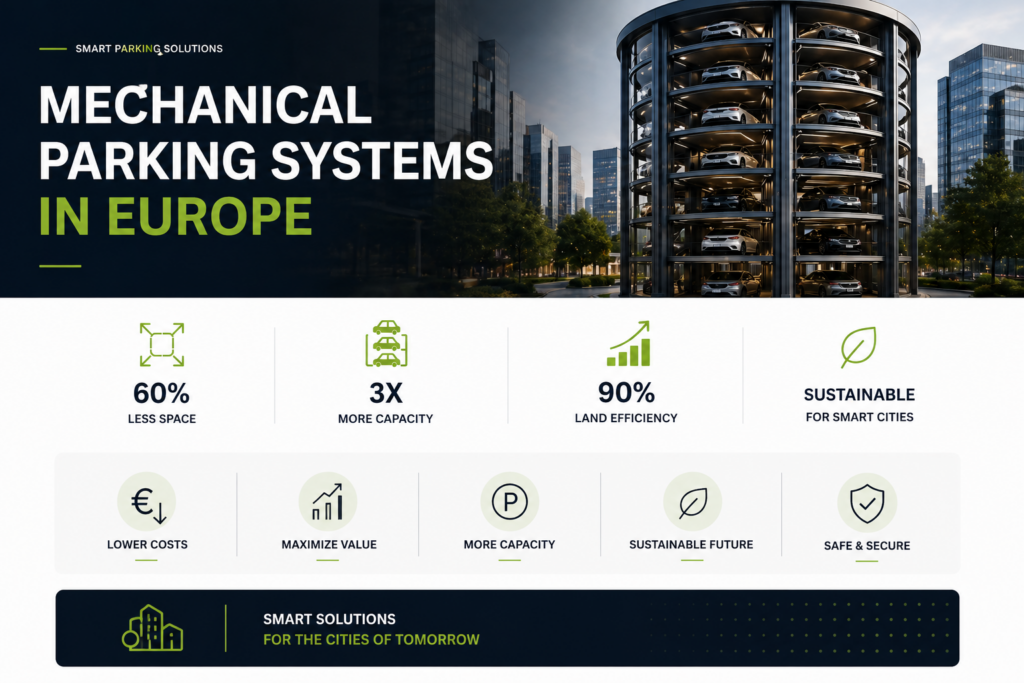
Istanbul’s own municipal government has already acknowledged the scale of the problem: ISPARK, the parking management arm of the Istanbul Metropolitan Municipality, was created specifically because vehicle density and traffic congestion had become defining features of daily life in the city, and its network of multi-storey car parks is reported to reduce the ground footprint consumed by parked vehicles across the city by as much as 40%. That single statistic captures the entire argument for mechanical and automated parking in Istanbul: the city cannot keep solving its parking shortage by spreading further outward, because in most of its most valuable and most historic districts, there is nowhere left to spread.
This guide explains how mechanical parking systems work, what has already been built across Istanbul, and how developers, hoteliers, and facility owners should think about specifying the right system for a site in this genuinely unique city.
Why Istanbul’s Parking Challenge Is Unlike Any Other City’s
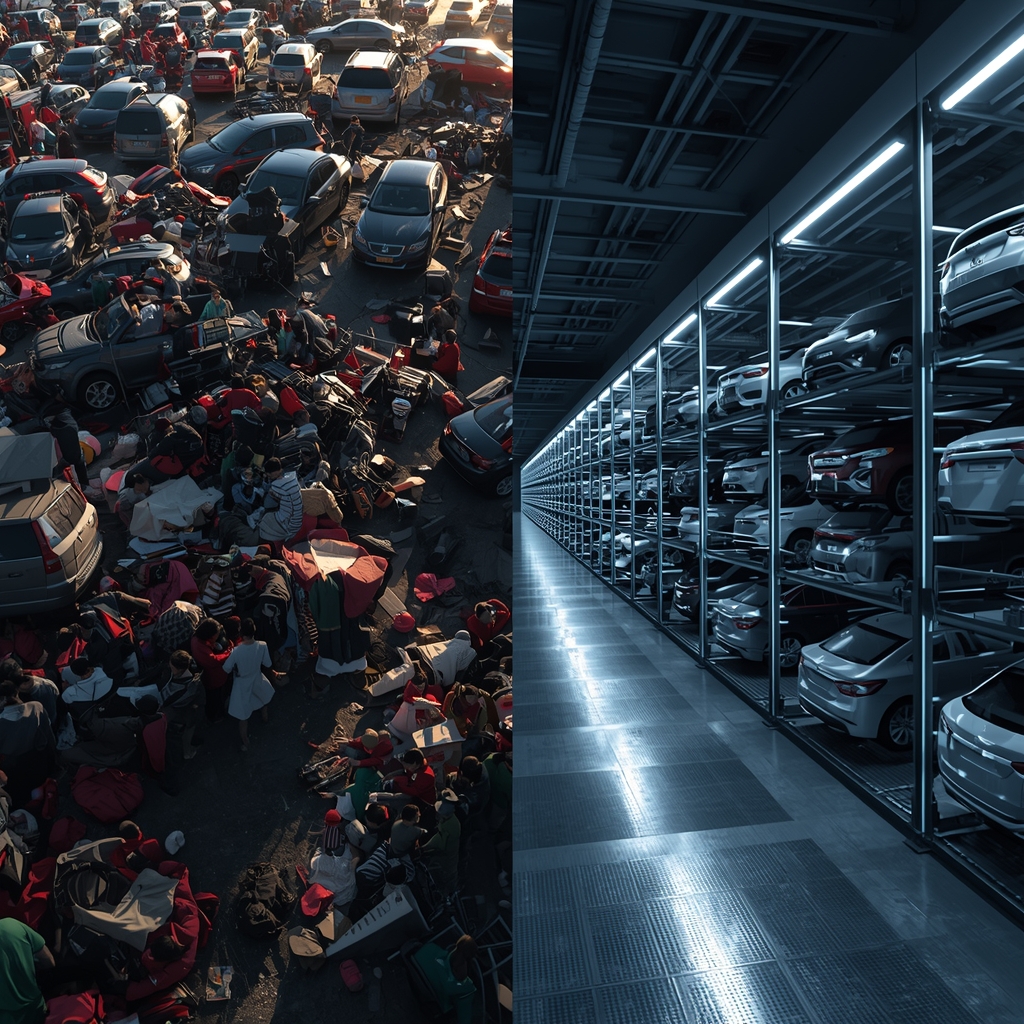
A historic peninsula where excavation is often not an option. Sultanahmet, Beyoğlu, Galata, and Eminönü are dense with narrow streets, high foot traffic, and minimal legal parking, to the point that visiting drivers are routinely advised to park in a secure ISPARK facility outside the historic zone entirely and rely on the metro and tram network for the rest of their visit. Deep underground garages are frequently impractical here, both because of the physical density of historic construction and because any significant excavation risks disturbing archaeologically and architecturally sensitive ground — a near-identical constraint to what limits parking development in other heritage-dense Mediterranean cities.
Two continents, one traffic bottleneck. Istanbul’s geography, split by the Bosphorus and connected by a limited number of bridges and tunnels, concentrates enormous traffic volumes onto a handful of crossing points every day. Every square meter of parking capacity added closer to where people actually work and live reduces the number of vehicles making unnecessary cross-city trips in search of a place to park.
Extreme vehicle density. Istanbul’s high population density combined with heavy vehicle ownership has made parking a notoriously difficult, frustrating experience for both residents and visitors, and pricing in the city’s own municipal parking system is deliberately structured on a steep hourly curve specifically to discourage long-term parking in central districts and push drivers toward public transport instead.
Seismic risk unlike almost any other major city on this list. Istanbul sits close to the North Anatolian Fault, one of the most closely studied and most active fault lines in the world, and the city’s building codes and structural engineering standards reflect a level of seismic caution that most European or Gulf cities simply don’t need to plan around. Any parking structure — mechanical or conventional — has to be engineered and certified against this risk from the outset, not treated as an afterthought.
A modern high-rise business district racing upward. Districts like Levent and Maslak have become Istanbul’s answer to a modern financial district, with land values and vertical density that mirror any major global business hub, creating exactly the kind of land-scarcity pressure that makes flat surface parking one of the least efficient uses of a plot.
Istanbul Already Has One of the World’s Most Mature Mechanical Parking Industries
Unlike many of the markets this series has covered, Istanbul isn’t just a city that needs mechanical parking — it’s home to one of the sector’s most established domestic manufacturing industries. Turkey’s Parkolay (Otomatik Otopark Sistemleri A.Ş.) describes itself as the country’s first and leading manufacturer of parking systems, and its own project history reads like a timeline of the technology’s growth in the city: the first mechanical parking application in Turkey was installed in a residential project in Göztepe, Istanbul; Istanbul’s Cihangir Multi-Storey Car Park became the country’s first semi-automated parking system, with a capacity of 112 vehicles; and a fully automated installation in Levent reached 612 parking spaces, at the time considered among the largest such projects in the world.
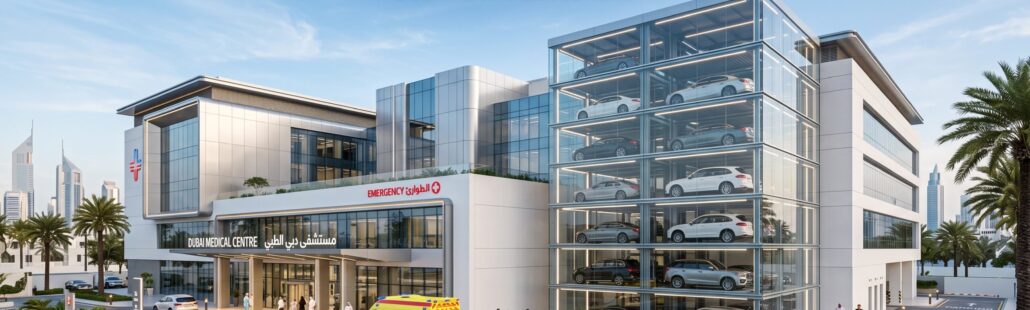
Perhaps the most telling example, though, is smaller in scale but larger in symbolism: the Fer Hotel, located directly beside the historic Nuruosmaniye Mosque in one of the most parking-constrained parts of Istanbul, solved its parking needs through a compact automatic parking system rather than any conventional alternative — a clear illustration of exactly the heritage-district constraint this guide has already described. Other domestic providers, including Sanpark, market their car-lift systems specifically around the argument that allowing two or three vehicles to occupy a single conventional parking space saves land, reduces traffic congestion searching for parking, and lowers fuel consumption and emissions across the city.

This existing market maturity is worth understanding for two reasons. First, it confirms that mechanical parking in Istanbul isn’t an unproven concept — it has a multi-decade track record across some of the city’s most demanding sites. Second, it means that any project considering this technology in Istanbul today has real, comparable local precedents to draw design and capacity lessons from, rather than having to reason from first principles.
What Is a Mechanical Parking System?
A mechanical parking system uses hydraulic, mechanical, or fully robotic movement to place and retrieve vehicles, instead of relying on the driver’s own maneuvering. The main categories are:
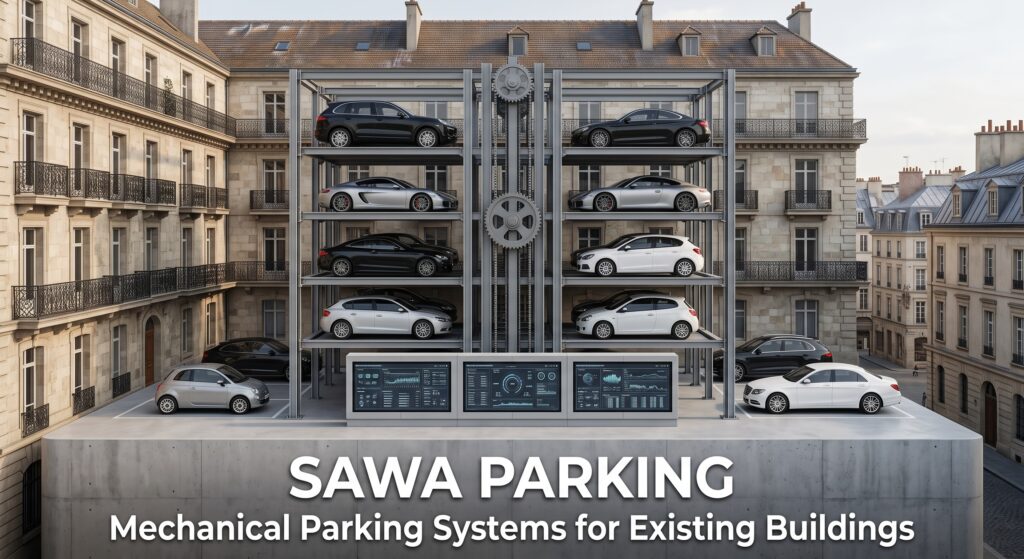
- Semi-automated systems, where the driver parks onto a platform that a hydraulic or mechanical mechanism then lifts or shifts to free additional space.
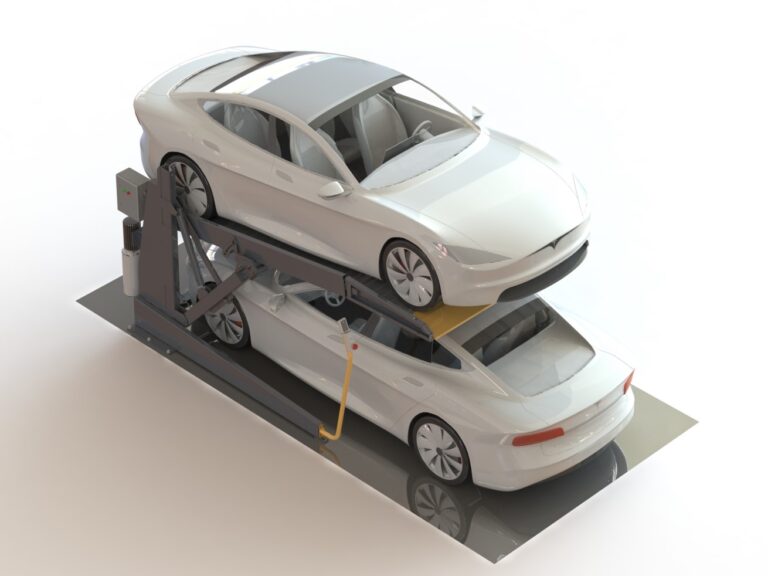
- Puzzle and pit-type systems, which lower and raise parking platforms within a shaft or pit, often multiplying a single ground-level footprint into two or three stacked parking levels below it.
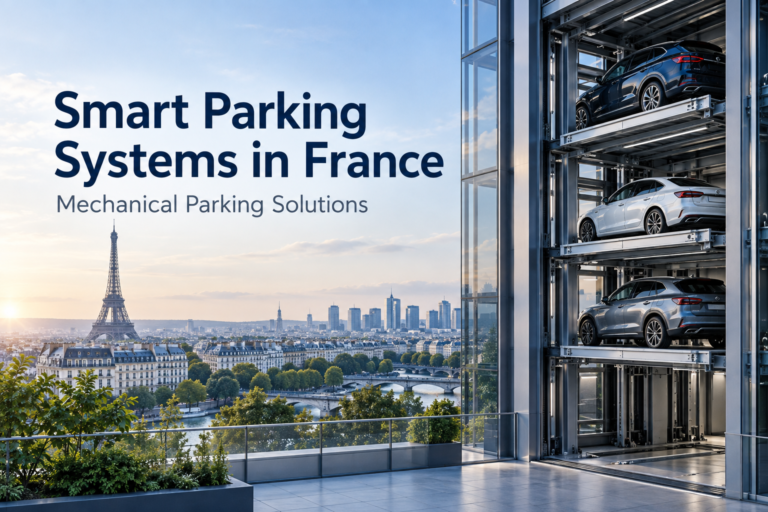
- Fully automated (robotic) systems, where the driver leaves the car at a transfer bay and a robotic shuttle stores it inside a rack or tower, with no further driver or public access to the storage area.
The Types of Systems Best Suited to Istanbul
Two-Post and Four-Post Hydraulic Lifts
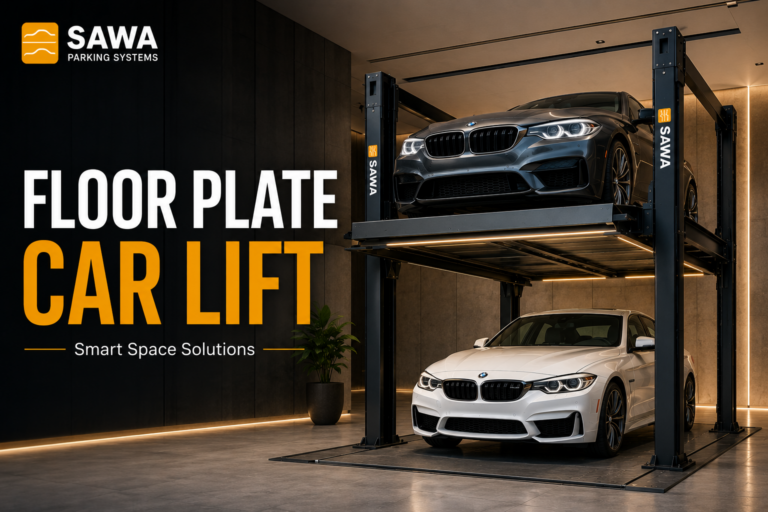
The simplest, most cost-effective format, commonly used to avoid a wide vehicle ramp in favor of a compact lift accessing a lower garage level — exactly the substitution used in several residential projects across Beşiktaş and other central Istanbul districts where ramp space simply isn’t available.
Independent Pit-Type (Well) Systems
Systems that lower platforms into a shaft below ground level can double or triple a single surface parking space’s capacity, and are particularly well suited to residential buildings and boutique commercial sites across Istanbul’s older, denser neighborhoods.
Compact Semi-Automated and Rotary Systems
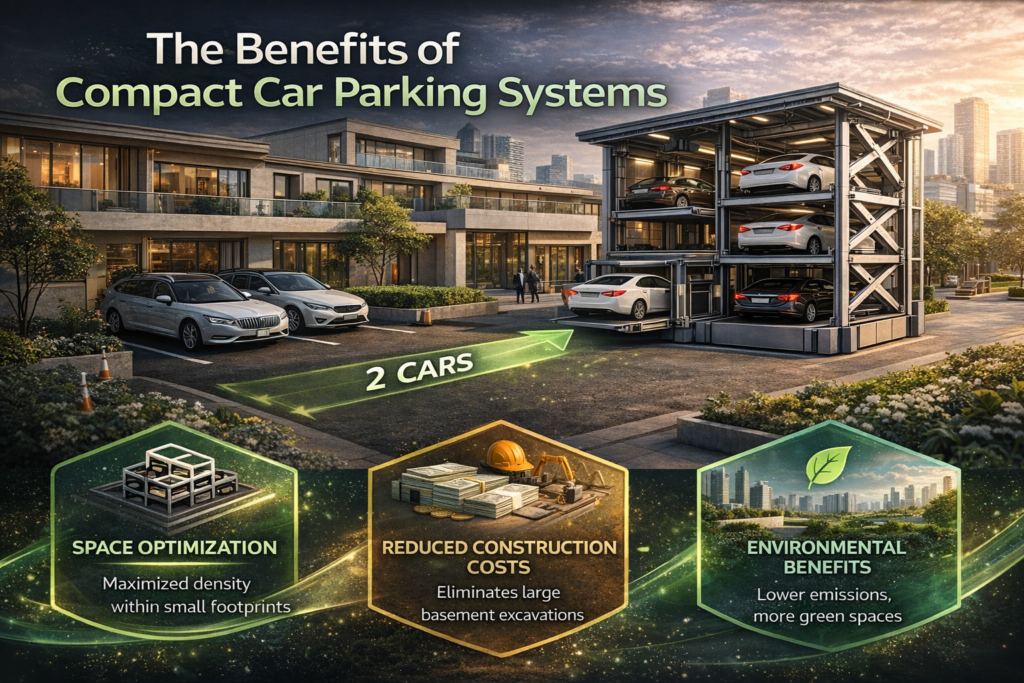
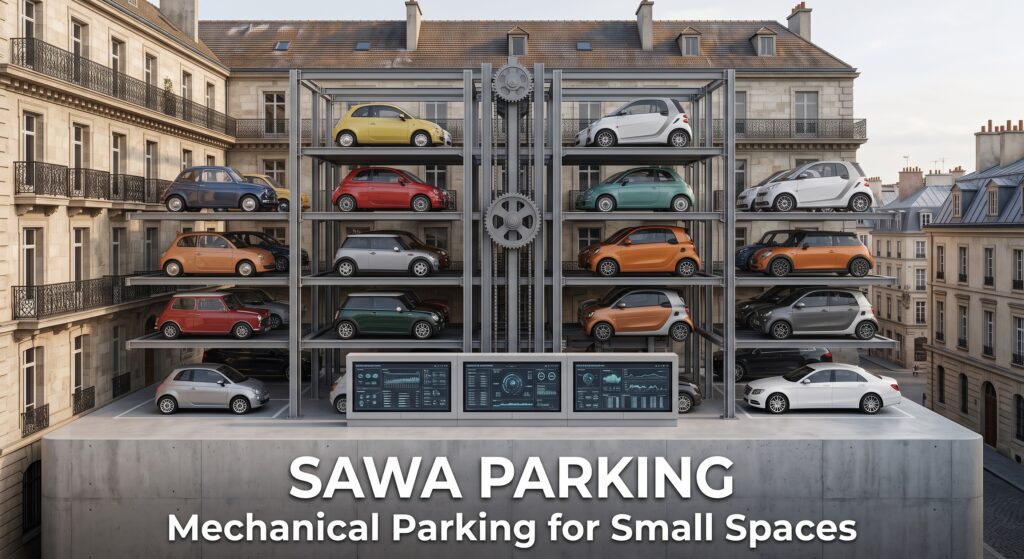
Ideal for the most space-constrained sites in the historic peninsula, where a handful of additional parking spaces recovered from an otherwise unusable footprint can be the difference between a hotel or commercial building offering guest parking at all.
Fully Automated Towers
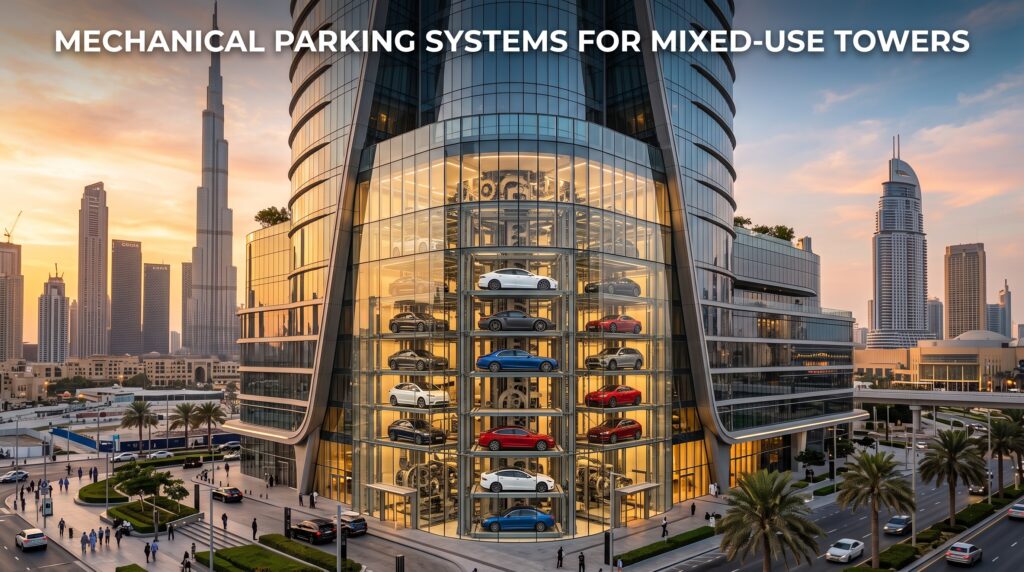
The highest-capacity format, suited to Istanbul’s modern business districts like Levent and Maslak, where large commercial and residential towers need to accommodate hundreds of vehicles within a footprint that also has to satisfy strict seismic design requirements.
Where Mechanical Parking Delivers the Most Value in Istanbul
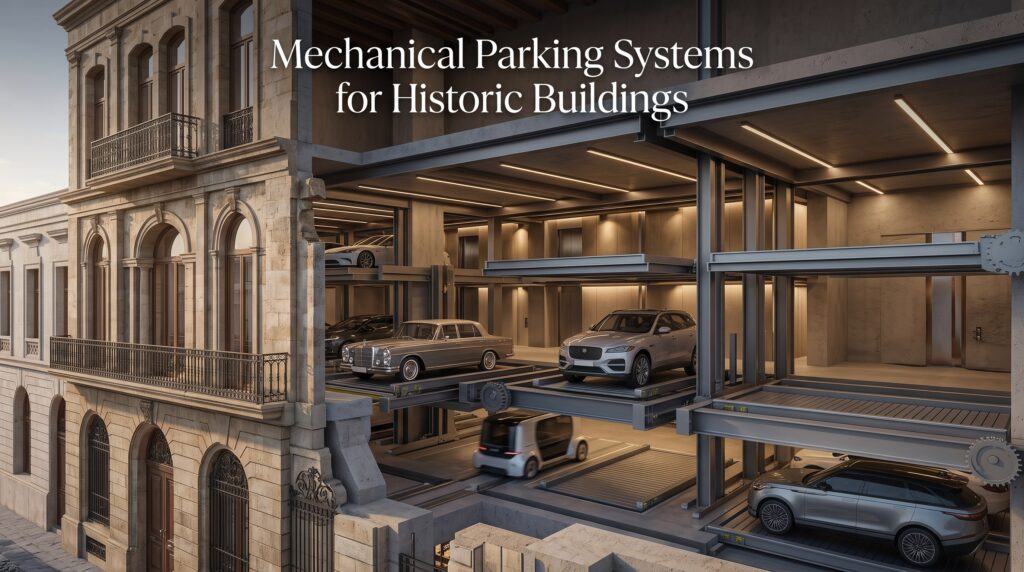
Hotels and boutique commercial buildings on the historic peninsula. As the Fer Hotel case demonstrates, heritage-adjacent sites in Sultanahmet, Beyoğlu, and similar districts often have no realistic alternative to a compact mechanical system if they want to offer guests secure, on-site parking at all.
Residential buildings across central, older districts. Beşiktaş, Kadıköy, Cihangir, and comparable neighborhoods have repeatedly turned to hydraulic lifts and pit-type systems specifically to avoid the large ramp space a conventional garage would require, preserving building footprint for living space instead.
Modern business towers in Levent and Maslak. Istanbul’s financial and corporate district already has a landmark precedent in the 612-space Levent installation, and continued high-rise development in this corridor will keep driving demand for large-scale automated capacity engineered to the district’s seismic standards.
Car dealerships and service centers. Istanbul’s dealership sector has already used car-lift systems to expand customer parking capacity at constrained urban sites, a model that translates directly to other commercial and retail contexts across the city.
Shopping malls and mixed-use retail. High-density retail destinations across Istanbul’s numerous shopping centers benefit from increased bay counts within the same footprint, reducing the entrance congestion that frustrates shoppers during peak hours.
University and institutional campuses. Istanbul’s academic institutions, often located on constrained urban campuses, have already used semi-automated systems to expand staff and visitor parking capacity without new land acquisition.
Cost, ROI, and What Affects Pricing in Istanbul
Pricing for mechanical parking systems in Istanbul depends on system type, vehicle capacity, and site-specific factors:
- Two-post and four-post hydraulic lifts offer the lowest cost per additional space and the fastest installation timeline, and are frequently chosen specifically as a lower-cost substitute for a conventional ramp in space-constrained residential and boutique commercial projects.
- Pit-type and compact semi-automated systems sit in the mid-range, and are the most common format across Istanbul’s dense residential and heritage-adjacent commercial sites, typically doubling or tripling a footprint’s original capacity.
- Fully automated towers require the highest upfront investment, but remain the only realistic way to deliver several hundred parking spaces within a single large commercial or residential development in districts like Levent, where land values justify the investment.
Ongoing preventive maintenance should be budgeted into any project, since hydraulic components, sensors, and control software require regular servicing to maintain reliability across a system’s typical 15-to-25-year lifespan — an especially important consideration given Istanbul’s seismic environment and the structural inspections that come with it.
Seismic, Climate, and Site Considerations Specific to Istanbul
Seismic design as a first-order constraint, not an afterthought. Istanbul’s proximity to the North Anatolian Fault means any mechanical or automated parking structure must be engineered and certified to Turkey’s seismic design standards, with structural steel, anchoring systems, and foundation design rated for regional earthquake risk. This is arguably the single most important specification difference between a system designed for Istanbul and one designed for a less seismically active market.
Bosphorus and Marmara Sea coastal humidity. Districts along the waterfront face accelerated corrosion risk on untreated steel, making galvanized or specially coated structural components and sealed electrical housings important specification details, particularly for open or semi-open system designs.
Dense, irregular historic-district plots. Much of Istanbul’s older urban fabric consists of small, irregularly shaped plots wedged between existing buildings, meaning a genuinely custom-engineered system — rather than a standardized, off-the-shelf product — is often necessary to make a project work at all.
Foundation and geotechnical variability. Istanbul’s terrain varies significantly between the historic peninsula, the Bosphorus waterfront, and the newer business districts further from the water, meaning every installation should begin with a proper geotechnical survey rather than a standardized foundation design.
How to Choose the Right System for an Istanbul Project
- Available footprint and heritage or archaeological status of the site — determines whether excavation is a viable option or a shallow-footprint, above-ground system is required.
- Seismic zone requirements — confirm the manufacturer’s structural design and certification process accounts for Istanbul’s specific earthquake risk.
- Expected vehicle volume and retrieval speed needs — malls, dealerships, and commercial buildings need faster throughput than long-stay residential parking.
- Budget and phasing — many Istanbul projects start with a simple lift or pit-type system and expand later, following the same pattern seen across the city’s own project history.
- Coastal exposure — confirm corrosion-resistant components for any site near the Bosphorus or Marmara Sea waterfront.
- Local regulatory and heritage compliance requirements — confirm the system design accounts for any municipal or preservation authority approval process specific to the site.
- After-sales support and maintenance response times, particularly important given the structural inspection routines that seismic-zone installations typically require.
What to Look for in a Mechanical Parking Manufacturer
Istanbul’s mechanical parking market is more mature than most cities covered in this series, with established domestic manufacturers like Parkolay and Sanpark holding decades of local project experience and deep familiarity with Turkish seismic and regulatory requirements. For developers evaluating options — whether local or international — the same core criteria apply:
- In-house design and manufacturing, rather than pure resale of imported equipment, typically meaning faster customization for irregular historic-district plots and more responsive after-sales support.
- A verifiable track record, ideally including comparable heritage-site or seismic-zone projects, not just marketing renders.
- End-to-end turnkey service — site consultation, engineering design, manufacturing, installation, and long-term preventive maintenance under one accountable provider.
- Clear warranty terms on structural steel and mechanical components, with confirmed local spare parts availability.
- Demonstrated experience with seismic design requirements and coastal corrosion resistance, both of which matter significantly more in Istanbul than in many other Mediterranean or Gulf markets.
SAWA Parking was established as the first factory in Egypt, Africa, and the Middle East dedicated specifically to manufacturing mechanical and automated parking systems, and has already exported systems to Mediterranean and European markets including Italy and France. SAWA offers a complete turnkey process — planning and consultation, engineering design, in-house manufacturing, installation, and ongoing maintenance — giving developers, hoteliers, and facility owners across Istanbul a single point of accountability from the first site assessment through years of operational support, alongside broader regional manufacturing experience relevant to seismic and coastal engineering considerations. For boutique hospitality projects in the historic peninsula, residential buildings in Istanbul’s older districts, or commercial towers in Levent and Maslak, working with a manufacturer that controls its own production line — rather than reselling third-party hardware — typically means faster lead times, easier customization for irregular or heritage-constrained plots, and more responsive support across a genuinely complex, two-continent city.
The Road Ahead
Istanbul’s parking pressures are unlikely to ease. The city’s population continues to grow, its historic districts remain protected by heritage regulations that make conventional excavation impractical in many locations, and its modern business corridors keep building upward on some of the most seismically demanding ground of any major city on earth. ISPARK’s own municipal parking network already demonstrates the scale of land savings possible when a city commits seriously to structured, multi-level parking — and mechanical and automated systems are the natural extension of that same logic into individual buildings and private developments.
If you are planning a hotel, residential building, commercial tower, or mixed-use development anywhere in Istanbul and want to explore which mechanical parking solution fits your site, SAWA Parking’s team can review your project details and propose a tailored parking strategy from concept through long-term maintenance.
Sources
- Parkolay (Otomatik Otopark Sistemleri A.Ş.) — Company History and Project Milestones in Istanbul. https://www.otomatik.com.tr/EN/471-Kurumsal/476-Tarihce/
- Parkolay — Project Portfolio, Including Fer Hotel Nuruosmaniye and Levent Installations. https://www.otomatik.com.tr/EN/48-Projects/
- Istanbul.com — ISPARK and the Istanbul Municipality’s Approach to Car Parking. https://istanbul.com/about-city/car-parking
- Sanpark Otopark Sistemleri — Major Touches to Istanbul’s Parking Problem. https://sanpark.eu/en/major-touches-to-istanbuls-parking-problem/