


Why Smart Parking Systems Are No Optional
Over the last decade, the role of parking infrastructure has changed dramatically across the world. What was once considered a secondary component of a development project has now become one of the most important factors influencing traffic flow, operational efficiency, user satisfaction, property value, and long-term project sustainability.
Cities are becoming denser, vehicle ownership continues increasing, and urban land is becoming significantly more expensive. At the same time, developers are expected to maximize land utilization while creating better experiences for residents, visitors, customers, and employees. These challenges are forcing governments, developers, architects, and urban planners to rethink traditional parking approaches.
For many years, conventional parking solutions were considered sufficient. Large surface lots, underground garages, and traditional parking layouts were capable of supporting urban needs. However, the scale of modern urban growth has exposed serious limitations in these systems.
This is why smart parking systems are rapidly becoming essential infrastructure rather than optional upgrades. Across Europe, North America, the Middle East, and emerging smart cities, intelligent parking technologies are helping solve some of the biggest urban mobility challenges of the twenty-first century.

Urban Growth Is Creating a Parking Crisis
The global urban population continues to grow every year. Major cities are becoming denser while available land becomes increasingly limited. This combination creates enormous pressure on transportation and parking infrastructure.
Many modern developments face a common challenge. The number of vehicles continues to increase, but the amount of available parking space remains relatively fixed. In some cases, parking demand grows much faster than infrastructure expansion.
This imbalance creates several operational problems:
- Traffic congestion
- Parking shortages
- Driver frustration
- Reduced property value
- Increased construction costs
- Poor visitor experience
Many cities are already experiencing these challenges. Areas that were designed decades ago are now struggling to accommodate modern traffic volumes. As urban populations continue expanding, the pressure on parking infrastructure is expected to become even more severe.
This is one of the primary reasons why smart parking systems have become a necessity rather than a luxury.

Traditional Parking Systems Are Reaching Their Limits
Traditional parking systems were designed for a completely different urban environment. They were developed when cities were less dense, land was less expensive, and vehicle ownership rates were significantly lower.
Today, these assumptions no longer apply.
Conventional parking requires:
- Large circulation areas
- Wide ramps
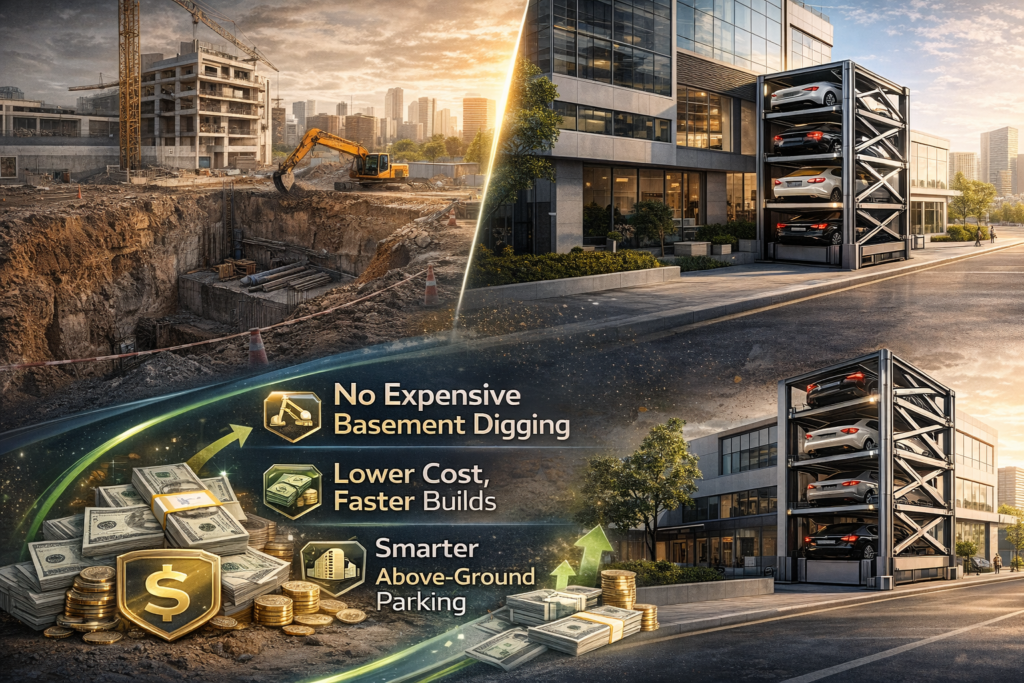
- Extensive underground excavation
- Significant land consumption
These requirements reduce the amount of usable space available for residential, commercial, hospitality, and recreational purposes.
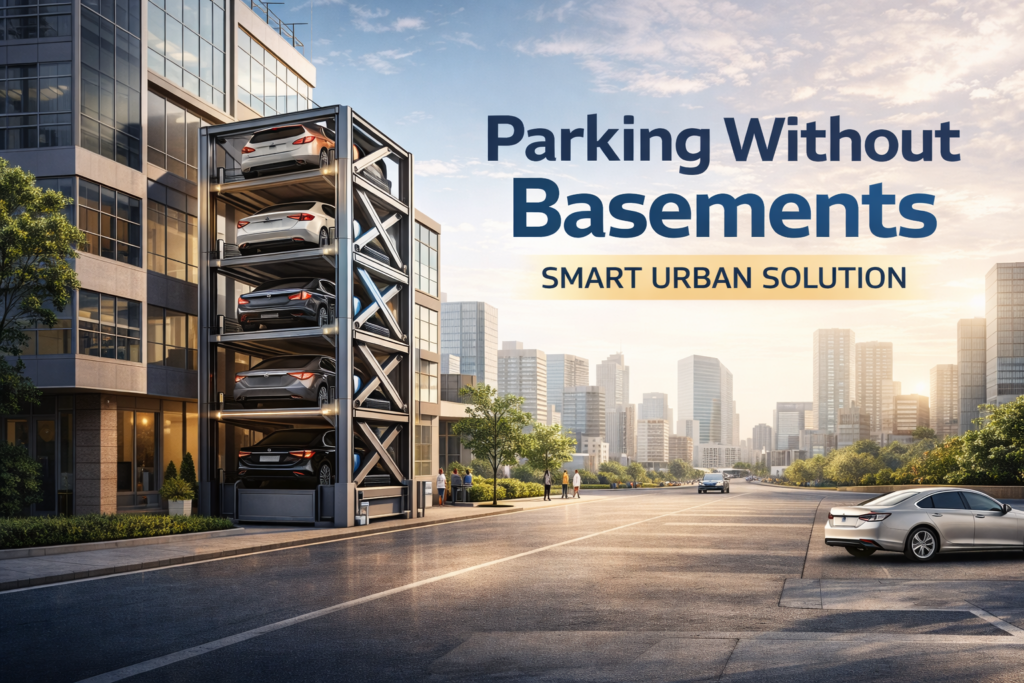
For developers, every square meter matters. Land costs continue rising in major cities, making inefficient parking layouts increasingly difficult to justify financially.
As a result, traditional parking methods are becoming less attractive for modern projects that prioritize efficiency, sustainability, and long-term value creation.
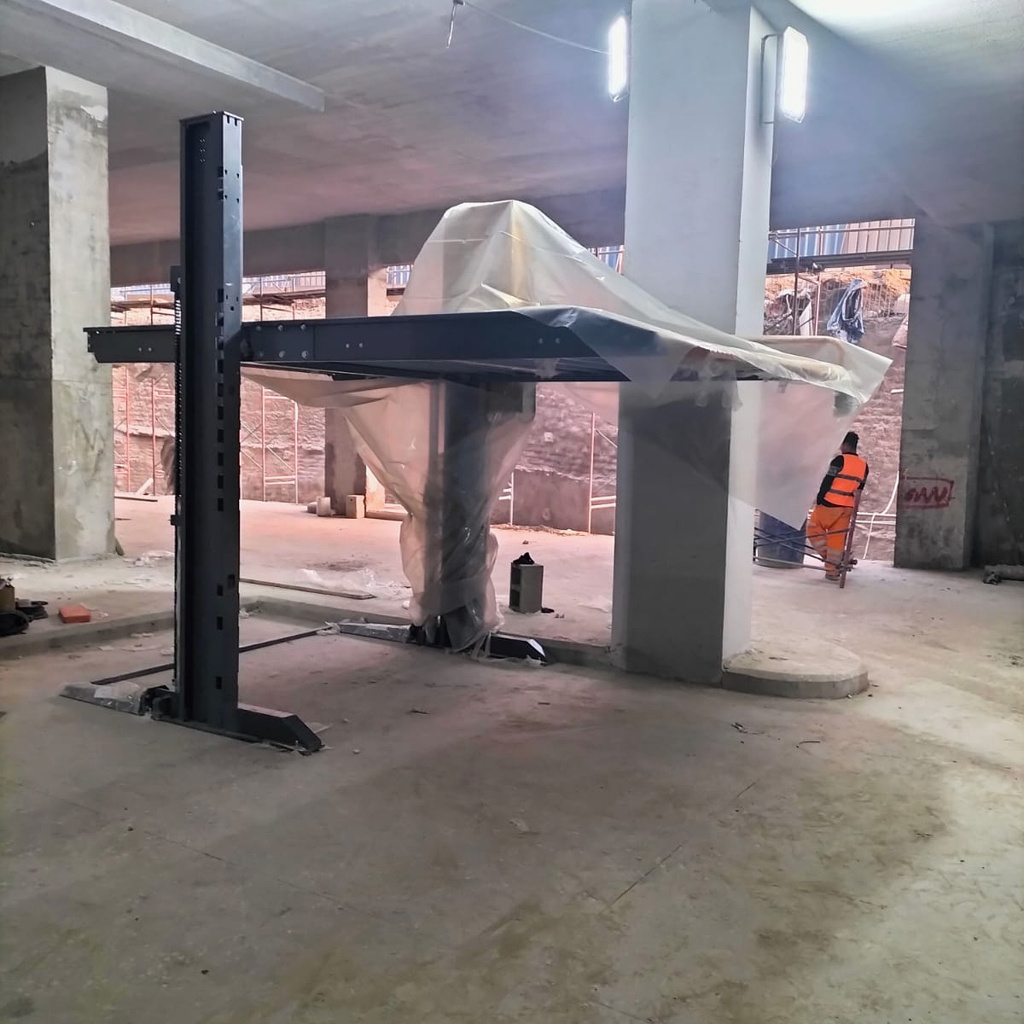
Smart Parking Systems Improve Space Utilization
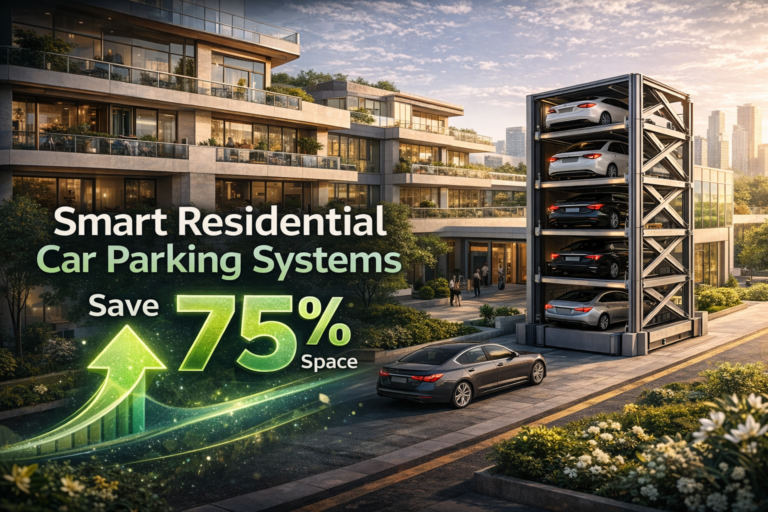
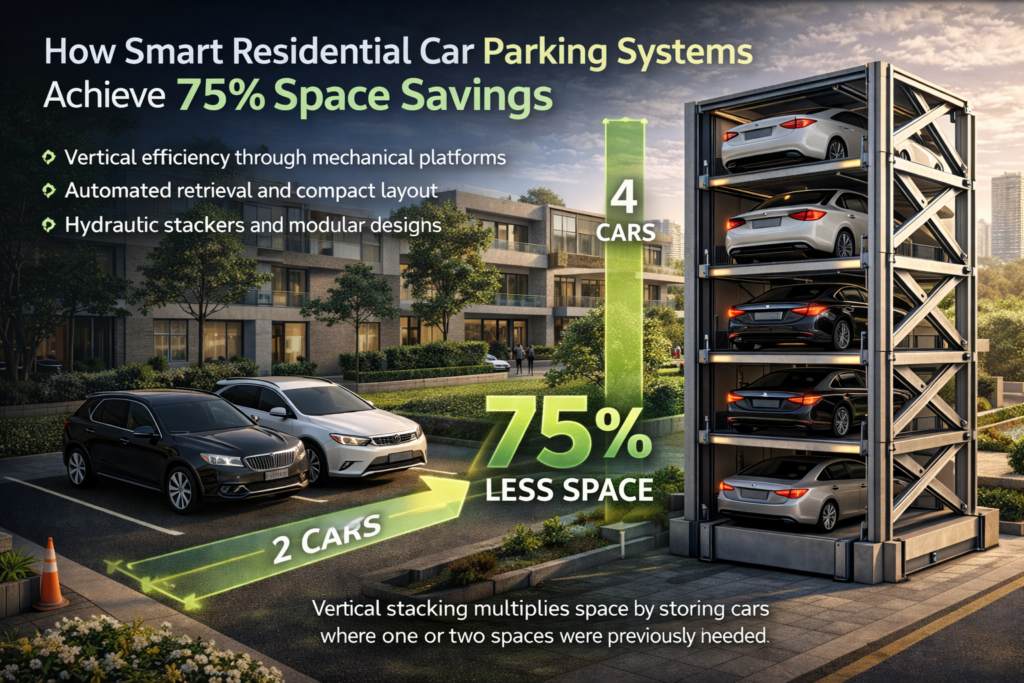
One of the biggest advantages of smart parking systems is their ability to maximize parking capacity within limited spaces.
Unlike traditional parking layouts, smart systems use advanced technologies and mechanical solutions to optimize vehicle storage and circulation.
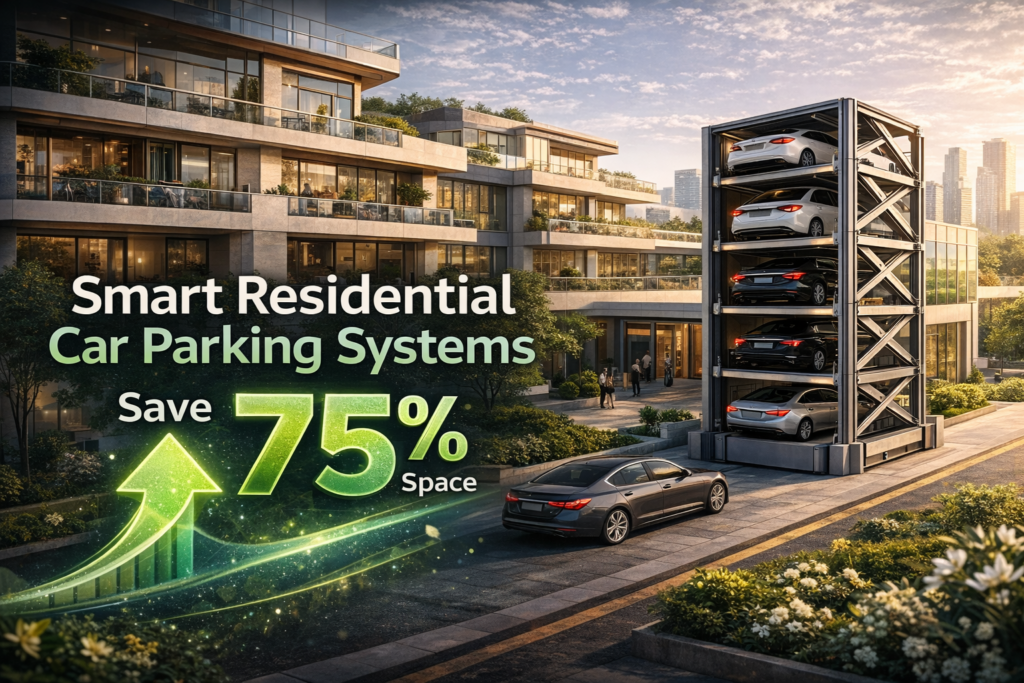
Examples include:
- Puzzle Parking Systems
- Rotary Parking Systems
- Automated Parking Systems
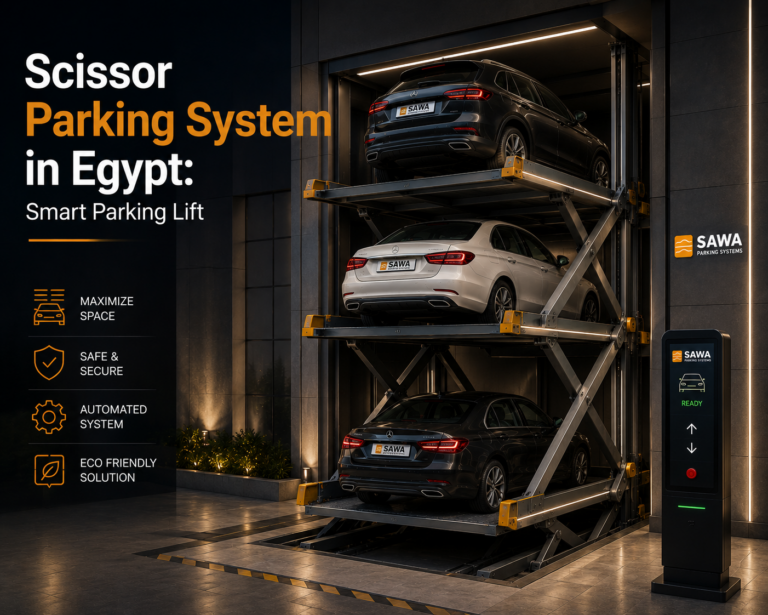
- Car Stacker Parking Lifts
- Automated Parking Towers
These technologies allow developers to accommodate significantly more vehicles while using substantially less land.
In some projects, parking capacity can increase by more than 100% without expanding the project footprint. This creates enormous value for developers while helping cities manage growing transportation demands more effectively.
Smart Parking Systems Reduce Traffic Congestion
Traffic congestion is one of the most expensive urban problems facing cities today.
Studies from multiple international transportation organizations have shown that a significant percentage of urban traffic is generated by drivers searching for available parking spaces.
This creates:
- Unnecessary vehicle circulation
- Increased fuel consumption
- Higher emissions
- Longer travel times
- Reduced productivity
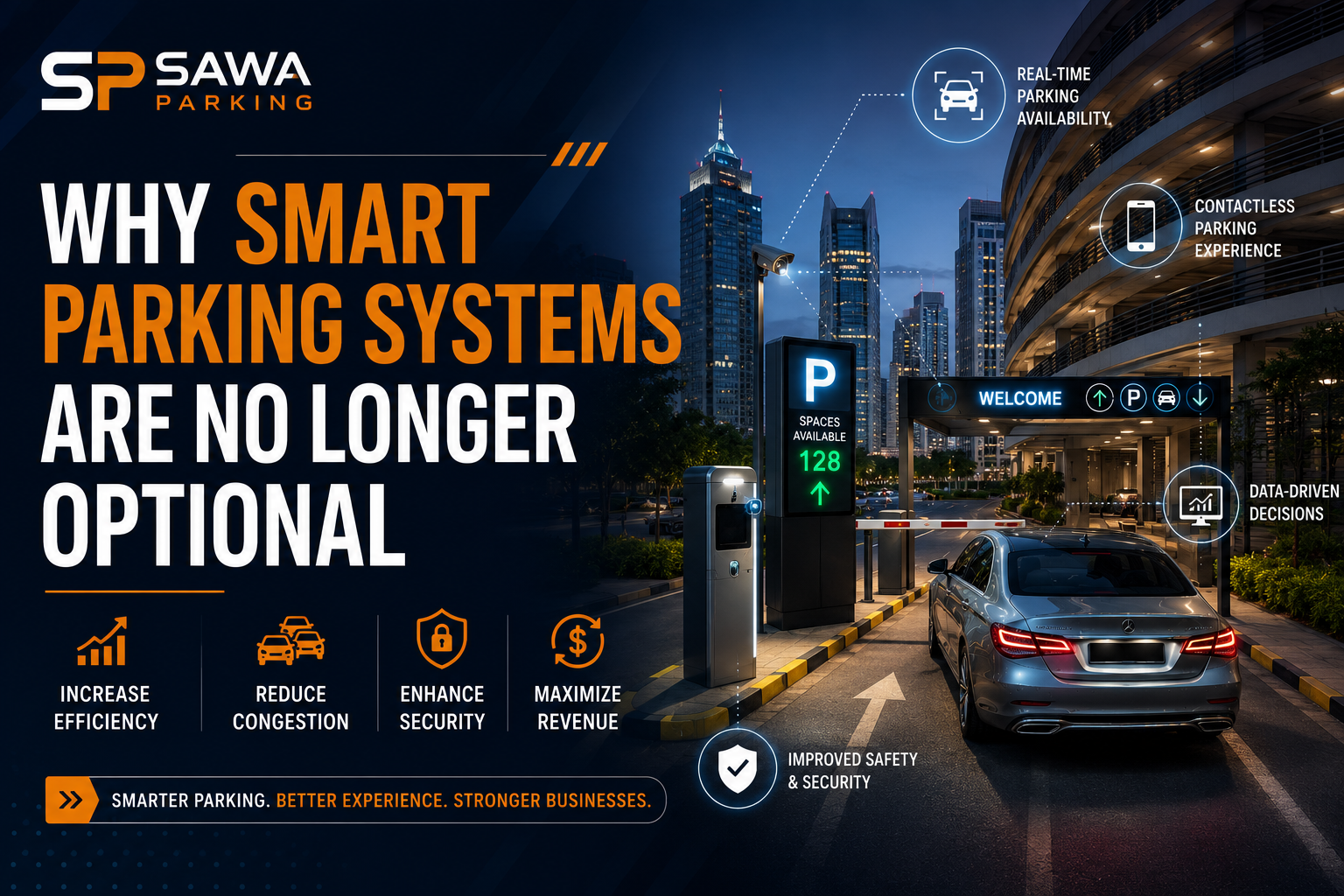
Smart parking systems address this challenge through technologies such as:
- Real-time occupancy monitoring
- Parking guidance systems
- ANPR technology
- Smart access control
- Automated parking allocation
These tools help drivers find parking faster and reduce unnecessary traffic movement throughout urban areas.
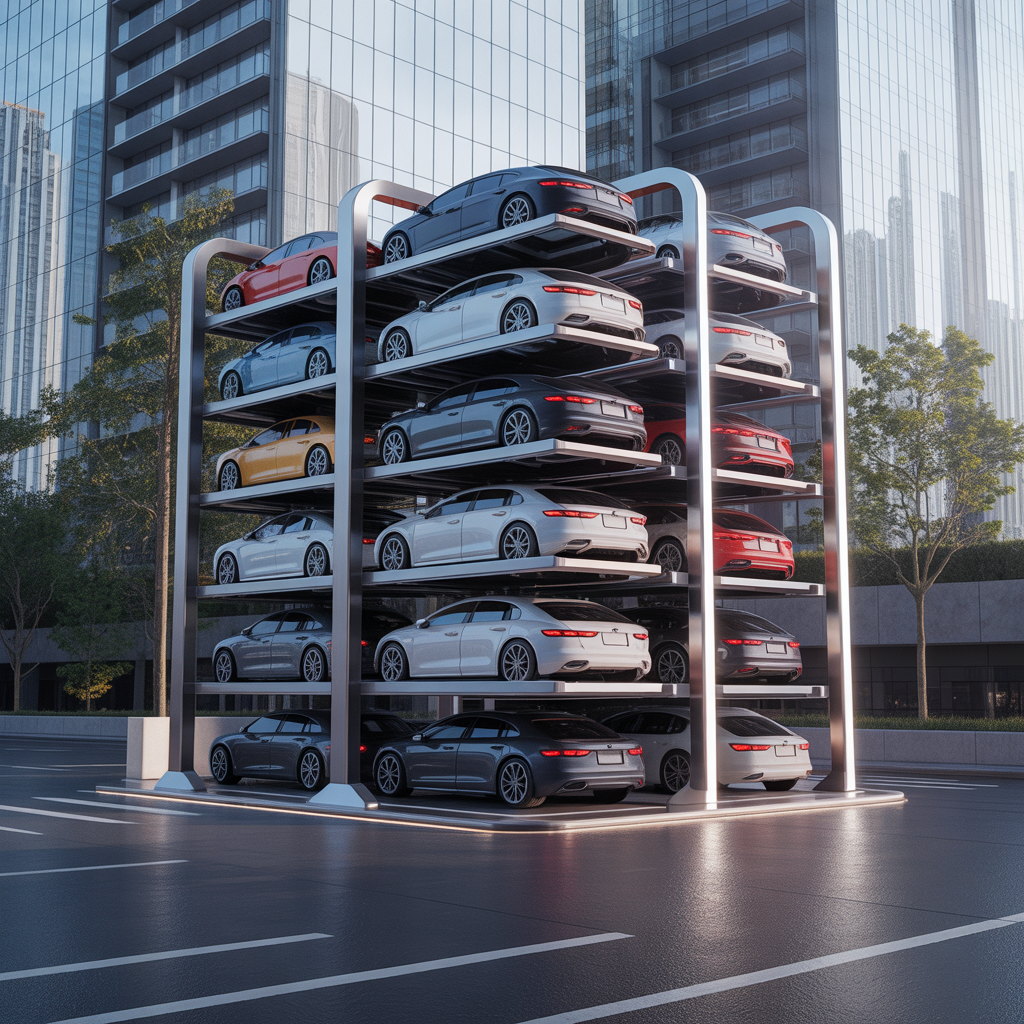
Smart Cities Depend on Smart Parking Infrastructure
Modern smart cities are built around data, efficiency, automation, and sustainability.
Governments around the world are investing billions of dollars in smart city infrastructure designed to improve urban living conditions and optimize resource utilization.
However, transportation remains one of the most critical components of any smart city strategy.
Without intelligent parking infrastructure, even the most advanced urban projects can experience:
- Traffic bottlenecks
- Accessibility problems
- Operational inefficiencies
- Reduced user satisfaction
Smart parking systems help integrate mobility infrastructure into broader smart city ecosystems by connecting parking operations with digital management platforms, access control systems, and transportation networks.
Why Every Modern Development Needs Smart Parking Systems
Modern developments are becoming more complex every year. Residential communities, commercial centers, office buildings, hotels, hospitals, universities, and mixed-use projects are all experiencing higher traffic volumes than ever before. At the same time, developers are under increasing pressure to maximize profitability while improving user experience and maintaining efficient operations.
Parking infrastructure plays a major role in achieving these objectives. A poorly designed parking system can negatively impact an entire development regardless of how impressive the architecture or facilities may be. Residents become frustrated, visitors struggle to find parking, traffic congestion increases, and operational efficiency declines.
This is why forward-thinking developers are no longer treating parking as a secondary engineering requirement. Instead, they view it as a strategic component of project planning. Smart parking systems help developments operate more efficiently, improve accessibility, increase property value, and create better user experiences.
As urban density continues increasing, the question is no longer whether a project should include smart parking solutions. The real question is which type of smart parking system will provide the highest long-term value.
Smart Parking Systems for Residential Communities
Residential compounds and gated communities have become one of the fastest-growing segments of the real estate market. Across Egypt, Europe, and the Middle East, modern residential projects are becoming larger, denser, and more ambitious.
However, many residential developments still underestimate future parking demand.
A common mistake occurs when developers calculate parking requirements based only on current occupancy levels. In reality, vehicle ownership continues increasing every year, especially among younger generations and high-income households. Families that previously owned one vehicle may now own two or three.
Without adequate parking infrastructure, communities often experience:
- Vehicles parked on internal roads
- Visitor parking shortages
- Traffic congestion
- Safety concerns
- Resident complaints
- Reduced property values
Smart parking systems help solve these challenges by maximizing parking capacity while maintaining organized circulation patterns. Technologies such as Puzzle Parking Systems and Car Stacker Parking Lifts allow communities to accommodate significantly more vehicles without consuming additional land.
For luxury residential developments, smart parking is becoming a competitive advantage rather than simply an operational feature.
Shopping Malls Cannot Operate Efficiently Without Smart Parking
For shopping malls, parking directly affects revenue.
Customers often decide where to shop based on convenience. If parking is difficult, time-consuming, or frustrating, visitors may simply choose another destination.
Large shopping centers face several parking challenges:
- Weekend traffic peaks
- Holiday shopping seasons
- Event-related congestion
- High visitor turnover
- Limited available land
Traditional parking layouts often struggle during these periods because they depend heavily on manual operations and inefficient circulation patterns.
Smart parking systems improve shopping mall operations through:
- Real-time occupancy tracking
- Intelligent parking guidance
- ANPR access systems
- Automated payment solutions
- Traffic flow optimization
These technologies reduce congestion, shorten parking search times, and improve overall customer satisfaction.
For mall operators, improved parking performance often translates directly into increased foot traffic and stronger commercial performance.
Airports Are Investing Heavily in Smart Parking Technologies
Airports represent one of the most demanding parking environments in the world.
Every day, thousands of vehicles arrive and depart within relatively short time windows. Passengers, employees, taxis, ride-sharing services, suppliers, and airport operators all compete for limited parking resources.
Major airports across Europe have increasingly adopted smart parking technologies to manage this complexity.
Examples include:
- Heathrow Airport
- Charles de Gaulle Airport
- Frankfurt Airport
- Amsterdam Schiphol Airport
These facilities use intelligent parking management systems to improve operational efficiency and reduce congestion.
Modern airport parking systems often integrate:
- License plate recognition
- Digital reservations
- Dynamic parking allocation
- Automated payment systems
- Real-time occupancy monitoring
These technologies improve passenger experience while helping airports manage increasing traffic volumes more effectively.
As global air travel continues growing, smart parking systems will become even more important for airport infrastructure planning.
Hospitals Require Intelligent Parking Management
Hospitals are among the most operationally sensitive environments in any city.
Unlike commercial developments, healthcare facilities cannot afford delays caused by parking congestion or inefficient vehicle circulation. Every minute matters, particularly when emergency services are involved.
Hospitals must simultaneously accommodate:
- Doctors
- Nurses
- Administrative staff
- Patients
- Visitors
- Ambulances
- Service vehicles
Managing these different user groups through traditional parking systems is becoming increasingly difficult.
Smart parking systems improve hospital operations by:
- Prioritizing emergency access
- Reducing entry delays
- Improving staff parking management
- Enhancing security
- Optimizing visitor circulation
Technologies such as ANPR systems allow hospitals to automate vehicle access while maintaining strict operational control.
For modern healthcare facilities, intelligent parking management has become a critical component of overall operational efficiency.
Hotels Are Using Smart Parking to Enhance Guest Experience
In the hospitality industry, first impressions are extremely important.
Guests begin forming opinions about a hotel before they even enter the lobby. Parking is often the first operational touchpoint that influences this experience.
Luxury hotels across Europe are increasingly investing in smart parking systems because they understand that convenience directly affects customer satisfaction.
Smart parking solutions help hotels:
- Reduce valet waiting times
- Improve traffic flow
- Increase parking capacity
- Enhance security
- Create premium arrival experiences
Many hotels now combine automated parking technologies with ANPR systems and digital guest management platforms.
This integration allows guests to enjoy seamless arrival and departure experiences while improving operational efficiency for hotel staff.
As hospitality standards continue rising, smart parking infrastructure is becoming an essential component of premium hotel operations.
Sustainability Is Accelerating the Shift Toward Smart Parking
Environmental sustainability has become a major priority for governments, developers, and urban planners worldwide.
Traditional parking systems often contribute to:
- Excessive land consumption
- Higher construction costs
- Increased traffic congestion
- Greater fuel consumption
- Higher emissions
Smart parking systems help address these challenges by improving efficiency and reducing unnecessary vehicle movement.
Benefits include:
- Reduced parking search times
- Lower fuel consumption
- Reduced emissions
- Better land utilization
- Improved urban sustainability
Many cities now view intelligent parking infrastructure as an important tool for achieving broader environmental and mobility goals.
As sustainability regulations continue evolving, smart parking systems are expected to become even more important for future developments.
Why Smart Parking Systems Are No Longer Optional
The evidence is becoming increasingly clear.
Modern cities are growing faster than traditional infrastructure can support. Vehicle ownership continues increasing, available land continues shrinking, and user expectations continue rising.
Developments that fail to invest in intelligent parking solutions may eventually face:
- Operational inefficiencies
- Traffic congestion
- Resident dissatisfaction
- Higher maintenance costs
- Reduced long-term competitiveness
Meanwhile, projects that implement smart parking technologies gain significant advantages in efficiency, scalability, sustainability, and user satisfaction.
This is why smart parking systems are rapidly transitioning from optional upgrades to essential infrastructure.
Why Choose Sawa Parking
As the demand for intelligent parking infrastructure continues growing, developers need partners capable of delivering reliable, scalable, and future-ready solutions.
Sawa Parking specializes in:
- Smart Parking Systems
- Puzzle Parking Systems
- Rotary Parking Systems
- Automated Parking Systems
- Car Stacker Parking Lifts
- ANPR Parking Solutions
- Parking Design & Engineering
By combining engineering expertise, local manufacturing capabilities, and advanced parking technologies, Sawa Parking helps developers maximize parking capacity while improving operational performance and land utilization.
Whether the project is a residential compound, commercial development, hospital, hotel, or mixed-use destination, Sawa Parking delivers customized solutions designed for long-term success.
Conclusion
Parking is no longer simply a place to leave a vehicle. It has become a critical component of modern urban infrastructure that directly influences mobility, sustainability, operational efficiency, and user experience.
As cities become denser and development projects become more complex, traditional parking approaches are increasingly unable to meet modern demands.
Smart parking systems offer a more efficient, scalable, and sustainable solution capable of supporting the future of urban growth. From residential communities and shopping malls to airports, hospitals, and hotels, intelligent parking technologies are helping create better environments for residents, businesses, and visitors alike.
The future of urban mobility depends on smarter infrastructure—and smart parking systems are one of the most important pieces of that future.
References
- International Parking & Mobility Institute (IPMI)
Comprehensive research, industry standards, and best practices related to parking management, smart parking technologies, and urban mobility infrastructure. - Urban Land Institute (ULI)
Global research and reports covering urban development, real estate trends, land utilization, and sustainable city planning. - Smart Cities World
Industry insights and case studies related to smart city infrastructure, intelligent mobility systems, and digital urban transformation. - ITS International
International coverage of intelligent transportation systems, parking technologies, and mobility innovations. - World Economic Forum – Urban Mobility Insights
Research and policy discussions on the future of urban transportation, sustainability, and smart city development. - McKinsey & Company – Cities & Infrastructure Research
Strategic reports and analysis on infrastructure investment, mobility trends, and future urban development. - UN-Habitat
Global studies on urbanization, sustainable development, and future city planning. - European Commission – Urban Mobility Framework
Official European policies and frameworks related to sustainable urban mobility and transportation planning.