


Advantages of Puzzle Parking System in Salalah for Hotels
Salalah occupies a distinctive position in Oman’s tourism industry. Located in Dhofar Governorate along the Arabian Sea, the city attracts visitors seeking coastal resorts, natural landscapes, cultural attractions, and the unusually green scenery associated with the Khareef season. Unlike many destinations in the Arabian Peninsula, Salalah experiences a seasonal monsoon influence that brings mist, drizzle, and cooler conditions during part of the summer.
This tourism environment creates particular challenges for hotel and resort developers. A property may experience substantial changes in guest arrivals, vehicle movements, and parking demand throughout the year. At the same time, operators want to preserve attractive entrances, landscaped areas, pedestrian routes, and guest facilities rather than allowing conventional parking to dominate the property.
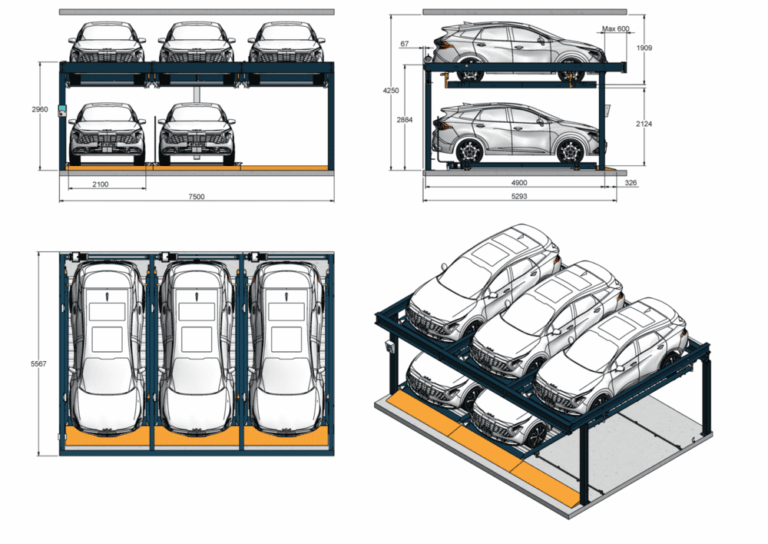
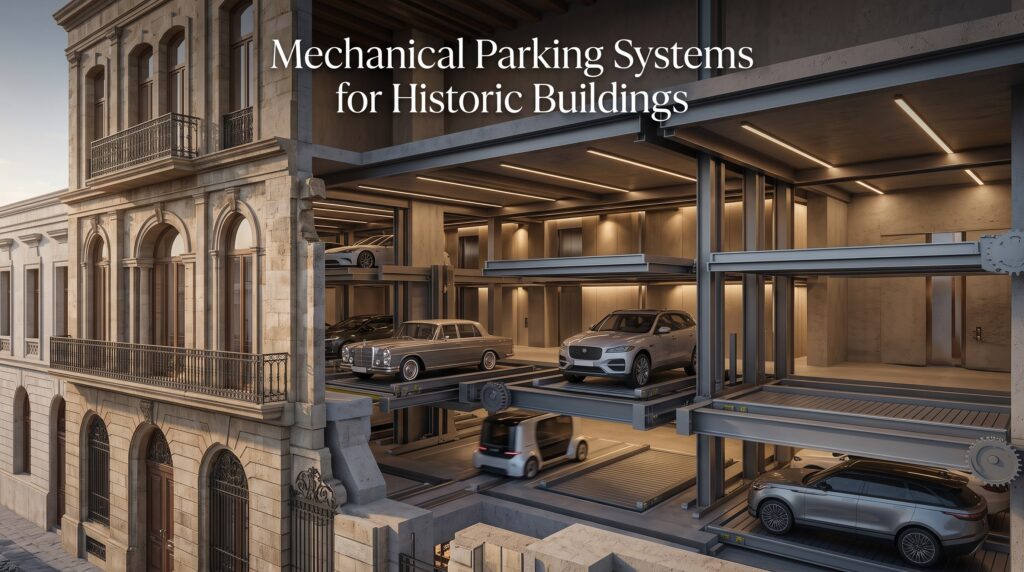
A Puzzle Parking System in Salalah can provide an alternative way to organize vehicle storage. Instead of arranging every vehicle across a large horizontal parking area, puzzle parking uses mechanically operated platforms that move vertically and horizontally. This allows selected vehicles to be stored in multiple levels within a compact footprint.
For hotels, the value of this approach goes beyond fitting additional cars into a limited space. Mechanical parking may help preserve land for hospitality functions, support valet operations, accommodate seasonal demand, and reduce the area dedicated to conventional circulation.
However, Salalah also presents engineering considerations that cannot be ignored. Coastal humidity, moisture, seasonal drizzle, corrosion exposure, and the operational demands of busy hotel arrival periods all affect equipment selection.
The Oman Ministry of Heritage and Tourism maintains a dedicated directorate in Dhofar responsible for tourism development and heritage-related activities. This reflects the region’s importance as a tourism destination and provides a relevant planning context for hospitality investments.
This article explores five advantages of puzzle parking for hotels in Salalah, explains how seasonal tourism affects parking design, and identifies the engineering requirements that developers should assess before selecting a mechanical parking solution.
1. Maximize Parking Capacity Without Sacrificing Valuable Hotel Land
Hotels and resorts require space for far more than guest rooms. Entrances, reception areas, restaurants, swimming pools, gardens, outdoor seating, pedestrian circulation, service facilities, and parking must all fit within the development.
For a hospitality property, the allocation of land directly influences the guest experience.
A large conventional parking area may provide convenient vehicle access, but it can also occupy space that could otherwise support landscaping, recreational facilities, or other amenities. In a resort destination such as Salalah, where natural surroundings form an important part of the visitor experience, this trade-off deserves particular attention.
Conventional parking requires individual vehicle bays as well as driving aisles, turning areas, and access routes. These circulation requirements increase the total area needed to accommodate each vehicle.
Puzzle parking offers a different storage arrangement.
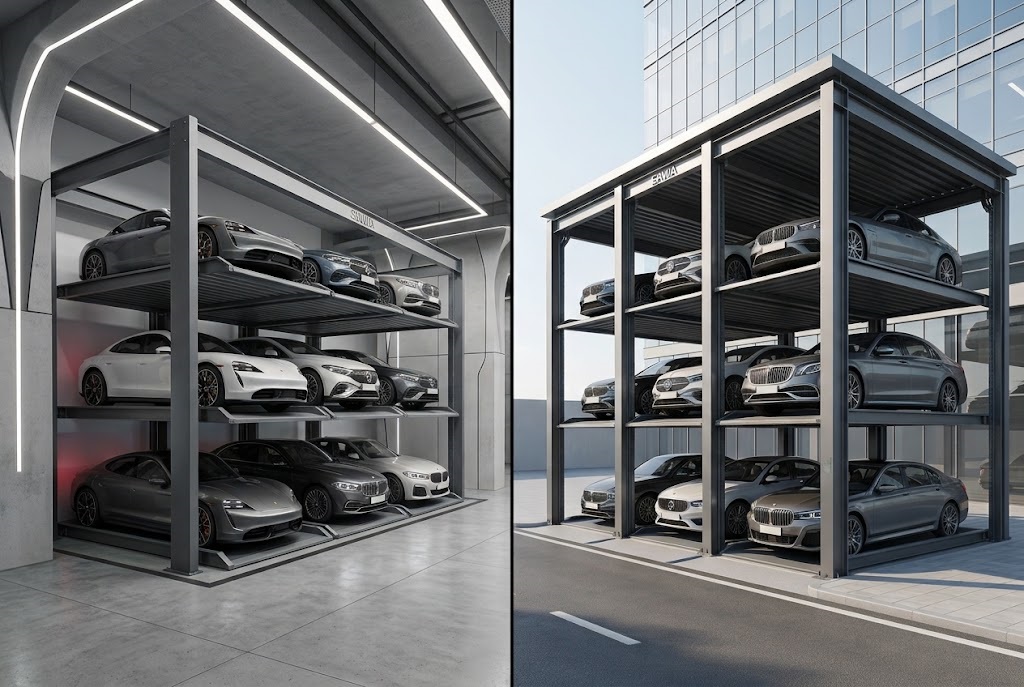
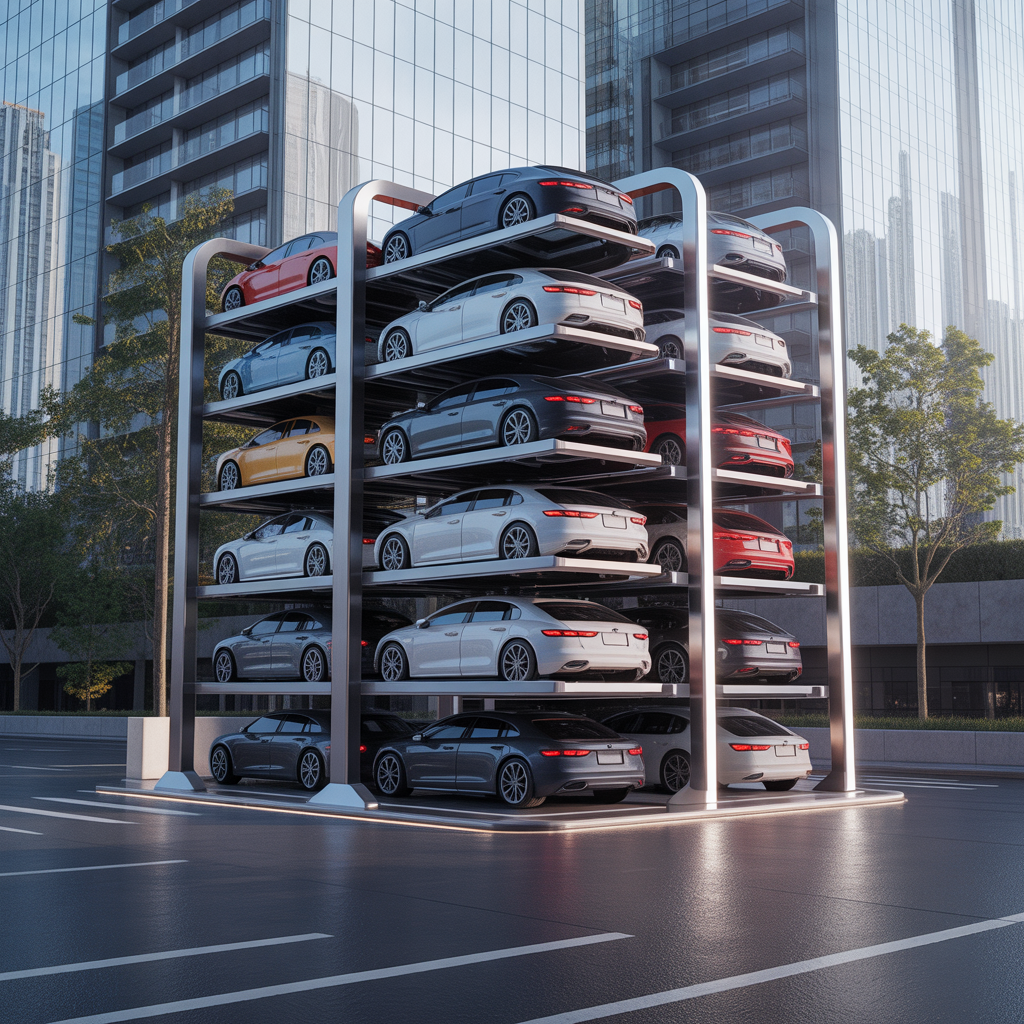
Vehicles are positioned on mechanical platforms that move horizontally and vertically. Depending on the selected configuration, multiple storage levels can be arranged within a relatively compact area, reducing the need for drivers to circulate through the entire storage zone.
For a hotel with limited available land, this creates an opportunity to accommodate selected vehicles within a smaller footprint than some conventional layouts.
The preserved area may support additional landscaping, improved guest entrances, pedestrian paths, or other hospitality functions.
However, the potential space saving must be demonstrated through a project-specific design. Mechanical parking requires structural support, access positions, safe operating clearances, electrical infrastructure, and maintenance space.
The actual number of vehicles accommodated depends on the available width, length, height, and platform arrangement.
For developers, the correct question is not simply whether mechanical parking can fit more vehicles. It is whether the resulting building and site layout provides greater overall value than the conventional alternative.
Planning a hotel or resort in Salalah? Explore Sawa Parking’s mechanical parking solutions to investigate how compact vehicle storage could preserve valuable hospitality space.
2. Manage Seasonal Parking Demand During the Khareef Tourism Period
One of Salalah’s defining characteristics is the Khareef season.
Oman’s official tourism platform, Experience Oman, describes Dhofar’s Khareef period as a major seasonal attraction, when mist and light showers transform parts of the landscape into green scenery. The season generally extends through the summer months, with the precise weather pattern varying from year to year.
This creates an important distinction between Salalah and destinations with more consistent tourism patterns.
Hotels may experience changes in occupancy, arrival schedules, guest vehicle use, and visitor activity between peak and quieter periods.
A parking facility should therefore be designed around realistic seasonal demand rather than an assumption that every day will have the same operating pattern.
Puzzle parking can contribute to this strategy by providing compact storage for selected vehicles.
Hotel guests who remain on the property for extended periods may be suitable for mechanical parking, especially when vehicle access is managed by trained staff.
However, peak tourism demand also creates operational challenges.
During busy arrival periods, multiple guests may arrive within a short time. At checkout, several vehicles may be requested simultaneously. If the mechanical system cannot process these movements efficiently, the result may be congestion at the hotel entrance.
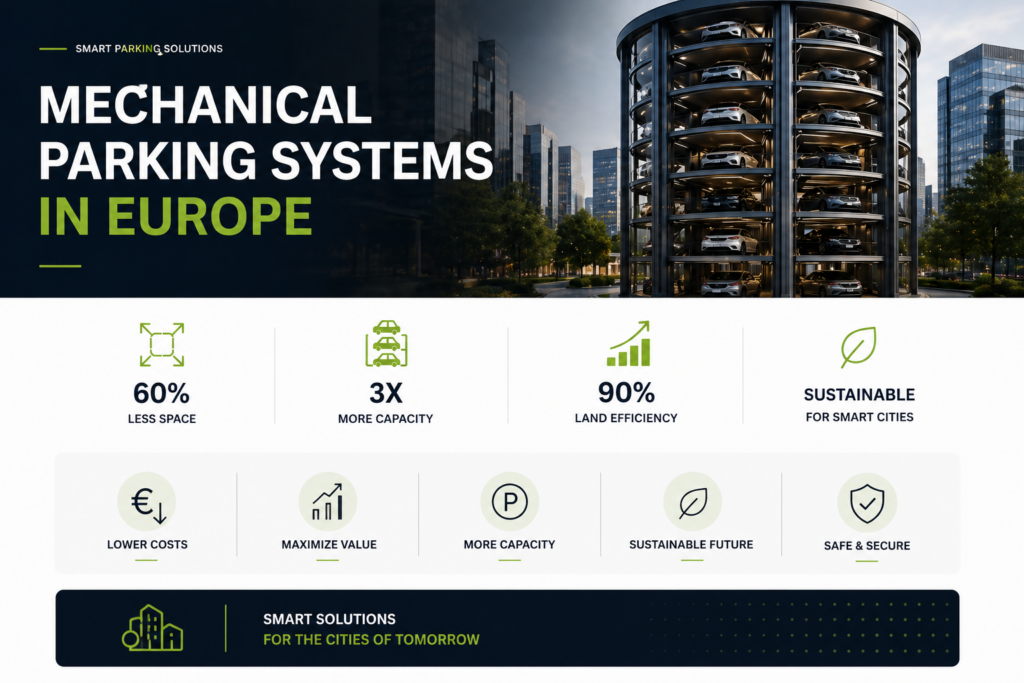
For this reason, the system’s retrieval performance is just as important as its storage capacity.
A hotel should evaluate expected arrival and departure patterns, average vehicle dwell time, access positions, and the number of simultaneous requests.
A hybrid parking arrangement may provide the best solution.
Mechanical parking can accommodate longer-stay vehicles, while conventional spaces remain available for immediate guest access, accessible parking, deliveries, and short-term stops.
| Hotel Parking Requirement | Design Consideration |
|---|---|
| Peak Khareef arrivals | Adequate vehicle intake capacity |
| Simultaneous checkout requests | Realistic retrieval performance |
| Long-stay guest vehicles | Potential mechanical storage |
| Short-term visitors | Convenient conventional parking |
| Accessible parking | Dedicated compliant arrangements |
| Tour buses and larger vehicles | Separate appropriately sized facilities |
| Hotel deliveries | Independent service and loading access |
| Valet operations | Trained staff and safe operating procedures |
Source: General hospitality parking operations principles, considered in the context of Dhofar’s seasonal tourism patterns documented by Oman’s Ministry of Heritage and Tourism.
The table highlights why maximum storage density should not be the only design objective.
A system capable of accommodating more vehicles may still be unsuitable if its retrieval sequence creates unacceptable delays during busy periods.
For hotels in Salalah, parking design must balance capacity, convenience, safety, and seasonal operating demand.
If your property experiences seasonal parking pressure, contact Sawa Parking to evaluate a mechanical parking arrangement based on your hotel’s actual vehicle movements.
3. Preserve Resort Landscaping, Guest Amenities, and Attractive Entrances
Salalah’s tourism identity is closely connected to its natural environment.
The destination is associated with coastal scenery, green mountain landscapes during Khareef, waterfalls, cultural attractions, and outdoor experiences.
Hotels and resorts often seek to reflect these characteristics through landscaped grounds, gardens, outdoor seating, and pedestrian-friendly spaces.
Parking infrastructure can compete directly with these features.
A large surface parking area may occupy a substantial portion of the available land, particularly when the property must accommodate guest vehicles, staff parking, and operational access.
This can reduce the space available for amenities that contribute to the overall hospitality experience.
A Puzzle Parking System in Salalah can offer another site-planning option.
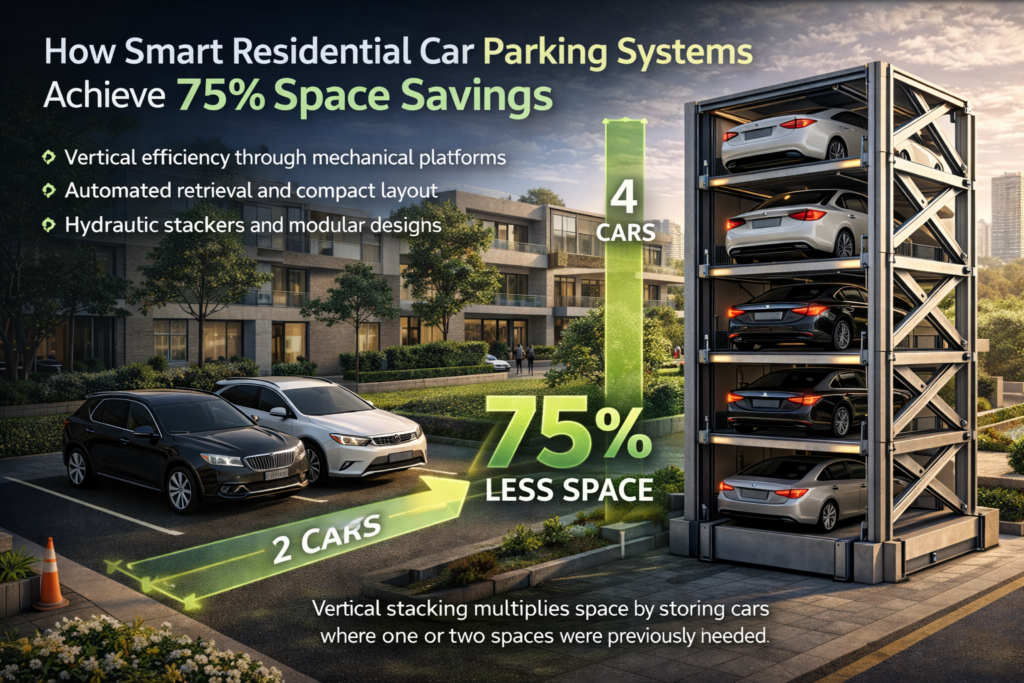
By concentrating selected vehicles within a compact mechanical storage zone, developers may be able to preserve more ground-level space for other functions.
For a resort, this could support landscaped entrances, additional outdoor amenities, or improved separation between pedestrian areas and vehicle movements.
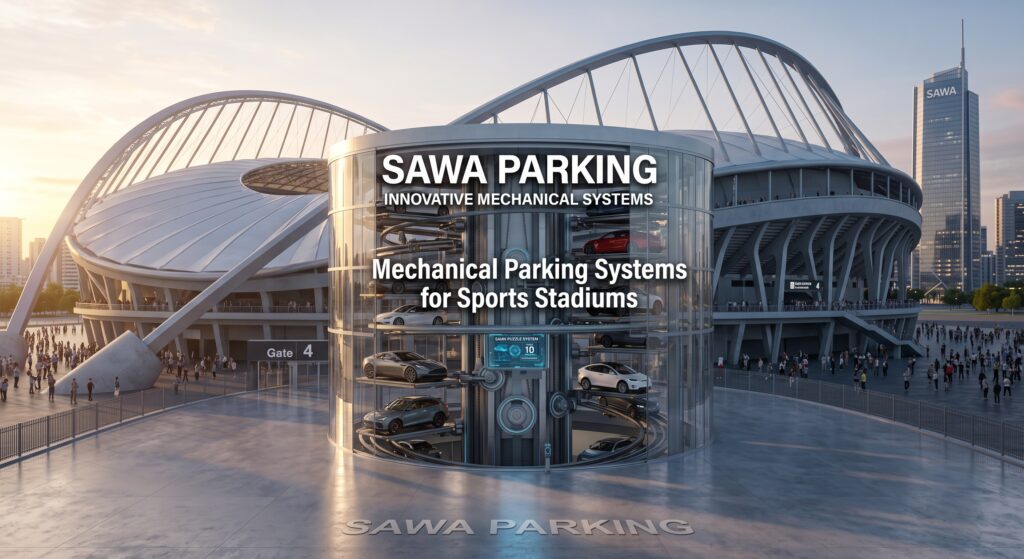
For an urban hotel, it may help protect valuable frontage for reception, restaurants, and guest facilities.
The opportunity is especially relevant during the early design stage, when architects can compare alternative arrangements for the entire property.
However, mechanical parking does not automatically create more usable landscaping or commercial area.
The system still requires access points, structural space, maintenance provisions, and safe vehicle circulation. Local building requirements and the project’s architectural constraints determine how any preserved area can be used.
The correct approach is to evaluate the overall site layout rather than simply compare the dimensions of individual parking bays.
A development should consider whether compact parking improves guest circulation, reduces conflicts between pedestrians and vehicles, and creates a more coherent property design.
For hospitality projects, these considerations may be just as important as the number of parking spaces provided.
Explore Sawa Parking’s parking systems to investigate how mechanical storage can be integrated into a hotel design without allowing parking to dominate the guest environment.
4. Support Hotel Valet Parking and More Organized Vehicle Operations
Many hotels rely on organized vehicle management to improve the arrival and departure experience.
Valet services can reduce the need for guests to search for spaces and may help control vehicle movements near the entrance.
Mechanical parking can potentially complement this operating model.
Instead of allowing every driver to enter a conventional garage, trained personnel can manage vehicle placement and retrieval through designated access positions.
This can simplify certain aspects of internal vehicle circulation, particularly where the mechanical storage area is separated from guest pedestrian routes.
However, successful integration requires careful operational planning.
Puzzle parking systems do not necessarily retrieve every vehicle immediately. Depending on the configuration, platforms may need to move before the requested vehicle becomes accessible.
During quiet periods, this may be manageable. During concentrated check-in or checkout times, retrieval sequences can create delays if the system has insufficient throughput.
A hotel considering mechanical parking should therefore examine several operating factors.
First, the number of vehicle access positions influences how quickly cars can enter or leave the system.
Second, the platform arrangement affects the number of movements required to retrieve certain vehicles.
Third, the hotel’s staffing model determines whether trained employees can operate the equipment consistently and safely.
Fourth, the property must establish procedures for power interruptions, equipment faults, emergency shutdowns, and maintenance activities.
Fifth, guests need clear instructions about vehicle handover and collection.
A mechanical system should never require hotel staff or guests to enter unsafe operating zones during platform movement.
Safety interlocks, sensors, barriers, emergency controls, and user procedures must be appropriate for the selected equipment and applicable requirements.
Where vehicle demand is particularly concentrated, a hybrid strategy may be more effective than placing every guest vehicle into mechanical storage.
For example, longer-stay vehicles could be assigned to the puzzle system, while conventional spaces remain available for immediate departures or operationally sensitive users.
The objective is to improve parking organization without compromising guest convenience.
Planning a valet-managed hotel? Contact Sawa Parking to discuss vehicle intake, retrieval requirements, and suitable mechanical parking configurations.
5. Improve Long-Term Land Efficiency Through Climate-Appropriate Engineering
Mechanical parking is a long-term infrastructure investment.
Its value depends not only on the number of vehicles accommodated at installation but also on the ability of the equipment to operate safely and reliably throughout its service life.
In Salalah, environmental conditions deserve particular attention.
The Oman Civil Aviation Authority’s Directorate General of Meteorology explains that the Khareef monsoon brings persistent drizzle, low-level humidity, mist, and seasonal winds to Dhofar.
These conditions create specific considerations for mechanical and electrical equipment.
Moisture can affect exposed electrical components, while coastal conditions may increase the importance of corrosion protection.
Rainwater and condensation can accumulate in areas with inadequate drainage. Moving components, sensors, control panels, and structural elements must therefore be selected and protected according to their actual installation environment.
An indoor mechanical parking system faces different conditions from an outdoor or partially exposed installation.
Protected indoor equipment may experience less direct weather exposure, but ventilation, humidity control, drainage, and maintenance remain important.
Outdoor systems may require additional environmental protection, suitable coatings, weather-resistant electrical enclosures, and carefully designed drainage arrangements.
The following factors should be addressed during the engineering stage.
| Environmental Factor | Recommended Design Assessment |
|---|---|
| Seasonal humidity | Electrical enclosure protection and moisture management |
| Coastal exposure | Corrosion-resistant materials and protective coatings |
| Khareef drizzle | Drainage and protection of moving equipment |
| Condensation | Inspection and ventilation requirements |
| Outdoor heat | Motor and control-system operating limits |
| Dust exposure | Protection of sensors and mechanical components |
| Water accumulation | Safe drainage around platforms and pits |
| Maintenance access | Safe inspection and servicing throughout the year |
Source: Engineering considerations informed by the climate characteristics described by the Oman Civil Aviation Authority. Specific equipment requirements must be established through manufacturer specifications, site conditions, and applicable standards.
These measures should be considered before equipment selection.
Retrofitting environmental protection after installation may be more difficult and expensive than incorporating it into the original design.
Long-term planning should also account for changing vehicle dimensions.
Hotel guests may arrive in compact cars, sedans, SUVs, or larger family vehicles. Mechanical platforms have defined width, length, height, weight, and ground-clearance limits.
Electric vehicles may introduce additional load and charging requirements.
Not every mechanical parking system supports EV charging. Where charging is required, the arrangement must be specifically engineered and approved for the selected equipment.
For hotels, reliable operation and predictable maintenance are essential.
The strongest long-term benefit comes from selecting equipment that fits the property’s physical conditions, environmental exposure, and operating requirements rather than choosing a system based on maximum theoretical capacity alone.
If your project requires parking equipment suitable for Salalah’s coastal and seasonal conditions, contact Sawa Parking to discuss environmental protection, vehicle compatibility, and maintenance planning.
Where Can Puzzle Parking Systems Be Used in Salalah?
Although hotels and resorts are the primary focus of this article, puzzle parking can also be evaluated for other developments in Salalah.
Urban hotels may benefit where conventional parking competes with guest facilities, restaurants, and commercial frontage.
Resort properties may investigate compact parking to preserve landscaped areas and separate vehicle storage from pedestrian amenities.
Serviced apartment developments may use mechanical parking for residents and longer-stay visitors, provided retrieval demand is manageable.
Mixed-use buildings combining accommodation with retail or offices may benefit from a hybrid arrangement that separates longer-dwell vehicles from high-turnover visitors.
Existing hospitality properties may also consider retrofits where available height, structural capacity, and access geometry permit installation.
However, mechanical parking is not automatically suitable for every resort.
A property with extensive available land and relatively low parking demand may find conventional surface parking more practical and economical.
Similarly, a hotel serving frequent tour buses or large vehicles must provide appropriate conventional access and storage arrangements for those vehicles.
The decision should be based on site constraints, expected vehicle demand, operating requirements, and a realistic comparison of alternatives.
How to Plan Puzzle Parking Around Hotel Peak Seasons
Parking capacity is only one component of a successful hotel parking strategy.
The system must also accommodate how vehicles move throughout the day and across different tourism periods.
A hotel should begin by reviewing its expected room occupancy, guest vehicle ownership patterns, average length of stay, and arrival and departure schedules.
The analysis should distinguish between peak-season and quieter-period demand.
During busy tourism periods, the property may need more space for arrivals, vehicle handovers, and waiting areas.
Mechanical parking can store vehicles compactly, but it cannot eliminate the need for safe access and circulation at the entrance.
The design team should also consider whether the hotel operates valet parking or allows guests to access vehicles independently.
Valet-managed operations may be suitable for certain mechanical configurations, but staff training and clear operating procedures are essential.
Where the property includes restaurants, event spaces, or conference facilities, additional visitor demand should be considered separately from overnight guest parking.
The most effective layout may combine mechanical storage with conventional spaces for short-term visitors and operational needs.
This allows the hotel to benefit from compact vehicle storage without forcing every user into the same retrieval process.
Why Oman Building Regulations Matter for Mechanical Parking
Mechanical parking systems must be evaluated within the applicable building and fire-safety framework.
The 2025 Oman Building Code, published through the Ministry of Housing and Urban Planning, includes specific provisions addressing mechanical-access enclosed parking garages.
These provisions address matters such as fire separation, smoke removal, fire-control equipment, emergency shutdown arrangements, and civil defense access.
For example, the code identifies requirements for fire-resistance separation between mechanical-access enclosed parking garages and other occupancies, together with provisions for smoke removal and emergency controls.
These requirements are particularly important for hotel developments because parking facilities may be located near guest rooms, commercial spaces, service areas, or other occupied parts of the building.
A mechanical parking installation should therefore be coordinated with qualified architects, structural engineers, fire-safety specialists, and the relevant local authorities.
The project team must determine which provisions apply to the proposed configuration, including whether the parking area is enclosed, open, attached to another occupancy, or part of an existing building.
Equipment specifications must also address electrical safety, structural loading, vehicle access, emergency procedures, and maintenance requirements.
The code provides a regulatory framework, but compliance cannot be established through a product description alone.
The final project requires appropriate engineering documentation, local review, and any necessary approvals.
For hotel developers in Salalah, regulatory coordination should begin before the mechanical parking layout is finalized.
Puzzle Parking vs. Conventional Hotel Parking in Salalah
Selecting a parking system requires a realistic comparison of alternatives.
Conventional parking offers direct vehicle access and generally avoids the additional moving equipment associated with mechanical systems.
However, it may require more horizontal area for parking bays, driving aisles, and turning movements.
Puzzle parking can improve storage density in suitable layouts but introduces equipment costs, retrieval sequences, preventive maintenance, and operational requirements.
| Evaluation Factor | Conventional Parking | Puzzle Parking |
|---|---|---|
| Land requirements | May require extensive horizontal space | Can concentrate vehicles vertically |
| Internal circulation | Driving aisles and turning areas | Reduced within mechanical storage zones |
| Guest access | Direct vehicle access | Access through designated positions |
| Valet integration | Conventional vehicle handling | Possible with trained operators |
| Peak retrieval | Direct access to individual spaces | Depends on platform movement and throughput |
| Mechanical maintenance | Limited parking-specific machinery | Regular equipment servicing required |
| Environmental protection | Building and surface protection | Additional protection for mechanical and electrical equipment |
| Initial investment | Primarily civil and building works | Civil works plus mechanical equipment |
| Best application | Properties with adequate space and high-turnover needs | Constrained properties with suitable vehicle demand |
Source: General comparison of parking technologies. Project-specific costs, capacities, and operating performance must be established through engineering and financial assessment.
The comparison demonstrates why the best solution depends on the property.
A large resort with abundant land may not need mechanical parking.
A compact hotel with limited parking space and valuable guest amenities may have stronger reasons to investigate it.
The appropriate decision should consider the full lifecycle of the facility rather than only the number of vehicles accommodated.
Why Early Engineering Is Essential for Hotel Parking Projects
Mechanical parking should ideally be considered before the building’s structural and architectural layout becomes fixed.
Available clear height determines which mechanical configurations are possible.
Structural columns, foundations, and floor slabs influence platform arrangement and equipment loads.
Vehicle entrances, waiting areas, pedestrian routes, and service access must be coordinated with the hotel’s operational design.
Electrical infrastructure, drainage, fire protection, ventilation, and emergency procedures also require early attention.
For Salalah, the engineering assessment should include humidity, coastal exposure, seasonal moisture, and the possibility of water entering parking areas during Khareef.
The project team should also establish realistic vehicle specifications, including larger SUVs and any electric vehicles expected to use the property.
A puzzle system may be appropriate for some layouts, while a Car Stacker, Scissor Parking System, or conventional arrangement may be more practical in others.
The engineering process should begin with the property’s actual requirements rather than a predetermined product.
How many vehicles must be accommodated? What dimensions are available? How often will guests request vehicles? Will valet staff operate the system? What environmental conditions will the equipment experience?
Answering these questions early helps developers identify realistic solutions and avoid expensive changes later.
For a new hotel or resort project in Salalah, contact Sawa Parking before finalizing the parking layout to evaluate suitable mechanical configurations.
Why Choose Sawa Parking for Mechanical Parking Projects in Salalah?
Sawa Parking designs and manufactures mechanical parking systems intended to improve vehicle-storage efficiency for residential, commercial, hospitality, and mixed-use developments.
Its manufacturing operations in Egypt include capabilities such as large-format laser cutting, tandem bending, 3D laser processing, PLC-based controls, and project-specific fabrication.
The company’s portfolio includes Puzzle Parking Systems, Car Stackers, Scissor Parking Systems, Rotary Parking Systems, Four Post Car Elevators, and other mechanical parking solutions.
This product range allows different technologies to be evaluated according to the available space, required vehicle capacity, and expected operating conditions.
For projects in Salalah, equipment selection should consider seasonal humidity, coastal exposure, vehicle dimensions, structural conditions, and the applicable Omani building and fire-safety requirements.
International manufacturing capability does not automatically establish local regulatory approval. Project teams must confirm the required certifications, engineering documentation, inspections, installation arrangements, and ongoing maintenance responsibilities before procurement.
Sawa Parking can support the initial assessment of project dimensions, parking requirements, and possible mechanical configurations.
The proposed system should then be coordinated with the project’s architects, engineers, and relevant Omani authorities.
The objective is to identify a practical parking arrangement that balances storage efficiency with guest convenience, safe operation, equipment durability, and long-term ownership requirements.
Explore Sawa Parking’s mechanical parking solutions or contact the engineering team to discuss a parking concept for your hotel or resort in Salalah.
Conclusion
Salalah’s tourism environment creates a distinctive set of parking challenges for hotel and resort developers.
Seasonal visitor demand, valuable hospitality land, guest arrival patterns, and the environmental conditions associated with Khareef all influence how parking facilities should be designed.
A Puzzle Parking System in Salalah offers five potential advantages: maximizing parking capacity within limited land, supporting seasonal vehicle demand, preserving landscaping and guest amenities, improving organized hotel parking operations, and enabling long-term space efficiency through appropriate engineering.
These benefits are not automatic.
Successful implementation depends on available dimensions, structural conditions, realistic vehicle demand, retrieval performance, environmental protection, regulatory compliance, and preventive maintenance.
For hotels, the strongest parking solution is not necessarily the one that accommodates the greatest number of vehicles. It is the one that provides the required capacity while protecting the guest experience and remaining practical to operate during both peak and quieter tourism periods.
Developers should therefore assess mechanical parking as part of the overall hospitality design rather than as an isolated equipment purchase.
Discover Sawa Parking’s mechanical parking systems and contact the team to explore whether compact parking can improve your next hotel or resort development in Salalah.
References
- Ministry of Heritage and Tourism, Sultanate of Oman. Directorate General of Heritage & Tourism in Dhofar. Official information about tourism planning, heritage protection, and the ministry’s responsibilities in Dhofar Governorate.
https://mht.gov.om/about/directorates/directorate-general-of-heritage-tourism-in-dhofar/
- Experience Oman, Ministry of Heritage and Tourism. Dhofar Destination Guide. Official tourism information about Dhofar’s landscapes, hospitality attractions, and seasonal Khareef tourism.
- Oman Civil Aviation Authority, Directorate General of Meteorology. Monsoon. Official meteorological information about the Khareef monsoon, seasonal drizzle, humidity, and weather conditions in Dhofar.
- Ministry of Housing and Urban Planning, Sultanate of Oman. 2025 Oman Building Code: Special Detailed Requirements Based on Occupancy and Use. Includes provisions for mechanical-access enclosed parking garages, fire separation, smoke removal, emergency shutdown, and civil defense access.