


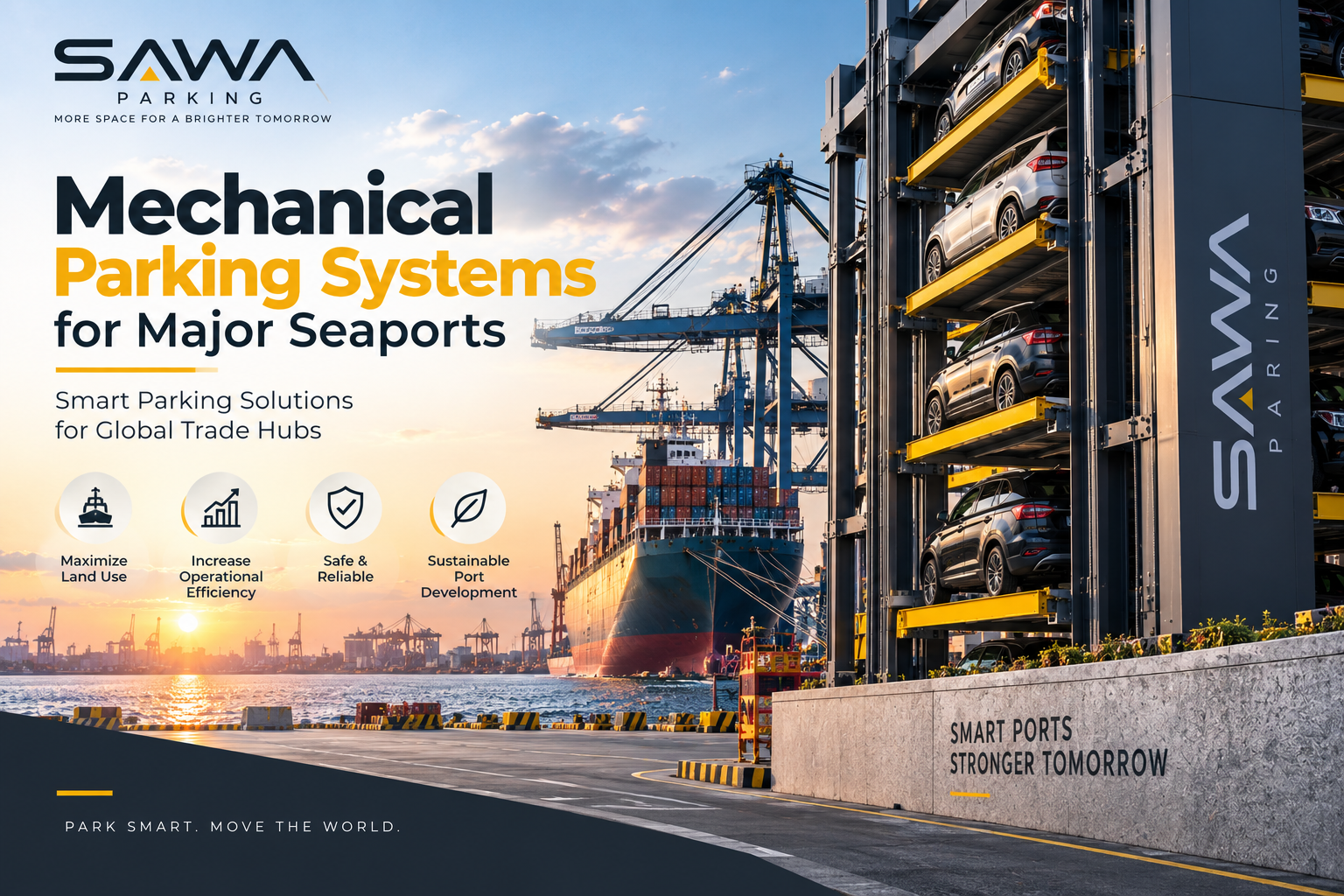
Mechanical Parking Systems for Major Seaports .The global economy is fundamentally dependent on the maritime shipping industry. Approximately 90% of global trade by volume is carried by sea, moving through a complex network of strategic hubs that act as the critical nodes of international supply chains. However, as consumer demands accelerate and global shipping volumes continue to break historical records year after year, the world’s most vital seaports are confronting a severe, often overlooked infrastructural paradox. While billions of dollars are routinely invested in dredging deeper berths to accommodate mega-ships, installing state-of-the-art ship-to-shore cranes, and expanding container yard capacities, the “landside” infrastructure—the interface between the port and the terrestrial transportation network—is being systematically suffocated by a critical lack of space. Specifically, the archaic methods used to store and stage the trucks, buses, and passenger vehicles that service these ports are creating catastrophic logistical bottlenecks. To resolve this 21st-century crisis, port authorities and civil engineers are increasingly turning to mechanical parking systems for seaports as an essential, non-negotiable component of modern port master planning. To navigate this complex spatial and engineering challenge, industry leaders like Sawa Parking are providing the heavy-duty automated solutions required to future-proof global maritime infrastructure.
The Landside Crisis: Why Mechanical Parking Systems for Seaports Are Essential
To fully comprehend the urgency of adopting automated parking in maritime environments, one must first understand the unforgiving spatial mathematics of a modern container terminal or cruise port. A seaport’s financial viability is directly tied to its “throughput”—the speed and volume at which it can move cargo from a ship to a terrestrial truck, and vice versa. Every square meter of port land has an astronomically high opportunity cost. It must be utilized for container stacking, refrigerated cargo storage, customs inspection zones, or high-value logistics warehouses.
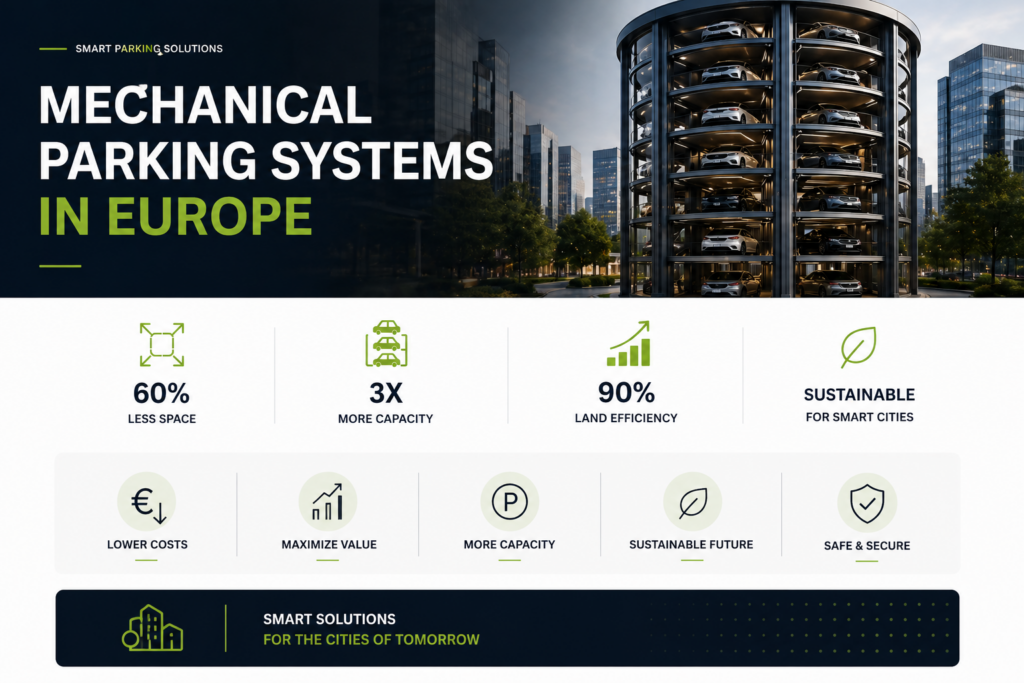
When a port authority relies on traditional parking infrastructure to accommodate the thousands of logistic trucks, port authority vehicles, customs officials, and cruise passenger buses that converge on the facility daily, the spatial waste is devastating. A conventional parking space—specifically one designed to handle the massive turning radii of 18-wheel articulated trucks, the wide driving lanes required for safe navigation, and the pedestrian walkways for drivers—consumes an average of 40 to 50 square meters of footprint. For a major international hub that processes 5,000 truck movements daily, traditional surface staging lots or multi-level concrete ramp garages would cannibalize hundreds of thousands of square meters of prime operational terminal space.
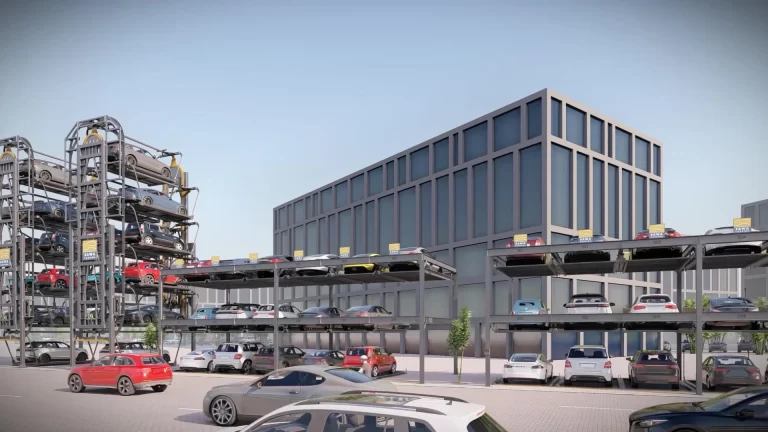
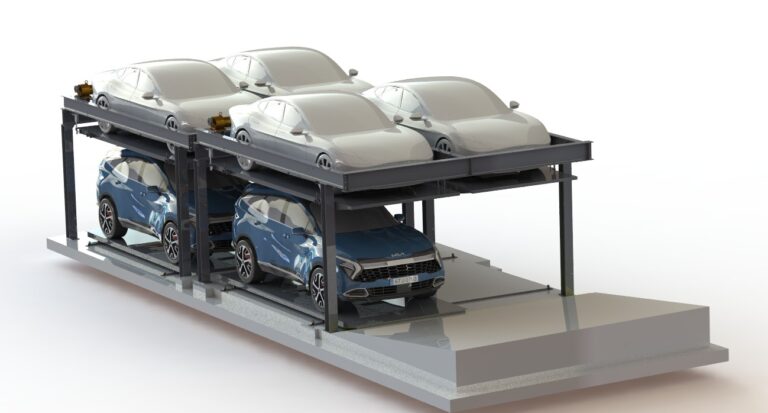
Mechanical parking systems for seaports completely this inefficient paradigm. By removing the human driver from the actual vehicular storage equation, the automated system eliminates the need for driving lanes, turning circles, pedestrian stairs, and emergency escape routes within the parking structure itself. Automated heavy-duty pallets, rail-guided shuttles, or robotic platforms stack vehicles in dense, high-density configurations, reducing the spatial requirement per commercial vehicle to as little as 18 to 22 square meters. For port authorities, this 50% to 60% reduction in the parking footprint allows them to reclaim incredibly valuable waterfront real estate, expanding their capacity to handle more Twenty-foot Equivalent Units (TEUs) without needing to reclaim land from the sea or buy out adjacent urban neighborhoods. To achieve this level of spatial compression, port planners can select from a highly specialized range of advanced parking products specifically engineered to handle commercial vehicle weights and dimensions.
Global Supply Chain Optimization Through Mechanical Parking Systems for Seaports
A seaport is not a static storage facility; it is a highly synchronized, 24/7 logistical machine. The profitability of a shipping line and the port authority is directly tied to the “dwell time” of a vessel—the time it spends at the berth. Any delay on the landside, particularly in the movement of trucks and drivers, creates a domino effect that ripples backward through the global supply chain, resulting in delayed deliveries, vessels missing tidal windows, and massive financial penalties known as demurrage.
Eliminating the Truck Staging Bottleneck
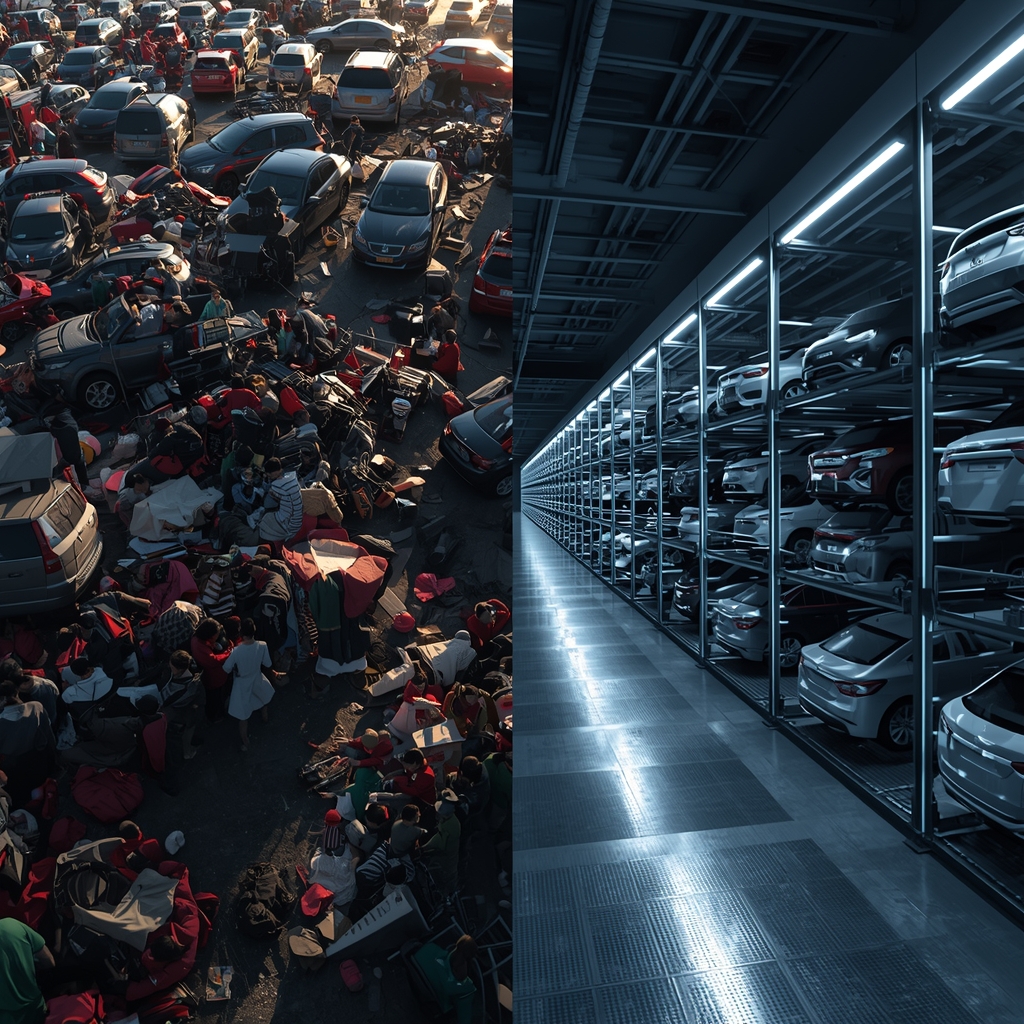
In a traditional port environment, the logistics of truck staging are chaotic. Truck drivers arriving to pick up a loaded container must first find a place to park their rig while they physically walk to the port administration building, wait in line to clear customs paperwork, and then walk back to their vehicle. This “staging” process often results in hundreds of trucks double-parked on operational roads, idling their engines, and blocking the flow of outbound cargo. Furthermore, once paperwork is cleared, the driver must navigate the tight, congested aisles of a traditional lot to exit, then maneuver through the terminal to reach the specific loading dock where their container is waiting. This process can add hours to a single truck’s turnaround time.
Mechanical parking systems for seaports provide a dedicated, high-speed, software-synchronized staging solution. Truck drivers pull into a ground-level, drive-through transfer cabin immediately upon entering the port gate. They leave their rig, and the automated machinery safely transports the truck into a high-density storage vault. The driver then proceeds directly to the customs office. Simultaneously, the port’s Terminal Operating System (TOS) communicates with the parking system’s software. The moment the container is cleared and placed on a chassis at the loading dock, the parking system is automatically triggered to retrieve the driver’s specific truck, delivering it front-first to an access lane directly adjacent to that specific dock. This eliminates the chaotic maneuvering of massive trucks in tight operational spaces, drastically reducing turnaround times and increasing the port’s overall throughput capacity. Implementing this level of logistical synchronization requires comprehensive end-to-end parking services that ensure the automated machinery’s software integrates flawlessly with the port’s existing enterprise resource planning (ERP) and TOS databases.
The Cruise Industry Surge and Mechanical Parking Systems for Seaports
While cargo logistics drive the global economy, the cruise industry drives massive localized economic impact. The Mediterranean, the Caribbean, and Northern Europe are experiencing an unprecedented boom in mega-cruise ship deployments. A modern mega-cruise ship can disembark 6,000 passengers and 2,000 crew members simultaneously within a two-hour window. This massive, instantaneous influx of humanity creates an extreme, highly concentrated demand for ground transportation, including dozens of luxury tour coaches, local transit buses, taxis, and private passenger vehicles.
The Illusion of Space at the Passenger Terminal
Traditional cruise ports attempt to solve this surge by building massive, multi-lane vehicle aprons in front of the passenger terminals. However, in historic port cities where the waterfront is constrained by ancient fortifications, urban highways, or steep topography, finding the land area to build these massive aprons is physically impossible. Paving over existing commercial piers for bus parking destroys the port’s utility for cargo or smaller ferries.
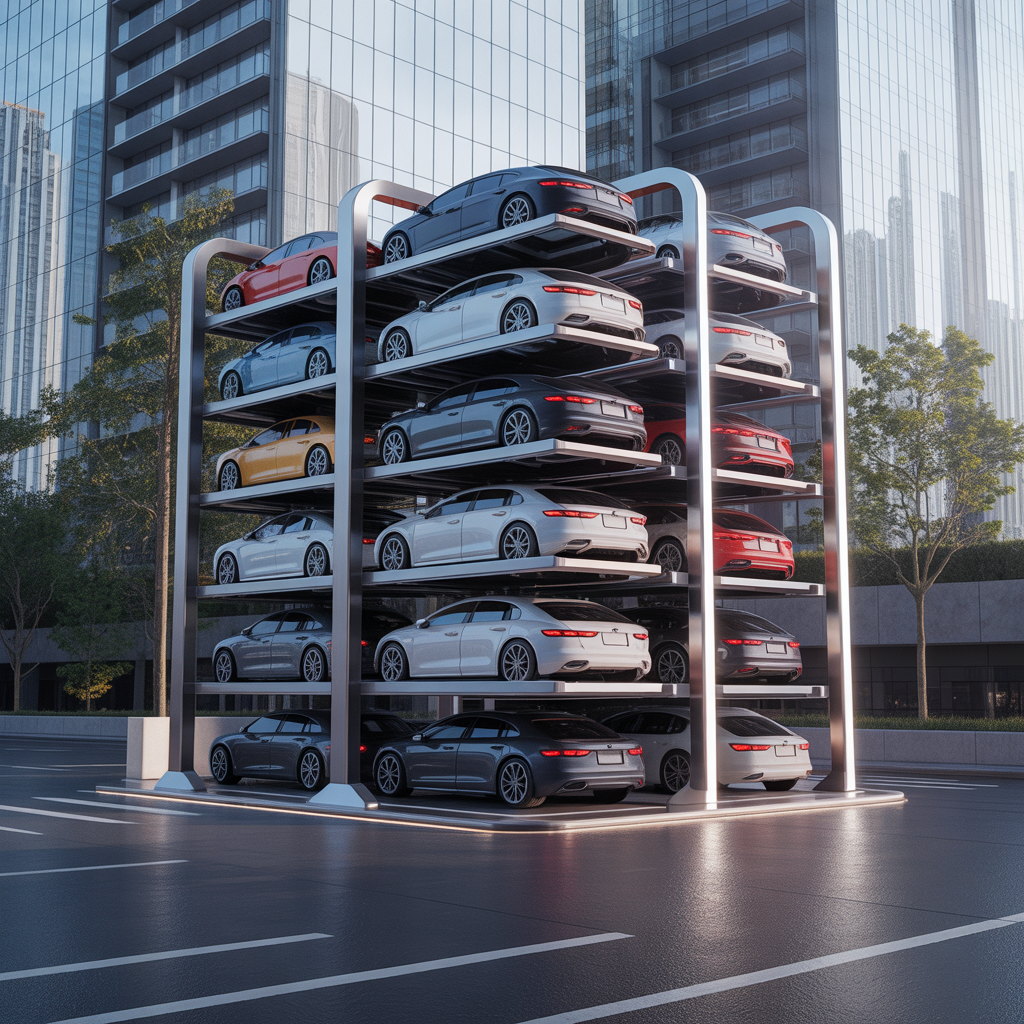
Mechanical parking systems for seaports offer an invisible, highly efficient solution to the cruise surge. Transfer buses, staff vehicles, and security transports can be stored in automated underground or above-ground vaults located directly beneath or adjacent to the passenger terminal footprint. When a mega-ship docks, the parking system can be pre-programmed to retrieve the necessary fleet of buses in rapid, staggered succession, dispatching them to the curbside in minutes without any traffic congestion. Once the passengers are loaded for their shore excursions, the empty buses can be returned to the automated vault, keeping the terminal apron completely clear for safe pedestrian flow, baggage handling, and emergency access. As documented in numerous international global project portfolios, the integration of automated parking at cruise terminals has allowed ports to increase passenger capacity without expanding their physical perimeter.
Heavy-Duty Engineering Requirements for Mechanical Parking Systems for Seaports
It is absolutely critical to understand that seaports do not park lightweight passenger sedans. The vehicular traffic utilizing port parking systems includes 40-ton articulated tractor-trailers, heavy double-decker tour buses, and port authority security SUVs. Standard automated parking systems designed for residential complexes, hospitals, or retail malls will instantly—and catastrophically—fail under the continuous, punishing stress of commercial port weights.
Reinforced Structural Integrity and Load Dynamics
Mechanical parking systems for seaports must be engineered to military-grade or heavy-industrial specifications. The steel parking pallets must be fabricated from high-yield, heavy-gauge structural steel, reinforced with cross-members designed to handle gross vehicle weights (GVW) exceeding 25,000 to 30,000 kilograms without structural deflection.
Furthermore, the engineering must account for dynamic loads. A truck moving at 5 km/h onto a pallet exerts a different force than a stationary truck. The electric drive motors, heavy-duty chain drives, and hydraulic scissor lifts must be massively uprated to handle these dynamic, unevenly distributed loads continuously, 24 hours a day, 365 days a year. The braking and holding systems must be capable of safely arresting and holding a fully loaded, 30-ton truck on a steep vertical incline in the event of a sudden power failure or motor fault, utilizing multiple redundant mechanical locks.
Precision Manufacturing for Continuous Duty Cycles
A seaport never sleeps. The duty cycle of the parking machinery is relentless and unforgiving. This demands the absolute highest level of mechanical engineering and quality control. The precision manufacturing processes behind these port-specific automated systems ensure that high-tensile steel components are subjected to rigorous non-destructive testing (such as ultrasonic and magnetic particle inspection), and that critical welds meet the highest international structural standards (such as AWS D1.1). This guarantees that the heavy-duty machinery will not suffer from metal fatigue, chain stretch, or motor burnout during critical peak shipping seasons.
Corrosive Marine Environments and Mechanical Parking Systems for Seaports
Seaports are located in some of the most chemically aggressive environments on the planet. The constant exposure to saltwater spray, high ambient humidity, extreme temperature fluctuations, and the presence of industrial sulfur oxides from ship exhaust create a nightmare scenario for steel and electronic components. Standard parking machinery will rapidly corrode, seize up, and fail in a marine environment.
Advanced Anti-Corrosion Methodologies
Therefore, mechanical parking systems for seaports require specialized metallurgical and protective engineering. The steel structures must undergo advanced anti-corrosion treatments. This typically includes full abrasive blasting to near-white metal (SA 2.5 standard), followed by the application of high-build, marine-grade epoxy primers and polyurethane topcoats that are specifically designed to withstand alkaline and saline attack. In highly aggressive environments, the use of hot-dip galvanization for smaller structural components may be required.
Environmental Sealing of Electronics
The electrical components—motors, limit switches, proximity sensors, and PLC control panels—are equally vulnerable. Saltwater ingress into an electrical enclosure will cause immediate short circuits and catastrophic system failure. Therefore, all electrical components must be housed in sealed enclosures with an Ingress Protection rating of IP66 or IP67, ensuring they are completely dust-tight and protected against temporary immersion in water. Port authorities looking to understand the long-term maintenance implications of these specialized marine coatings and seals can find valuable strategic insights by exploring a specialized parking technology blog.
Environmental Compliance, EU Directives, and Mechanical Parking Systems for Seaports
Global seaports are under intense, increasing scrutiny from environmental regulatory bodies. In Europe, the European Union has implemented aggressive directives aimed at reducing greenhouse gas emissions, improving urban air quality in coastal cities, and protecting marine ecosystems from atmospheric deposition. In the United States, the Environmental Protection Agency (EPA) enforces strict Clean Air Act standards at port facilities. Traditional port parking and staging areas are massive liabilities in achieving these environmental goals.
Eradicating Diesel Idling Emissions (NOx and PM2.5)
In a traditional seaport, thousands of heavy-duty trucks and tour buses routinely idle their massive diesel engines for 30 to 60 minutes while waiting in staging lanes, navigating the lot, or waiting for their drivers to return from customs. This concentrated, low-speed idling releases disproportionately high levels of nitrogen oxides (NOx), particulate matter (PM2.5), and carbon dioxide directly into the port environment. These pollutants severely degrade the air quality for port workers and nearby urban residents, often pushing local air quality indices into unsafe zones.
Mechanical parking systems for seaports eliminate this environmental hazard at the source. The heavy-duty vehicle is turned off the moment it enters the transfer cabin. There is zero idling inside the parking vault. Furthermore, because the automated parking grid is strictly human-free and the vehicles are stationary, the massive underground or above-ground structure does not require continuous, energy-intensive mechanical ventilation to extract diesel exhaust fumes. By law, a traditional parking garage handling trucks must run massive exhaust fans 24/7. An automated vault only requires ventilation fans to activate momentarily when a vehicle is actively entering or exiting the transfer cabin. This results in a staggering reduction in electrical energy consumption, drastically lowering the port’s carbon footprint and ensuring strict compliance with stringent international environmental mandates.
Conclusion
The historical maritime prowess of global trade hubs is currently being severely constrained by 20th-century landside infrastructure paradigms. As global supply chains demand faster turnaround times, mega-ships require deeper berths, and environmental regulations become strictly enforced, seaports simply do not have the luxury of flat, expansive land to accommodate the sprawling, inefficient, and highly polluting truck and bus parking lots of the past. Mechanical parking systems for seaports provide the definitive, heavily engineered solution to this geographical, logistical, and environmental crisis. They maximize the utilization of highly constrained port real estate, accelerate the turnaround times of cargo and cruise vessels through software synchronization, protect heavy-duty commercial assets in secure, anti-corrosive vaults, and ensure absolute compliance with stringent international environmental directives. By investing in heavy-duty automated parking infrastructure, port authorities are not just building a place to park trucks; they are unlocking the full, latent economic potential of their waterfront real estate, securing their position as competitive nodes in the global supply chain. To explore how these robust, marine-grade systems can be integrated into your port’s master plan, we encourage you to contact our team for a specialized engineering consultation. Discover how Sawa Parking is engineering the next generation of maritime logistics infrastructure.
References & Scientific Sources
- Maritime Economics & Logistics – Spatial optimization and landside capacity constraints in global hub ports: The economic impact of automated vehicular storage systems on terminal throughput. (Provides the academic foundation for calculating spatial footprint reductions, the opportunity cost of waterfront real estate, and the financial impact of truck turnaround times).
- Transportation Research Part A: Policy and Practice – Truck staging dynamics, dwell time analysis, and landside bottleneck mitigation at intermodal seaport terminals using automated retrieval technologies. (Validates the logistical argument regarding how traditional truck parking creates operational delays and how software-integrated automated parking improves supply chain fluidity).
- Ocean & Coastal Management – Environmental impact assessments of diesel NOx and PM2.5 emissions in coastal port zones and the mitigation potential of human-excluded automated infrastructure. (Supports the environmental compliance claims specific to EU and EPA directives, regarding the elimination of heavy-duty idling emissions and the reduction in continuous ventilation energy consumption).
- Corrosion Science – Material degradation, cathodic protection, and heavy-duty protective coating methodologies for steel structures in high-salinity, high-humidity marine environments. (Validates the engineering necessity for specialized, marine-grade manufacturing processes, IP67 sealing, and anti-corrosive treatments required for automated parking systems operating at seaports).