


- May 20, 2026
Smart Parking Systems in France: The Future After Removing Traditional Parking Spaces
France is becoming one of the clearest examples of how modern cities are transforming urban mobility and reshaping the future of parking infrastructure. Across Paris and several major French cities, governments and urban planners are actively reducing traditional on-street parking spaces as part of larger urban redevelopment strategies focused on sustainability, smart mobility, and public space optimization.
For decades, urban infrastructure in major cities was designed around private vehicles and large-scale road networks. Streets were heavily allocated to car movement and traditional parking spaces, while public areas for pedestrians, cycling, and green zones remained limited. Today, this model is rapidly changing.
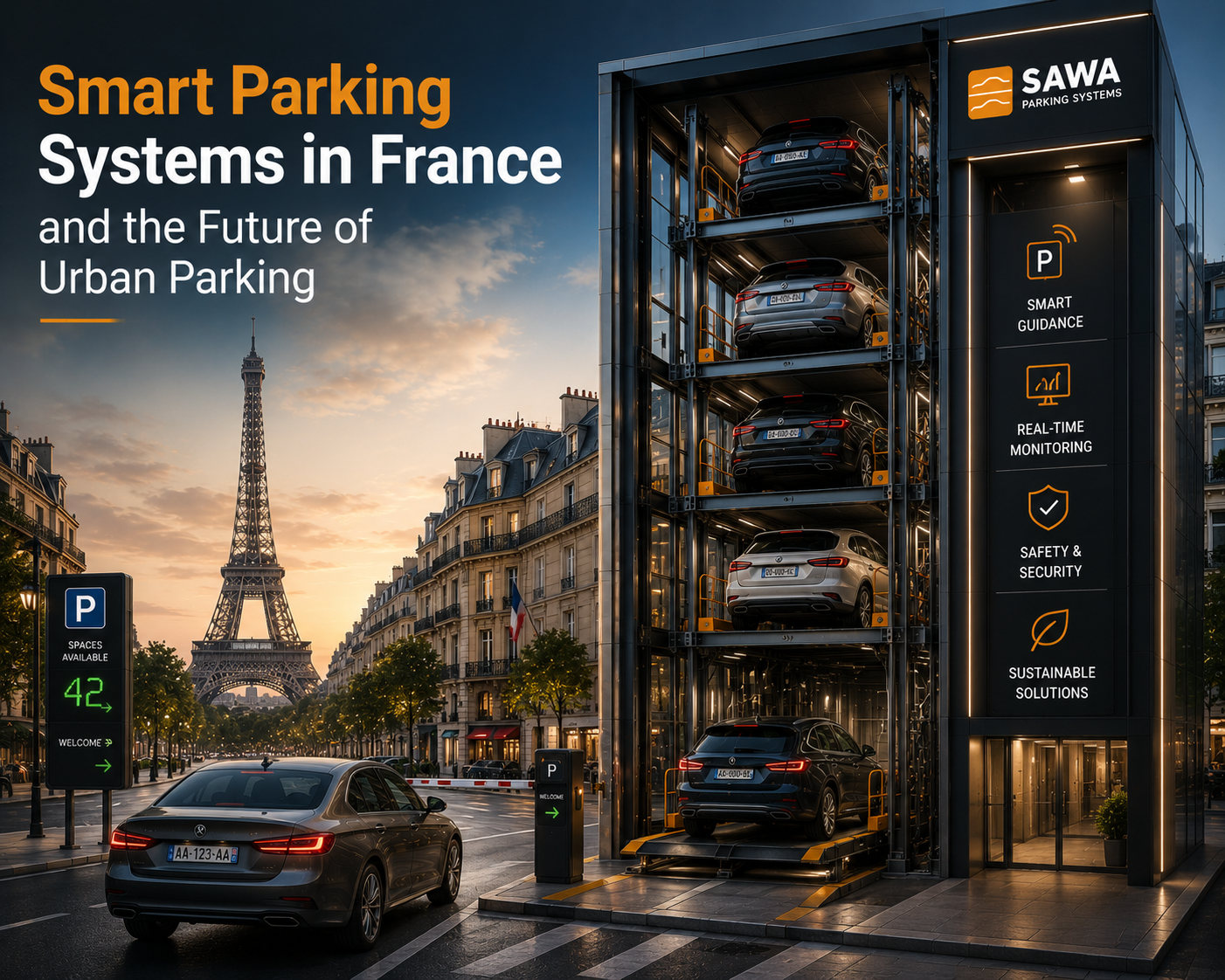
Paris alone has announced major plans to remove tens of thousands of traditional parking spaces over the coming years in order to expand green spaces, reduce congestion, improve walkability, and support environmentally sustainable transportation policies. Several districts across the city are already reducing dependence on traditional street parking while increasing investments in smart urban infrastructure.
However, this transformation is creating a major challenge that many cities are now struggling to solve efficiently: where will vehicles park as traditional parking spaces continue disappearing?
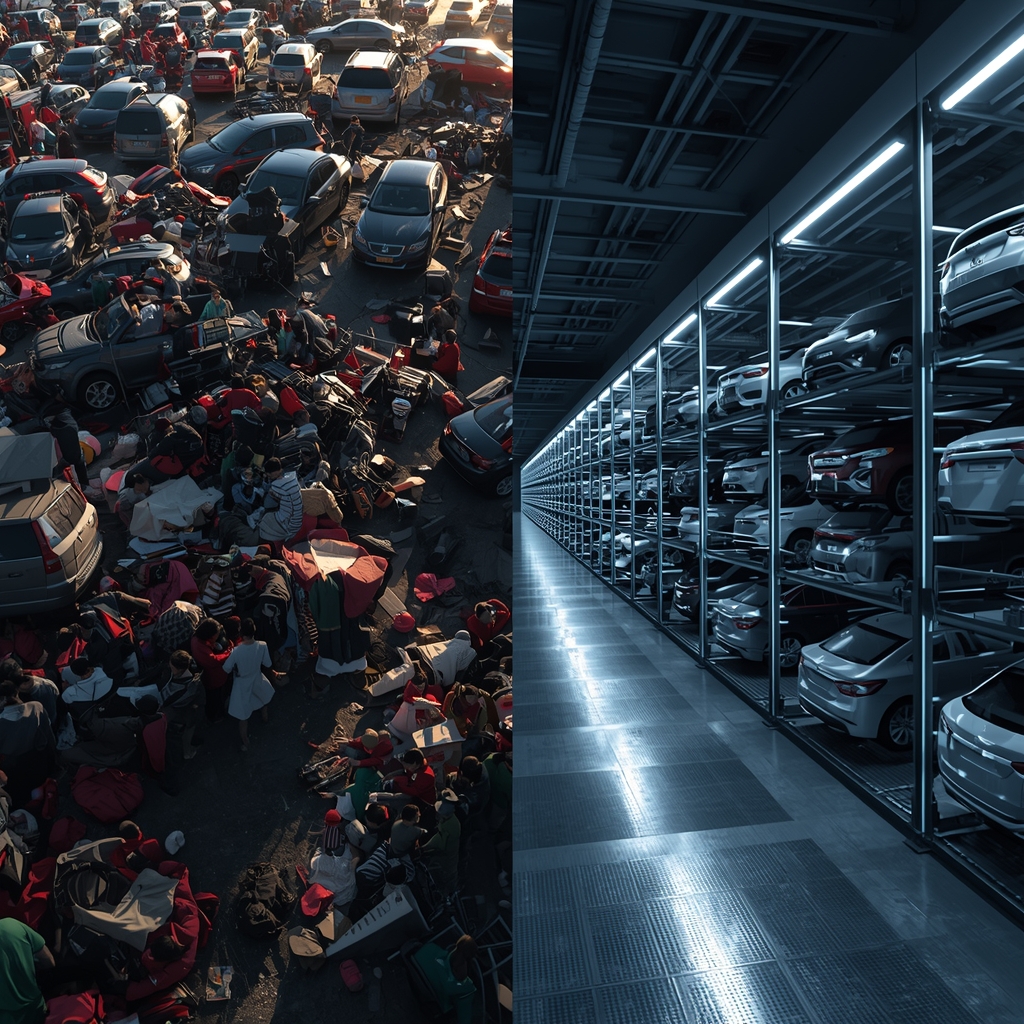
This is exactly why smart parking systems in France are becoming increasingly important. As urban density rises and traditional parking capacity decreases, cities and developers are being pushed toward smarter, more space-efficient parking technologies capable of supporting the future of high-density urban mobility.
France’s Urban Transformation Is Changing Parking Infrastructure
France is currently undergoing a major urban transformation focused on sustainability, environmental efficiency, and modern mobility systems. Cities are redesigning urban environments to prioritize pedestrians, cyclists, public transportation, and green infrastructure rather than traditional car-centered layouts.
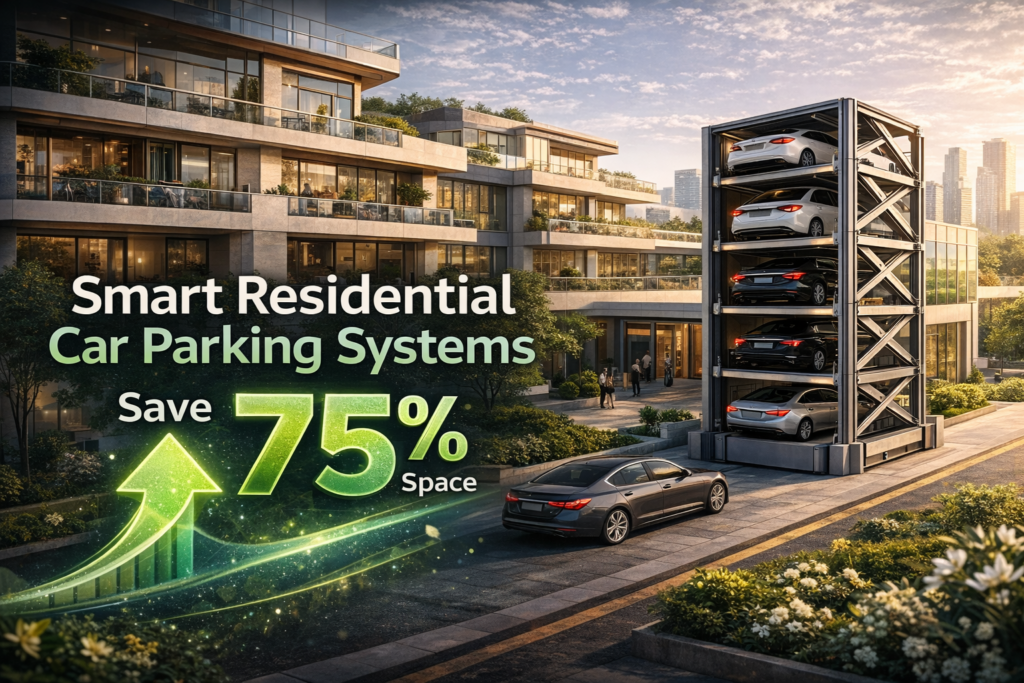
Paris has become one of the leading examples of this transformation. Local authorities continue implementing policies designed to reduce traffic congestion, improve air quality, and reclaim public space previously occupied by parked vehicles. Large areas of the city are gradually shifting away from traditional parking infrastructure toward more sustainable urban planning models.
This transformation includes:
- Removing on-street parking spaces
- Expanding cycling infrastructure
- Increasing pedestrian-only zones
- Redesigning urban streetscapes
- Reducing vehicle congestion
- Supporting low-emission mobility systems
While these policies support environmental and urban planning goals, they also create increasing pressure on existing parking infrastructure. Residents, businesses, visitors, and developers still require organized vehicle storage solutions even as available parking space continues shrinking.
This growing mismatch between vehicle demand and available parking capacity is accelerating the need for advanced smart parking systems in France capable of maximizing efficiency within highly limited urban footprints.
Paris Is Facing a New Parking Reality
One of the biggest misconceptions about modern urban planning is the belief that reducing traditional parking automatically eliminates vehicle demand. In reality, millions of people still rely heavily on private transportation for residential, commercial, and daily operational needs.

Even as Paris reduces dependence on traditional street parking, the city continues experiencing extremely high urban density combined with significant vehicle movement every day. Residential buildings, hotels, commercial centers, mixed-use developments, hospitals, and office districts still require efficient parking infrastructure to operate effectively.
The problem is that traditional parking systems are no longer capable of supporting these requirements efficiently inside dense urban environments where land is extremely expensive and available space is highly limited.
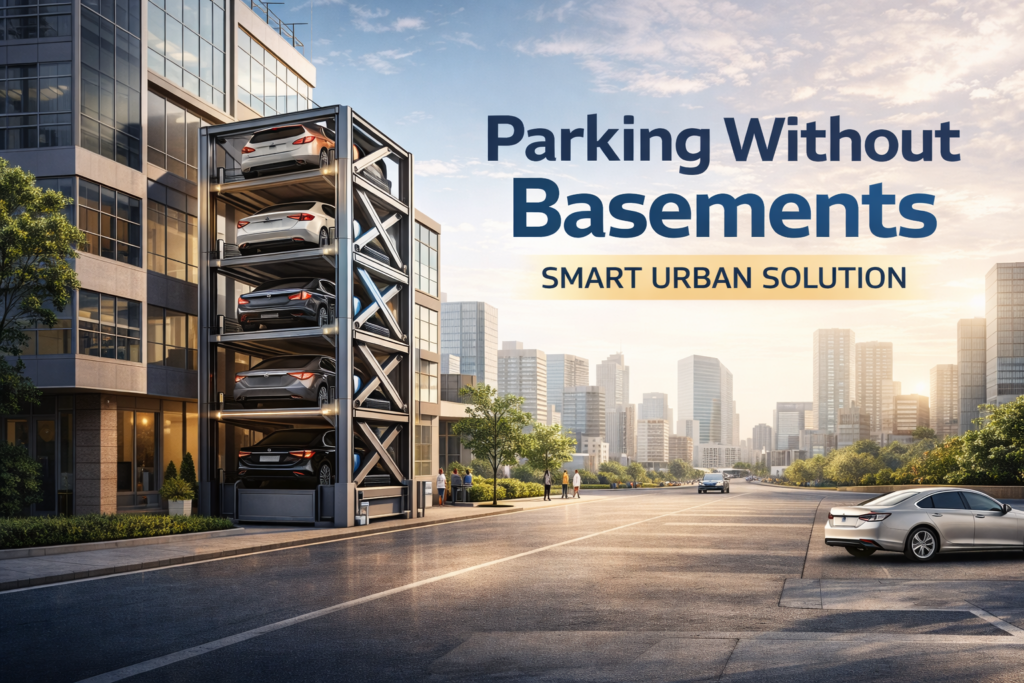
Traditional parking methods consume enormous amounts of valuable urban land through:
- Ramps
- Circulation lanes
- Turning radiuses
- Underground excavation
- Large parking footprints
In cities such as Paris where land value is exceptionally high, these inefficient layouts are becoming financially and operationally unsustainable.
This is one of the biggest reasons why developers and urban planners are increasingly exploring smart parking systems in France as a long-term solution for future urban infrastructure challenges.
Why Traditional Parking Is Becoming Unsustainable
Traditional parking infrastructure was originally designed for cities with lower urban density, smaller vehicle volumes, and less pressure on land utilization. Modern cities no longer operate under those conditions.
Today, urban environments must support:
- Higher population density
- Larger mixed-use developments
- Increased traffic movement
- Limited available land
- Rising construction costs
- Sustainability regulations
As a result, traditional parking systems are becoming increasingly inefficient because they require excessive space while providing relatively low parking density. Underground parking construction has also become significantly more expensive due to excavation complexity, structural engineering requirements, ventilation systems, waterproofing infrastructure, and rising labor costs.
For developers, this creates a major financial problem. Parking consumes valuable project space but does not generate revenue in the same way as apartments, retail units, offices, or hospitality facilities. Every square meter wasted on inefficient parking directly reduces project profitability and operational efficiency.
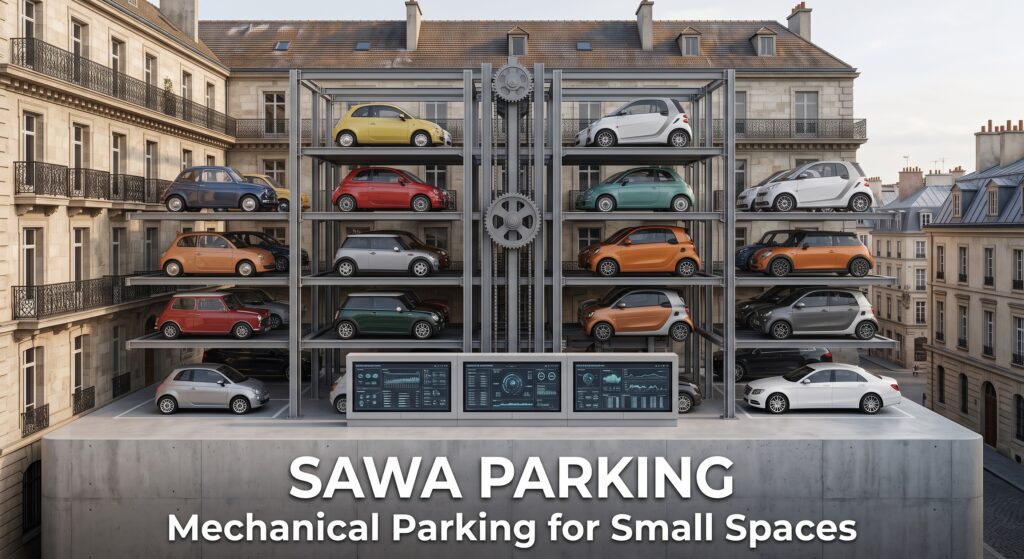
This financial pressure is one of the major factors accelerating demand for more advanced smart parking systems in France capable of increasing parking density while minimizing space consumption and construction complexity.
Why Smart Parking Systems Are Becoming Essential in France
A few years ago, many mechanical and automated parking technologies were viewed primarily as premium or specialized systems used in luxury developments. Today, they are rapidly becoming essential infrastructure solutions in many dense urban environments across Europe.

Modern smart parking systems in France solve several major urban infrastructure challenges simultaneously by:
- Increasing parking capacity
- Reducing land consumption
- Minimizing underground excavation
- Improving traffic organization
- Supporting sustainable urban planning
- Enhancing operational efficiency
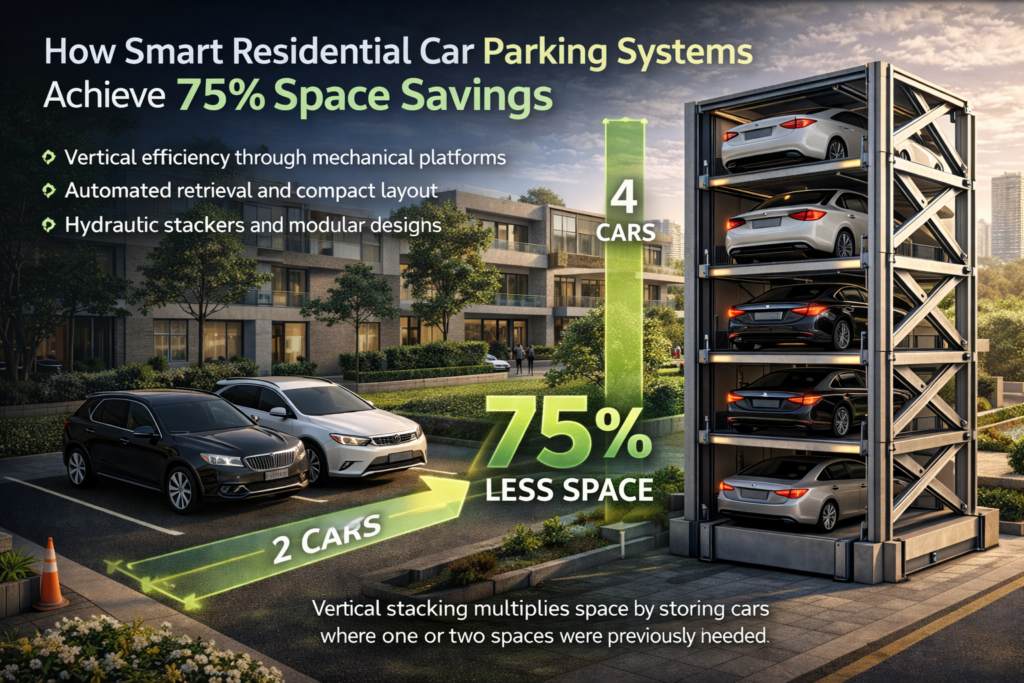
Instead of relying entirely on horizontal parking layouts, smart parking systems use intelligent vertical storage and automated parking technologies to maximize parking density within compact footprints.
Systems such as:
- Puzzle parking systems
- Rotary parking systems
- Vertical parking systems
- Automated parking systems
- Mechanical parking lifts
allow developers to accommodate significantly more vehicles while using substantially less land compared to conventional parking methods.
As French cities continue reducing traditional parking spaces, these technologies are expected to become increasingly important for future residential, commercial, and mixed-use developments
Europe’s Parking Crisis Is Accelerating Innovation
France is not the only country experiencing this transformation. Across Europe, governments and urban planners are actively redesigning cities around sustainability, public transportation, and reduced dependence on traditional street parking.
Cities across Italy, the United Kingdom, Germany, and the Netherlands are implementing similar urban strategies focused on reclaiming public space, reducing congestion, and improving environmental efficiency.
However, while public infrastructure policies continue reducing traditional parking availability, urban density and vehicle demand remain extremely high in many major cities. This creates a growing infrastructure gap that cannot be solved through conventional parking methods alone.
As a result, Europe is witnessing a rapid increase in demand for:
- Automated parking systems
- Mechanical parking systems
- Smart parking infrastructure
- Vertical parking solutions
- Intelligent mobility technologies
This shift is transforming parking from a basic operational necessity into one of the most important components of future urban infrastructure planning.
The future of parking in Europe is no longer based on expanding horizontal parking space. It is increasingly focused on intelligent space optimization and smart infrastructure integration.
The Financial Value of Parking Space Is Increasing
One of the biggest changes happening in modern urban development is the increasing financial value of land itself.
In dense cities such as Paris, every square meter has become extremely valuable. Developers can no longer afford to waste large portions of urban land on inefficient parking layouts dominated by ramps, turning zones, and oversized circulation areas.
This is why smart parking infrastructure is becoming not only an operational necessity but also a major financial optimization strategy.
Advanced smart parking systems in France allow developers to:
- Increase parking density significantly
- Preserve more sellable project area
- Improve land utilization efficiency
- Reduce underground construction complexity
- Support higher-density developments
In many projects, mechanical parking systems help free substantial areas that can instead be used for residential units, commercial spaces, retail facilities, or hospitality functions.
As urban land prices continue rising across Europe, efficient parking infrastructure will increasingly become a strategic financial advantage rather than simply a technical engineering component.
Smart Cities Require Smart Parking Infrastructure
Modern smart cities are built around efficiency, sustainability, digital infrastructure, and optimized urban mobility. Parking systems are becoming an increasingly important part of this ecosystem because inefficient parking directly affects traffic congestion, energy consumption, pollution, and urban operational performance.
Future-ready smart parking systems in France are now integrating advanced technologies such as:
- Automated vehicle management
- Digital parking control systems
- Smart traffic monitoring
- Real-time parking availability tracking
- Intelligent access management
- AI-supported operational optimization
These technologies improve traffic organization while reducing parking search time and operational congestion inside urban developments.
As France continues expanding smart city infrastructure initiatives, parking systems are expected to evolve from isolated vehicle storage areas into fully integrated components of intelligent urban mobility networks.
What France’s Parking Transformation Means for the Future
The transformation currently happening in France reflects a much larger global shift in urban infrastructure planning. Cities are no longer designed around unlimited horizontal expansion and traditional parking models. Instead, they are moving toward smarter, denser, and more sustainable infrastructure systems capable of supporting future urban growth efficiently.
This means parking infrastructure itself must evolve. Traditional parking systems are becoming increasingly incompatible with the operational and financial realities of modern cities.
Mechanical and automated parking technologies are no longer optional upgrades reserved for luxury developments. They are rapidly becoming essential infrastructure solutions required to support the future of urban mobility, high-density real estate, and smart city planning.
France is simply one of the earliest examples of this transformation becoming highly visible at a national urban scale. Many other countries are expected to follow similar paths over the coming years.
Why This Matters for Egypt and Emerging Urban Markets
The parking challenges currently affecting France and Europe are highly relevant for rapidly expanding urban markets such as Egypt.
Cities like Cairo, New Cairo, Sheikh Zayed, and the New Administrative Capital are already experiencing:
- Rapid urban expansion
- Rising vehicle ownership
- Increasing traffic congestion
- Higher land prices
- Growing mixed-use developments
- Higher-density residential projects
If parking infrastructure continues relying entirely on traditional systems, many future developments may face the same operational limitations now visible in several European cities.
This is why many developers are beginning to recognize the importance of integrating intelligent parking technologies early rather than waiting until parking problems become long-term operational crises.
The global shift toward smart parking infrastructure is not limited to Europe. It is becoming a worldwide urban development trend driven by density, efficiency, sustainability, and smarter land utilization.
Why Sawa Parking Supports the Future of Smart Urban Mobility
As global urban infrastructure continues evolving, companies capable of delivering intelligent parking technologies will play a critical role in shaping future cities.
Sawa Parking focuses on advanced parking infrastructure solutions designed specifically for modern urban environments where space efficiency, operational performance, and intelligent mobility have become essential priorities.
The company combines:
- Smart parking technologies
- Advanced engineering expertise
- Mechanical parking systems
- Intelligent parking design
- Local manufacturing capabilities
- Customized infrastructure solutions
This allows developers to implement parking systems capable of supporting both current operational requirements and future urban growth demands.
By focusing on smarter space utilization and modern parking technologies, Sawa Parking continues helping support the future of efficient urban mobility and sustainable real estate development.
Conclusion
France’s decision to reduce traditional parking spaces is reshaping the future of urban parking infrastructure and accelerating the global shift toward smarter and more efficient mobility solutions. As cities continue prioritizing sustainability, public space optimization, and high-density urban planning, traditional parking methods are becoming increasingly inefficient and financially unsustainable.
This transformation is creating rapidly growing demand for advanced smart parking systems in France capable of maximizing parking capacity while minimizing land consumption and supporting future urban mobility requirements.
Mechanical and automated parking technologies are no longer optional innovations. They are becoming essential infrastructure systems required to support the future of modern cities, intelligent urban development, and sustainable transportation planning.
As more countries move toward smarter urban infrastructure strategies, the future of parking will increasingly depend on intelligent, compact, and technology-driven parking systems designed for the realities of modern high-density cities.
References
France 24 – Paris Urban Mobility & Parking Policies
https://www.france24.com
ITS International – Smart Parking & Urban Mobility
https://www.itsinternational.com
Smart Cities World
https://www.smartcitiesworld.net
Urban Land Institute (ULI)
https://uli.org
International Parking & Mobility Institute (IPMI)
https://www.parking-mobility.org
Paris Official City Reports
https://www.paris.fr
McKinsey & Company – Urban Mobility Reports
https://www.mckinsey.com
World Economic Forum – Future of Urban Mobility
https://www.weforum.org