


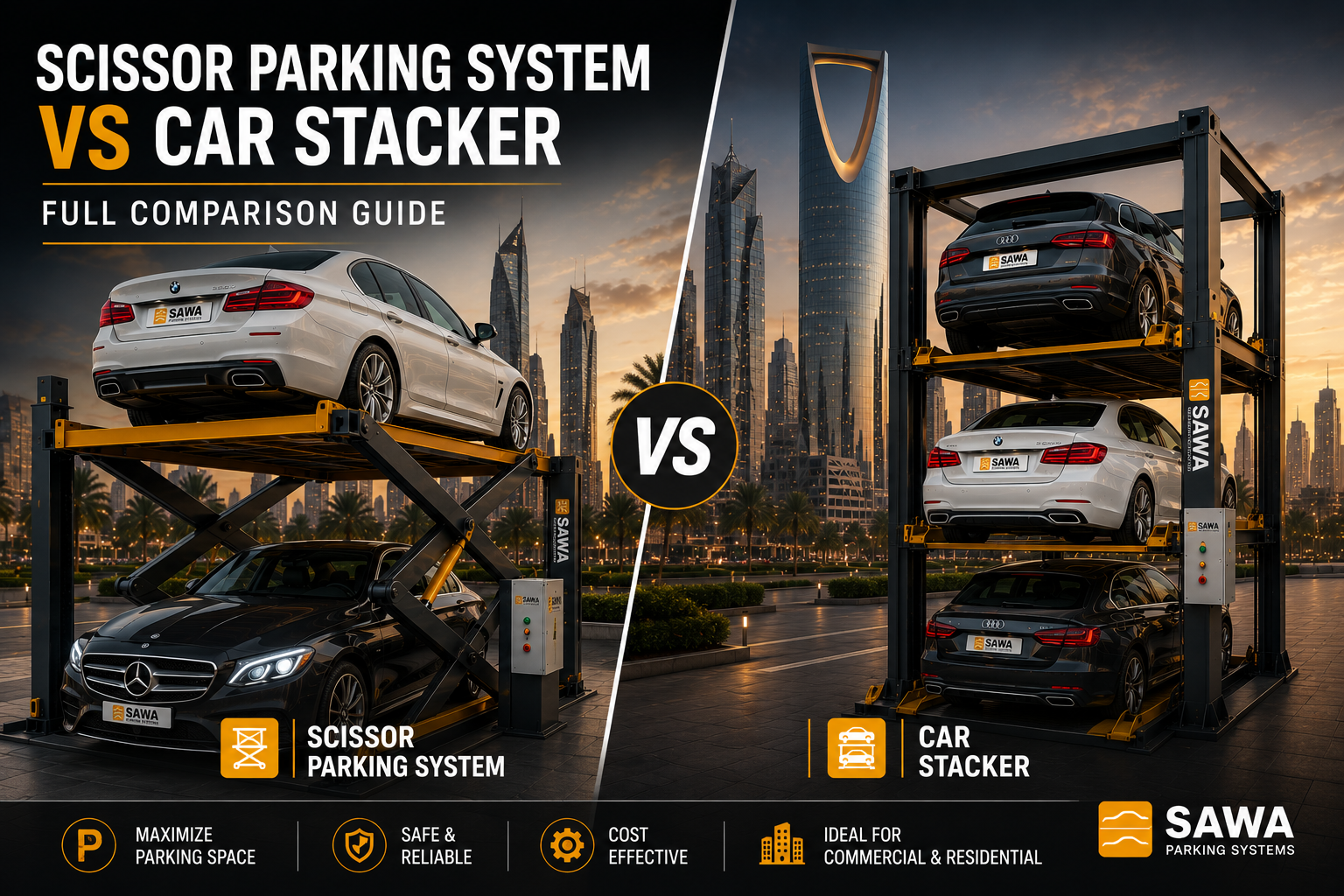
Scissor Parking System vs Car Stacker: Full Comparison Guide
Introduction
In modern urban developments, parking is no longer a secondary component of design—it has become a critical factor that directly impacts land utilization, construction cost, and long-term project profitability. Developers today are facing increasing pressure due to limited land availability, rising material costs, and growing demand for higher parking capacity.
Choosing between a scissor parking system and a car stacker is not simply a technical preference. It is a strategic decision that determines how efficiently a project uses space and how much value it generates over time. A well-chosen system can increase parking capacity by up to 2–3 times, reduce space consumption by over 60%, and significantly lower construction costs. On the other hand, a poor choice can lead to inefficient layouts, higher expenses, and reduced project performance.
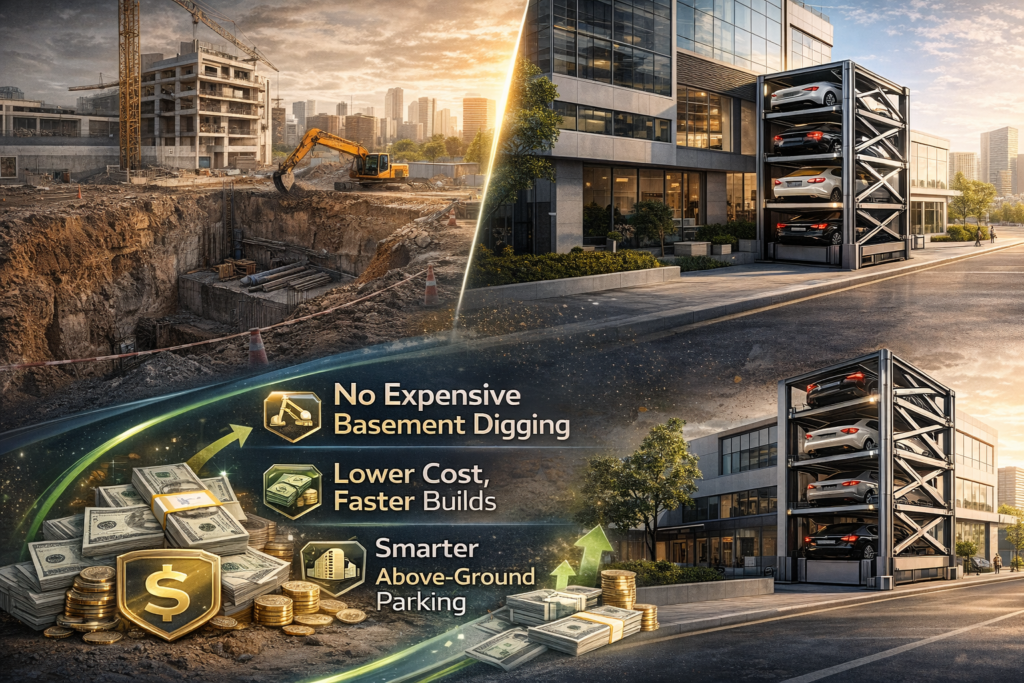
This guide provides a detailed comparison between both systems to help developers, consultants, and decision-makers select the most effective solution based on real project conditions.
Why This Comparison Matters in Modern Developments
Parking design plays a central role in shaping the success of any real estate project. Traditional parking layouts consume a large portion of land due to ramps, circulation lanes, and inefficient spacing. In contrast, mechanical parking systems offer a smarter alternative by maximizing vertical space and minimizing wasted areas.
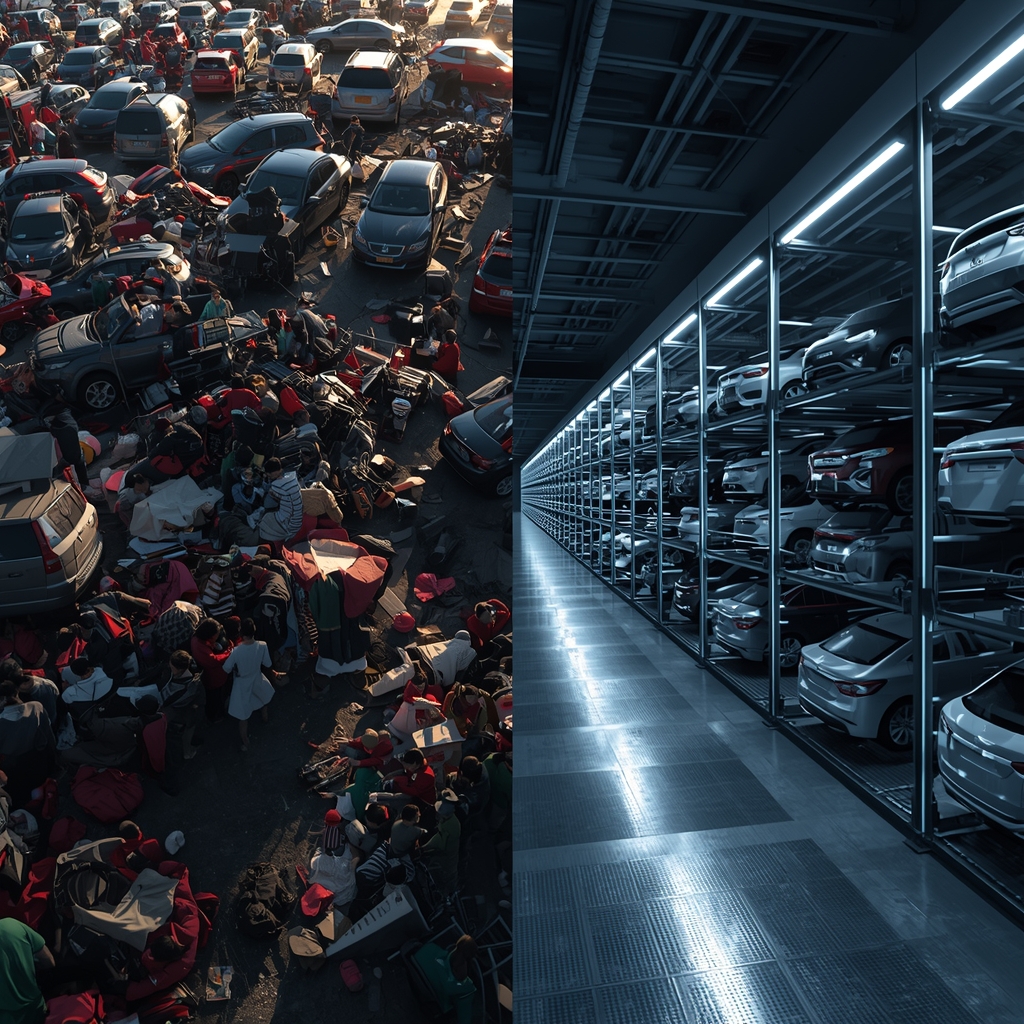
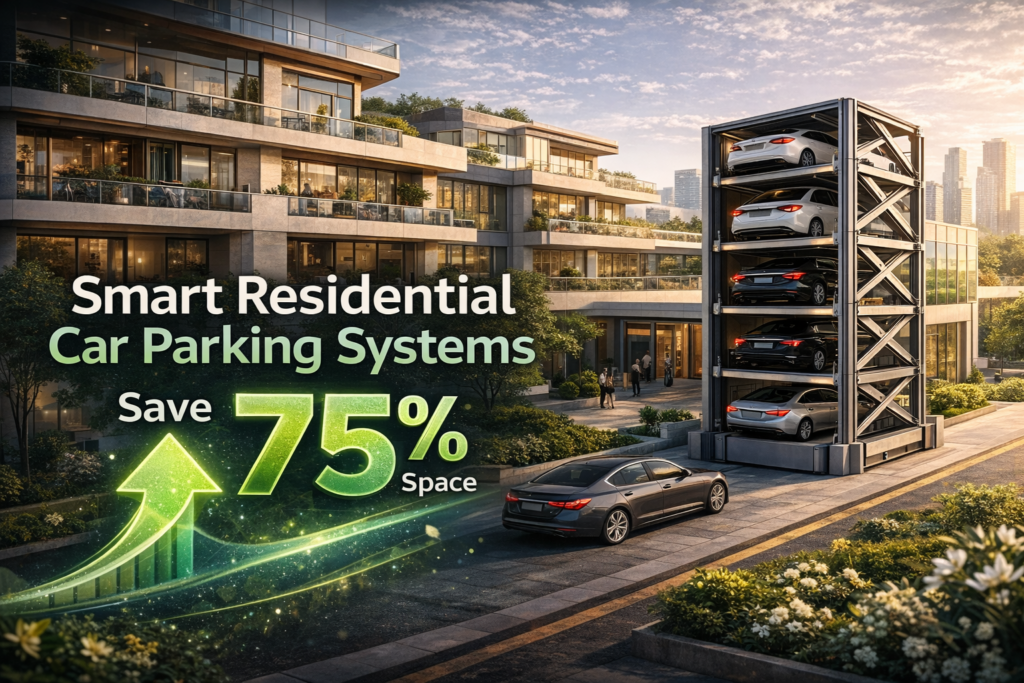
Modern systems can achieve up to 90% land utilization efficiency, allowing developers to free up valuable space for residential units, commercial areas, or amenities. In many cases, mechanical solutions can deliver up to 4 times more parking capacity within the same footprint. This directly translates into higher return on investment and better project performance.as demonstrated in this smart parking systems ROI guide
As a result, comparing systems such as scissor parking and car stackers is essential for identifying the most efficient approach to parking design. Mechanical parking systems offer a smarter alternative by maximizing vertical space and minimizing wasted areas, while also helping reduce construction costs as detailed in this mechanical parking systems cost guide
What Is a Scissor Parking System?
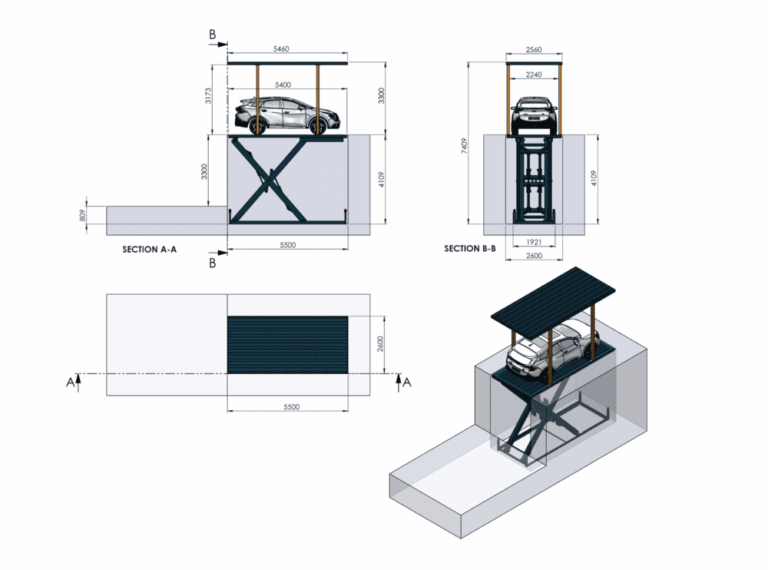
A scissor parking system is a compact mechanical solution that uses a vertical lifting mechanism based on a scissor structure. The system expands and contracts to lift vehicles vertically within a very limited footprint, making it one of the most space-efficient solutions available for constrained environments.
This type of system is specifically designed for projects where space is extremely limited or where traditional parking solutions cannot be implemented. It is commonly used in basements with restricted height, narrow plots, and developments where maximizing every square meter is essential.
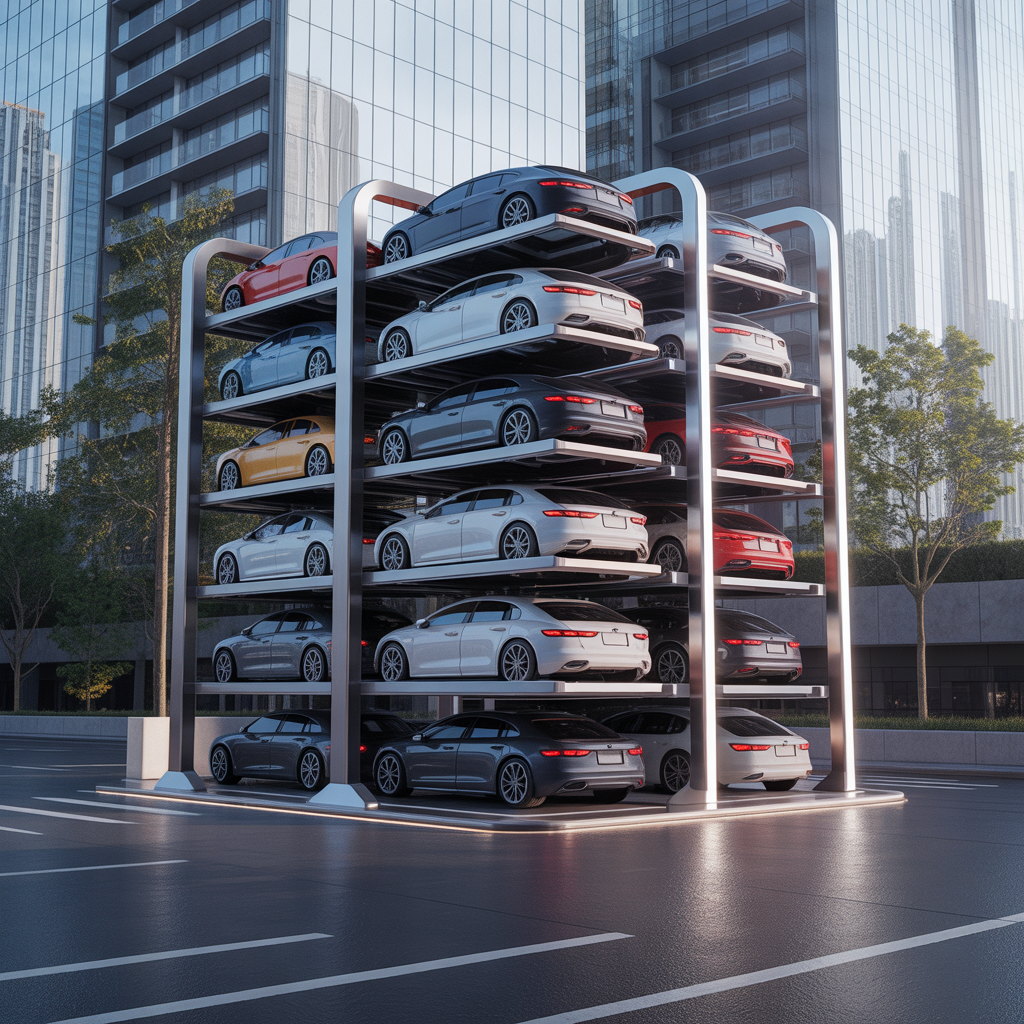
Key Technical Specifications
A typical scissor parking system includes:
- Load capacity reaching up to 2,500 kg per platform
- Platform width ranging between 2.3 and 2.6 meters
- Vehicle height clearance up to 2.1 meters
- Space savings that can exceed 60–65% compared to conventional parking layouts
These specifications allow the system to handle a wide range of vehicles while maintaining a compact design that fits within tight architectural constraints.
What Is a Car Stacker System?
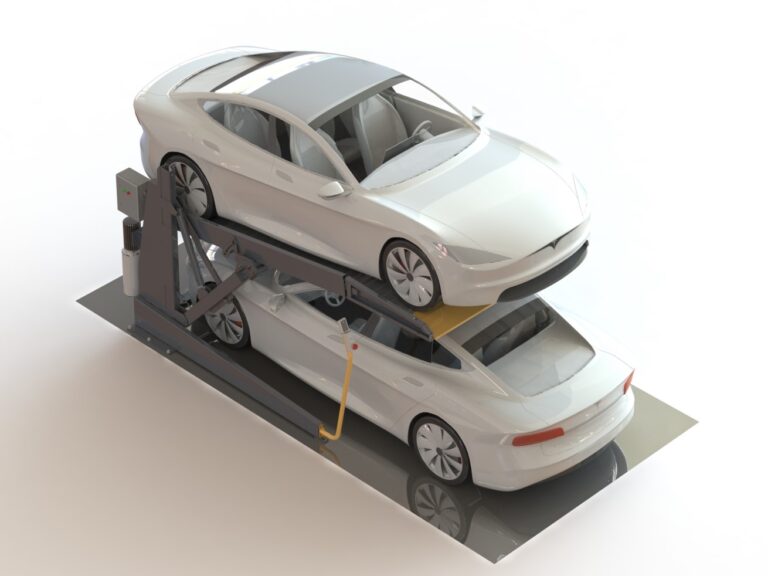
A car stacker system is one of the most widely used mechanical parking solutions due to its simplicity, reliability, and cost efficiency. It operates by lifting one vehicle to create space for another beneath it using hydraulic or motor-driven platforms.
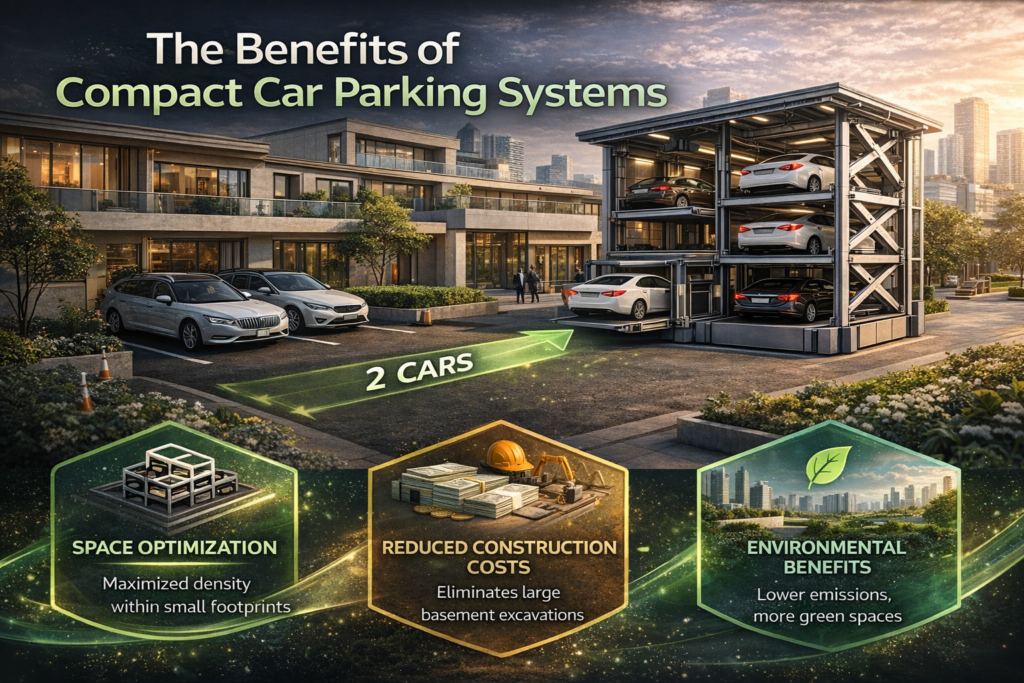
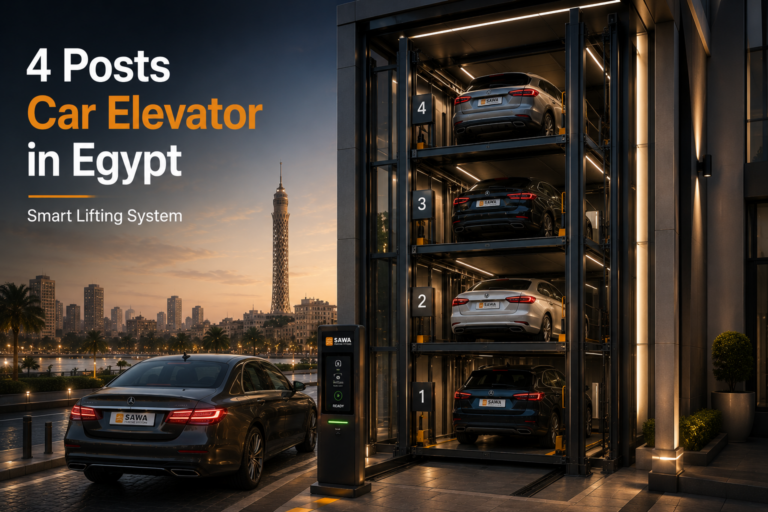
Car stackers are typically available in configurations such as 2-post or 4-post systems and are commonly used in residential buildings, commercial facilities, and standard parking layouts. Unlike scissor systems, they require more vertical clearance but offer a more straightforward and faster operation.
Key Technical Specifications
A standard car stacker system includes:
- Load capacity between 2,500 and 3,000 kg per platform
- Platform width ranging from 2.4 to 2.7 meters
- Capacity of 2 to 4 vehicles per unit
- Parking efficiency improvement of up to 2 times compared to traditional parking
These features make car stackers a practical and scalable solution for many types of developments.
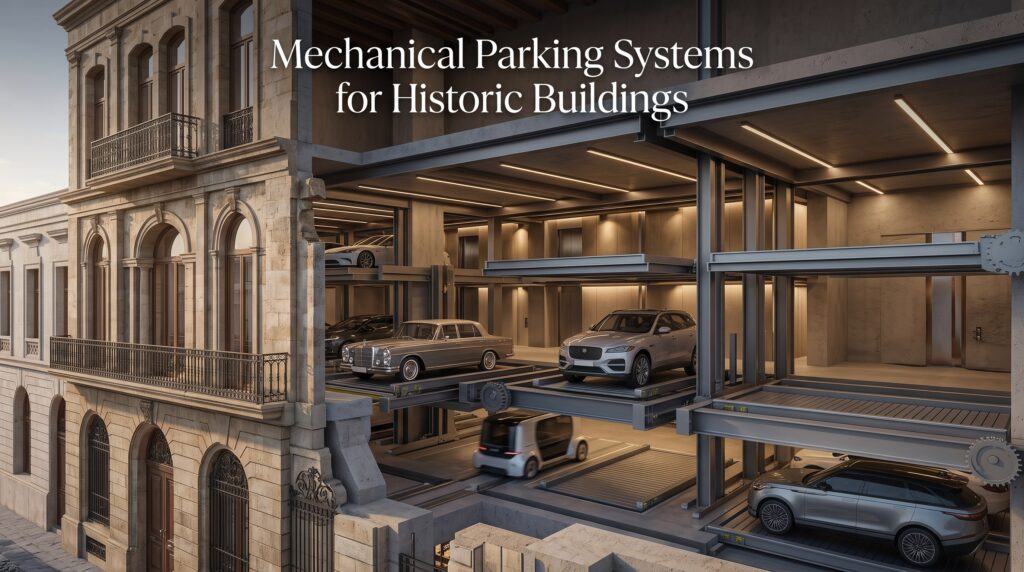
Space Efficiency: Compact Precision vs Practical Optimization
Space efficiency is the most important factor when comparing these two systems.
A scissor parking system is designed for extreme compactness. It can operate in environments where space is highly restricted and where other mechanical systems cannot be installed. Its ability to function within a minimal footprint allows developers to maximize parking capacity even in the most challenging conditions.
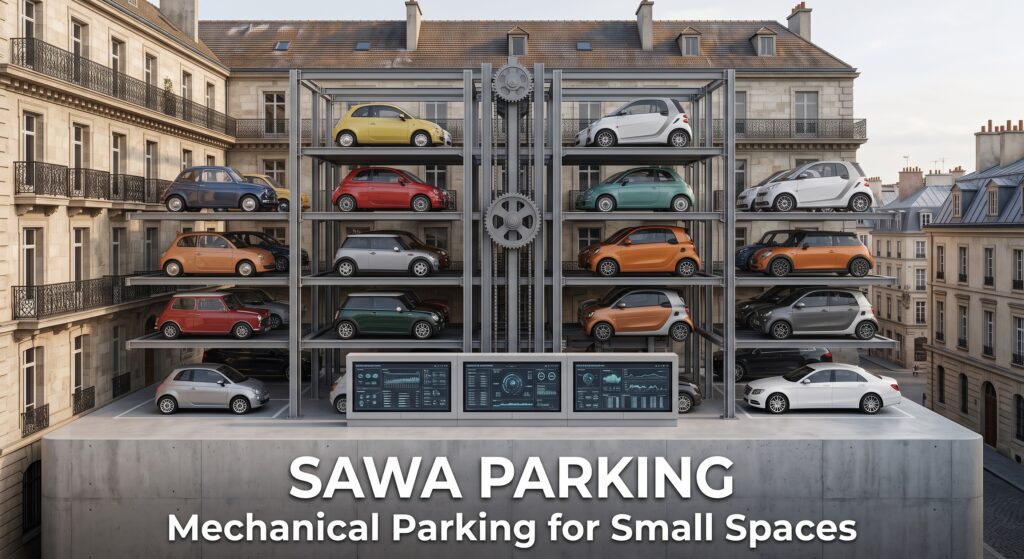
Car stackers, while still efficient, are better suited for projects where space is moderately available. They provide excellent vertical stacking capabilities but require more height and installation area compared to scissor systems.
From a practical perspective:
- Scissor systems are ideal for projects with severe space limitations
- Car stackers are more suitable for standard layouts with sufficient clearance
Comparison Table: Scissor Parking System vs Car Stacker
| Feature | Scissor Parking System | Car Stacker |
|---|---|---|
| Space Efficiency | Very high (up to 65% saving) | High (up to 2x capacity) |
| Footprint | Extremely compact | Moderate |
| Vertical Clearance | Lower requirement | Higher requirement |
| Installation Complexity | Moderate | Low |
| Cost | Medium | Lower upfront |
| Operation Speed | Moderate | Faster |
| Flexibility | High for constrained spaces | High for standard layouts |
| Best Use Case | Tight basements and narrow plots | Residential and commercial buildings |
Cost and Construction Impact
Both systems provide a cost-effective alternative to traditional parking structures, especially when compared to expensive basement construction that requires excavation, waterproofing, and heavy structural work.
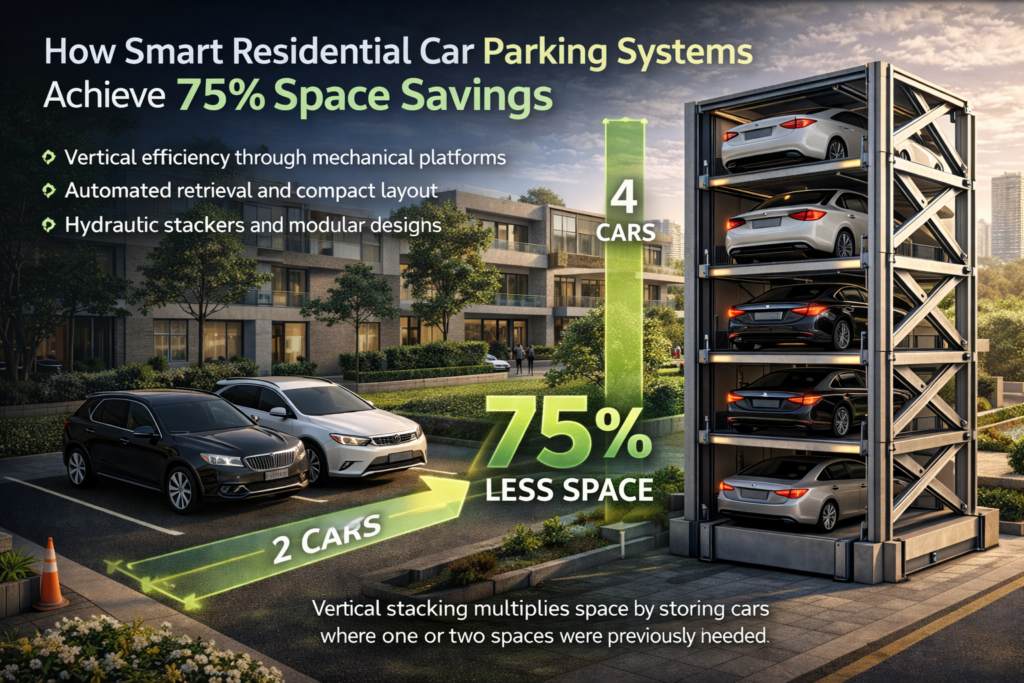
A scissor parking system may involve a slightly higher initial investment due to its advanced engineering. However, it significantly reduces the need for additional land and structural modifications, which can lead to overall cost savings in the project.
Car stackers, on the other hand, are more budget-friendly at the initial stage. Their simple design reduces manufacturing and installation costs, making them an attractive option for developers working within tighter budgets.
Performance and User Experience
Performance is not only measured by capacity but also by how efficiently users interact with the system.
Scissor parking systems prioritize compact design and space optimization, which may result in slightly longer lifting cycles. However, they are highly effective in environments where space constraints are the primary concern.
Car stackers offer a faster and more intuitive user experience. Vehicles can be parked and retrieved quickly, making them more convenient for everyday use in residential settings.
Flexibility and Integration
Flexibility is another important factor when choosing between these systems.
Scissor systems are highly adaptable and can be integrated into irregular layouts, low-ceiling basements, and constrained environments where traditional solutions are not feasible. They are often used in retrofit projects or developments with complex spatial conditions.
Car stackers are easier to integrate into standard building designs. Their modular structure allows for simple installation and scalability, making them suitable for both small and large projects.
Why Sawa Parking Delivers Superior Solutions
Selecting the right system is only part of the process. Choosing a reliable provider is equally important for ensuring performance and long-term efficiency.
Sawa Parking combines advanced engineering with local manufacturing capabilities, offering a significant advantage in terms of cost, customization, and delivery time. Developers working with Sawa Parking benefit from tailored solutions designed to meet specific project requirements, along with high-quality materials and strict safety standards.
Final Decision: Which One Should You Choose?
The choice between a scissor parking system and a car stacker depends entirely on project requirements and constraints.
A scissor parking system is the ideal solution for projects with extremely limited space where maximum compactness is required.
A car stacker is better suited for projects that require a cost-effective, simple, and efficient solution within a standard layout.
Conclusion
Both systems offer strong alternatives to traditional parking solutions. The scissor parking system excels in compact environments, while car stackers provide simplicity and cost efficiency. By understanding the differences between these two systems, developers can make informed decisions that improve space utilization, reduce construction costs, and enhance overall project performance.
Frequently Asked Questions (FAQs)
What is the main difference between a scissor parking system and a car stacker?
The primary difference lies in spatial efficiency and operational design. A scissor parking system is engineered for highly constrained environments, utilizing a compact vertical lifting mechanism, while a car stacker is designed for standard layouts with simpler vertical stacking and faster operation.
Which parking system is more suitable for limited spaces?
A scissor parking system is more suitable for limited spaces due to its compact footprint and ability to operate within restricted height and width conditions. It is specifically developed for basements and narrow urban plots where traditional systems cannot be implemented.
Are car stackers more cost-effective than scissor parking systems?
Car stackers generally have lower initial costs due to their simpler mechanical structure and ease of installation. However, scissor parking systems can provide greater long-term value by maximizing space utilization and reducing the need for additional construction.
What are the typical load capacities of these systems?
Both systems are designed to handle standard vehicle weights. Scissor parking systems typically support up to 2,500 kg per platform, while car stackers can range between 2,500 and 3,000 kg depending on the configuration.
Can scissor parking systems be installed in existing buildings?
Yes, scissor parking systems are highly adaptable and can be integrated into existing structures, especially in retrofit projects where space constraints and low ceiling heights are critical considerations.
Which system provides faster operation and user convenience?
Car stackers generally offer faster operation cycles and a more straightforward user experience, making them suitable for residential applications where ease of use is a priority.
Do mechanical parking systems require high maintenance?
Modern mechanical parking systems are designed with durable components and safety features that minimize maintenance requirements. Regular inspection and servicing, however, are essential to ensure long-term performance and safety compliance.
How do these systems impact project return on investment (ROI)?
Both systems contribute positively to ROI by increasing parking capacity and reducing land consumption. Scissor systems maximize space efficiency, while car stackers provide cost-effective solutions with faster implementation timelines.
References and Academic Sources
International Organization for Standardization (ISO). (2018). ISO 45001: Occupational Health and Safety Management Systems.
Available at: https://www.iso.org/standard/63787.html
European Committee for Standardization (CEN). (2008). EN 14010: Safety of Machinery – Equipment for Power Driven Parking of Motor Vehicles.
Available at: https://standards.iteh.ai/catalog/standards/cen
Transportation Research Board. (2010). Highway Capacity Manual (HCM). Washington, DC: National Academies Press.
Available at: https://nap.nationalacademies.org/catalog/14597/highway-capacity-manual
Urban Land Institute. (2019). Shared Parking (2nd Edition) by Mary S. Smith. Washington, DC.
Available at: https://uli.org/research/centers-initiatives/uli-terwilliger-center-for-housing/shared-parking/
Institute of Transportation Engineers. (2019). Parking Generation Manual (5th Edition). Washington, DC.
Available at: https://www.ite.org/technical-resources/topics/travel-demand/parking-generation/
Elsevier. (2018). Automation in Construction Journal.
Available at: https://www.sciencedirect.com/journal/automation-in-construction
Springer. (2020). Journal of Transportation Engineering and Smart Infrastructure.
Available at: https://link.springer.com
ScienceDirect. (2021). Smart Parking Systems: A Review of Engineering Design and Efficiency.
Available at: https://www.sciencedirect.com/topics/engineering/automated-parking
MDPI. (2022). Sustainability Journal – Smart Parking and Urban Mobility Studies.
Available at: https://www.mdpi.com/journal/sustainability
Allied Market Research. (2023). Automated Parking System Market Report.
Available at: https://www.alliedmarketresearch.com/automated-parking-system-market
Mordor Intelligence. (2024). Mechanical Parking Systems Market Analysis.
Available at: https://www.mordorintelligence.com/industry-reports/mechanical-parking-systems-market