

Mechanical Parking Systems in Morocco: The Complete Guide for Developers, Hotels, and City Planners
Morocco’s cities are growing faster than their streets can handle. Casablanca, Rabat, Marrakech, and Tangier are adding residential towers, shopping centers, and five-star hotels at a pace that has outstripped something far less glamorous, but just as critical: parking space. Land in city centers has become too expensive and too scarce to keep pouring into flat, single-level parking lots, and municipal building codes are tightening the number of parking bays required per unit in new developments.
This is exactly the gap that mechanical parking systems are designed to close. Instead of building outward, these systems build upward or use automated platforms to stack, shuffle, and retrieve cars mechanically, multiplying the number of vehicles a single plot of land can hold — sometimes by three or four times — without adding a single square meter of footprint.
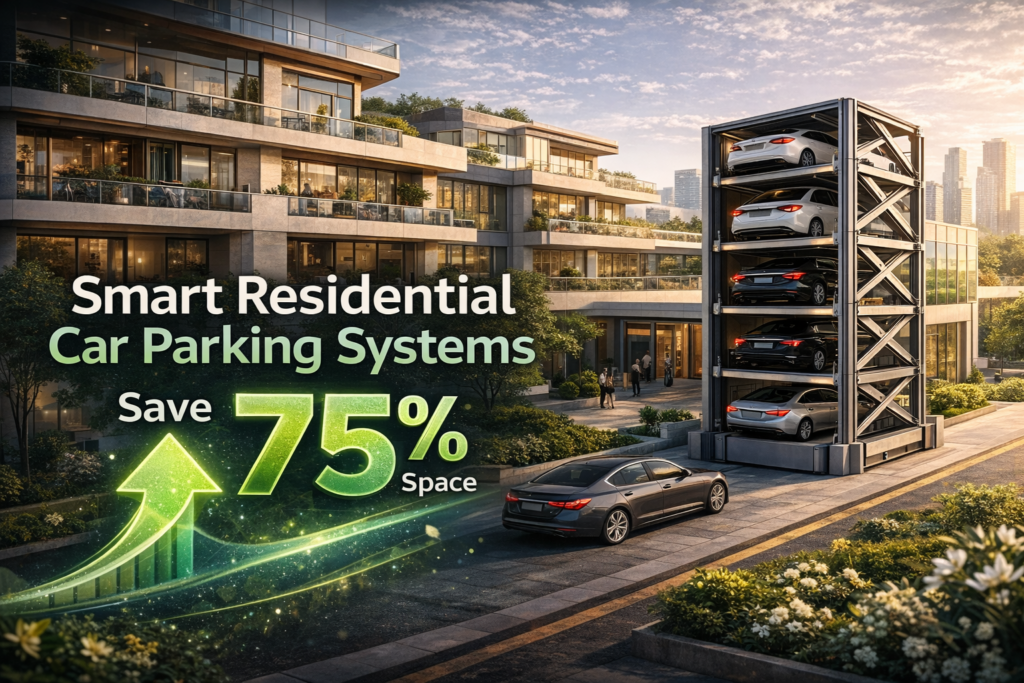
In this guide, we break down everything a developer, architect, hotel owner, or facility manager in Morocco needs to know before investing in a mechanical or automated parking system: how the technology works, which type fits which project, what it costs, how Moroccan regulations factor in, and what to look for in a manufacturer before signing a contract.
Why Morocco Needs Mechanical Parking Systems Now
Morocco’s urban population has been expanding steadily for two decades, and car ownership has grown alongside it despite periodic dips in purchasing power. Cities such as Casablanca and Rabat are seeing constant vertical construction — apartment towers, office parks, and mixed-use developments — on plots that were never designed to also accommodate a surface parking lot.
A few forces are converging at once:
1. Land scarcity and rising prices in city centers. Every square meter dedicated to a ramp, a driveway, or a row of surface parking is a square meter not generating rental income, retail revenue, or living space. In dense districts of Casablanca and Rabat, land values have made traditional flat parking lots one of the least efficient uses of a plot.
2. Stricter municipal parking requirements. Moroccan building permit regulations increasingly tie the approval of new residential and commercial projects to a minimum ratio of parking spaces per unit or per square meter of built area. Developers who cannot physically fit the required number of bays on a conventional layout are increasingly turning to stacked and automated systems to meet code without redesigning the entire project.
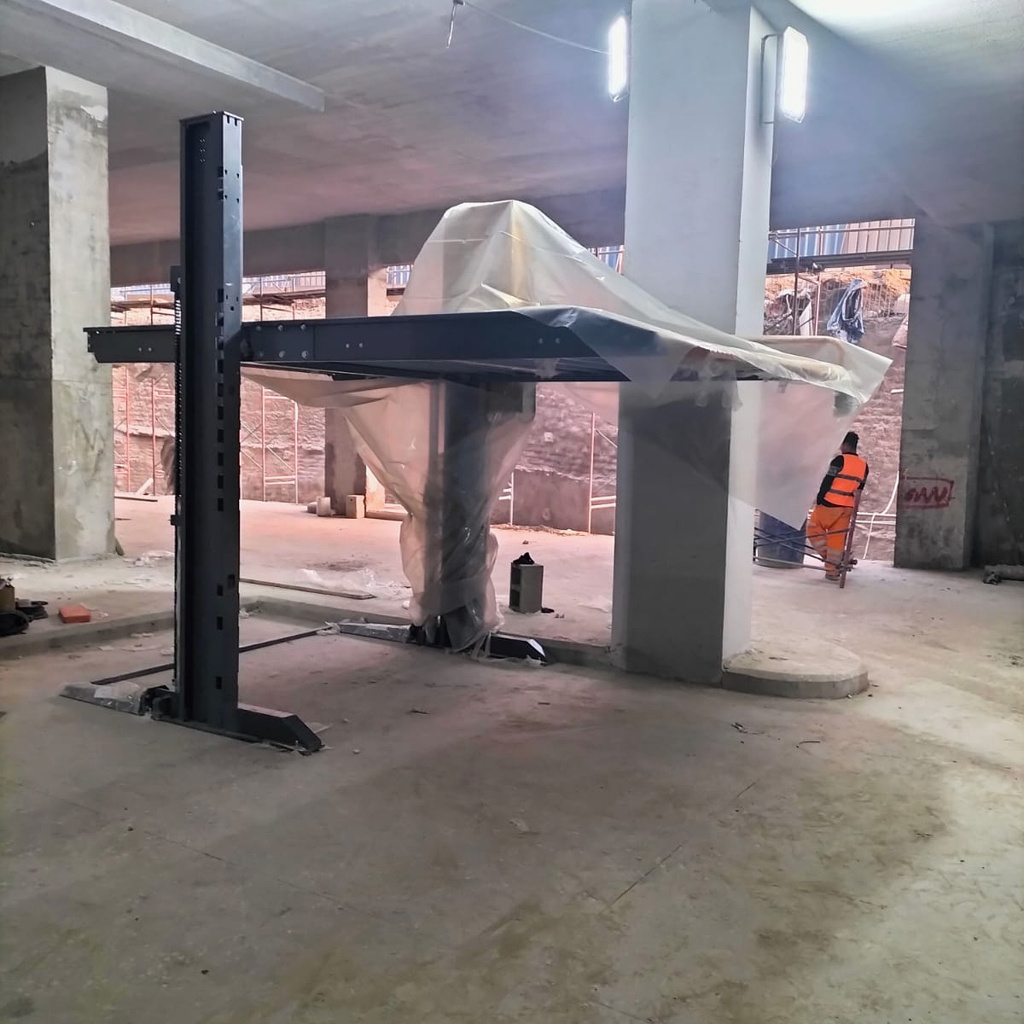
3. Tourism and hospitality growth. Morocco’s hotel and riad sector, particularly in Marrakech, Fes, and the medinas of historic cities, faces a unique problem: centuries-old buildings with narrow streets and virtually no space for guest parking. Compact car lifts and puzzle systems let these properties offer guests secure, on-site parking without demolishing historic structures or losing rentable floor area.
4. Smart city initiatives. Casablanca’s municipal authorities have already begun piloting AI-driven parking management technology, including automatic number plate recognition and app-based reservation systems, aimed at reducing search times and increasing efficient use of existing parking infrastructure. This broader push toward smart mobility creates fertile ground for automated parking hardware to be adopted alongside software-based solutions, since the two work best together: software optimizes how drivers find a spot, mechanical systems optimize how many spots actually exist.
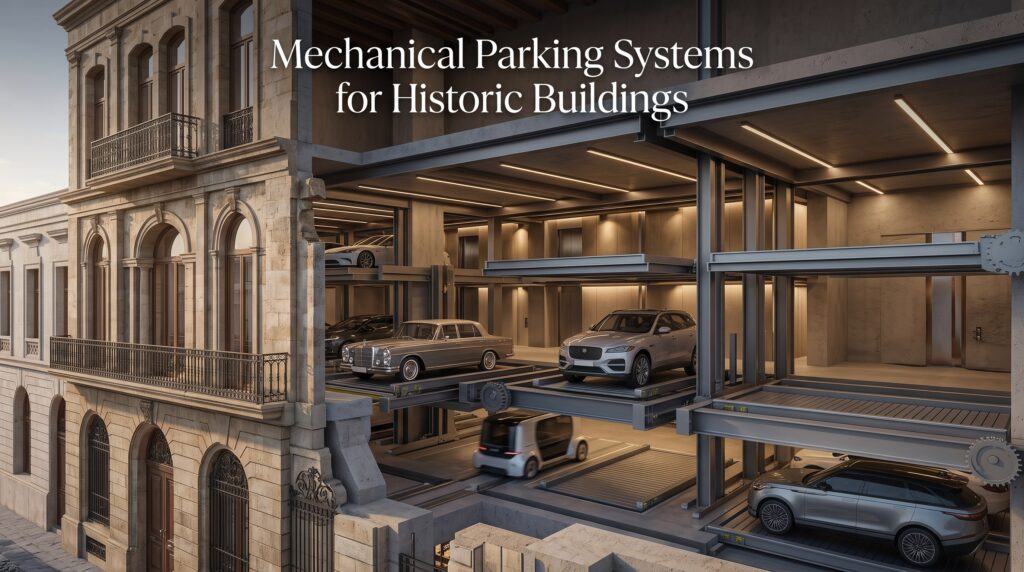
5. Environmental pressure. Search-for-parking traffic is a well-documented contributor to urban congestion, wasted fuel, and unnecessary emissions in cities worldwide. Reducing the physical footprint of parking also frees up land that can be returned to green space or pedestrian use, a priority increasingly reflected in Moroccan urban planning discussions.
Put together, these pressures mean mechanical parking is no longer a “nice to have” feature for a handful of luxury towers — it is quickly becoming a practical necessity for any mid-to-large development in Morocco’s major cities.
What Exactly Is a Mechanical Parking System?
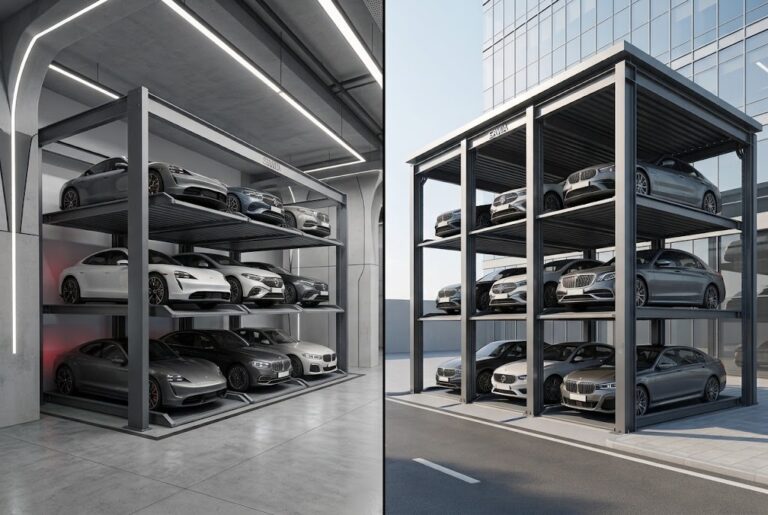
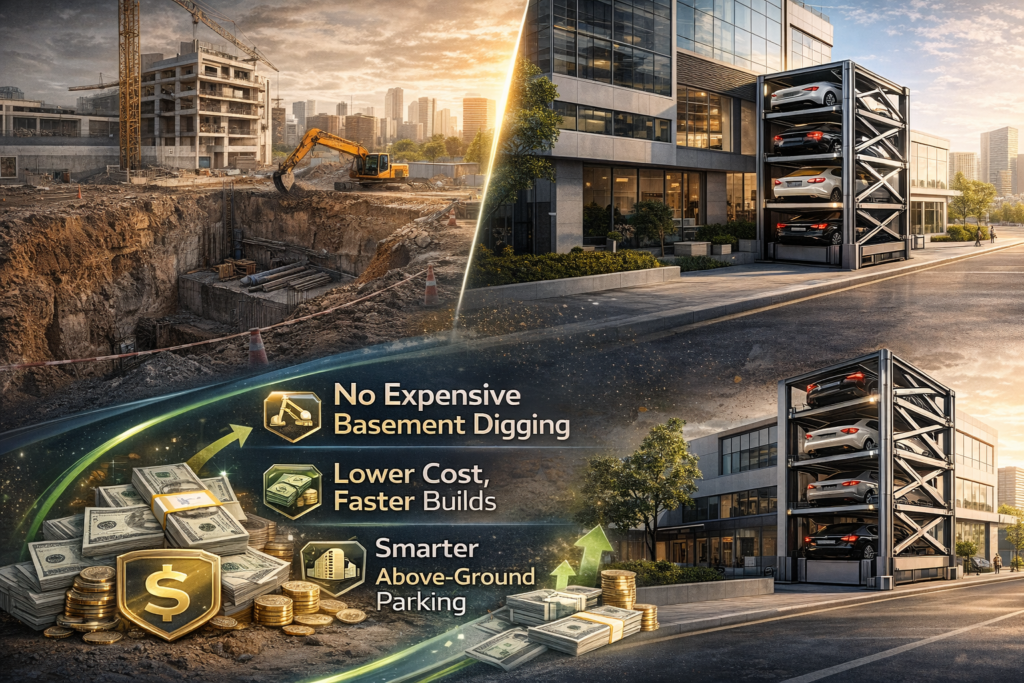
A mechanical parking system is any structure that uses hydraulic, mechanical, or electro-mechanical movement — rather than the driver’s own maneuvering — to place a vehicle into its final parking position. Systems range from simple manually-operated platforms to fully automated, computer-controlled towers that operate with no driver access to the parking area at all.
Broadly, mechanical parking technology falls into three categories:
- Analog / semi-automated systems: The driver still parks the car onto a platform, and a mechanical mechanism (usually hydraulic) then lifts or shifts that platform to free up space below or beside it. Two-post and four-post lifts fall into this category.
- Puzzle and shuttle systems: Vehicles are moved both vertically and horizontally by a network of platforms and pallets, allowing several cars to be repositioned automatically so that a specific vehicle can be retrieved, even if it isn’t parked at the front.
- Fully automated (robotic) systems: The driver leaves the car at a transfer station, and the system takes over completely — measuring the vehicle, then using a robotic shuttle, lift, or conveyor to store it in a rack, tower, or underground vault. The driver never enters the parking structure itself.
The Main Types of Mechanical Parking Systems
Choosing the right system depends heavily on plot dimensions, ceiling height, budget, and how quickly cars need to be retrieved. Here are the formats most commonly deployed in Moroccan and regional projects:
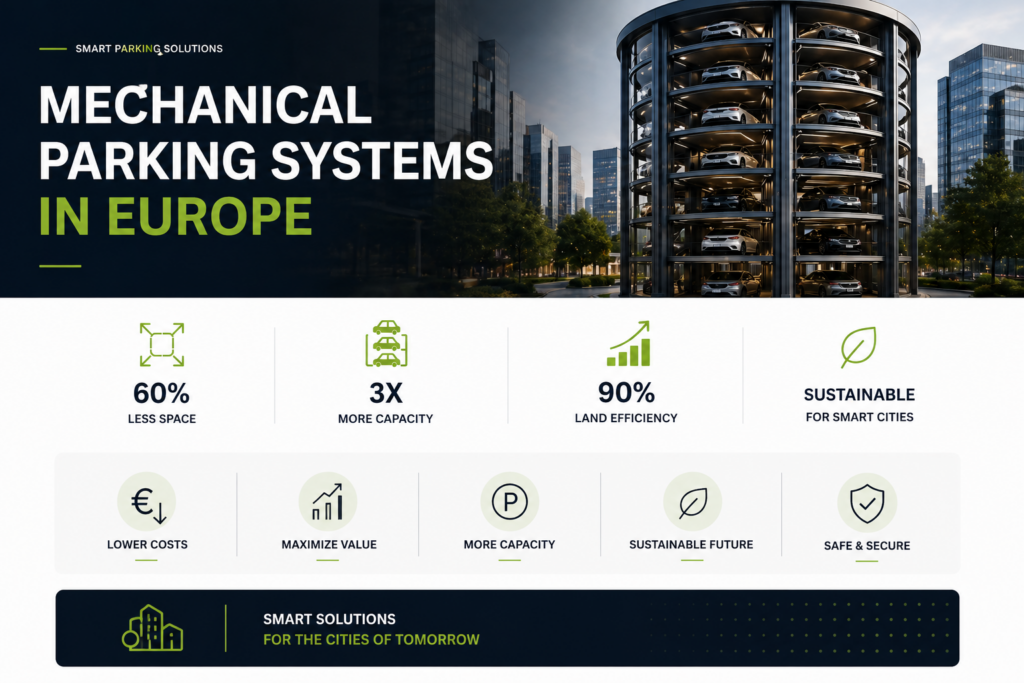
1. Two-Post and Four-Post Car Lifts
These are the entry point into mechanical parking, commonly used in villas, small residential buildings, and light commercial garages. A platform is raised hydraulically or mechanically to create a second parking level above or below an existing space, effectively doubling capacity on the same footprint. They are relatively low-cost, quick to install, and simple to maintain, making them a popular first step for developers testing mechanical parking on smaller projects.
2. Tandem (Dependent) Parking Systems
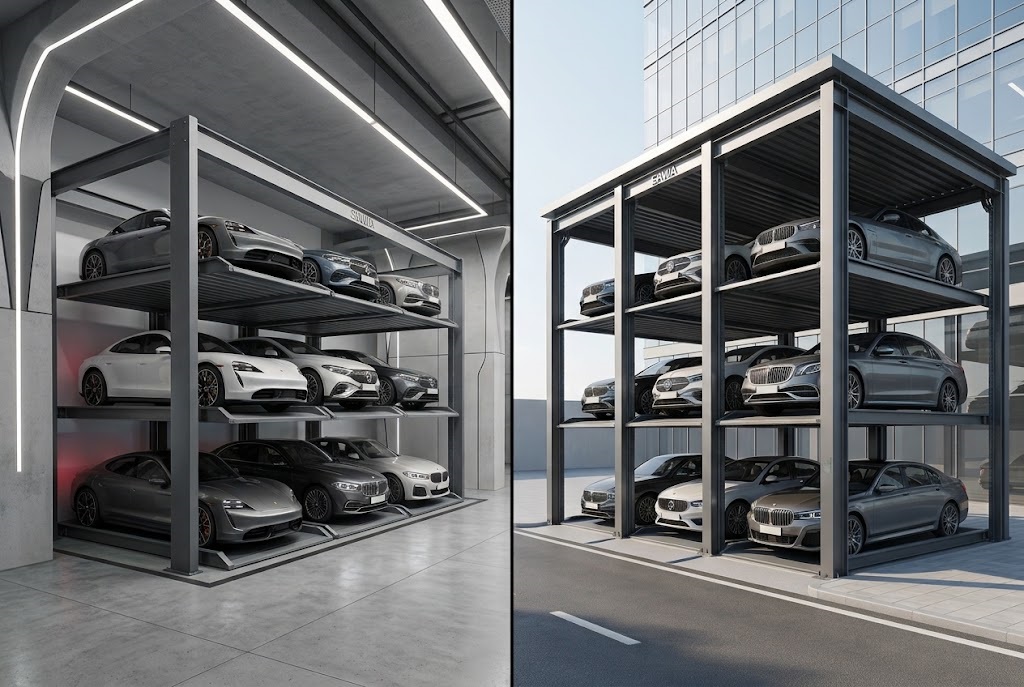
Tandem systems park two or more cars in a single line, one behind or above the other. They are ideal where car owners are known in advance (residential buildings, staff parking, valet-operated garages) because retrieving the rear car requires moving the front one first. Tandem lifts are among the most cost-effective ways to increase capacity in narrow garages.
3. Puzzle Parking Systems
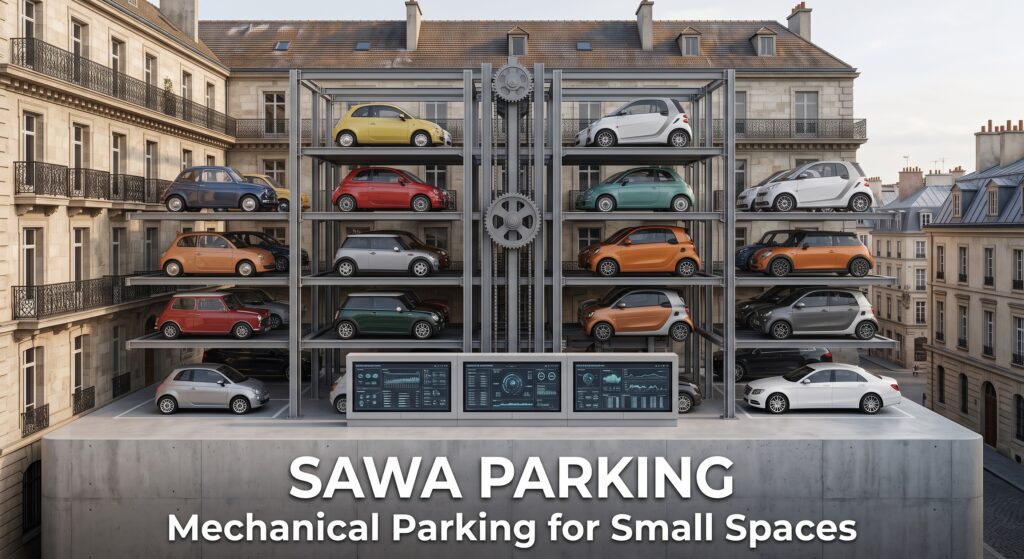
Puzzle systems use a grid of platforms that shift horizontally and vertically, similar to a sliding puzzle, so that any car in the structure can be brought to ground level for retrieval without needing to move every other vehicle in sequence. This format works particularly well for mid-size buildings — residential complexes, office parks, or hotels — where moderate turnover and unpredictable arrival/departure times make full independence between vehicles important.
4. Tower and Silo (Fully Automated) Parking Systems
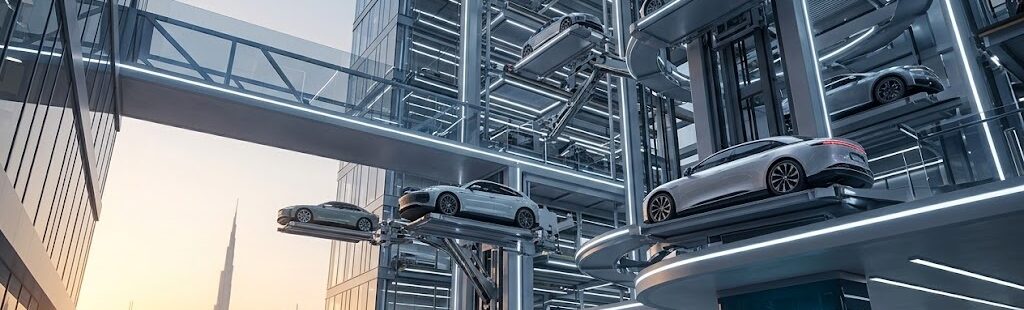
These are the most space-efficient format available. Cars are stored in a vertical rack system, sometimes entirely enclosed, and retrieved by a robotic shuttle within one to three minutes of a driver requesting their vehicle via a keypad, card, or mobile app. Tower systems are the format of choice for very tight urban plots, luxury towers, and high-density mixed-use developments where every square meter above ground is reserved for revenue-generating space rather than a ramp.
5. Turntables and Car Elevators
Rather than adding storage capacity, turntables and car elevators solve maneuvering problems — rotating a vehicle 180 degrees so it can exit forward onto a narrow street, or moving cars vertically between underground and street-level floors. These are frequently combined with other systems (puzzle or tandem) as part of a larger parking solution rather than used stand-alone.
Key Benefits for Moroccan Developers and Property Owners
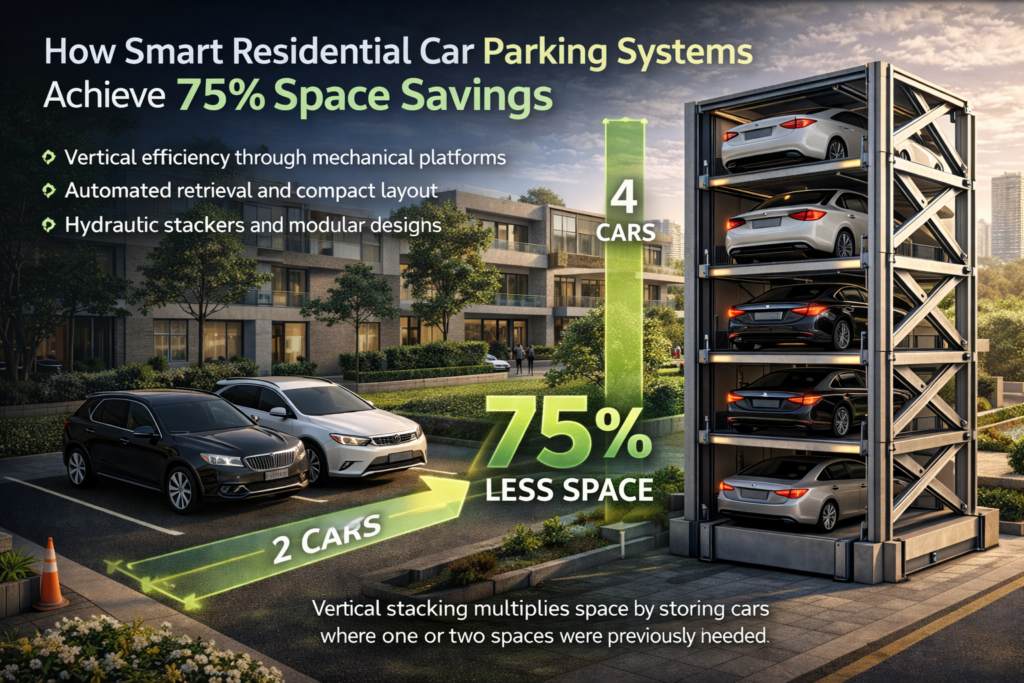
Maximum capacity on minimum land. This is the core value proposition: a mechanical system can park two to four times more vehicles than a traditional flat layout on the same plot, which is often the difference between a project meeting its parking obligations or not.
Improved return on investment. Land freed up from ramps and driveways can instead be leased, sold, or built upon. For hotel and retail projects, every square meter recovered from parking is a square meter that can become guest rooms, retail units, or amenity space — assets that generate ongoing revenue rather than sitting idle as a driveway.
Compliance with building and parking codes. As Moroccan municipalities tighten parking ratio requirements for new construction, mechanical systems give architects a practical way to hit code without redesigning the building envelope or losing marketable floor area.
Enhanced marketing and resale value. Buyers and tenants increasingly view guaranteed, secure, technology-enabled parking as a differentiator. Studies on real estate development consistently show that integrating smart, automated amenities — including parking — has a measurably positive effect on a project’s perceived value and sales pace.
Security. Fully automated systems remove the need for drivers, valets, or the general public to walk through the parking structure at all, significantly reducing the risk of theft, vandalism, and accidents compared to an open surface lot.
Environmental benefits. Fewer ramps and driveways mean more green space is preserved. Reduced circling and searching for a spot also lowers idle-engine emissions, a benefit increasingly highlighted in sustainability-focused development projects across the region.
Faster, more predictable retrieval times. Automated systems typically retrieve a vehicle in under two to three minutes — often faster than a human driver could locate and walk to a car in a large surface lot, especially during peak hours at malls, hospitals, or hotels.
Mechanical Parking in Morocco’s Key Sectors
Residential towers and mixed-use developments. In Casablanca and Rabat, high-rise residential buildings are increasingly required to meet strict parking ratios despite tight urban plots. Puzzle and tower systems allow developers to meet these ratios without sacrificing ground-floor retail space or building footprint.
Hospitality and riads. Marrakech and Fes attract millions of tourists annually into historic medinas where street width and heritage preservation rules make traditional parking construction nearly impossible. Compact lift and puzzle systems installed in courtyards or adjacent lots let hotels offer valet-style, secure parking without altering historic facades.
Shopping malls and retail centers. High footfall retail destinations need to turn over large volumes of vehicles quickly during peak hours. Puzzle and semi-automated systems increase total bay count in the same footprint, directly reducing the entrance queues and circling traffic that frustrate shoppers.
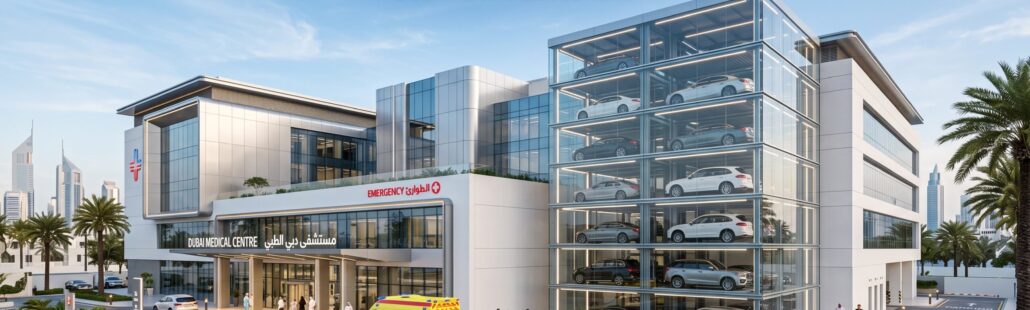
Hospitals and institutional buildings. Predictable, secure parking matters for staff and visitors alike, and mechanical systems allow institutions on constrained urban plots to add capacity without expanding the building’s footprint.
Corporate and office parks. As Morocco’s business districts grow, office towers face the same land-cost pressures as residential buildings, making automated parking a practical way to offer tenants guaranteed parking as a leasing incentive.
Cost, ROI, and What Affects Pricing
The cost of a mechanical parking system in Morocco depends on several factors: the type of system (a two-post lift is far less expensive than a fully robotic tower), the number of vehicles it needs to accommodate, site conditions (soil, foundation work, ceiling height), and whether the project requires custom engineering to fit an irregular plot.
As a general rule:
- Two-post and four-post lifts offer the lowest cost per additional parking space and the fastest installation timeline, making them attractive for smaller projects or as a pilot before scaling to a larger system.
- Puzzle and tandem systems sit in the mid-range, balancing cost against a meaningful jump in capacity and flexibility.
- Fully automated towers carry the highest upfront investment but typically deliver the greatest space efficiency and the strongest long-term ROI on expensive urban land, since they recover the most square meters for alternative use.
Developers should also budget for ongoing preventive maintenance, which is essential to keep hydraulic components, sensors, and control software running reliably over the system’s lifespan — typically 15 to 25 years with proper servicing.
Climate and Site Considerations Specific to Morocco
Morocco’s geography spans coastal humidity in cities like Tangier and Casablanca, arid heat and dust in Marrakech and the south, and cooler mountain-adjacent conditions inland. These variations matter when specifying a mechanical parking system:
- Coastal humidity and salt air (Tangier, Casablanca, Rabat, Agadir) accelerate corrosion on untreated steel components, so galvanized or specially coated structural steel and enclosed electrical housings are important specification details.
- Heat and dust exposure (Marrakech, Fes, inland cities) can affect sensor accuracy and require more frequent cleaning of optical or laser-based vehicle detection systems.
- Foundation and soil conditions vary significantly between coastal, plains, and mountain-adjacent sites, meaning any automated system installation should begin with a proper site survey rather than a generic, one-size-fits-all foundation design.
A manufacturer with regional experience will factor these conditions into the system’s material specification and control cabinet design from the outset, rather than treating them as an afterthought.
How to Choose the Right Mechanical Parking System
Before selecting a system, developers and property owners in Morocco should work through the following checklist with their engineering and parking system partner:
- Available footprint and ceiling height — Determines whether a tower, puzzle, or simple lift system is physically feasible.
- Number of vehicles to be accommodated — Drives the choice between basic lifts and larger, higher-throughput automated systems.
- Expected turnover and retrieval speed needs — Malls and hospitals need faster retrieval than long-stay residential parking.
- Budget and phasing — Some projects start with a simpler system and expand capacity later as demand grows.
- Local building codes and parking ratio requirements — Confirm the exact number of bays your project must legally provide.
- Maintenance and after-sales support availability — A system is only as reliable as the servicing behind it; confirm response times and spare parts availability locally.
- Manufacturer experience with similar climates and site conditions — Ask for references from projects with comparable environmental exposure.
What to Look for in a Mechanical Parking Manufacturer
Not every supplier offering “automated parking” in the Moroccan and North African market manufactures its own equipment — many resell imported systems with limited local engineering support. When evaluating a partner, look for:
- In-house design and manufacturing capability, rather than pure resale, which typically means faster customization and more responsive after-sales support.
- A track record of completed, verifiable projects — including residential towers, commercial buildings, and export projects — that demonstrates real-world reliability rather than only marketing renders.
- End-to-end service, covering site consultation, engineering design, manufacturing, installation, and long-term preventive maintenance under one roof.
- Warranty terms on structural steel and mechanical components, along with clear commitments to spare parts availability.
- Regional experience, since a manufacturer familiar with Middle East and North Africa climate conditions and regulatory environments will design more appropriately for Moroccan sites than one accustomed only to European or Asian markets.
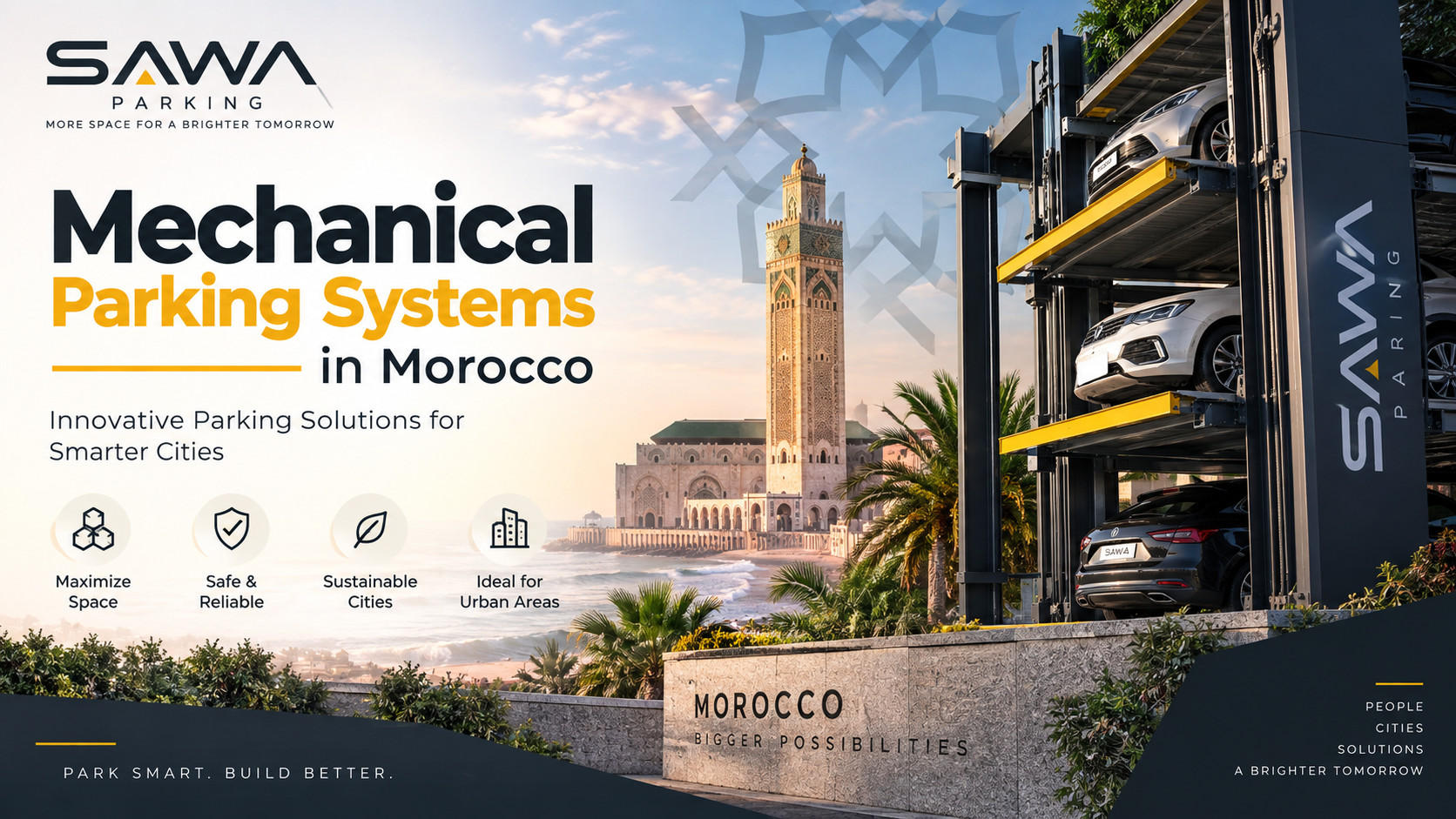
SAWA Parking was established as the first factory in Egypt, Africa, and the Middle East dedicated specifically to manufacturing mechanical and automated parking systems, and has since exported systems to markets including Italy and France. SAWA offers a full turnkey process — planning and consultation, engineering design, precision manufacturing in its own factory, installation, and ongoing maintenance — giving developers a single point of accountability from the first site visit through years of operation. For developers and hotel owners in Morocco evaluating mechanical parking for the first time, working with a manufacturer that controls its own production line, rather than reselling third-party equipment, typically means faster lead times, easier customization for irregular plots, and more responsive local support after installation.
The Future of Parking in Morocco
Mechanical parking hardware is increasingly being paired with software-driven smart parking tools — automatic number plate recognition, mobile app reservations, and real-time occupancy data — that Moroccan cities like Casablanca are already piloting at the municipal level. The next generation of parking infrastructure in Morocco is likely to combine both layers: mechanical systems that physically maximize how many vehicles a plot can hold, and digital systems that guide drivers efficiently to the nearest available spot and manage payment without friction.
Electric vehicle adoption is another factor developers should plan for. Integrating EV charging points directly into lift and tower parking bays is increasingly common in newer installations elsewhere in the region, and is worth specifying early rather than retrofitting later.
Final Thoughts
Morocco’s parking challenge is not going away — it is intensifying as cities grow taller, land grows scarcer, and building codes grow stricter. Mechanical and automated parking systems offer developers, hotel owners, and facility managers a proven way to meet regulatory requirements, protect land value, and offer tenants or guests a modern, secure parking experience, all without expanding a building’s physical footprint.
Whether the right fit is a simple two-post lift for a boutique riad or a fully automated tower for a high-rise in Casablanca, the decision comes down to matching the system to the site, the budget, and the long-term maintenance partner behind it.
If you are planning a new development or retrofitting an existing building in Morocco and want to explore which mechanical parking solution fits your project, SAWA Parking’s team can review your site details and propose a tailored parking strategy from concept through installation.
Sources:
- Business Market Insights — Middle East & Africa Automated Parking System Market Report. https://www.businessmarketinsights.com/reports/middle-east-and-africa-automated-parking-system-market
- HunterBI — Smart Parking, Smart Hotels, Smart Cities: AI Infrastructure in Morocco. https://hunterbi.com/smart-parking-hotels-cities-ai-infrastructure-morocco/
- ScienceDirect — Automated Vehicles and the Urban Parking Paradigm: Environmental Implications and Citizen Preference. https://www.sciencedirect.com/science/article/pii/S1361920924003948
- Dergipark / The Black Sea Journal of Sciences — Internet of Things Driven Smart Parking System Design and Implementation, referencing IoT-based smart parking research conducted in Marrakesh, Morocco. https://dergipark.org.tr/en/pub/kfbd/article/1635746