


Introduction
Few cities in the world illustrate the pressure of urban space constraints quite like Amsterdam. Its historic canal belt, protected as a UNESCO World Heritage Site, was laid out centuries before the automobile existed, leaving the city with narrow streets, tightly packed canal houses, and an extremely high water table that limits how deep any basement can be excavated. Against this backdrop, mechanical parking systems in Amsterdam have become one of the city’s most important tools for reconciling the practical need for vehicle storage with the imperative to preserve historic character and reclaim public space for pedestrians, cyclists, and greenery.
This article examines what mechanical parking systems in Amsterdam are, why the city has embraced them so enthusiastically, the technologies involved, notable local projects, the regulatory and policy environment driving adoption, and what the future is likely to bring for automated parking across the Dutch capital.
What Are Mechanical Parking Systems?
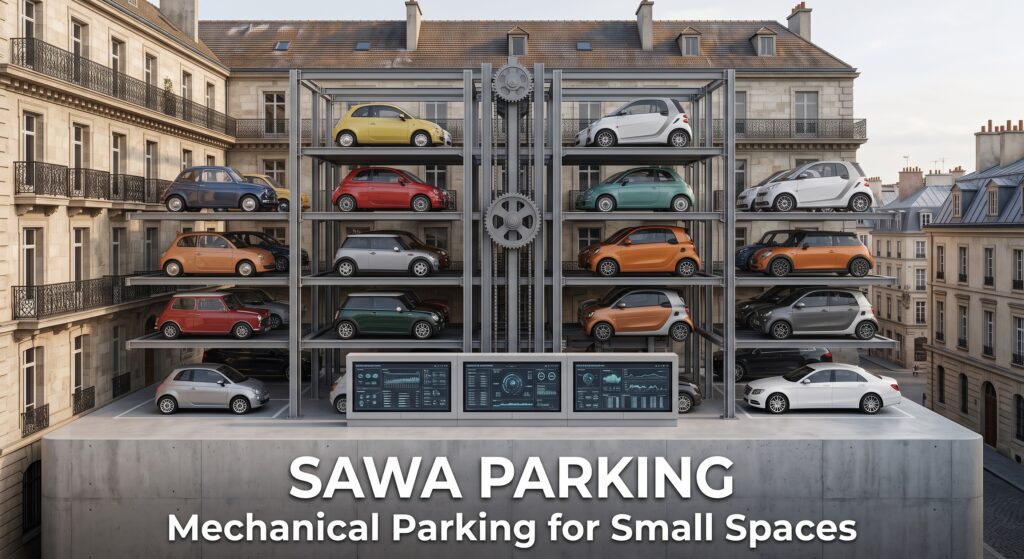
Mechanical parking systems, also referred to as automated parking systems (APS), use machinery rather than a human driver to move a vehicle into and out of a storage position. A driver pulls into a compact entry bay, exits the vehicle, and the system’s motors, hydraulics, lifts, and conveyors take over from there, transporting the car to an assigned slot within the structure.
Several distinct categories of mechanical parking systems in Amsterdam are represented across the city’s building stock:
- Pallet-based systems – Vehicles are parked on individual steel pallets that are moved between levels using vertical lifts and horizontal conveyors, functioning much like an automated warehouse for cars.
- Puzzle parking systems – Platforms shift horizontally and vertically in a coordinated sequence, freeing up access lanes as needed, and are well suited to mid-sized residential buildings.
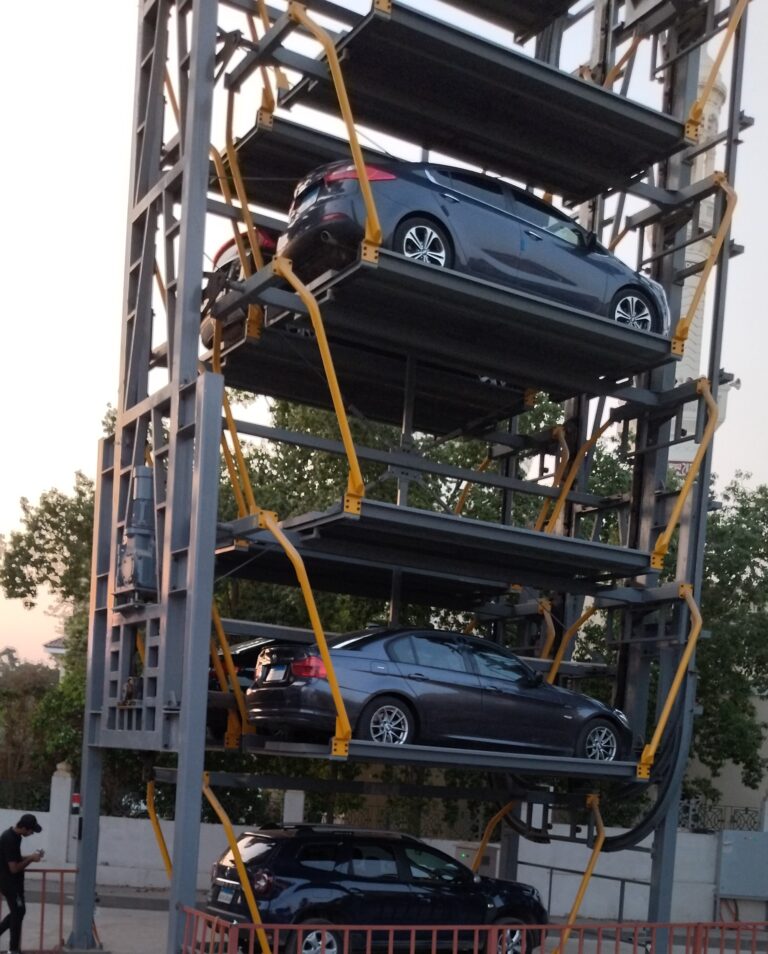
- Tower or silo systems – A narrow vertical shaft with a central lift stores vehicles at multiple levels, ideal for sites with very limited footprint but available height.
- Turntable-assisted systems – Rotating platforms allow vehicles to be repositioned without reversing onto busy or narrow streets, a particularly valuable feature in Amsterdam’s canal-side environment where reversing directly onto the road can be hazardous.
- Hybrid underground systems – Combining multiple technologies within a single structure, these systems are often used in large municipal projects built beneath streets or squares in the historic center.
Each of these approaches has been applied somewhere within Amsterdam’s dense urban fabric, and the choice of technology typically depends on the depth of excavation possible, the shape of the available site, and the number of spaces required.
Why Amsterdam Needs Mechanical Parking Systems
A High Water Table and a Historic Canal Belt
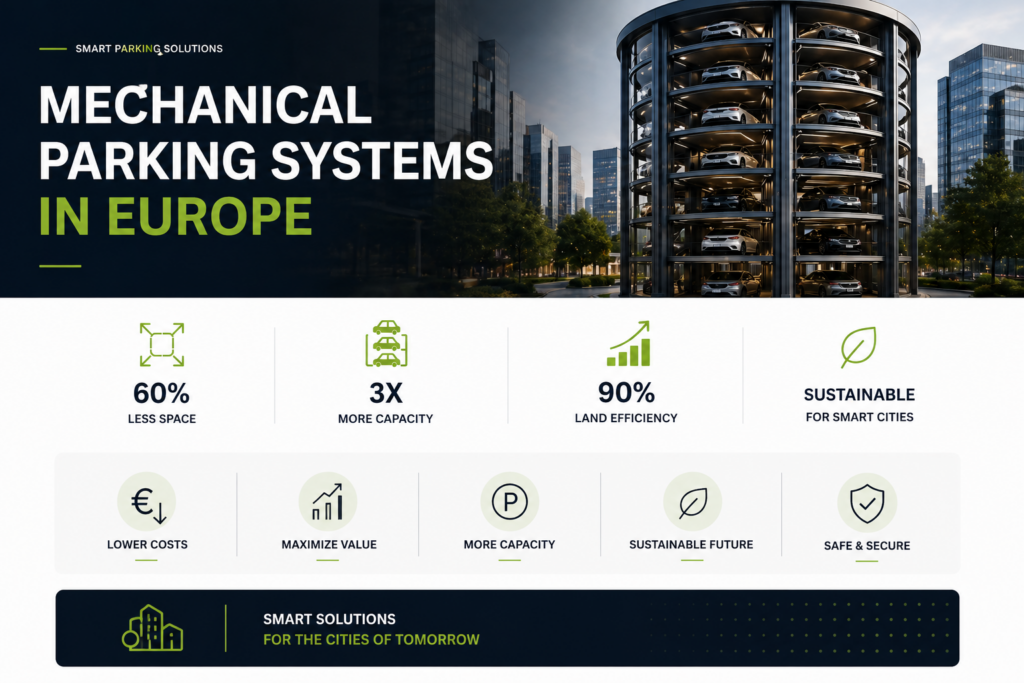
Amsterdam’s geography presents a unique challenge: the city sits on soft, waterlogged soil, and its high water table severely limits how deep a conventional underground garage can be built before flooding and structural risks become prohibitive. This single factor has been one of the strongest drivers behind the adoption of mechanical parking systems in Amsterdam, since automated technology can be engineered to work efficiently within shallow, compact footprints that would be impractical for a traditional ramped garage.
Extremely Narrow Building Footprints
Canal houses in central Amsterdam are famously narrow, a legacy of a historic property tax system that charged owners based on street frontage width. This has left the city with an enormous number of buildings that simply do not have the physical width to accommodate a conventional garage ramp. Mechanical parking systems in Amsterdam, particularly pallet-based and tower configurations, can be installed within these constrained footprints, often fitting dozens of parking spaces into a site that would otherwise accommodate only a handful of cars.
The “Agenda Amsterdam Autoluw” Policy
The municipality of Amsterdam has pursued a long-term policy known as Agenda Amsterdam Autoluw, aimed at reducing the number of cars in the city center and reclaiming street space for pedestrians, cyclists, public transport, and greenery. Rather than simply banning cars, the policy has encouraged shifting stationary vehicles underground and into efficient automated structures, freeing up the surface for other uses. Large-scale mechanical parking systems in Amsterdam have been central to this strategy, allowing the city to remove hundreds of on-street parking spaces while still accommodating residents’ vehicles nearby.
Preserving a UNESCO World Heritage Site
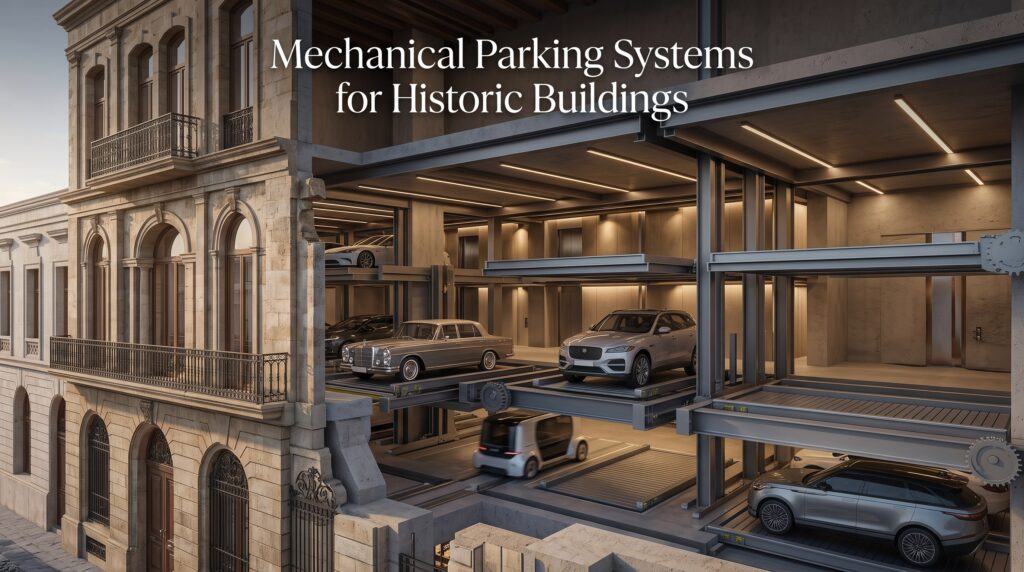
Because much of central Amsterdam’s canal district carries UNESCO World Heritage status, any new parking infrastructure must be designed to minimize visual and physical impact on the historic streetscape. Automated systems are particularly well suited to this requirement, since the only visible elements above ground are typically small, discreetly designed entry pavilions, while the bulk of the parking structure and machinery sits out of sight below street level.
Congestion and the Search for Parking
Like many dense European cities, a significant share of Amsterdam’s inner-city traffic congestion has historically been caused by drivers circling the streets in search of an available space. Mechanical parking systems in Amsterdam, particularly those integrated with residential permit databases and number-plate recognition, allow permit holders to access guaranteed parking directly, reducing unnecessary circling traffic in already congested canal-side streets.
How Mechanical Parking Systems Work in Practice
Regardless of the specific technology used, most installations follow a broadly similar sequence:
- Entry – The driver enters a compact bay, often positioned behind a discreet glass-fronted entry pavilion designed to blend with the surrounding architecture.
- Identification and Authorization – Many systems use number-plate recognition or app-based credentials to confirm the vehicle is registered and authorized, a feature widely used across Amsterdam’s residential permit parking schemes.
- Transfer – Once the bay is confirmed clear of the driver, the pallet, platform, or lift takes control of the vehicle.
- Storage – The system calculates the optimal available slot and moves the car using a combination of lifts, conveyors, and, in some designs, turntables that eliminate the need for reversing.
- Retrieval – When requested, the system reverses the process, delivering the vehicle back to the entry/exit bay, typically within one to a few minutes.
This process removes the need for wide interior driving lanes and turning circles, allows for shallower structures than would otherwise be required, and significantly reduces the risk of collisions since vehicles are never driven by their owners while inside the storage structure.
Notable Amsterdam Projects
Amsterdam is home to some of the most well-documented and long-running examples of mechanical parking systems in Amsterdam’s canal district and beyond, several of which have been in continuous operation for decades.
One of the earliest pallet-based automated parking systems in Europe was installed at a mixed-use building on the historic Herengracht canal, where a lack of on-site parking space was compounded by the need to preserve access for delivery vehicles to a rear postal office. The resulting four-level automated system used twin internal lifts to move cars on pallets, remaining fully operational for well over two decades after installation.

Another landmark project, the Silodam development in Amsterdam’s western dock area, converted a former dam and silo complex into a mixed residential and commercial building. Because the site bordered water on an old pier, engineers had to design an automated parking system that worked within a single level to control civil engineering costs while still fitting more than a hundred vehicles using a sliding pallet, puzzle-style configuration.
More recently, one of the largest underground automated parking facilities in the Netherlands was completed beneath the street Vijzelgracht in the historic canal belt, built into an existing vault between street level and a metro station. The project, commissioned directly by the Amsterdam municipality as part of its broader car-reduction strategy, provides hundreds of automated spaces accessed through discreet glass entry pavilions designed specifically to minimize visual impact on the surrounding UNESCO-listed streetscape. Residents access the facility through permit-linked accounts, with number-plate recognition technology confirming authorization automatically.
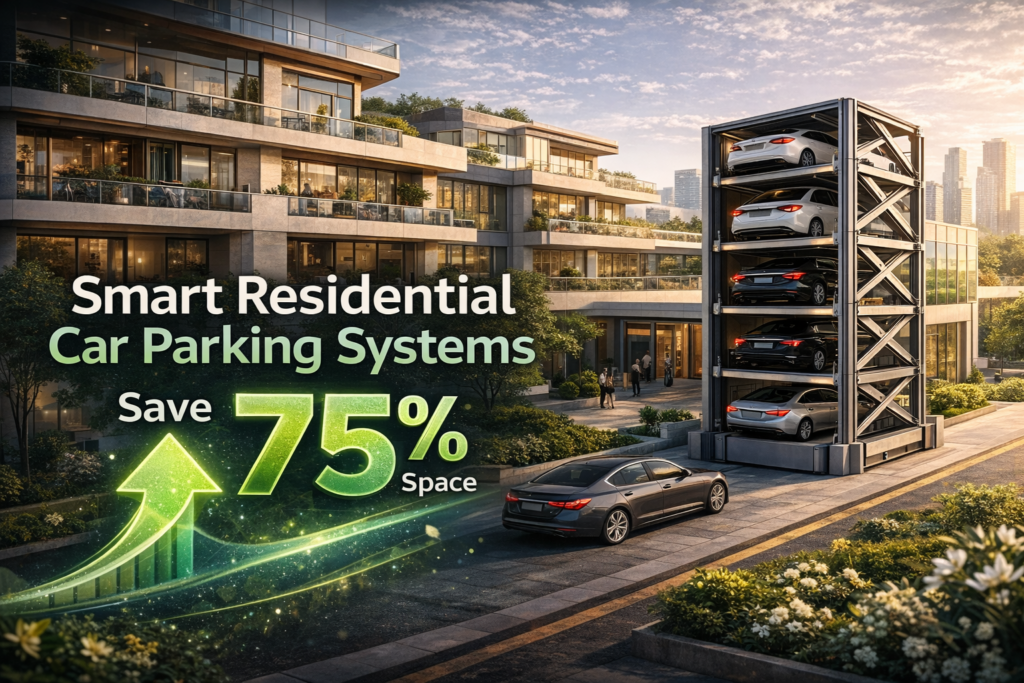
Elsewhere in the city, boutique hotel and residential developments have installed smaller automated systems, some holding around fifty vehicles, specifically engineered to cope with the challenges posed by the city’s high water table, which rules out the deep excavation a conventional underground garage would require.
Benefits of Mechanical Parking Systems in Amsterdam
Maximizing Scarce Space
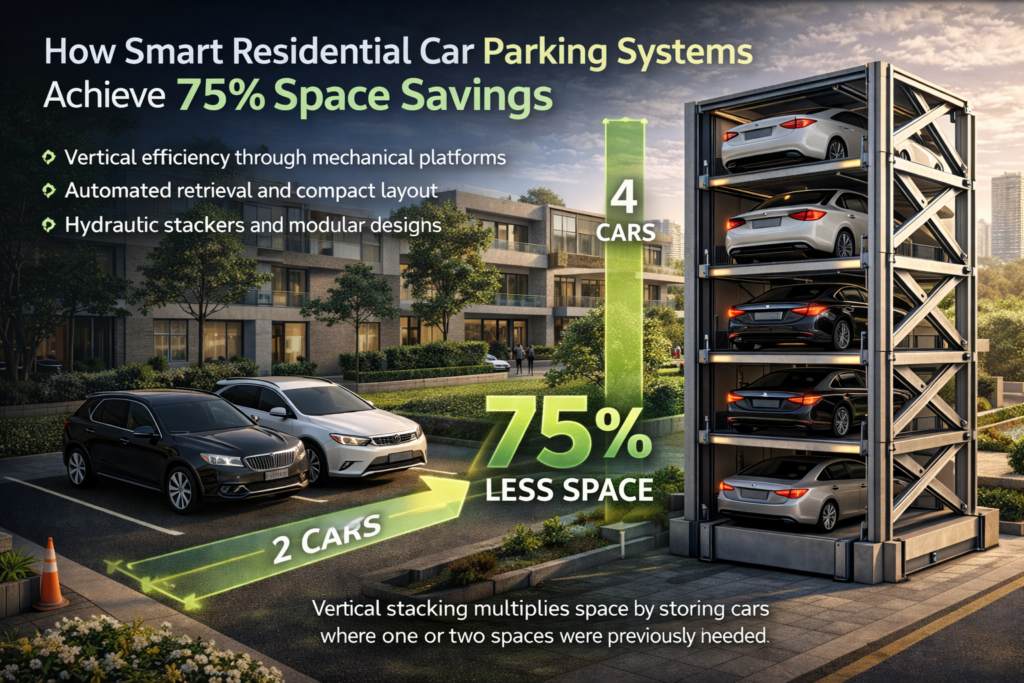
The single greatest advantage is space efficiency. By removing the need for driving lanes and turning circles, mechanical parking systems in Amsterdam consistently fit significantly more vehicles into a given footprint than a traditional garage of the same size, a critical advantage in a city where every square meter of land carries a premium.
Compatibility with Shallow Excavation
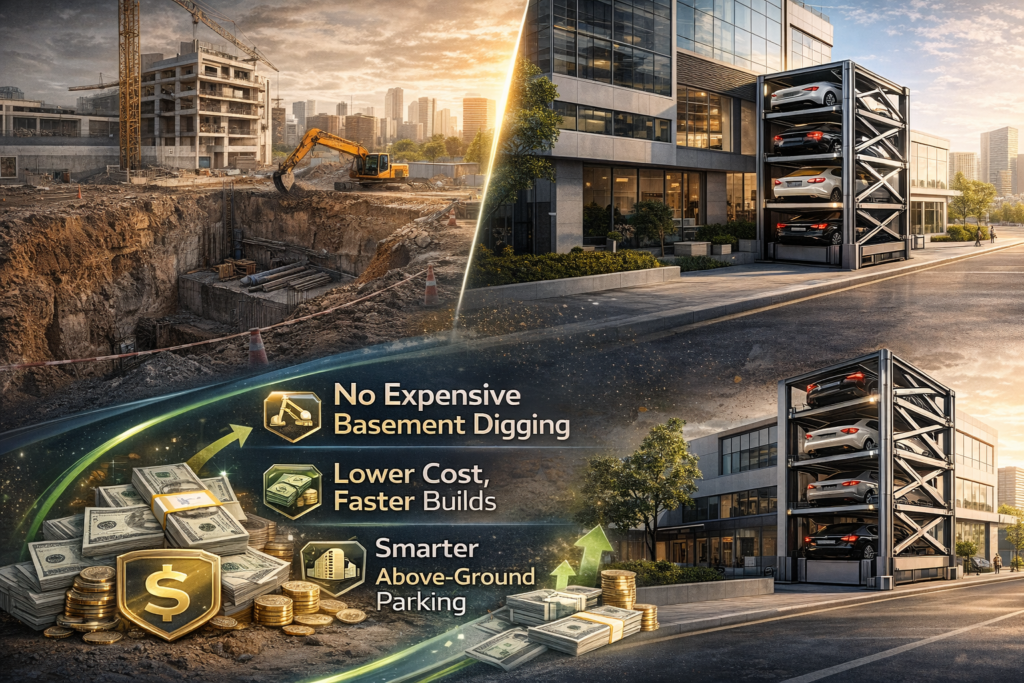
Because many automated systems can be engineered as single-level or shallow multi-level structures, they are far better suited to Amsterdam’s high water table than deep, multi-story conventional garages, which would face far greater engineering and cost challenges to keep dry and structurally sound.
Preserving Historic Streetscapes
With only small entry pavilions visible above ground, mechanical parking systems in Amsterdam allow developers and the municipality to add substantial parking capacity without disrupting the protected facades and sightlines that define the UNESCO-listed canal district.
Supporting the Autoluw Vision
By shifting stationary vehicles underground and into efficient automated structures, the city is able to reclaim surface space for pedestrians, cyclists, public transport, and greenery, directly supporting Amsterdam’s long-term ambition to reduce the dominance of private cars in its historic core.
Enhanced Security and Reduced Damage
Automated retrieval, combined with number-plate recognition and app-based access, reduces the risk of theft, vandalism, and accidental collisions compared to open, publicly accessible garages, since only authorized vehicles and users can interact with the system.
Solving the Reversing Problem
Amsterdam’s narrow canal-side streets, filled with cyclists and pedestrians, make reversing a vehicle onto the road from a garage entrance particularly hazardous. Several mechanical parking systems in Amsterdam incorporate turntables specifically to allow vehicles to exit facing forward, removing this risk entirely.
Challenges and Considerations
Higher Upfront Investment
As in other cities, automated systems generally require a greater initial capital outlay than a conventional garage of comparable size, reflecting the specialized machinery, control software, and precision engineering involved.
Engineering Complexity Near Water
Amsterdam’s waterlogged soil and proximity to canals add a layer of engineering complexity to any underground construction project, mechanical or otherwise. Systems built near canal walls or beneath piers require careful structural design to manage water pressure and long-term stability.
Vehicle Size and Weight Restrictions
Most systems are engineered around defined maximum vehicle dimensions and weights. Some of Amsterdam’s automated facilities, for example, specify limits on vehicle length, height, and weight to ensure compatibility with the storage racks and lifting mechanisms involved.
Long-Term Maintenance Requirements
As mechanical systems with numerous moving parts, these facilities require ongoing maintenance contracts and access to qualified technicians, a consideration that must be planned for from the outset of any project involving mechanical parking systems in Amsterdam.
Permit and Access Management
Because many of Amsterdam’s automated facilities are tied to municipal residential permit schemes, careful coordination between building operators, the municipality, and permit databases is required to ensure smooth, error-free access for residents.
The Policy and Regulatory Landscape
The city of Amsterdam has taken an active role in promoting mechanical parking systems as part of its broader mobility strategy, rather than leaving adoption purely to private developers. Large public infrastructure projects, procured through competitive European tenders, have seen the municipality directly commission automated parking facilities specifically to replace on-street spaces in the historic center. This reflects a broader recognition among Dutch planners that shifting parking underground and into space-efficient automated systems is often the only viable way to meet both housing and mobility needs without compromising the protected character of the canal district.
Developers proposing new mechanical parking systems in Amsterdam are generally expected to engage closely with the municipality’s planning and heritage departments, particularly for sites within the UNESCO-protected zone, where additional scrutiny is applied to any element visible above ground, including entry pavilions, signage, and lighting.
The Market and Industry Landscape
Automated parking technology used in Amsterdam is frequently supplied by specialized European manufacturers with deep experience in engineering complex underground and space-constrained installations. Given the technical challenges posed by the city’s water table and historic building stock, providers with proven track records in the Netherlands are typically favored for major municipal projects, and manufacturing of key machinery components is often carried out at dedicated plants abroad before being shipped and installed on-site. The Netherlands as a whole has seen a steady stream of automated parking installations over the past several decades, with Amsterdam representing one of the most active and technically demanding markets in the country due to its unique combination of heritage constraints and geological challenges.
The Future of Mechanical Parking Systems in Amsterdam
Continued Expansion of the Autoluw Strategy
As Amsterdam continues pursuing its long-term goal of reducing car dominance in the city center, further large-scale automated parking projects are likely, particularly in areas where on-street parking removal is planned as part of broader public space redesigns.
Integration with Electric Vehicle Infrastructure
As the Netherlands accelerates its transition to electric mobility, newer automated parking installations are increasingly expected to include built-in charging capability at individual storage slots, allowing electric vehicles to charge automatically while parked.
Digital Integration with City Mobility Platforms
Given Amsterdam’s sophisticated digital permit and number-plate recognition systems already in use, future mechanical parking systems in Amsterdam are likely to be even more tightly integrated with citywide mobility apps, allowing residents to manage permits, reservations, and payments through a single unified platform.
Retrofit Potential in Historic Buildings
Beyond large municipal projects, there remains significant potential to retrofit smaller automated parking solutions into underused courtyards, basements, and former commercial spaces scattered throughout the historic center, further expanding the reach of mechanical parking systems in Amsterdam without requiring large-scale new construction.
Comparing Mechanical Parking Systems to Traditional Garages
It is worth directly comparing automated technology against the conventional ramped garage to understand why Amsterdam has embraced mechanical parking systems so decisively.
A traditional multi-story garage requires wide driving lanes, ramps, and turning circles on every level, none of which contribute directly to parking capacity. In a city where land is extraordinarily scarce and construction costs near the historic core are correspondingly high, this “non-productive” floor area represents a significant inefficiency that mechanical parking systems in Amsterdam largely eliminate, since vehicles are transported by machine rather than driven under their own power once inside the structure.
Excavation depth is another critical point of comparison. A conventional underground garage typically needs several full levels of vertical clearance to accommodate ramps and driver sightlines, which is difficult to achieve safely given Amsterdam’s high water table. Automated systems, by contrast, can often be compressed into shallower pallet or platform slots, since no person needs to enter or exit the vehicle once it has been handed over to the system. This is one of the central reasons mechanical parking systems in Amsterdam have proven more technically and financially feasible than conventional alternatives in much of the historic center.
Construction disruption is also considerably reduced. Conventional garages require wider excavations and larger volumes of structural concrete to support ramps and expansive floor plates, whereas automated systems are frequently engineered as narrow vertical shafts or compact underground vaults. In a city defined by narrow canal-side streets already congested with cyclists, pedestrians, and delivery traffic, minimizing the footprint and duration of construction work is a meaningful practical advantage.
The Role of Digital Technology and Data
Modern mechanical parking systems in Amsterdam increasingly depend on sophisticated digital platforms that extend well beyond the mechanical hardware itself. Number-plate recognition cameras, linked directly to municipal permit databases, allow the city to manage who is authorized to access a given facility without requiring physical tickets or manual checks. Mobile apps let residents request their vehicle in advance, monitor retrieval status in real time, and receive maintenance or downtime notifications.
This digital integration also supports more flexible access models. Some facilities allow short-term or visitor access to be granted temporarily through the same digital platform used for daily resident access, with billing handled automatically. As Amsterdam continues to build out its broader smart mobility ecosystem, expect mechanical parking systems to become increasingly interconnected with car-sharing services, electric vehicle charging networks, and the city’s wider digital permit infrastructure, further increasing their convenience and value for residents and visitors alike.
Environmental and Public Space Benefits
Beyond the advantages to individual buildings and their residents, mechanical parking systems in Amsterdam contribute meaningfully to city-wide environmental and public space objectives. By concentrating vehicles into dense, efficient underground structures rather than long rows of on-street parking, the city is able to redirect reclaimed surface space toward wider pedestrian pavements, protected cycling infrastructure, street trees, and public seating areas, all central components of the Agenda Amsterdam Autoluw vision.
There is also a meaningful reduction in traffic caused by drivers searching for an available space, a phenomenon that contributes disproportionately to inner-city congestion in many dense European capitals. Facilities offering guaranteed, permit-linked automated parking reduce this behavior among their own users, contributing incrementally to smoother traffic flow and a calmer, more pedestrian-friendly atmosphere throughout the historic canal district.
Frequently Asked Questions
Why are mechanical parking systems particularly common in Amsterdam? The combination of a high water table, extremely narrow historic building footprints, and strict heritage preservation rules makes conventional ramped garages impractical in much of the city, while automated systems can be engineered to work within these constraints.
How does the high water table affect these systems? Because deep excavation is difficult and costly in Amsterdam’s waterlogged soil, many mechanical parking systems in Amsterdam are designed as single-level or shallow multi-level structures, rather than the deep multi-story garages seen in cities with more stable ground conditions.
Do these systems require a parking permit to use? Many of Amsterdam’s larger automated facilities, particularly those commissioned directly by the municipality, are linked to the city’s residential parking permit system, with access controlled through number-plate recognition and app-based credentials.
Are mechanical parking systems visible from the street? Typically not. Most installations in the historic center are designed so that only a small, architecturally discreet entry pavilion is visible above ground, preserving the appearance of the surrounding UNESCO-protected streetscape.
What types of vehicles can use these systems? Compatibility depends on the specific system, but most are designed around defined maximum length, height, and weight limits, so it is important to confirm a vehicle’s dimensions against the specifications of a given facility before relying on it for regular use.
Conclusion
Amsterdam’s unique combination of geological challenges, historic preservation requirements, and a deliberate municipal strategy to reduce car dominance in the city center has made it one of the most compelling case studies in Europe for automated vehicle storage. Mechanical parking systems in Amsterdam offer a practical way to reconcile the city’s need for resident and visitor parking with its equally strong commitment to preserving a UNESCO World Heritage canal district and reclaiming street space for pedestrians, cyclists, and public life. As the city continues pursuing its long-term Autoluw vision and integrates new technology such as electric vehicle charging and unified mobility apps, mechanical parking systems in Amsterdam are set to remain a central pillar of the Dutch capital’s approach to sustainable, space-efficient urban mobility for decades to come.
For developers, architects, and municipal planners evaluating parking solutions in Amsterdam, mechanical parking systems represent far more than a technical workaround for a difficult site — they are an essential tool for balancing heritage preservation, environmental ambition, and the practical realities of life in one of Europe’s most historically significant and densely built cities.