


- August 22, 2026
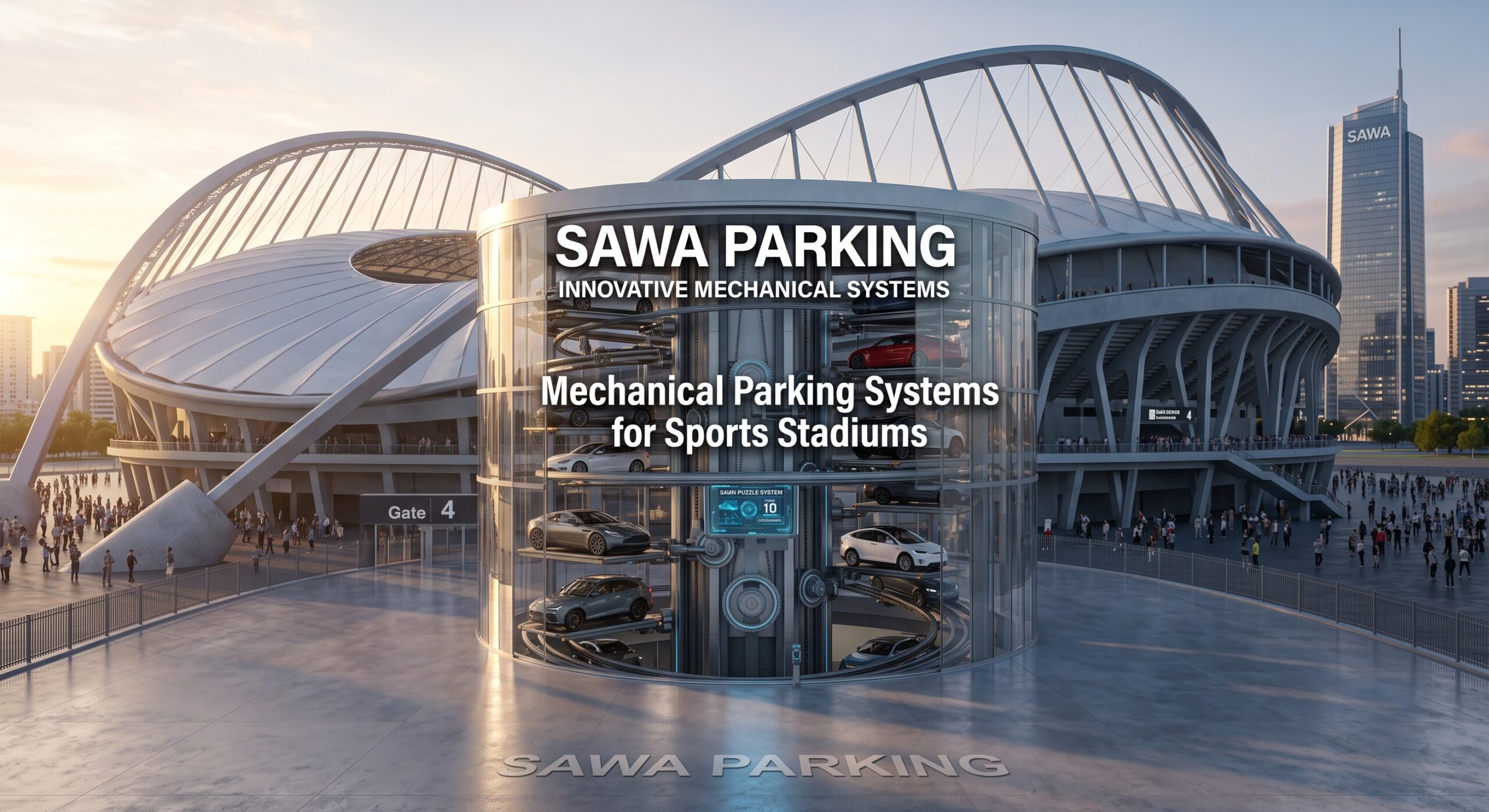
The modern Mechanical Parking Systems for Sports Stadiums have evolved far beyond its original purpose of simply hosting a 90-minute football match or a three-hour baseball game. Today, a mega-stadium is a year-round, multi-billion-dollar immersive entertainment district. It encompasses luxury hospitality suites, high-end retail centers, corporate conference facilities, and massive concourse areas designed to keep fans spending money long after the final whistle blows. However, this architectural evolution has created a massive, highly visible logistical paradox that plagues stadium operators globally: the “Event Day” traffic nightmare.
When 60,000 to 80,000 fans descend upon a confined geographic location within a two-hour window, the surrounding urban infrastructure inevitably collapses into gridlock. The weakest link in this logistical chain is invariably the parking infrastructure. Traditional sprawling surface lots and multi-level concrete ramp garages require immense footprints, cause dangerous pedestrian-vehicle conflicts, and force fans to spend hours navigating congested ramps before and after the event. To resolve this critical operational failure, sports franchise owners and urban planners are increasingly turning to mechanical parking systems for sports stadiums as a foundational element of modern venue design. To solve this complex spatial and traffic engineering puzzle, stadium developers are relying on the advanced infrastructure solutions provided by industry leaders like Sawa Parking.
The Event Day Crisis and Mechanical Parking Systems for Sports Stadiums
To understand the necessity of automated parking in the sports sector, one must analyze the unique traffic generation dynamics of a stadium. Unlike an office building or a shopping mall that generates a steady, predictable flow of traffic over 10 to 12 hours, a stadium generates extreme, violent shockwaves of traffic.
The Pre-Game and Post-Game Shockwave
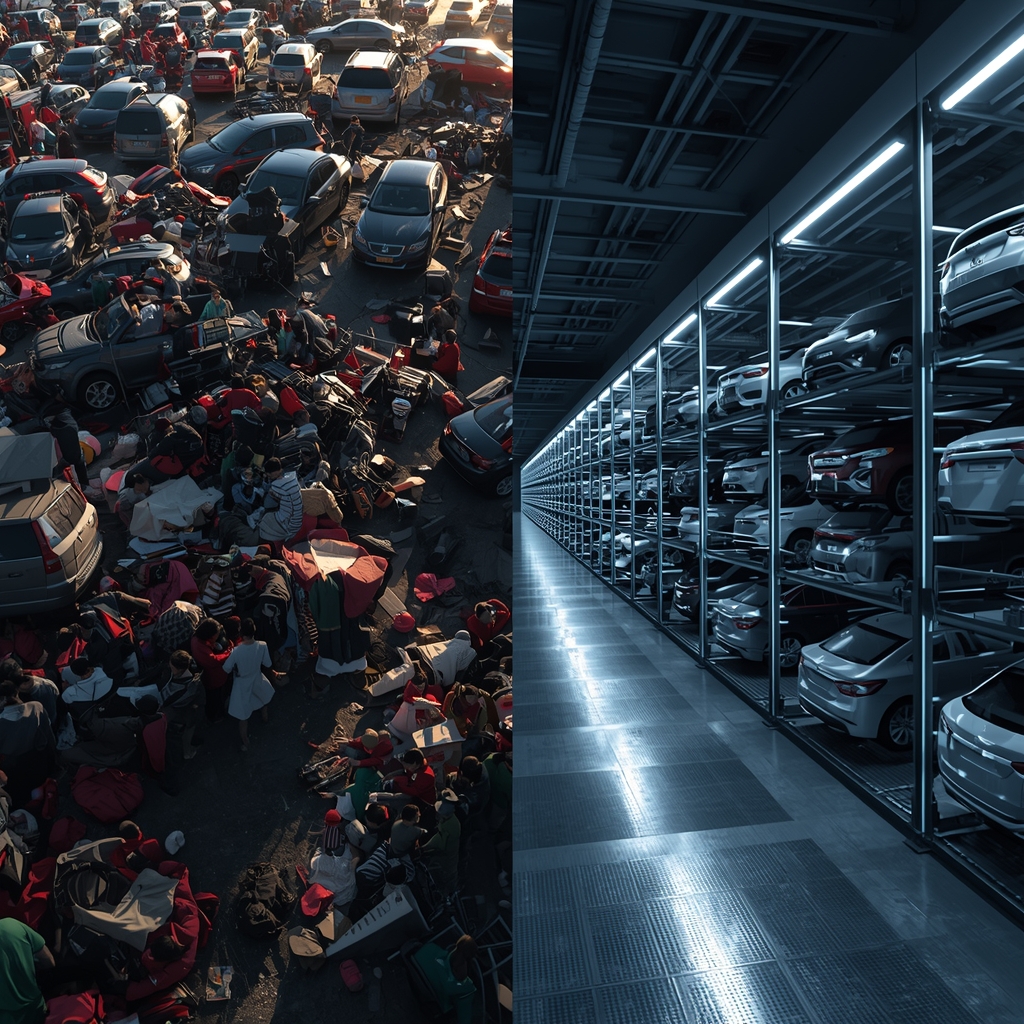
In the two hours leading up to kickoff, tens of thousands of vehicles converge simultaneously on a single geographic point. In a traditional parking layout, this causes immediate gridlock on adjacent highways and local arterial roads. Fans are forced to sit in their cars, idling their engines, stressing about missing the start of the event. The post-game exodus is even more chaotic. When the event ends, 60,000 people walk to their cars at the exact same time and attempt to exit the parking facility simultaneously. Traditional parking ramps—which feature narrow aisles, limited exit points, and bottlenecked toll booths—can take two to three hours to clear. This severely degrades the fan experience and creates immense liability for stadium operators.
Mechanical parking systems for sports stadiums engineer this friction out of existence. The entry process is exponentially faster. Fans pull into highly visible, ground-level transfer cabins positioned strategically around the stadium perimeter. They exit their vehicles in under 60 seconds and walk directly into the stadium plaza. The automated machinery stores the cars rapidly in the background. More importantly, automated systems can be programmed for “mass retrieval.” As the final quarter is playing, the system can begin pre-staging vehicles in the retrieval zone, allowing a continuous, rapid-fire exit of vehicles immediately after the game, drastically reducing the post-game exodus time. Implementing this level of sophisticated traffic engineering requires comprehensive end-to-end parking services to ensure the automated machinery is perfectly synchronized with the stadium’s event management and ticketing software.
Urban Spatial Constraints and Mechanical Parking Systems for Sports Stadiums
The economics of modern sports franchises demand that stadiums be located in dense, highly accessible urban cores rather than remote suburban outskirts. Fans want to be able to walk to nearby bars, restaurants, and hotels before and after the game. However, building a 60,000-seat stadium in the center of a major city—such as the renovations of the Santiago Bernabéu in Madrid, or the Tottenham Hotspur Stadium in London—presents an extreme spatial challenge.
The Mathematics of the Footprint
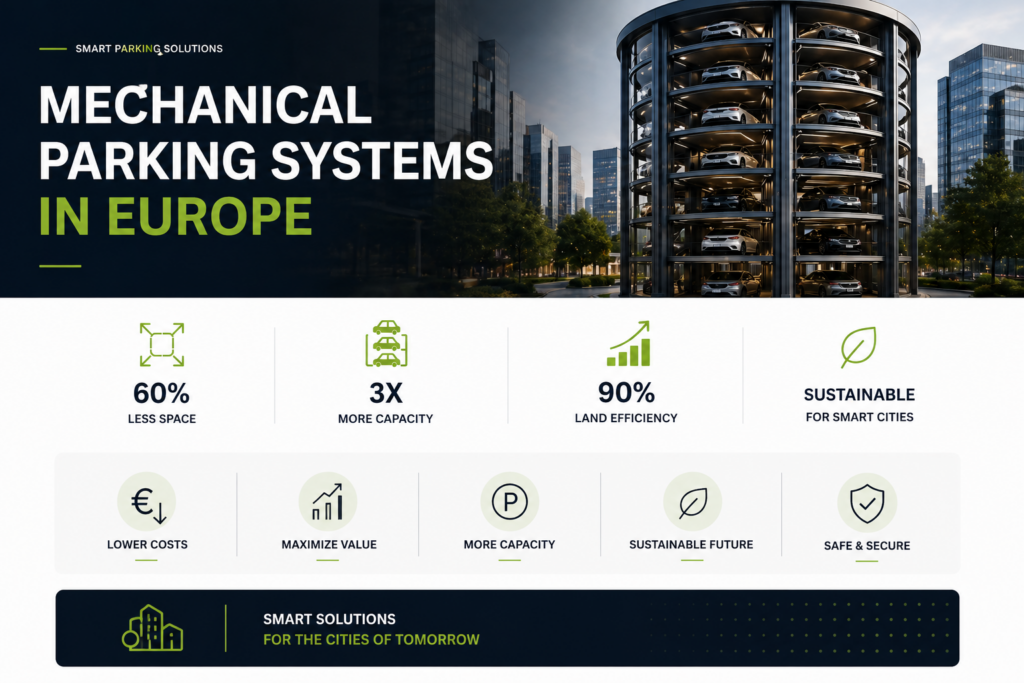
In a dense urban core, land is astronomically expensive. A conventional parking space—including wide driving lanes to accommodate the massive turning radii of SUVs and pickup trucks, pedestrian walkways, and structural supports—consumes an average of 30 to 35 square meters of footprint. To park 10,000 cars using traditional methods requires over 300,000 square meters (30 hectares) of land. In a city center, acquiring or paving over this much land is financially ruinous and politically impossible due to community pushback.
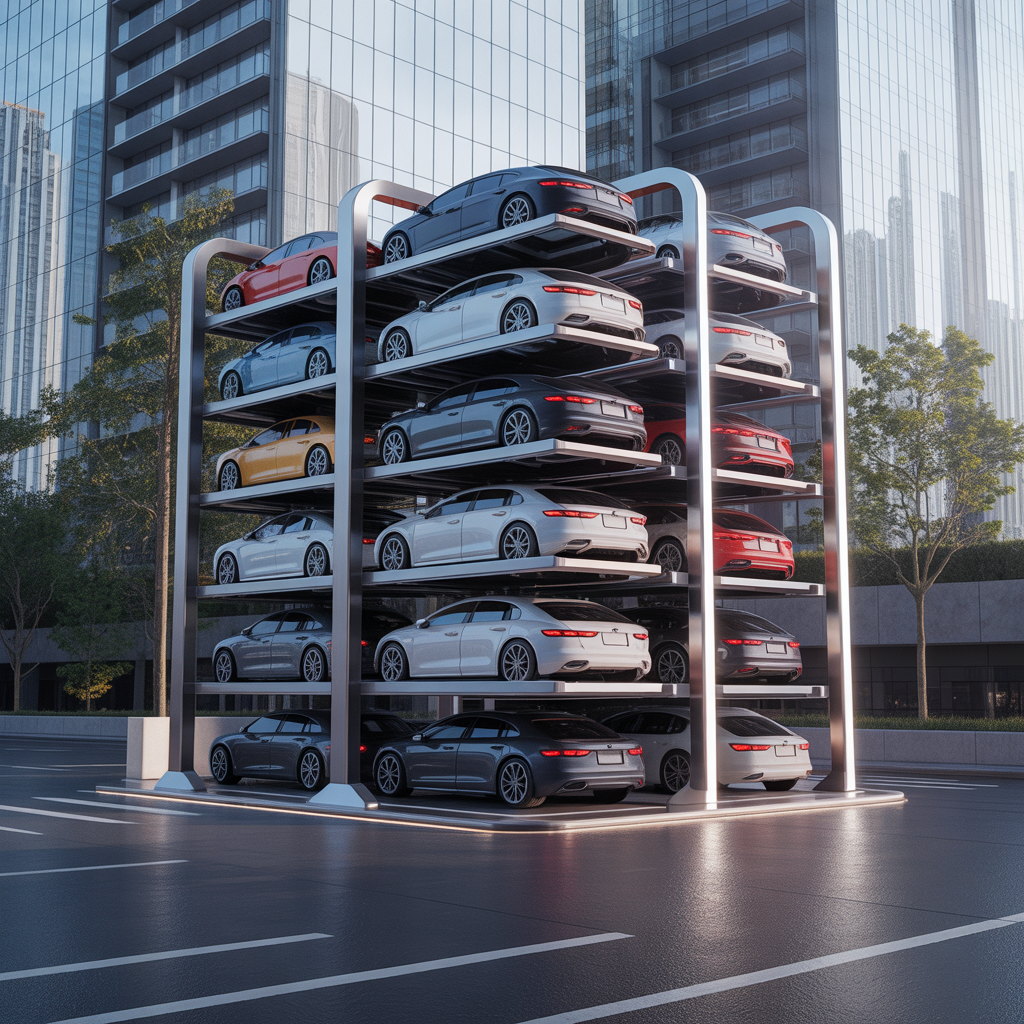
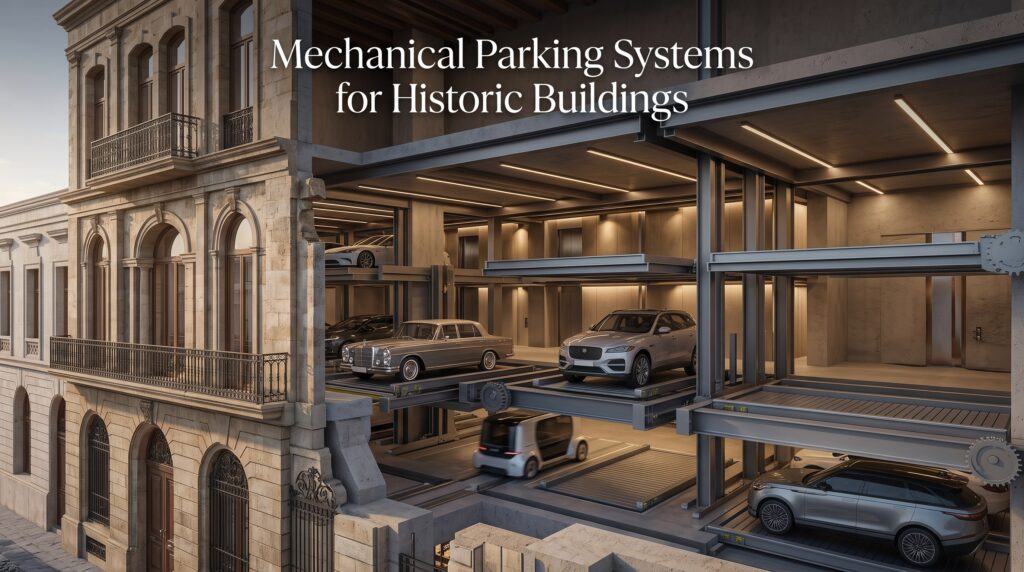
Mechanical parking systems for sports stadiums completely rewrite this mathematical paradigm. By utilizing automated pallets, lifts, or robotic platforms, the human driver is removed from the parking equation. The system eliminates the need for driving lanes, turning circles, and pedestrian stairs, compressing the spatial requirement per vehicle to as little as 15 to 18 square meters. For a stadium developer, this represents a 50% to 60% reduction in the parking footprint. This massive spatial efficiency allows developers to build smaller, more condensed parking structures, freeing up valuable urban land for lucrative mixed-use developments like fan zones, retail centers, and hotels that generate revenue 365 days a year, rather than just on game day. To achieve this level of spatial compression, architects can select from a highly specialized range of advanced parking products tailored for high-volume public assembly.
Fan Psychology: How Mechanical Parking Systems for Sports Stadiums Elevate the Journey
In the highly competitive entertainment industry, the fan experience does not begin when you take your seat; it begins the moment you leave your house. The psychological state of a fan upon arrival heavily influences their spending behavior and their likelihood of returning for future events.
Eliminating the “Last Mile” Frustration
Traditional stadium parking creates immense cognitive load and anxiety. Fans worry about finding a spot, remember which section they parked in, and stress about the long walk to the gate, often in inclement weather. By the time they reach their seat, they are often agitated and exhausted.
Automated parking transforms this narrative. The fan drives directly to a well-lit, clearly signed transfer cabin adjacent to the stadium. They step out of their car and are immediately immersed in the pre-game atmosphere. The walk from the car to the stadium gate is reduced from a 20-minute hike through a concrete labyrinth to a two-minute stroll through a secure, vehicle-free plaza. This frictionless arrival puts the fan in a positive, excited psychological state, which behavioral economists have proven directly correlates with higher per-capita spending on concessions, merchandise, and premium hospitality. The global project portfolios of automated parking providers feature numerous sports and entertainment venues where this transition to seamless arrivals has drastically improved fan satisfaction scores.
Engineering High-Throughput Retrieval in Mechanical Parking Systems for Sports Stadiums
The ultimate test of a stadium parking system is not getting cars into the facility; it is getting them out. The post-game exodus is an engineering nightmare that traditional concrete ramps simply cannot handle efficiently.
The Power of Automated Guided Vehicles (AGVs)
For new stadium constructions, Automated Guided Vehicle (AGV) technology is the ultimate solution for high-throughput events. When a fan drops their car at a transfer cabin, a laser-guided robotic platform slides underneath the vehicle, lifts it by the tires, and navigates it into a high-density parking grid. Because there are no fixed ramps or moving aisles within the grid, the space is entirely filled with cars.
During the post-game exodus, the AGV system shines. Instead of relying on a single, narrow ramp for cars to exit one by one, multiple AGVs can retrieve vehicles simultaneously from different sectors of the grid and deliver them to multiple ground-level exit cabins around the stadium perimeter. This parallel processing drastically increases the exit flow rate. Vehicles are delivered front-first, meaning fans never have to reverse out of tight spaces, eliminating the minor fender-benders that traditionally cause massive delays on exit ramps. The precision manufacturing processes behind these AGV systems ensure that the robotic platforms, battery management systems, and laser guidance modules can withstand the continuous, high-stress duty cycle of back-to-back game days without mechanical failure.
Security Perimeters and Mechanical Parking Systems for Sports Stadiums
In today’s world, large public assembly spaces are inherently vulnerable. Sports stadiums are classified as “soft targets” for terrorism and vehicular ramming attacks. The primary security protocol for any modern stadium is to establish a strict “vehicle exclusion zone” around the perimeter of the building. No unauthorized vehicle should be allowed to get close to the physical structure or the dense crowds lining up to enter.
The Vulnerability of Traditional Ramps
Traditional multi-level parking ramps directly attached to the stadium completely violate this security principle. They allow thousands of unscreened vehicles to penetrate deep into the secure perimeter, driving directly underneath the spectator seating areas.
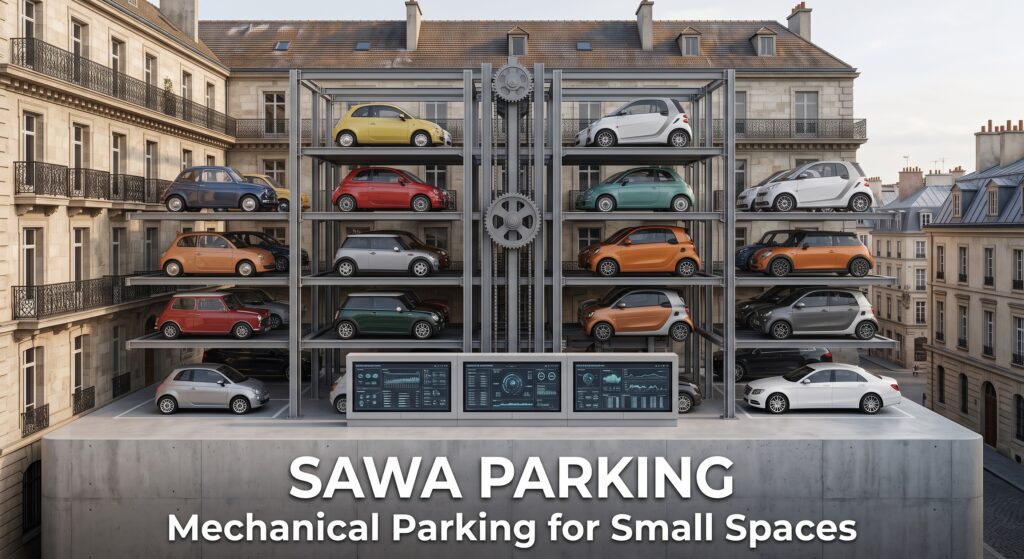
Mechanical parking systems for sports stadiums enforce the vehicle exclusion zone perfectly. The automated parking vault can be constructed as a standalone structure, set back 50 to 100 meters from the stadium bowl. Fans drive into a secure transfer cabin at the perimeter, exit the vehicle, and walk through security screening checkpoints before entering the stadium plaza. The cars are whisked away into a remote, human-free, highly secure vault. If a security threat is detected in a vehicle, it is contained within the isolated parking structure, far from the crowd. Stadium security directors looking to understand how to integrate these secure perimeter designs with automated logistics can find valuable strategic insights by exploring a specialized parking technology blog.
Sustainability and Mechanical Parking Systems for Sports Stadiums
Major sporting organizations, such as the International Olympic Committee (IOC) and UEFA, have implemented strict sustainability mandates for host cities and new stadium constructions. Stadiums must now meet rigorous environmental certification standards, such as LEED or BREEAM. Traditional parking is a massive barrier to achieving these green certifications.
Mitigating the Urban Heat Island Effect
Traditional stadium parking requires leveling massive tracts of land and covering them in black asphalt. On a hot summer day, these lots absorb immense amounts of solar radiation, creating a localized “urban heat island” that can raise the ambient temperature by several degrees. This not only makes the pedestrian walk to the stadium miserable but also increases the cooling load (and energy consumption) of the stadium itself. By condensing the parking footprint by 60% using mechanical parking systems for sports stadiums, developers can replace acres of asphalt with permeable green spaces, landscaped fan plazas, or tree canopies, drastically cooling the microclimate.
Eradicating Event Day Emissions
Perhaps the most significant environmental benefit is the elimination of “cruising for parking.” In a traditional lot, tens of thousands of cars spend 15 to 20 minutes idling their engines, circling aisles, and crawling up and down ramps. This concentrated idling releases massive amounts of carbon dioxide, nitrogen oxides, and particulate matter directly into the stadium bowl area. Automated parking turns the car off the moment it enters the transfer cabin. Furthermore, because the parking vault is human-free, it requires no continuous lighting or mechanical ventilation, saving millions of kilowatt-hours of electricity annually.
Conclusion
The economic success of a modern mega-stadium is no longer determined solely by the team on the pitch or the artists on the stage; it is determined by the quality of the logistical infrastructure that surrounds it. As stadiums integrate deeper into dense urban environments and fan expectations for seamless experiences continue to rise, the sprawling, congested, and insecure parking paradigms of the 20th century are no longer viable. Mechanical parking systems for sports stadiums provide the definitive, engineered solution to the event day crisis. They maximize the utilization of highly constrained urban land, eliminate the dangerous pedestrian-vehicle conflicts of the post-game exodus, enforce strict anti-terrorism security perimeters, and ensure compliance with aggressive environmental sustainability mandates. By investing in high-throughput automated parking infrastructure, stadium developers are not just building a place to store cars; they are engineering a superior, frictionless gateway that maximizes fan satisfaction and drives year-round revenue generation. To explore how these high-speed systems can be integrated into your next sports venue master plan, we encourage you to contact our team for a specialized consultation. Discover how Sawa Parking is engineering the future of global sports infrastructure.
References & Authoritative Industry Sources
-
Institute of Transportation Engineers (ITE) – Trip Generation Manual – Traffic generation rates and spatial distribution models for high-density public assembly and sports stadium land uses. (This authoritative engineering source validates the article’s claims regarding the extreme, shockwave traffic generation dynamics of stadiums and the mathematical spatial requirements of traditional versus automated parking footprints). 🔗 https://www.ite.org/technical-resources/topics/trip-and-parking-generation/

-
UEFA Stadium Infrastructure Regulations – Stadium design, safety, and environmental sustainability guidelines for elite European football venues. (This premier sports governing body’s documentation supports the article’s arguments regarding the necessity of vehicle exclusion zones for anti-terrorism security and the strict environmental mandates required for modern stadium parking and landscaping). 🔗 https://www.uefa.com/supportingfootball/stadium/
-
Urban Land Institute (ULI) – Sports Facilities and Downtown Development – Economic impact studies on the integration of sports venues into dense urban cores and the monetization of reclaimed surface parking land. (This global real estate authority provides the financial frameworks that back up the article’s claims regarding the high opportunity cost of urban land and the revenue-generating benefits of replacing asphalt parking lots with mixed-use commercial developments). 🔗 https://uli.org/research/centers-initiatives/building-healthy-places/
-
American Society of Civil Engineers (ASCE) – Structural Engineering Institute – Design load considerations and seismic/structural requirements for high-capacity automated guided vehicle (AGV) systems in public assembly spaces. (This premier engineering institution validates the technical claims regarding the heavy-duty structural requirements, dynamic load calculations, and precision manufacturing needed for robotic parking systems to withstand the continuous duty cycles of mega-stadiums). 🔗 https://www.asce.org/institutes/structural-engineering-institute/