



- June 10, 2026
Hospitals across the United Kingdom are facing increasing pressure on parking infrastructure as patient demand, staff requirements, visitor traffic, and healthcare operations continue growing rapidly. In many hospitals, parking has become one of the most critical operational challenges affecting accessibility, patient experience, emergency response efficiency, and overall facility performance.
Every day, hospitals must accommodate:
- Medical staff
- Emergency vehicles
- Patients
- Visitors
- Service providers
- Logistics operations
- Ambulance movement
all within highly active environments where operational efficiency is essential.
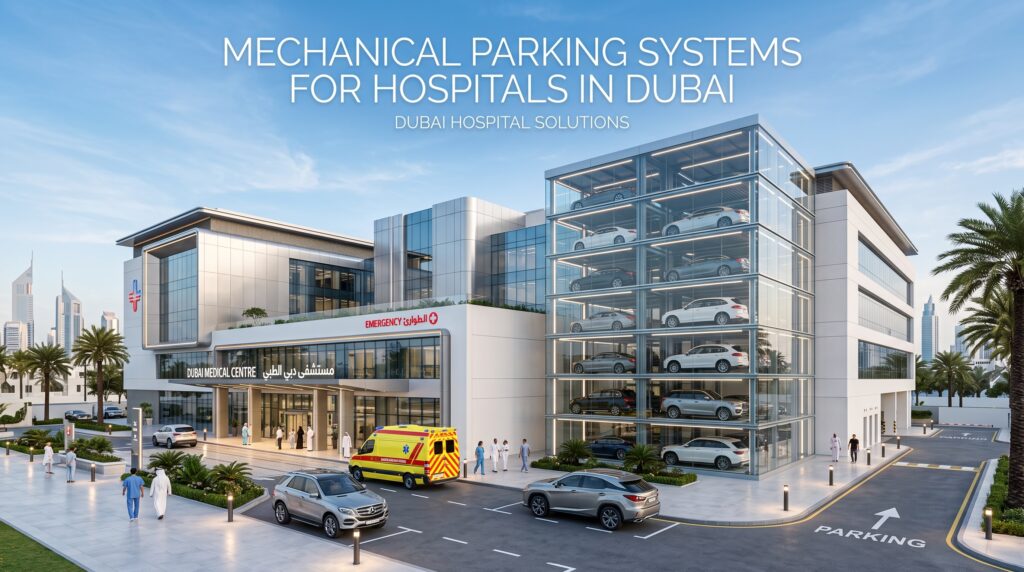
At the same time, many healthcare facilities across the UK are located inside dense urban areas where available land is limited and traffic congestion is already extremely high. Traditional parking systems are increasingly struggling to support modern healthcare infrastructure efficiently because they consume large amounts of space while still creating operational bottlenecks and circulation problems.
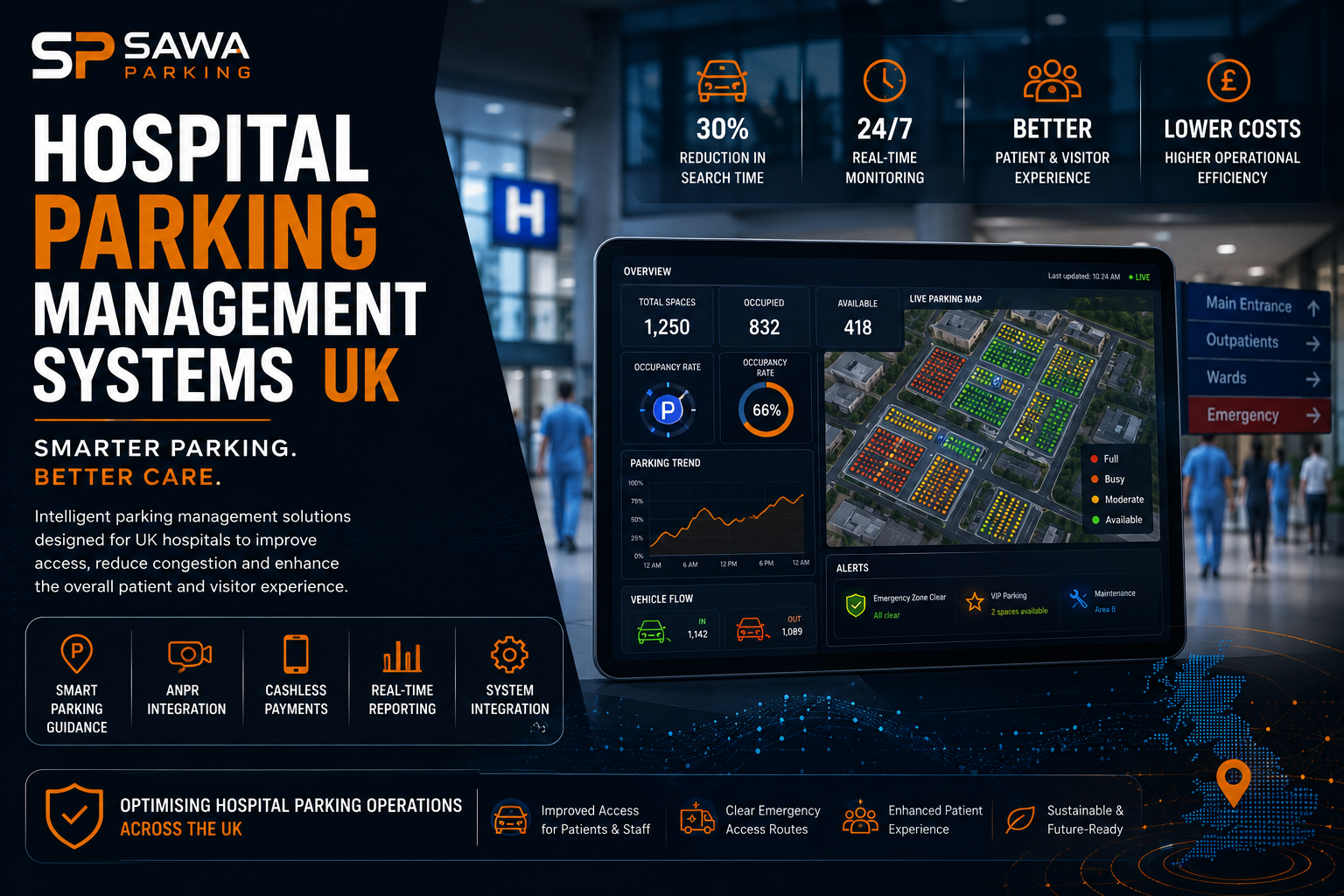
This is exactly why hospital parking management systems UK are becoming increasingly important for healthcare infrastructure planning. Smart parking technologies are helping hospitals improve accessibility, reduce traffic congestion, optimize land utilization, and support more efficient patient and staff mobility across healthcare environments.

As hospitals continue evolving into more advanced and digitally connected facilities, intelligent parking infrastructure is becoming an essential component of modern healthcare operations.
Hospital Parking Has Become a Major Operational Challenge
Modern hospitals operate under extremely high daily traffic pressure. Unlike many commercial developments where traffic demand fluctuates throughout the day, healthcare facilities experience continuous vehicle movement across multiple operational categories simultaneously.
Hospitals must support:
- Emergency access routes
- Staff parking
- Patient parking
- Visitor parking
- Delivery operations
- Ambulance circulation
- Service vehicle access
Traditional parking systems often struggle to organize these different traffic flows efficiently, especially in hospitals located inside dense urban environments where space is already highly restricted.
Common operational problems include:
- Parking shortages
- Traffic congestion at entrances
- Long vehicle waiting times
- Poor circulation efficiency
- Delayed accessibility
- Emergency route obstruction
- Visitor frustration
In healthcare environments where accessibility and operational efficiency directly affect patient experience and emergency response performance, parking infrastructure itself becomes a critical operational system rather than simply a secondary facility component.

This growing infrastructure pressure is accelerating investment in more advanced hospital parking management systems UK capable of improving both operational efficiency and overall healthcare accessibility.
Urban Hospitals Face Increasing Space Limitations
Many hospitals across the UK are located in highly dense urban environments where available land is extremely limited and expensive.
Cities such as:
- London
- Manchester
- Birmingham
- Liverpool
- Glasgow
- Leeds
continue experiencing rising population density and increasing traffic congestion, placing enormous pressure on healthcare infrastructure systems.
Traditional parking systems require:
- Large circulation lanes
- Ramps
- Surface parking areas
- Underground excavation
- Oversized parking layouts
These systems consume valuable hospital space that could otherwise support:
- Medical facilities
- Patient services
- Clinical expansion
- Emergency infrastructure
- Healthcare operations
As land becomes increasingly valuable, hospitals can no longer afford to waste large portions of available infrastructure space on inefficient parking layouts.
This is one of the major reasons why smart parking technologies are becoming increasingly important for future healthcare infrastructure planning across the UK.

Why Hospital Parking Management Systems UK Are Becoming Essential
Modern hospital parking management systems UK solve several critical healthcare infrastructure challenges simultaneously by improving traffic organization, parking efficiency, and operational accessibility.
These systems integrate technologies such as:
- Smart parking software
- Automated vehicle monitoring
- Real-time parking availability systems
- Intelligent traffic control
- Digital access management
- Automated parking infrastructure
Instead of relying entirely on traditional parking organization methods, intelligent systems optimize vehicle movement and parking allocation more efficiently across healthcare environments.

The advantages include:
- Faster parking access
- Reduced congestion
- Better emergency circulation
- Improved patient accessibility
- More efficient staff parking management
- Better operational scalability
As hospitals continue becoming more operationally complex, intelligent parking management infrastructure is becoming increasingly essential for maintaining efficient healthcare operations.
Traffic Congestion Affects Healthcare Efficiency
One of the biggest problems affecting many hospitals today is that traffic congestion directly impacts operational performance and patient experience.

When parking infrastructure becomes inefficient, hospitals often experience:
- Delayed patient arrivals
- Increased stress for visitors
- Slower emergency vehicle movement
- Staff accessibility problems
- Poor traffic circulation inside facilities
In healthcare environments, even small delays can significantly affect operational efficiency and patient satisfaction.
Advanced hospital parking management systems UK help reduce these problems through:
- Smart traffic organization
- Real-time parking allocation
- Intelligent circulation management
- Automated access systems
- Better vehicle flow optimization
This allows hospitals to improve mobility performance while reducing operational pressure across healthcare environments.
Smart Parking Systems Improve Emergency Accessibility
Emergency accessibility is one of the most critical operational priorities inside any healthcare facility. Ambulances and emergency vehicles require fast and uninterrupted access to emergency departments and critical infrastructure zones.
Poor parking organization can create serious operational risks by increasing congestion around hospital entrances and emergency circulation routes.
Smart parking systems help hospitals improve emergency accessibility by:
- Separating traffic flows
- Optimizing vehicle circulation
- Reducing parking congestion
- Improving access management
- Supporting emergency route prioritization
As healthcare facilities continue expanding, intelligent parking infrastructure will become increasingly important for maintaining operational safety and emergency response efficiency.

Mechanical Parking Systems Are Becoming More Attractive for Hospitals
Many hospitals are now exploring:
- Mechanical parking systems
- Automated parking systems
- Vertical parking infrastructure
- Smart parking technologies
as more efficient alternatives to traditional parking layouts.
Mechanical parking systems such as:
- Puzzle parking systems
- Rotary parking systems
- Automated parking towers
- Car stacker systems
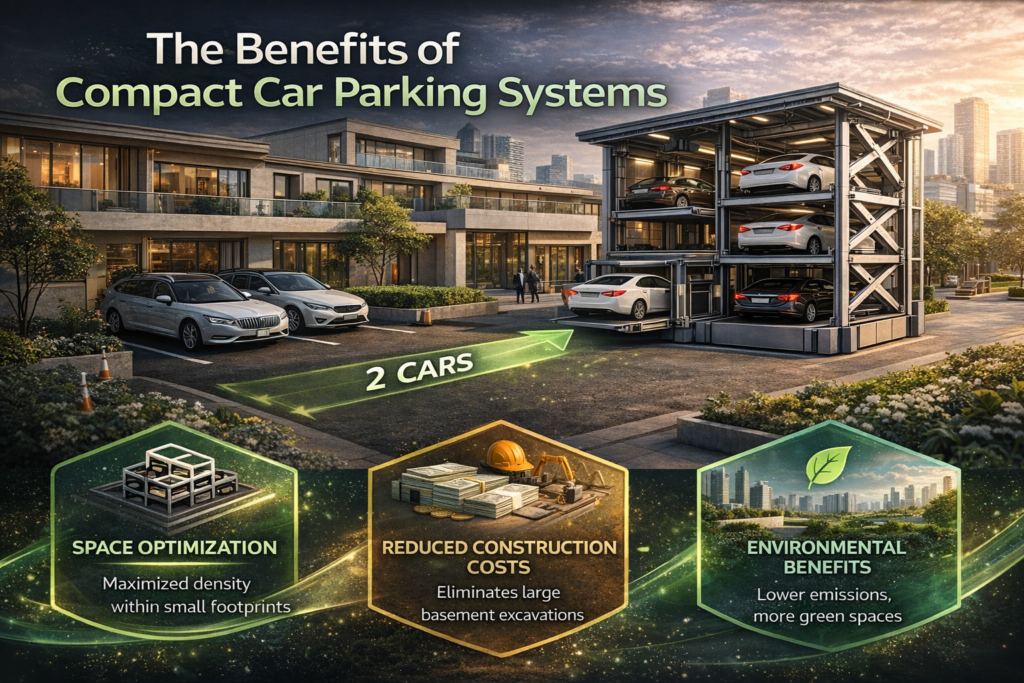
allow hospitals to significantly increase parking capacity within compact footprints compared to conventional parking methods.
This helps healthcare facilities:
- Improve land utilization
- Reduce parking shortages
- Support future expansion
- Optimize operational infrastructure
As healthcare demand continues increasing across the UK, these technologies are becoming increasingly attractive for future hospital infrastructure planning.
Smart Hospitals Require Smart Parking Infrastructure
Modern healthcare facilities are rapidly evolving toward digitally integrated smart infrastructure systems designed to improve operational performance and patient experience.
Smart hospitals increasingly depend on technologies such as:
- AI-supported operational systems
- Digital healthcare infrastructure
- Smart building management
- Intelligent traffic systems
- Automated facility operations
Parking infrastructure is becoming an important component of this ecosystem because inefficient parking directly affects accessibility, congestion, operational flow, and healthcare performance.
Advanced hospital parking management systems UK are increasingly integrating technologies such as:
- Real-time parking tracking
- Digital mobility platforms
- Automated access control
- Intelligent parking analytics
- Smart payment systems
These technologies transform parking infrastructure into active operational systems supporting the overall efficiency of healthcare facilities.
Parking Infrastructure Must Support Future Healthcare Growth
Healthcare demand across the UK is expected to continue increasing significantly due to:
- Population growth
- Urban density expansion
- Aging populations
- Increased healthcare service demand
- Expanding medical infrastructure
This means hospitals will require increasingly scalable infrastructure systems capable of supporting larger operational volumes efficiently.
Traditional parking systems may eventually become insufficient for many healthcare environments because they consume too much space while limiting future expansion flexibility.
Smart parking technologies provide more scalable and future-ready infrastructure models capable of supporting modern healthcare growth far more efficiently.
Why This Matters for Global Healthcare Infrastructure
The transformation currently happening across UK hospitals reflects a much larger global shift toward smarter healthcare infrastructure systems.
Hospitals worldwide are increasingly facing:
- Higher patient volumes
- Limited available land
- Traffic congestion
- Operational complexity
- Infrastructure scalability challenges
This means intelligent parking systems are becoming globally important components of future healthcare infrastructure planning.
The same infrastructure challenges affecting hospitals in the UK are becoming increasingly relevant for healthcare facilities across Europe, the Middle East, and rapidly growing urban markets such as Egypt.
Why Sawa Parking Supports Smart Healthcare Infrastructure
As healthcare facilities continue evolving globally, companies capable of delivering intelligent parking infrastructure will play an increasingly important role in supporting future operational efficiency.
Sawa Parking focuses on advanced smart parking technologies specifically designed for modern urban environments where operational efficiency, scalable infrastructure, and intelligent mobility systems have become critical priorities.
The company combines:
- Smart parking systems
- Mechanical parking technologies
- Advanced engineering expertise
- Intelligent parking design
- Customized infrastructure integration
- Local manufacturing capabilities
This allows healthcare facilities and developers to implement highly efficient parking solutions capable of supporting modern operational requirements while improving land utilization and mobility performance.
Conclusion
Parking infrastructure is becoming one of the most important operational systems affecting modern healthcare facilities across the UK. Rising traffic congestion, limited urban land, increasing patient demand, and growing healthcare complexity are making traditional parking systems increasingly inefficient and operationally restrictive.
This is why hospital parking management systems UK are becoming essential infrastructure solutions for improving accessibility, reducing congestion, optimizing land utilization, and supporting future healthcare infrastructure growth.
As hospitals continue evolving into smarter and more connected operational environments, intelligent parking technologies will become critical components of future healthcare mobility and infrastructure planning.
References
NHS England
https://www.england.nhs.uk
Transport for London (TfL)
https://tfl.gov.uk
International Parking & Mobility Institute (IPMI)
https://www.parking-mobility.org
ITS International
https://www.itsinternational.com
Smart Cities World
https://www.smartcitiesworld.net
Urban Land Institute (ULI)
https://uli.org
McKinsey & Company – Urban Infrastructure Reports
https://www.mckinsey.com