


- June 12, 2026
Modern hospitals operate in highly complex environments where efficiency, accessibility, and rapid mobility are critical for both patient care and daily operations. Every day, healthcare facilities must manage thousands of vehicle movements involving doctors, medical staff, emergency vehicles, patients, visitors, suppliers, and service providers — all within limited spaces and under constant operational pressure.
As hospitals continue expanding and healthcare demand increases, parking infrastructure has become one of the most important operational systems affecting overall hospital performance. In many healthcare facilities, traditional parking management methods are no longer capable of supporting modern operational requirements efficiently.
Long vehicle queues, delayed emergency access, staff parking conflicts, visitor congestion, ticketing delays, and inefficient traffic circulation all create operational problems that directly affect hospital accessibility and user experience.
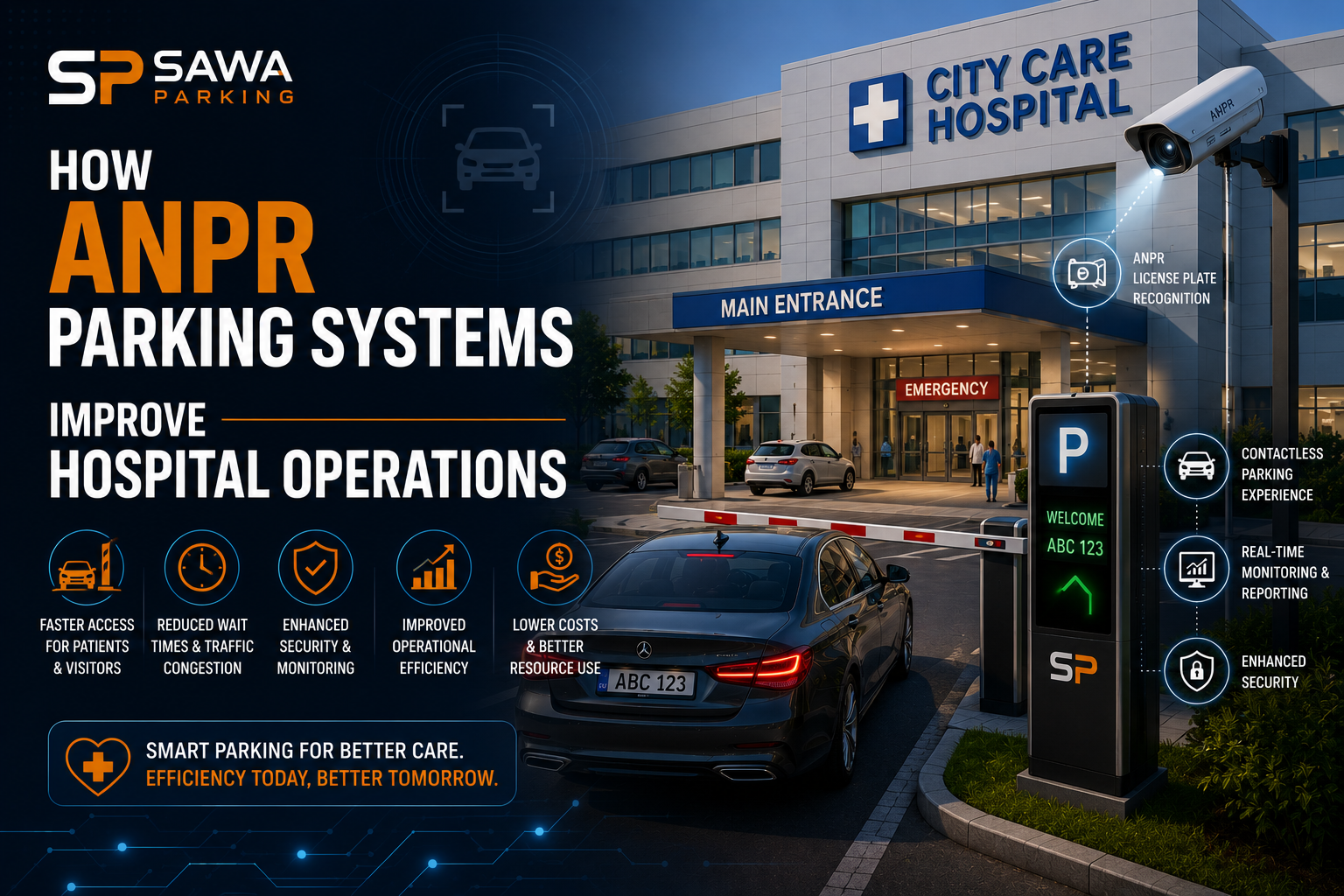
This is exactly why ANPR parking systems are becoming increasingly important for modern healthcare infrastructure. Automatic Number Plate Recognition technology allows hospitals to automate vehicle access, improve parking management, reduce congestion, strengthen security, and support smarter operational workflows across healthcare environments.
As hospitals continue evolving into more digitally connected and operationally efficient facilities, ANPR parking technology is rapidly becoming an essential part of modern healthcare infrastructure planning.
What Is an ANPR Parking System
ANPR stands for Automatic Number Plate Recognition. It is an intelligent parking management technology that uses advanced cameras and software systems to automatically detect, read, and process vehicle license plates during entry and exit operations.
Instead of relying on traditional ticket-based parking systems or manual gate management, ANPR systems automatically recognize vehicles and control parking access digitally and efficiently.
Modern ANPR parking systems typically include:
- High-resolution ANPR cameras
- Vehicle recognition software
- Automated gate systems
- Smart parking databases
- Access management platforms
- Real-time vehicle monitoring systems
When a vehicle approaches the parking entrance, the ANPR camera automatically reads the license plate and grants access based on predefined permissions or parking rules.

This creates a much faster, more efficient, and more secure parking operation compared to traditional manual systems.
Hospital Parking Operations Are Becoming More Complex
Hospitals are among the most operationally demanding environments for parking management because they must simultaneously support multiple traffic categories with completely different priorities and access requirements.
Healthcare facilities typically manage:
- Emergency vehicles
- Ambulances
- Doctors and medical staff
- Administrative employees
- Patients
- Visitors
- Service providers
- Delivery vehicles
Traditional parking systems often struggle to organize these traffic flows efficiently, especially during peak operational periods where large vehicle volumes create congestion and circulation problems around entrances and parking zones.
Common hospital parking problems include:
- Long entry queues
- Delayed emergency access
- Traffic congestion at gates
- Ticketing delays
- Unauthorized parking
- Visitor confusion
- Security limitations
- Manual operational errors
In healthcare environments where accessibility and operational speed directly affect patient experience and emergency performance, inefficient parking systems can become serious operational obstacles.
This is one of the biggest reasons why hospitals are increasingly investing in advanced ANPR parking systems capable of improving operational efficiency and traffic management automatically.
ANPR Parking Systems Improve Emergency Access
One of the biggest operational advantages of ANPR technology in hospitals is faster and more efficient emergency vehicle access.
Ambulances and emergency vehicles require immediate entry into healthcare facilities without delays caused by ticketing systems, security checks, or traffic congestion at parking entrances.
Traditional parking systems often create unnecessary bottlenecks that slow emergency circulation and increase operational pressure around hospital access points.

Modern ANPR parking systems solve this challenge by:
- Automatically identifying emergency vehicles
- Opening access gates instantly
- Prioritizing emergency traffic flow
- Reducing congestion at entrances
- Improving operational response speed
This significantly improves emergency accessibility while helping hospitals maintain smoother operational performance during high-pressure situations.
Faster Entry and Exit Improve Overall Hospital Efficiency
Hospitals experience continuous vehicle movement throughout the day. Delays at parking entrances and exits create operational congestion that can quickly spread across surrounding roads and healthcare facilities.
ANPR parking systems dramatically improve traffic flow because vehicles no longer need to:
- Collect paper tickets
- Wait for manual verification
- Stop for payment processing
- Interact with gate operators
Vehicles enter and exit automatically through license plate recognition technology, creating a much faster and smoother parking experience.
This helps reduce:
- Vehicle waiting times
- Entrance congestion
- Traffic accumulation
- Operational delays
As hospitals become busier and more operationally complex, these efficiency improvements become increasingly valuable for maintaining organized healthcare environments.
Better Staff Parking Management
Managing staff parking efficiently is one of the biggest challenges affecting many hospitals today.

Doctors, nurses, administrative employees, and healthcare staff require fast and reliable parking access because operational delays can directly affect healthcare performance and shift organization.
Traditional parking systems often create problems such as:
- Limited reserved parking
- Unauthorized parking usage
- Staff delays during peak hours
- Parking allocation conflicts
Advanced ANPR parking systems allow hospitals to create intelligent staff parking management systems through:
- Authorized vehicle databases
- Reserved parking permissions
- Priority access control
- Automated vehicle recognition
- Smart parking allocation systems
This improves operational organization while helping staff access facilities faster and more efficiently.
ANPR Parking Systems Improve Hospital Security
Security is a critical priority for modern healthcare facilities. Hospitals must continuously monitor vehicle access in order to protect patients, staff, visitors, and operational infrastructure.
Traditional parking systems often provide limited visibility and weak vehicle tracking capabilities.
Modern ANPR parking systems significantly improve healthcare security through:

- Real-time vehicle tracking
- License plate recording
- Vehicle access history monitoring
- Blacklist and whitelist management
- Unauthorized vehicle detection
- Automated security alerts
This creates a far more secure parking environment while improving operational monitoring across healthcare facilities.
Hospitals can also integrate ANPR systems with broader security infrastructure such as:
- CCTV systems
- Access control platforms
- Smart surveillance systems
- Facility management software
creating more connected and intelligent operational environments.
Reducing Visitor Stress and Improving Patient Experience
Hospital visits are already stressful for many patients and visitors. Parking problems often increase frustration before patients even enter the healthcare facility.
Long queues, complicated ticketing systems, parking shortages, and unclear parking organization negatively affect overall patient experience and hospital accessibility.
ANPR parking systems improve visitor experience by:
- Simplifying parking access
- Reducing waiting times
- Improving traffic organization
- Eliminating paper ticket systems
- Supporting smoother vehicle circulation
This creates a more organized and user-friendly healthcare environment while improving accessibility for patients and visitors.
As healthcare facilities continue focusing more heavily on patient experience and operational quality, parking infrastructure itself is becoming an increasingly important component of healthcare service delivery.
ANPR Systems Support Smart Hospital Infrastructure
Modern hospitals are rapidly moving toward smart infrastructure systems designed to improve operational efficiency, automation, and healthcare management performance.
Smart hospitals increasingly depend on:
- AI-supported systems
- Digital infrastructure
- Smart building management
- Intelligent security systems
- Automated operational technologies
Parking infrastructure is becoming an important part of this transformation because parking efficiency directly affects overall facility operations and accessibility.

Advanced ANPR parking systems integrate easily with:
- Smart parking platforms
- Automated payment systems
- Digital mobility infrastructure
- Facility management software
- Traffic monitoring systems
This allows hospitals to create more intelligent and connected operational environments capable of supporting future healthcare infrastructure demands.
Why Hospitals in the UK Are Investing in ANPR Parking Systems
Hospitals across the UK are increasingly investing in intelligent parking technologies due to rising healthcare demand, increasing traffic pressure, and limited available urban space.
Many healthcare facilities now face:
- Growing patient volumes
- Higher staff density
- Increased operational complexity
- Urban congestion challenges
- Limited parking infrastructure
As a result, healthcare operators are increasingly recognizing that traditional parking systems can no longer support future operational requirements efficiently.
This is accelerating investment in:
- Smart parking management systems
- ANPR parking systems
- Automated parking infrastructure
- Intelligent mobility technologies
as part of larger healthcare modernization and digital transformation strategies.
Why Sawa Parking Supports Smart Healthcare Infrastructure
As healthcare facilities continue evolving globally, companies capable of delivering intelligent parking technologies will play a major role in supporting future healthcare infrastructure performance.
Sawa Parking focuses on advanced smart parking solutions specifically designed for modern operational environments where efficiency, scalability, and intelligent mobility systems have become essential priorities.
The company combines:
- ANPR parking technologies
- Smart parking systems
- Mechanical parking systems
- Advanced engineering expertise
- Intelligent parking design
- Customized infrastructure integration
This allows hospitals and healthcare developers to implement highly efficient parking systems capable of supporting modern healthcare operations while improving traffic organization, security, and operational performance.
Conclusion
Parking infrastructure is becoming one of the most important operational systems affecting modern healthcare facilities worldwide. Rising traffic congestion, increasing patient demand, limited urban space, and growing operational complexity are making traditional parking systems increasingly inefficient for hospital environments.
This is why ANPR parking systems are becoming essential infrastructure solutions for improving hospital accessibility, reducing congestion, strengthening security, and supporting smarter healthcare operations.
As hospitals continue evolving into more digitally connected and operationally efficient environments, ANPR technology will become an increasingly important component of future healthcare infrastructure and intelligent mobility systems.
References
NHS England
https://www.england.nhs.uk
ITS International
https://www.itsinternational.com
International Parking & Mobility Institute (IPMI)
https://www.parking-mobility.org
Smart Cities World
https://www.smartcitiesworld.net
Urban Land Institute (ULI)
https://uli.org
McKinsey & Company – Smart Infrastructure Reports
https://www.mckinsey.com
World Economic Forum – Smart Mobility Reports
https://www.weforum.org