


Smart Scissor Parking System: 7 Green Gains
1) The Rising Demand for Sustainable Parking Solutions
As cities continue to expand, sustainability has become a critical priority in urban development. Governments, developers, and investors are increasingly focused on reducing carbon emissions and improving environmental efficiency. Traditional parking structures, especially underground basements, require extensive excavation, heavy machinery, and large amounts of concrete, all of which contribute significantly to carbon emissions. In contrast, modern mechanical solutions such as the scissor parking system offer a more sustainable alternative. By reducing construction impact and optimizing space, these systems support environmentally responsible development while maintaining high functionality.
2) What Is a Scissor Parking System?
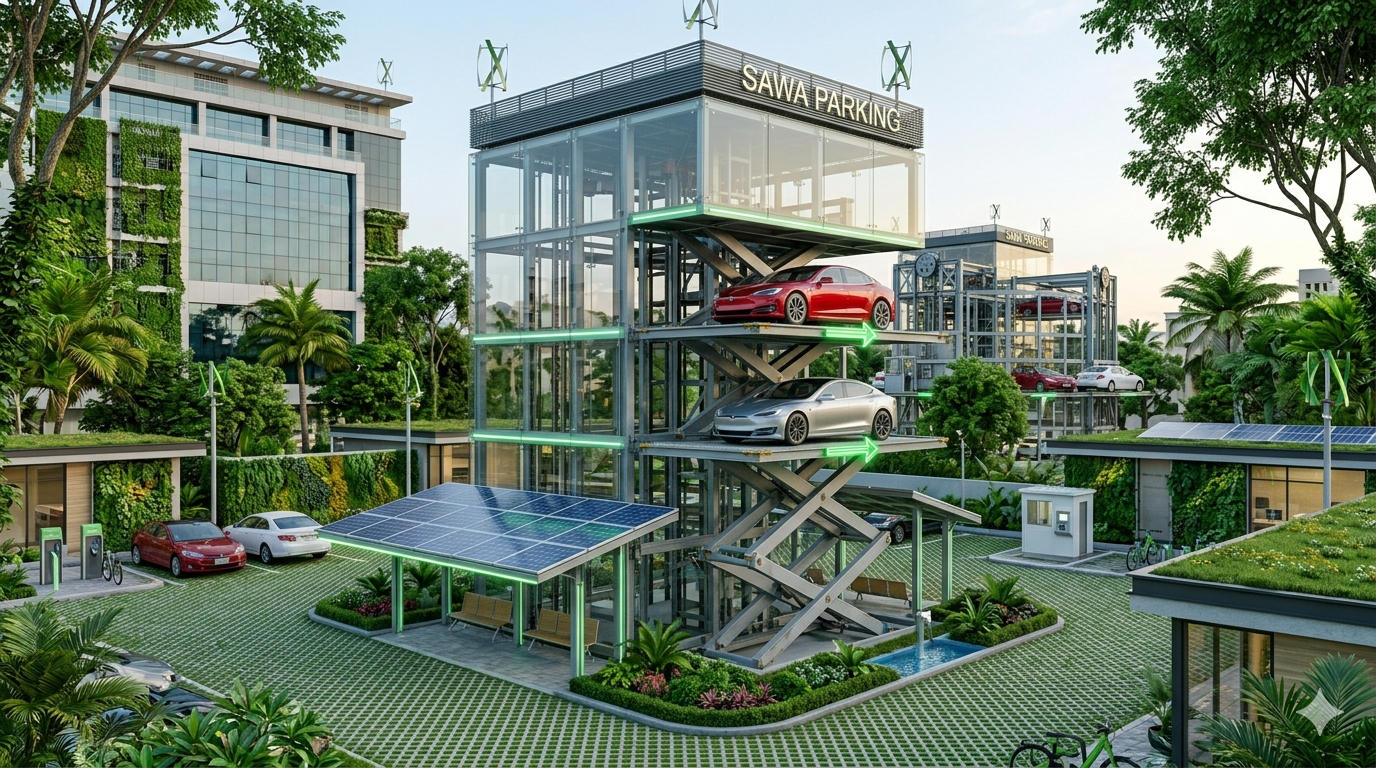
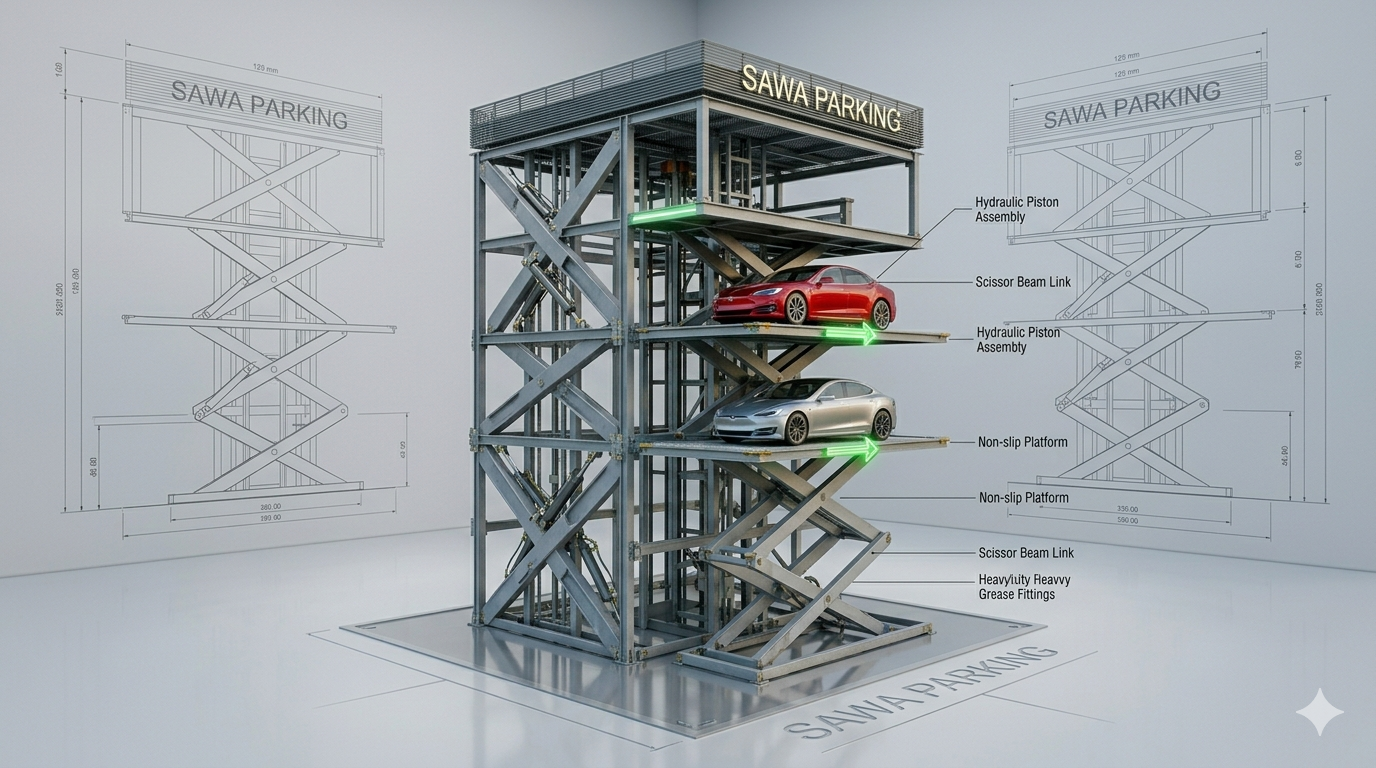
A scissor parking system is a mechanical parking solution that uses a vertical lifting mechanism similar to a scissor lift to stack vehicles above one another. This system is compact, efficient, and ideal for locations with limited space. Vehicles are lifted vertically and stored in multiple levels, allowing developers to increase parking capacity without expanding the footprint. Many solutions within smart residential car parking systems demonstrate how compact lifting systems can deliver both efficiency and sustainability in modern developments.
3) Reducing CO2 Through Lower Construction Impact
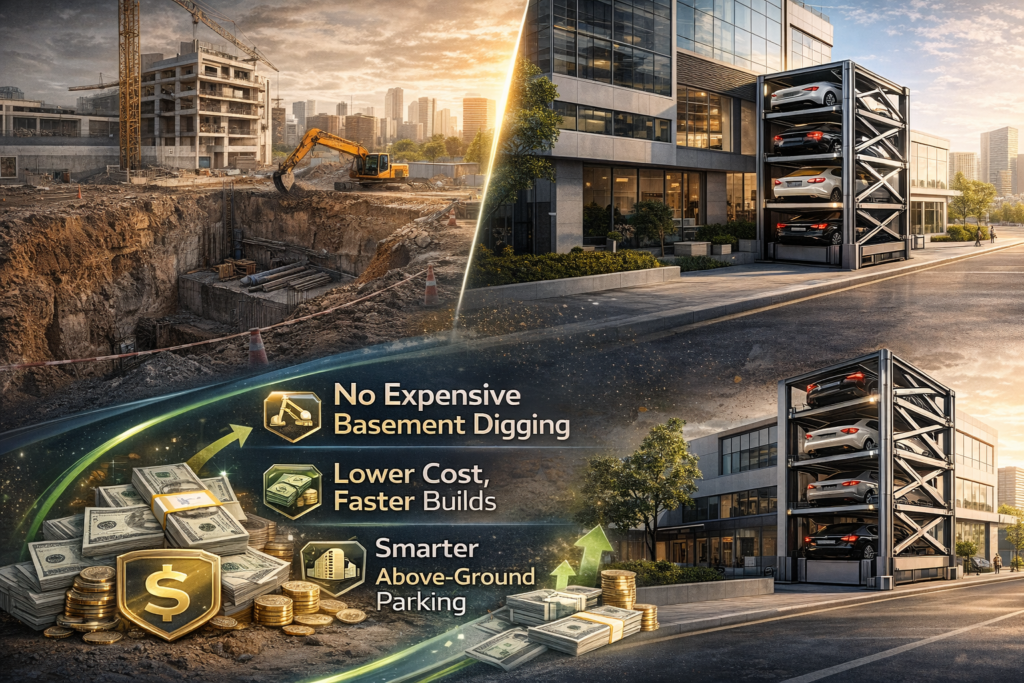
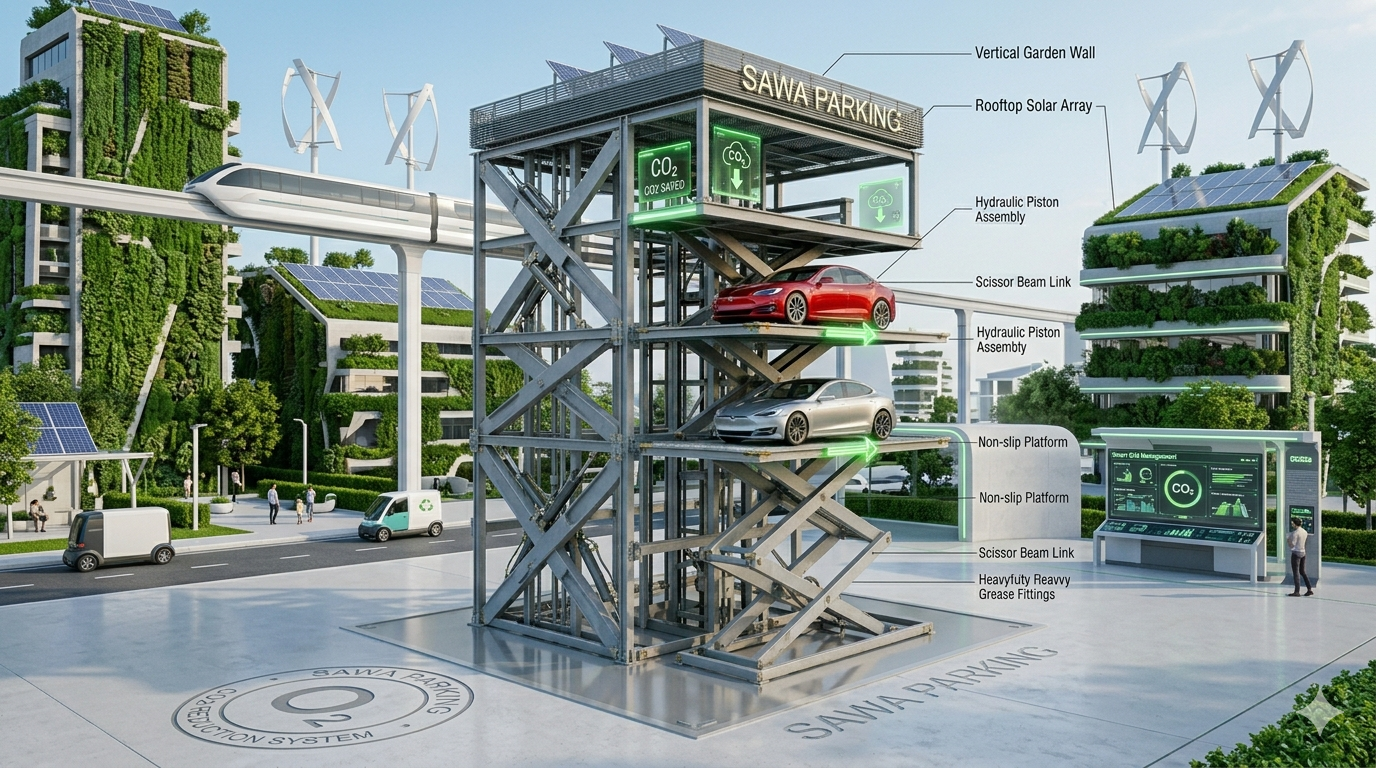
One of the most important environmental advantages of a scissor parking system is its ability to reduce CO2 emissions during construction. Traditional parking structures require deep excavation, which involves heavy machinery and large-scale concrete usage. These activities generate significant carbon emissions. Scissor systems, on the other hand, reduce or eliminate the need for excavation. By relying on compact vertical structures, developers can significantly lower the carbon footprint associated with construction. This makes scissor parking systems an effective solution for projects aiming to meet sustainability targets.
4) Minimizing Land Usage and Urban Footprint
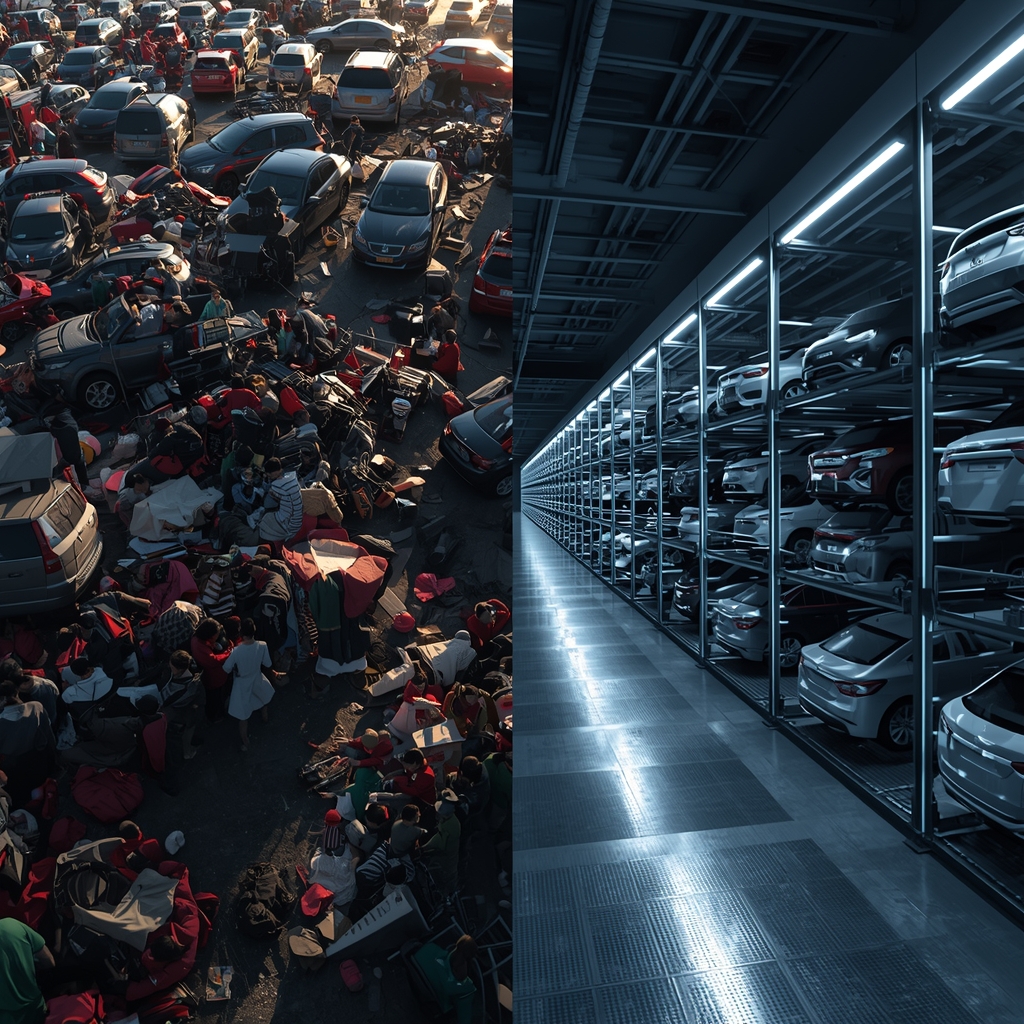
Efficient land use is directly connected to environmental sustainability. When parking structures consume large areas of land, they reduce space available for green areas and increase urban density pressure. A scissor parking system minimizes land usage by stacking vehicles vertically within a compact footprint. This allows developers to preserve more land for landscaping, pedestrian areas, or additional development. Compact systems such as the puzzle parking system also demonstrate how vertical parking solutions contribute to efficient land utilization while supporting sustainable urban planning.
5) Lower Energy Consumption in Daily Operations
Sustainability is not only about construction—it also includes long-term operational efficiency. Traditional parking garages require continuous lighting, ventilation, and vehicle movement, all of which consume energy. A scissor parking system reduces these requirements by eliminating unnecessary vehicle circulation. Drivers park their vehicles once, and the system handles vertical movement automatically. This reduces energy consumption and lowers emissions over the lifetime of the building. The result is a more efficient and environmentally friendly parking solution.
6) Supporting Green Building Certifications
Many developers aim to achieve green building certifications such as LEED or other sustainability standards. Parking infrastructure plays a significant role in these certifications, particularly in areas related to energy efficiency, land use, and emissions reduction. A scissor parking system supports these goals by reducing construction impact, minimizing land usage, and improving operational efficiency. Developers working with providers such as Sawa Parking can integrate sustainable parking solutions that align with green building requirements and enhance the overall environmental performance of their projects.
7) Faster Construction with Reduced Environmental Impact
Construction speed also affects environmental impact. Longer construction timelines require more energy, labor, and resources. Scissor parking systems are typically prefabricated and installed quickly on-site, reducing the duration of construction activities. This leads to lower energy consumption and reduced emissions during the building process. Faster installation also allows developers to complete projects sooner, improving both environmental and financial outcomes.
8) Sustainable Solution for High-Density Cities
High-density cities face increasing pressure to balance growth with sustainability. Limited land, high population density, and environmental concerns require innovative solutions. The scissor parking system provides a practical answer by delivering high parking capacity within a small footprint while reducing environmental impact. This makes it an ideal solution for residential, commercial, and mixed-use developments in urban environments.
9) The Future of Green Parking Infrastructure
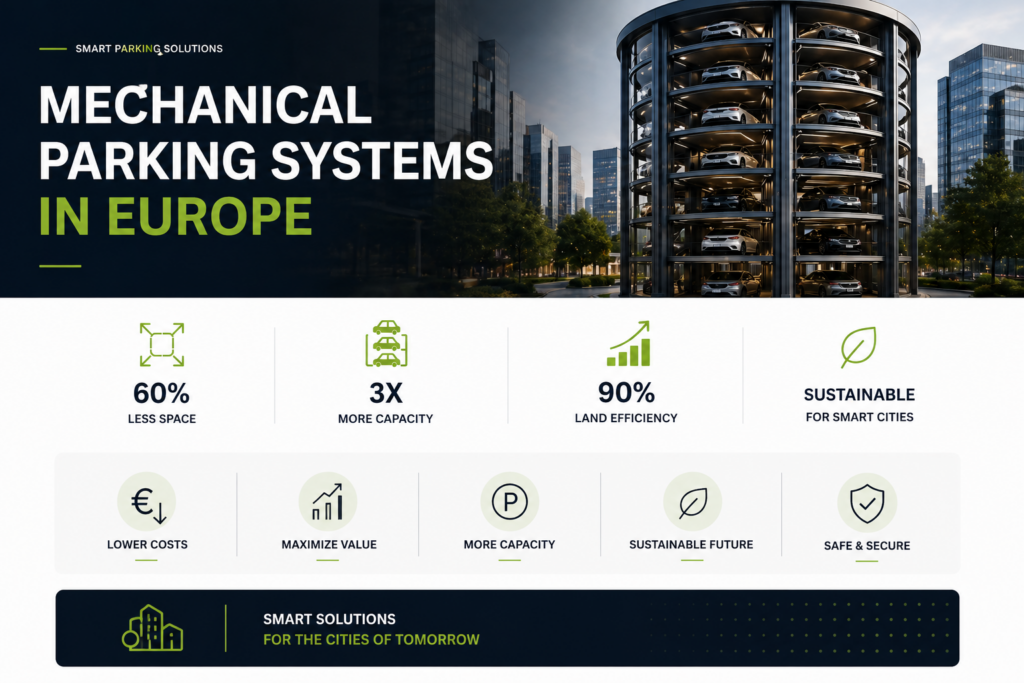
As sustainability becomes a central focus in urban planning, parking infrastructure will continue to evolve. Mechanical parking systems, including scissor parking systems, represent the future of environmentally responsible development. By combining space efficiency, reduced emissions, and lower resource consumption, these systems align with global efforts to create greener cities. Developers who adopt sustainable parking solutions today will be better positioned to meet future regulations and market demands.
Conclusion
The scissor parking system is a powerful solution for sustainable urban development. By reducing CO2 emissions, minimizing land usage, and improving energy efficiency, it offers a practical alternative to traditional parking structures. As cities continue to grow and environmental concerns become more urgent, adopting smart and sustainable parking solutions will be essential. Scissor parking systems not only solve space challenges but also contribute to building a cleaner and more efficient urban المستقبل.
References
- Urban Land Institute (ULI). Sustainable Development and Parking Strategies.
https://uli.org - Institute of Transportation Engineers (ITE). Parking and Environmental Impact.
https://www.ite.org - Transportation Research Board (TRB). Sustainable Urban Infrastructure.
https://www.trb.org - McKinsey & Company. Sustainability in Urban Mobility.
https://www.mckinsey.com