

Reasons to Install Puzzle Parking System in Thessaloniki
Thessaloniki is one of Greece’s most important urban, commercial, and cultural centers. Located along the Thermaic Gulf, the city combines a historic urban core with densely developed residential neighborhoods, universities, offices, retail streets, and major transportation infrastructure. These characteristics create a distinctive challenge for property owners and developers: accommodating necessary vehicle parking without allowing conventional garages to consume excessive urban space.
The challenge is particularly visible in established areas where buildings occupy compact plots and the street network has developed over many decades. Expanding a parking facility horizontally may be difficult because neighboring structures, existing roads, underground infrastructure, and property boundaries restrict available space.
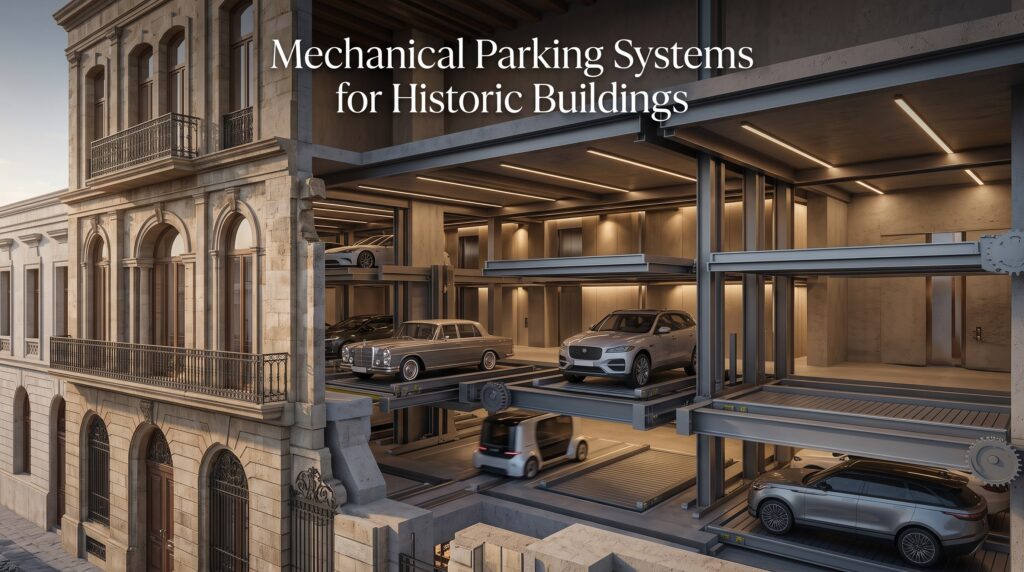
Thessaloniki’s archaeological heritage introduces additional complexity. The city contains internationally recognized Byzantine monuments, and construction projects in historically sensitive locations may require archaeological assessment and approval. Excavation cannot always be treated as a straightforward solution to parking shortages.
At the same time, the city’s transportation environment is changing. The Thessaloniki Metro, which began passenger service in November 2024, has introduced an important new public transport option. This makes it increasingly relevant for developers to consider how much parking a property actually needs and how to provide that capacity efficiently.
A Puzzle Parking System in Thessaloniki offers one possible approach. Using mechanically operated platforms that move horizontally and vertically, puzzle parking can accommodate vehicles within a compact storage arrangement. Depending on the system configuration, this may reduce the amount of space required for internal driving aisles and conventional circulation.
The technology can be relevant to residential buildings, mixed-use developments, offices, hotels, and selected redevelopment projects. However, mechanical parking is not automatically appropriate for every property.
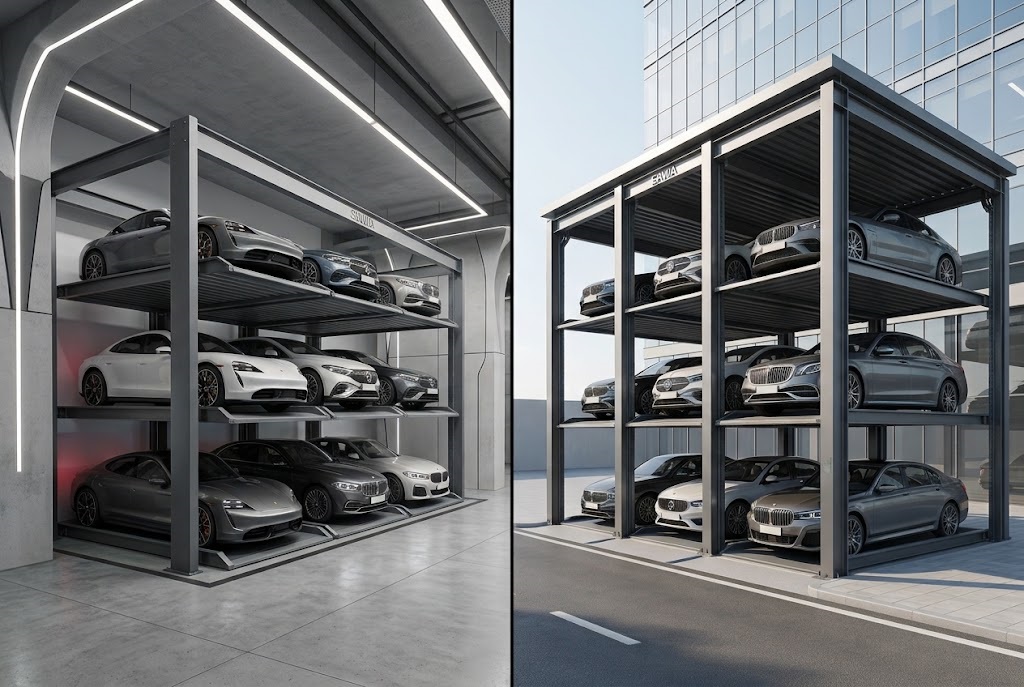
Structural conditions, available height, vehicle dimensions, access geometry, archaeological restrictions, fire safety, maintenance, and local approvals must all be considered before installation.
This article examines six reasons developers may investigate puzzle parking in Thessaloniki and explains how the technology can support practical parking design without conflicting with the city’s urban and historical character.
1. Make Better Use of Limited Space in Central Thessaloniki
Land availability is one of the principal challenges facing developments in established urban districts.
In central Thessaloniki, buildings, streets, commercial activity, and public spaces compete for a limited amount of land. Properties may have restricted frontage, irregular boundaries, or structural arrangements that make conventional parking difficult to accommodate.
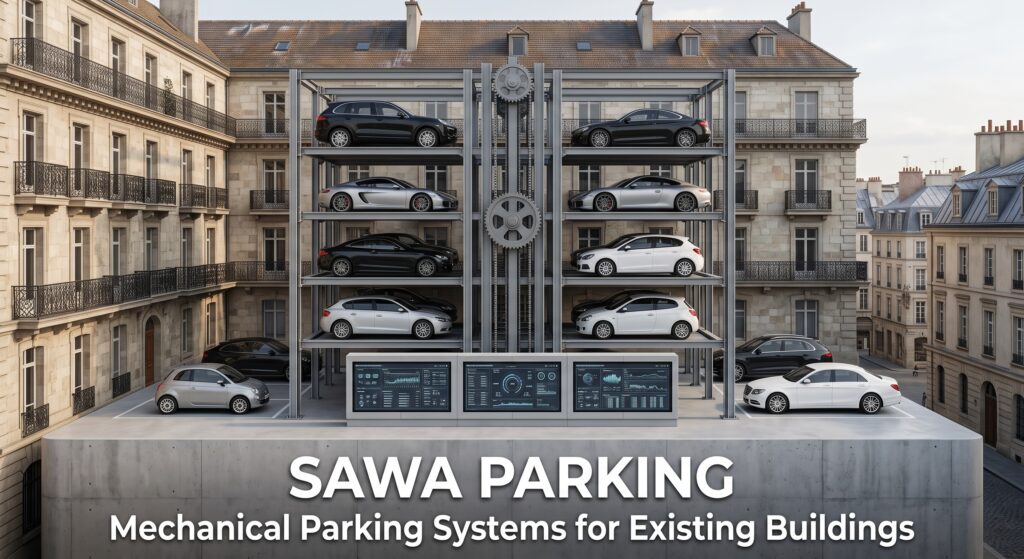
A traditional garage requires more space than the dimensions of the parked vehicles alone. Drivers need circulation aisles, turning areas, entrances, and ramps where multiple levels are involved.
These requirements can occupy a substantial portion of the available floor area.
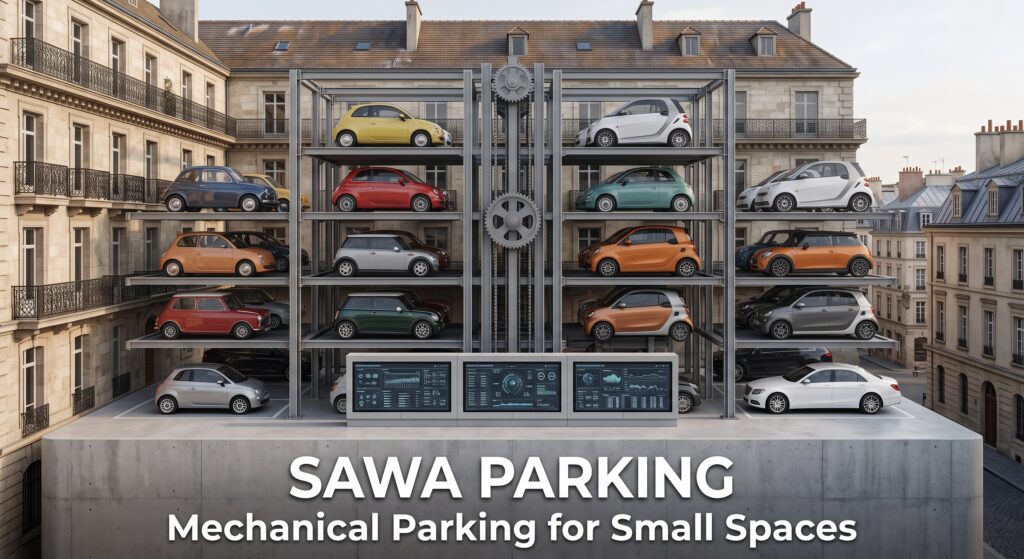
Puzzle parking introduces vertical storage as an alternative.
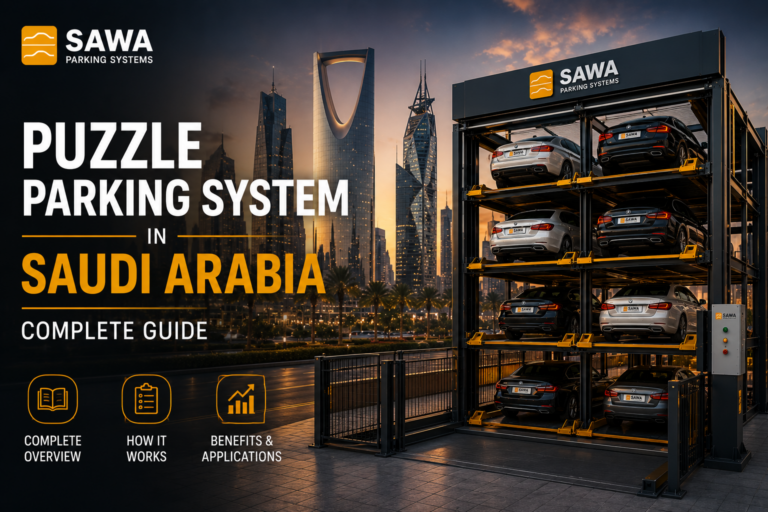
Vehicles are positioned on mechanical platforms that move horizontally and vertically to provide access to selected parking positions. Depending on the arrangement, multiple vehicles can be stored across several levels without requiring drivers to navigate the entire storage area.
For a compact development, this creates an opportunity to investigate whether the required parking capacity can be accommodated within a smaller footprint.
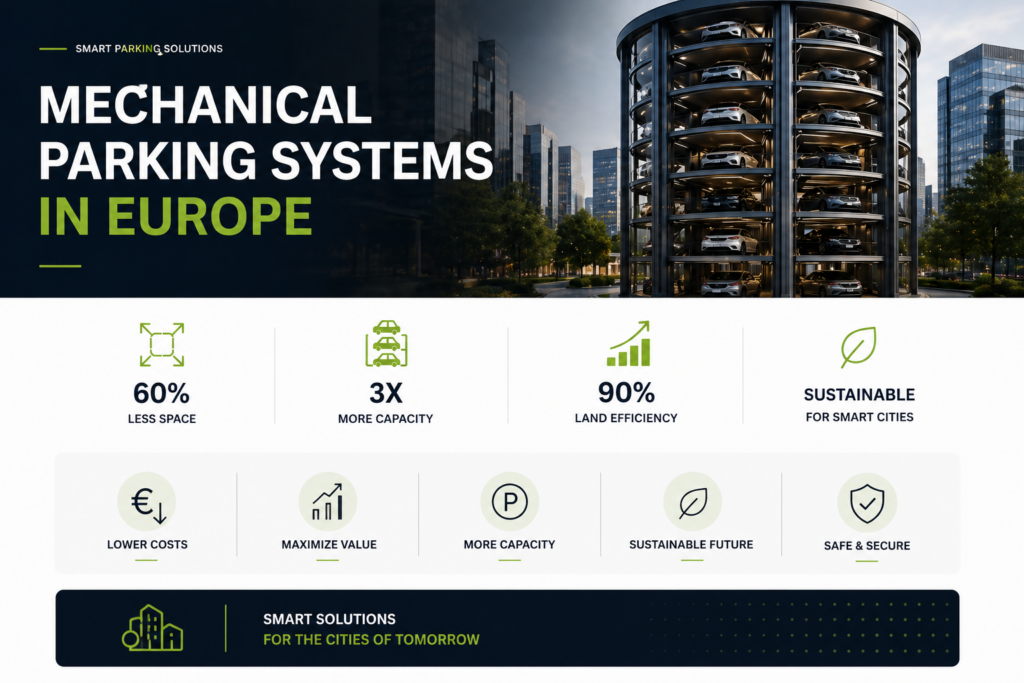
The preserved space may support building entrances, commercial functions, amenities, or other uses.
However, the actual capacity improvement depends on the dimensions of the property.
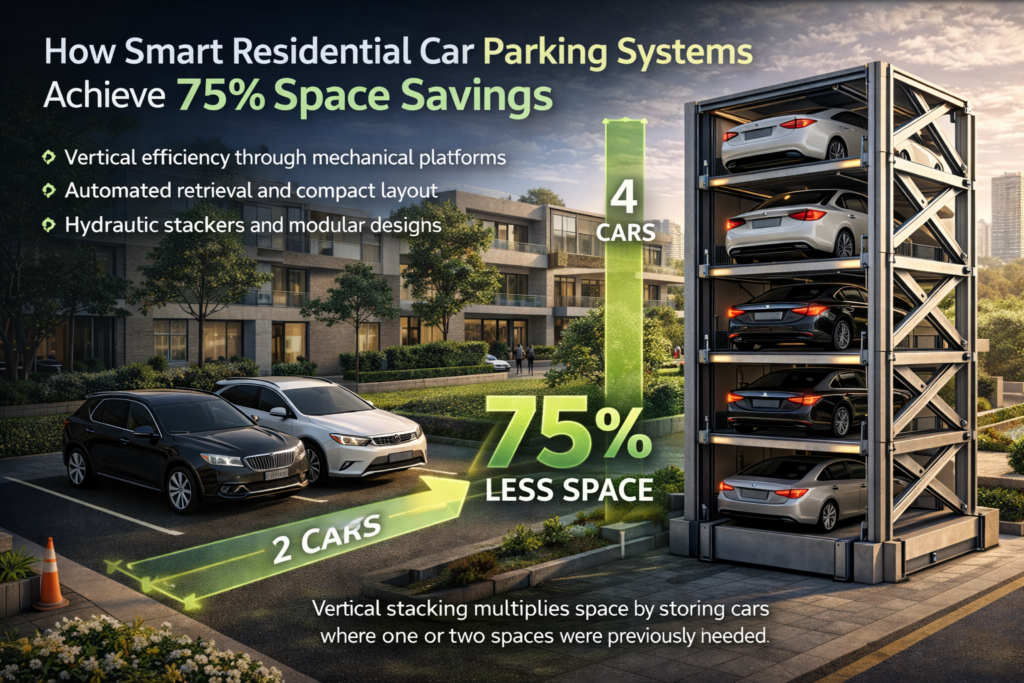
Clear height, structural columns, vehicle specifications, platform arrangement, and safe operating clearances all influence the number of usable parking positions.
Mechanical parking should therefore be compared with a realistic conventional layout rather than an idealized capacity estimate.
The strongest opportunity arises when the property has suitable vertical clearance but insufficient horizontal space for efficient conventional parking.
Planning a compact development in Thessaloniki? Explore Sawa Parking’s mechanical parking systems to investigate whether vertical vehicle storage can improve the use of your available space.
2. Reduce Dependence on Extensive Underground Excavation
Underground parking is a common solution when surface space is limited.
However, excavation can become complicated in historic cities.
Thessaloniki has a long urban history extending through Roman, Byzantine, Ottoman, and modern periods. Archaeological remains may be present beneath areas of the contemporary city, making some construction projects subject to additional investigation and review.
The Thessaloniki Metro project illustrates the relationship between modern infrastructure and archaeological heritage.
During construction, extensive archaeological discoveries required careful management, documentation, and integration into the development process.
This does not mean every parking project in Thessaloniki will encounter archaeological remains. It does mean developers should not assume that deeper excavation is always the simplest way to create additional parking capacity.
Mechanical parking can introduce another option.
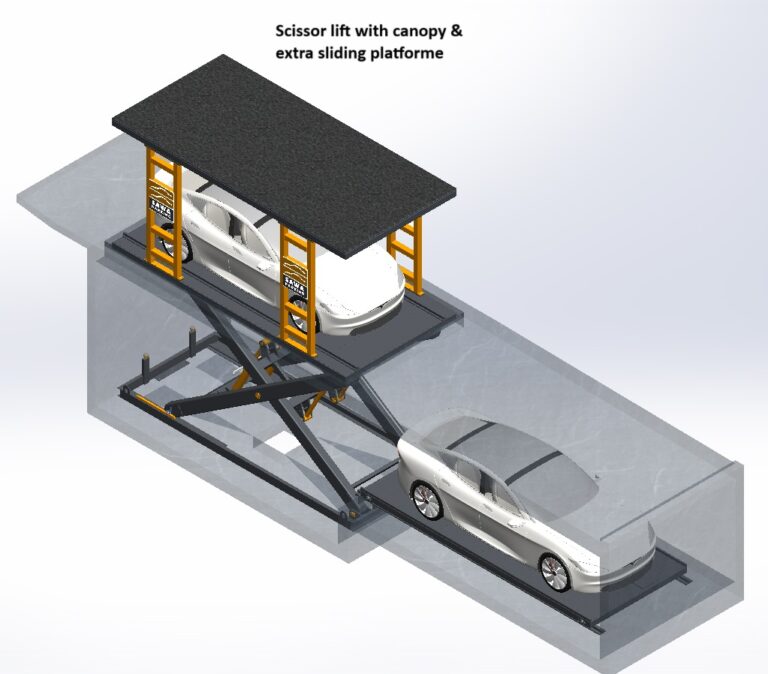
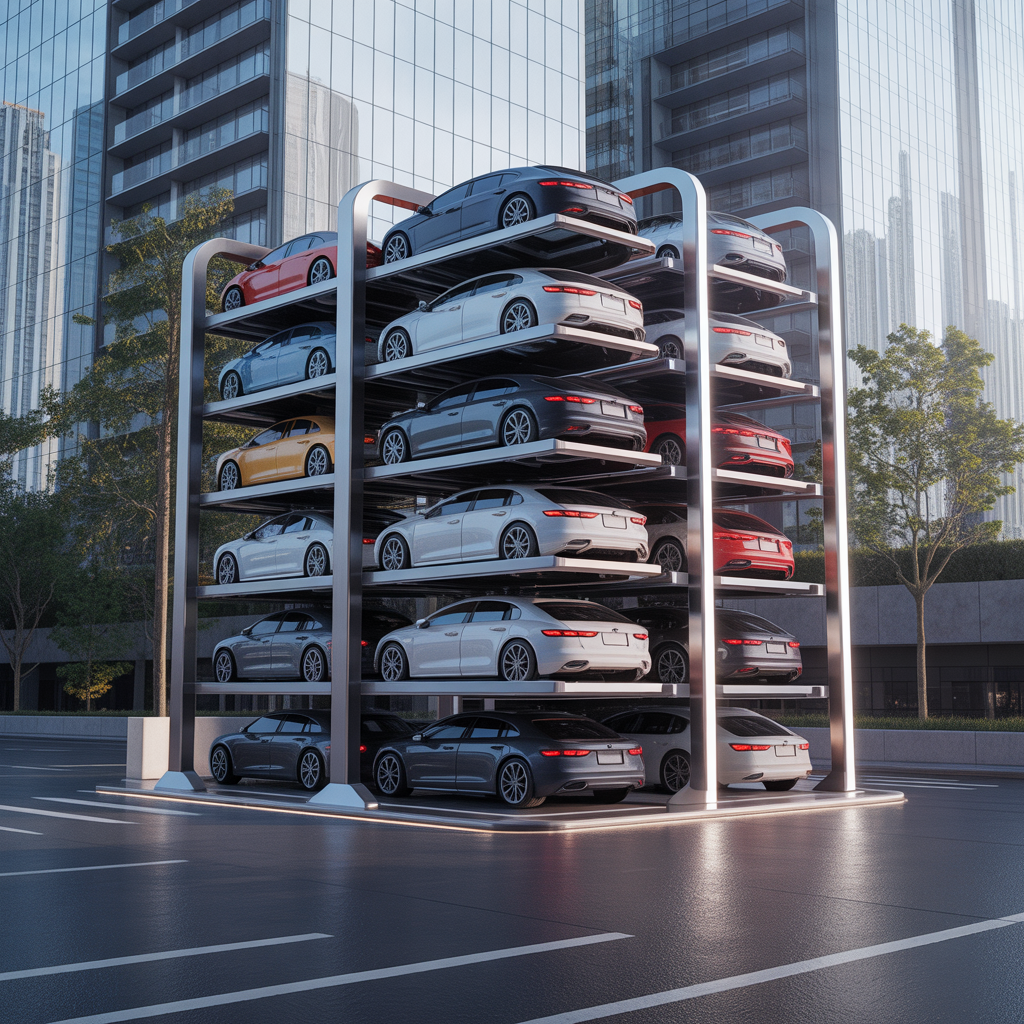
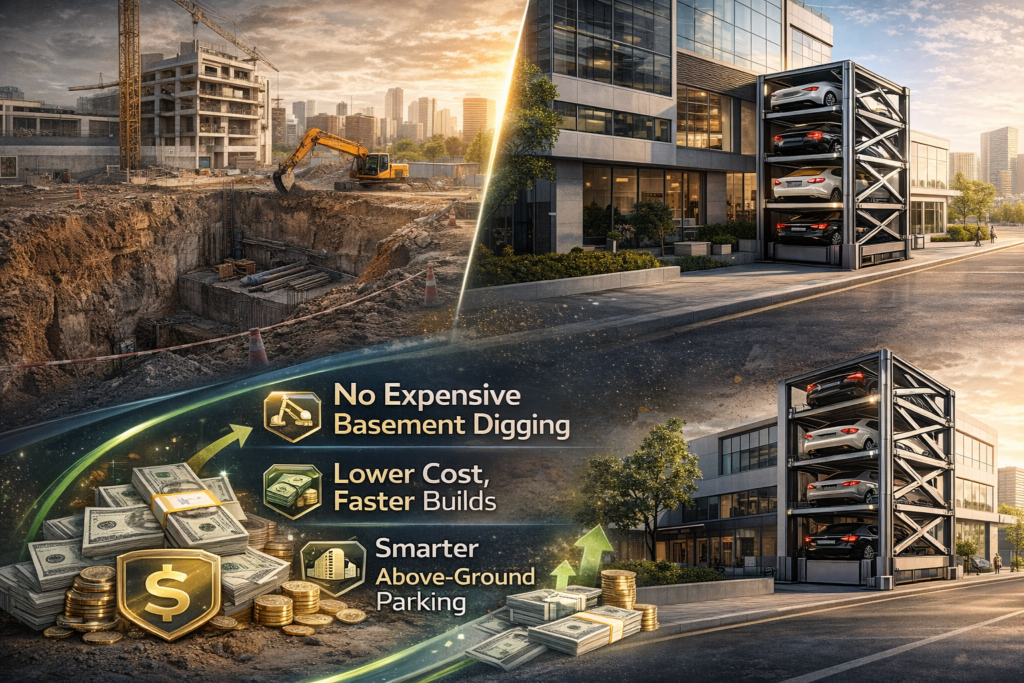
Depending on the building geometry, a puzzle system may allow selected vehicles to be stored within an existing ground-floor area, a suitable above-ground structure, or a more compact parking volume.
This could reduce the need for extensive horizontal parking construction in some projects.
However, mechanical parking does not automatically eliminate excavation.
Certain configurations require pits, foundations, or structural modifications. Others may need additional building height.
The project team must therefore compare realistic alternatives and determine whether mechanical storage genuinely reduces the construction intervention.
In archaeologically sensitive areas, qualified professionals and the relevant Greek authorities must establish which investigations and approvals are required.
A compact mechanical system should never be presented as a way to bypass archaeological protection.
Instead, it can be evaluated as one possible design alternative where conventional excavation would be difficult or undesirable.
If your project involves constrained foundations or potential archaeological restrictions, contact Sawa Parking to discuss mechanical configurations before the parking design is finalized.
3. Improve Parking Options for Existing Residential Buildings
Thessaloniki contains many established residential neighborhoods where buildings were developed under different planning and vehicle ownership conditions.
Some properties may have limited parking capacity, while others contain ground-floor areas or garages that are difficult to use efficiently.
Expanding conventional parking can be challenging when neighboring buildings and property boundaries prevent horizontal construction.
A Puzzle Parking System in Thessaloniki may offer an alternative for selected residential properties.
By using vertical storage, mechanical platforms can potentially accommodate additional vehicles within a compact area.
This can be particularly relevant where the building has adequate clear height and a suitable structural arrangement.
However, retrofitting an existing residential building requires careful engineering.
The floor slab and foundations must be capable of supporting the equipment and vehicles. Structural columns may restrict platform movement, while existing electrical, drainage, and fire-protection systems can influence the installation.
Vehicle access must also be assessed.
A narrow entrance may limit the size of vehicles that can safely enter the system, even if the internal storage area appears adequate.
Residents’ daily routines are another important consideration.
Morning departures and evening arrivals may create concentrated retrieval demand. A system that provides additional parking positions but causes excessive waiting times may not be suitable.
Developers and building owners should therefore assess both capacity and operating performance.
The appropriate arrangement may combine mechanical storage for selected resident vehicles with conventional spaces for users requiring direct access.
| Residential Parking Factor | Design Requirement |
|---|---|
| Available floor area | Accurate dimensions and platform layout |
| Clear height | Suitable vertical movement clearance |
| Structural capacity | Verification of equipment and vehicle loads |
| Vehicle access | Safe entry and exit geometry |
| Resident vehicle types | Compatible dimensions and weight ratings |
| Peak retrieval demand | Acceptable operating performance |
| Electrical infrastructure | Adequate supply and safety provisions |
| Maintenance | Access for inspection and servicing |
Source: General residential mechanical parking design considerations. Final requirements depend on the existing building, selected equipment, and applicable Greek regulations.
For existing residential properties, mechanical parking should be treated as a feasibility option rather than a guaranteed retrofit solution.
If your residential building has insufficient parking capacity, explore Sawa Parking’s solutions to investigate whether a compact mechanical layout could be suitable.
4. Support Mixed-Use Developments Without Sacrificing Commercial Space
Mixed-use buildings must accommodate different activities within the same property.
A development may combine apartments, offices, shops, restaurants, and hospitality functions. Each use creates different parking requirements and vehicle movement patterns.
Residents may leave vehicles parked overnight. Office employees often park for extended daytime periods. Retail visitors and restaurant customers may require shorter stays and more frequent access.
Conventional parking facilities must accommodate these users while also providing sufficient circulation space.
On compact sites, this can compete with commercially valuable floor area.
Puzzle parking offers an opportunity to organize selected longer-dwell vehicles within a smaller mechanical storage zone.
Conventional spaces can remain available for high-turnover visitors, accessible parking, deliveries, and other operational needs.
This hybrid approach can be particularly relevant in established commercial districts where ground-floor frontage is valuable.
However, the financial benefit should not be assumed.
Mechanical parking introduces equipment investment, electrical infrastructure, preventive maintenance, inspections, and eventual component replacement.
Developers should compare the complete project economics rather than focusing exclusively on the number of vehicles stored.
The potential value of preserved floor area also depends on whether that area can legally and practically be used for another purpose.
A reduction in garage circulation space does not automatically create additional rentable commercial area.
The most effective design is one that balances vehicle storage with the building’s wider architectural and operational requirements.
Planning a residential and commercial development? Contact Sawa Parking to investigate whether mechanical parking can improve the overall allocation of building space.
5. Coordinate Parking Design With Thessaloniki’s Changing Transport Network
The introduction of the Thessaloniki Metro represents an important development in the city’s transport system.
The initial metro line began operating in November 2024, providing a new public transport connection across key urban areas.
For property developers, this changing mobility environment raises an important planning question: how much private parking should a building provide?
The answer depends on the property’s location, intended use, user demand, applicable regulations, and access to public transportation.
A development located near a metro station may have different parking requirements from a property in an area with fewer transport alternatives.
Mechanical parking should therefore not be used simply to maximize vehicle capacity.
Instead, it can be considered after the project team establishes the appropriate number of spaces.
Where parking is necessary, a compact mechanical arrangement may reduce the physical area required to accommodate those vehicles.
This can support a broader strategy in which valuable urban land remains available for housing, commercial functions, pedestrian access, and other uses.
The distinction is important.
Puzzle parking does not automatically reduce traffic congestion or encourage public transport use. It remains infrastructure for private vehicles.
Its potential contribution is more specific: improving the spatial efficiency of parking that a development has already determined it needs.
Developers should coordinate parking decisions with the surrounding transport environment rather than designing the garage in isolation.
Explore Sawa Parking’s mechanical parking systems to evaluate compact vehicle storage as part of a broader development and mobility strategy.
6. Improve Long-Term Parking Efficiency in a Coastal Urban Environment
Thessaloniki’s location along the Thermaic Gulf creates environmental considerations for mechanical parking equipment.
Coastal humidity, airborne salts in exposed locations, seasonal temperature variations, and precipitation can influence the performance and maintenance requirements of mechanical and electrical systems.
A Puzzle Parking System in Thessaloniki must therefore be selected according to the actual installation environment.
An indoor system located within a protected garage faces different conditions from an outdoor or partially exposed installation.
Outdoor equipment may require additional corrosion protection, suitable electrical enclosures, drainage arrangements, and inspection procedures.
Moving platforms, motors, sensors, electrical controls, and structural connections must remain accessible for preventive maintenance.
Vehicle compatibility is another important long-term consideration.
Modern passenger vehicles vary in length, width, height, weight, and ground clearance.
Larger SUVs and electric vehicles may require different platform specifications from smaller cars.
Electric vehicle charging introduces additional complexity because moving platforms require careful electrical and cable-management design.
Not every puzzle parking system supports EV charging. Where charging is required, the selected arrangement must be specifically engineered and approved.
| Long-Term Planning Factor | Engineering Consideration |
|---|---|
| Coastal humidity | Corrosion protection and moisture management |
| Seasonal rainfall | Drainage and equipment protection |
| Outdoor exposure | Suitable electrical enclosure ratings |
| Vehicle dimensions | Platform length, width, and clear height |
| Vehicle weight | Structural and mechanical load ratings |
| Electric vehicles | Platform compatibility and charging integration |
| Preventive maintenance | Inspection and servicing requirements |
| Equipment downtime | Emergency procedures and operational planning |
Source: General mechanical parking engineering and lifecycle planning principles. Actual requirements depend on the installation environment, equipment specifications, and applicable standards.
Long-term value depends on reliable operation, not simply maximum capacity at installation.
A well-designed system should remain compatible with the vehicles and operating requirements expected throughout the building’s service life.
For projects near Thessaloniki’s waterfront or in exposed environments, contact Sawa Parking to discuss equipment protection, vehicle compatibility, and maintenance planning.
Where Can Puzzle Parking Systems Be Used in Thessaloniki?
Puzzle parking may be considered for several types of property, provided the available dimensions and operating requirements support installation.
Residential apartment buildings are potential candidates where existing parking layouts are constrained and vehicle demand is relatively predictable.
Mixed-use developments may benefit from mechanical storage for longer-dwell vehicles while retaining conventional spaces for visitors and service operations.
Office buildings can investigate compact parking for employees who leave vehicles parked for extended periods.
Hotels and serviced apartments may consider mechanical parking where conventional garages compete with guest facilities or other valuable building functions.
Existing properties may also be candidates for retrofits, subject to structural feasibility, access geometry, and available height.
However, projects in archaeologically sensitive areas require additional investigation.
Mechanical parking should not be assumed to be suitable where installation would require unacceptable excavation, structural alteration, or interference with protected heritage.
The correct solution depends on the individual property rather than the building category alone.
Why Archaeological and Heritage Restrictions Matter
Thessaloniki’s cultural heritage is an essential part of its identity.
UNESCO recognizes the Paleochristian and Byzantine Monuments of Thessalonika as a World Heritage property, reflecting the city’s architectural and historical importance.
These monuments demonstrate the significance of preserving historic structures and their surrounding urban context.
For developers, this creates additional responsibilities when projects are located within areas subject to archaeological or heritage controls.
A mechanical parking system may require foundations, pits, structural supports, or changes to building access.
Even when the equipment occupies a relatively small footprint, these interventions can affect archaeological remains or protected architectural features.
The project team must therefore establish whether the property is subject to relevant restrictions before selecting equipment.
Qualified local professionals and the appropriate Greek authorities should determine which investigations and approvals are necessary.
Where the proposed installation is incompatible with conservation requirements, alternative parking arrangements should be considered.
Mechanical parking should support responsible development rather than create pressure to compromise protected heritage.
What Should Developers Evaluate Before Installation?
A mechanical parking feasibility study should begin with accurate information about the site.
The project team needs to establish available floor area, clear height, structural columns, foundations, access geometry, and existing building services.
Vehicle specifications must also be defined.
Platform dimensions and load ratings should reflect the passenger vehicles expected to use the facility.
Retrieval performance is equally important.
A system serving residents may have different operating requirements from one serving offices, hotels, or commercial visitors.
Electrical supply, drainage, fire protection, ventilation, emergency procedures, and maintenance access must be coordinated during the engineering stage.
Developers should also confirm applicable Greek building, planning, accessibility, and equipment safety requirements.
Where archaeological restrictions apply, the necessary heritage assessments must be completed before construction proceeds.
The final decision should compare mechanical parking with realistic conventional alternatives.
In some projects, a Car Stacker, Scissor Parking System, or conventional garage may be more appropriate than puzzle parking.
The correct technology is the one that satisfies the project’s actual requirements safely and efficiently.
Why Choose Sawa Parking for Mechanical Parking Projects in Thessaloniki?
Sawa Parking designs and manufactures mechanical parking systems intended to improve vehicle-storage efficiency for residential, commercial, hospitality, and mixed-use developments.
Its manufacturing operations in Egypt include capabilities such as large-format laser cutting, tandem bending, 3D laser processing, PLC-based controls, and project-specific fabrication.
The company’s portfolio includes Puzzle Parking Systems, Car Stackers, Scissor Parking Systems, Rotary Parking Systems, Four Post Car Elevators, and other mechanical parking solutions.
This product range allows different technologies to be evaluated according to the available space, required capacity, and operating conditions.
For projects in Thessaloniki, equipment selection must consider building geometry, structural capacity, vehicle dimensions, coastal environmental exposure, and applicable Greek and European requirements.
International manufacturing capability does not automatically establish local regulatory approval.
Developers must confirm the required engineering documentation, conformity assessment, certifications, inspections, installation arrangements, and maintenance responsibilities before procurement.
Sawa Parking can support the initial evaluation of project dimensions, parking requirements, and possible mechanical configurations.
The proposed solution should then be coordinated with the project’s architects, engineers, and relevant local authorities.
The objective is to identify a parking arrangement that balances storage efficiency with safe operation, long-term durability, and the practical needs of the building.
Explore Sawa Parking’s mechanical parking solutions or contact the engineering team to discuss a parking concept for your development in Thessaloniki.
Conclusion
Thessaloniki presents a distinctive environment for mechanical parking because established urban development, residential demand, archaeological heritage, and changing transport infrastructure must be considered together.
Conventional parking remains appropriate for many properties, but it can consume valuable space through circulation aisles, ramps, turning areas, and extensive horizontal layouts.
A Puzzle Parking System in Thessaloniki offers six potential advantages: more efficient use of central urban land, alternatives to extensive underground construction, improved residential parking options, better integration with mixed-use developments, coordination with the city’s changing transport network, and long-term space efficiency through appropriate equipment planning.
These advantages depend on realistic engineering conditions.
Successful implementation requires careful evaluation of available dimensions, structural capacity, vehicle compatibility, retrieval performance, environmental protection, maintenance, and regulatory approvals.
Projects in archaeologically sensitive locations require additional care, and mechanical parking should only be considered where it is compatible with applicable heritage requirements.
For developers, the strongest parking solution is not necessarily the one that stores the greatest number of vehicles.
It is the one that provides the required capacity safely and efficiently while preserving the architectural, operational, and urban value of the development.
Discover Sawa Parking’s mechanical parking systems and contact the team to explore whether compact parking can improve your next project in Thessaloniki.
References
- UNESCO World Heritage Centre. Paleochristian and Byzantine Monuments of Thessalonika. Official documentation describing the city’s internationally recognized Byzantine monuments and their historical significance.
- Elliniko Metro S.A. Thessaloniki Metro. Official information about Thessaloniki’s metro infrastructure, project development, and archaeological considerations.
- European Commission, European Urban Mobility Observatory. Greece. Information about Greece’s urban mobility planning context and the development of sustainable transportation strategies.
- Hellenic Ministry of Culture. Official Portal. National authority responsible for cultural heritage, archaeological protection, and relevant heritage management procedures.