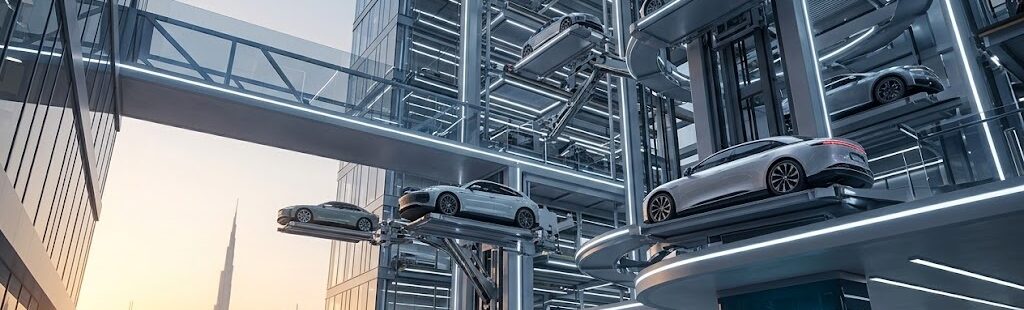



Mechanical Parking Systems for US Airports The United States operates the most complex and heavily trafficked aviation infrastructure in the world. According to the Federal Aviation Administration (FAA), US airports handle hundreds of millions of passenger enplanements annually, with mega-hubs like Hartsfield-Jackson Atlanta International (ATL), Los Angeles International (LAX), and Chicago O’Hare (ORD) constantly vying for the title of the world’s busiest. However, the incredible sophistication of airborne traffic management is often starkly contrasted by the archaic, ground-level infrastructure that greets passengers before they even enter the terminal.
The most critical, yet frequently underestimated, bottleneck in the modern US airport experience is the parking facility. As air travel rebounds and surpasses pre-pandemic levels, the vast, sprawling asphalt lots and multi-story concrete ramps of the 20th century are proving to be fundamentally inadequate. They consume massive tracts of valuable urban land, create severe traffic congestion on airport access roads, and subject passengers to high-stress, time-consuming navigational ordeals. To resolve this escalating crisis, forward-thinking aviation authorities are turning to mechanical parking systems for airports. Industry pioneers like Sawa Parking are engineering the automated solutions required to modernize aviation ground infrastructure.
The Ground Traffic Crisis: Why Mechanical Parking Systems for Airports Matter in the US
The traditional airport parking model in the United States is built on a sprawling, low-density paradigm. It relies on massive surface lots located miles from the terminal, connected by slow, diesel-powered shuttle buses, or on gargantuan multi-level ramp garages built directly adjacent to the terminals. Both models are failing under modern passenger volumes.
When a passenger arrives at a major US hub during peak hours, they are frequently met with digital signs reading “LOTS FULL.” This forces them into a frustrating loop of circling existing structures or being diverted to remote economy lots. The subsequent journey—lugging heavy baggage onto a crowded shuttle bus, navigating traffic, and finally walking through endless terminal corridors—adds an average of 45 to 60 minutes of “friction time” to the journey. In an era where tight flight connections and TSA wait times are already stressful, this ground-level friction directly contributes to missed flights and severely degraded passenger satisfaction scores.
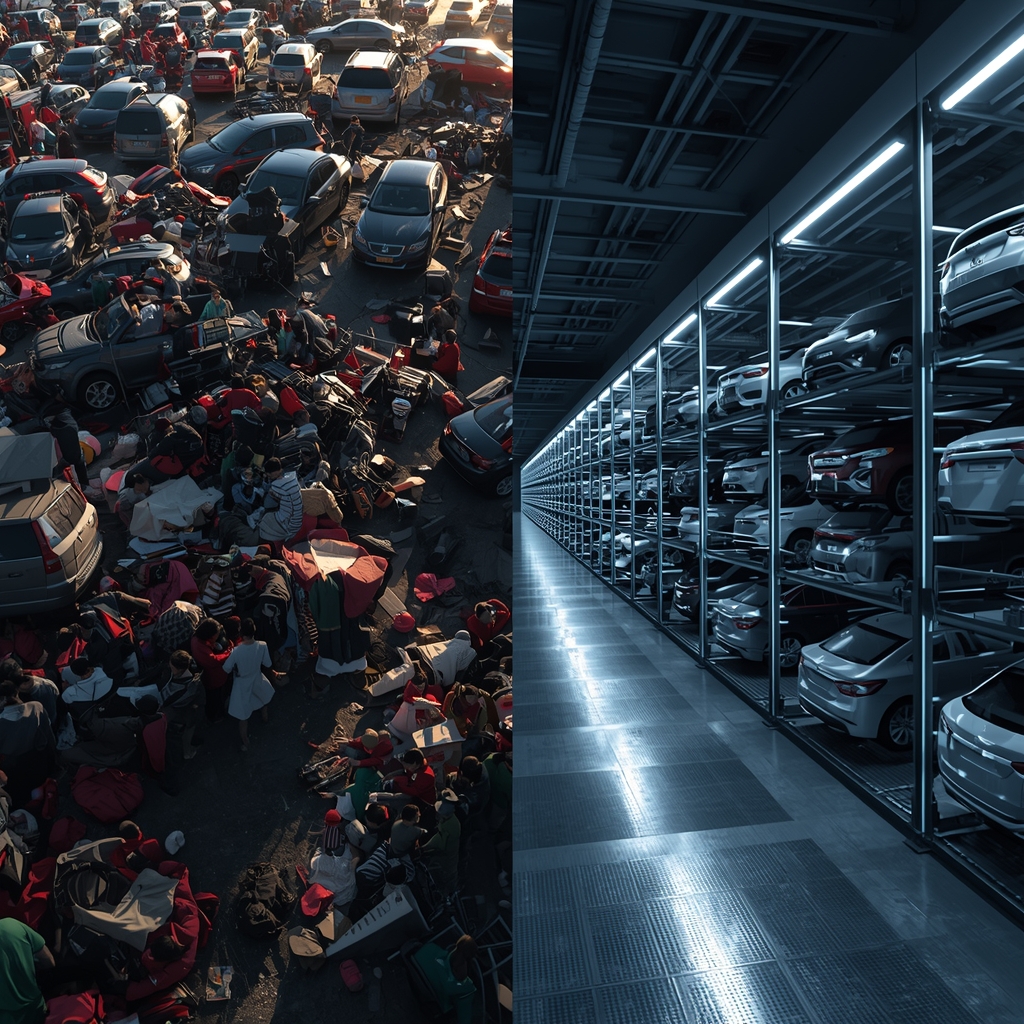
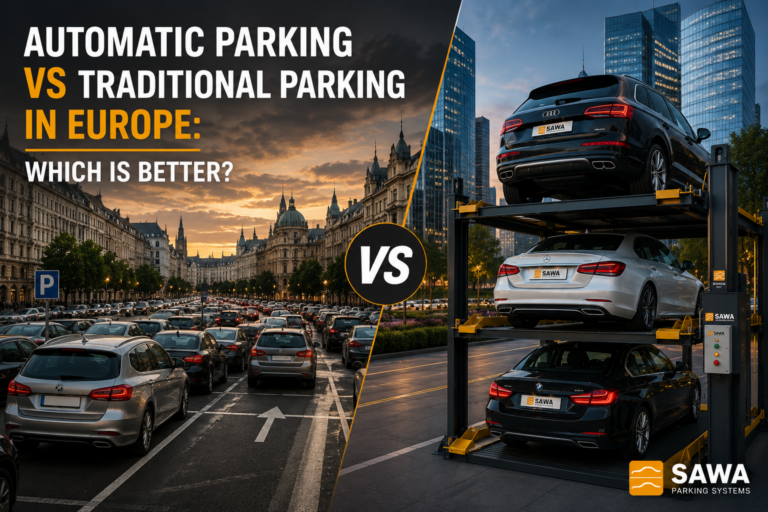
Mechanical parking systems for airports offer a radical departure from this failing model. By utilizing automated technology to store vehicles in dense, high-density grids, airports can drastically increase the capacity of the land they already own, effectively eliminating the “lot full” scenario without needing to pave over additional perimeter land.
Economic Impact: Mechanical Parking Systems for US Airports and Space Optimization
Airports in the United States are uniquely landlocked entities. Unlike European airports that sometimes have room to expand outward, major US hubs like LAX, San Francisco International (SFO), and Seattle-Tacoma International (SEA) are entirely surrounded by dense urban development, highways, and residential neighborhoods. Acquiring additional land for surface parking is financially prohibitive and politically impossible due to community pushback against noise and traffic.
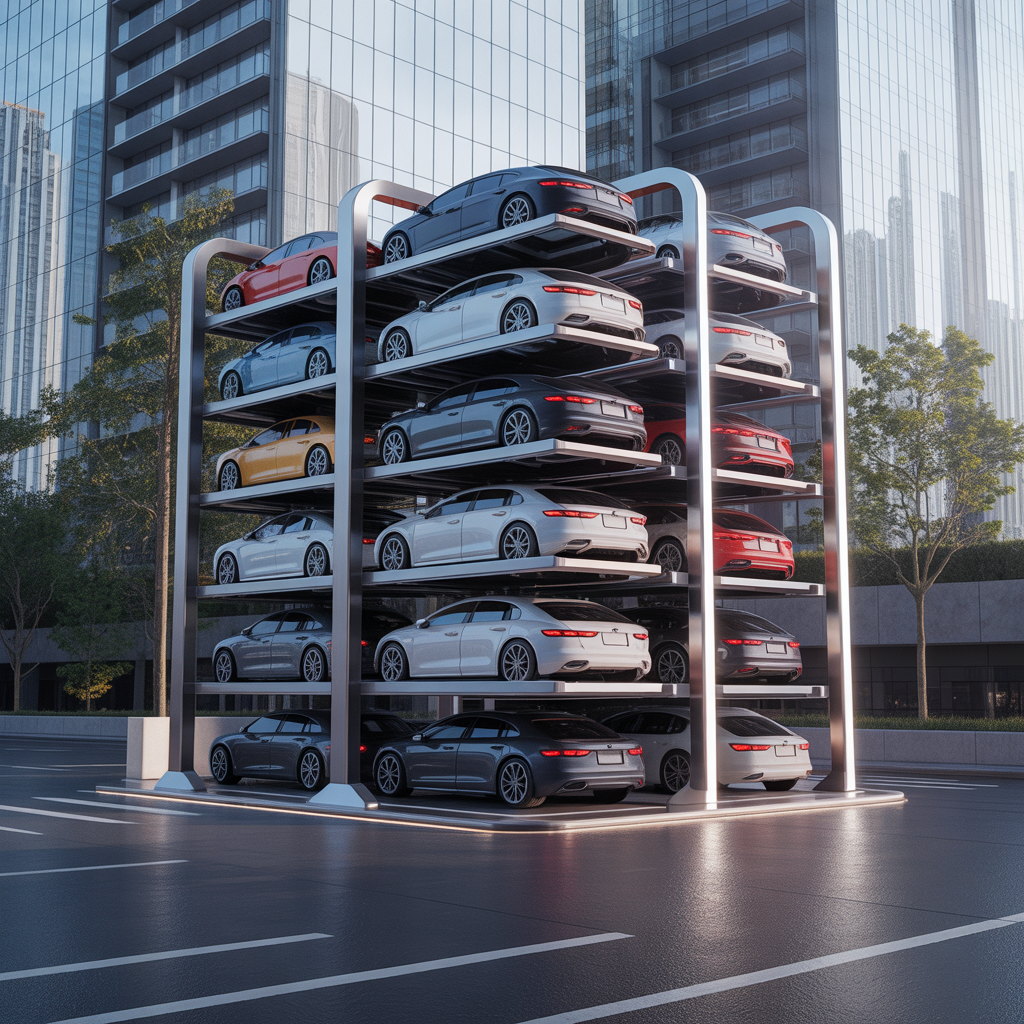
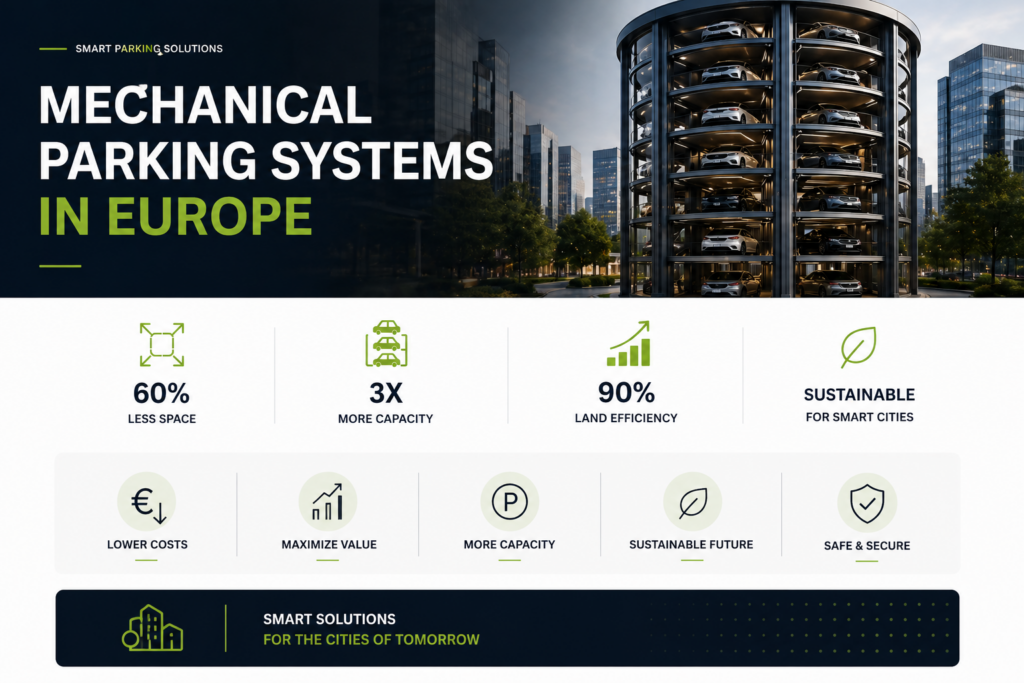
This spatial constraint makes the economic argument for automated parking unassailable. Traditional parking requires approximately 30 to 35 square meters of footprint per vehicle, factoring in driving lanes, turning radii, pedestrian walkways, and structural supports. In contrast, mechanical parking systems for airports compress this requirement to as little as 15 to 18 square meters per vehicle.
By deploying these systems, US airport authorities can achieve a 60% to 100% increase in parking capacity within the exact same structural footprint. Furthermore, by going vertical or subterranean with automated systems, airports can reclaim highly valuable surface land. This reclaimed land can be repurposed for revenue-generating infrastructure, such as consolidated rental car facilities (CONRACs), premium cargo logistics centers, or new terminal expansions. As documented in various global project portfolios, this spatial reclamation represents billions of dollars in unlocked real estate value for aviation authorities.
Engineering High Throughput in Mechanical Parking Systems for Airports
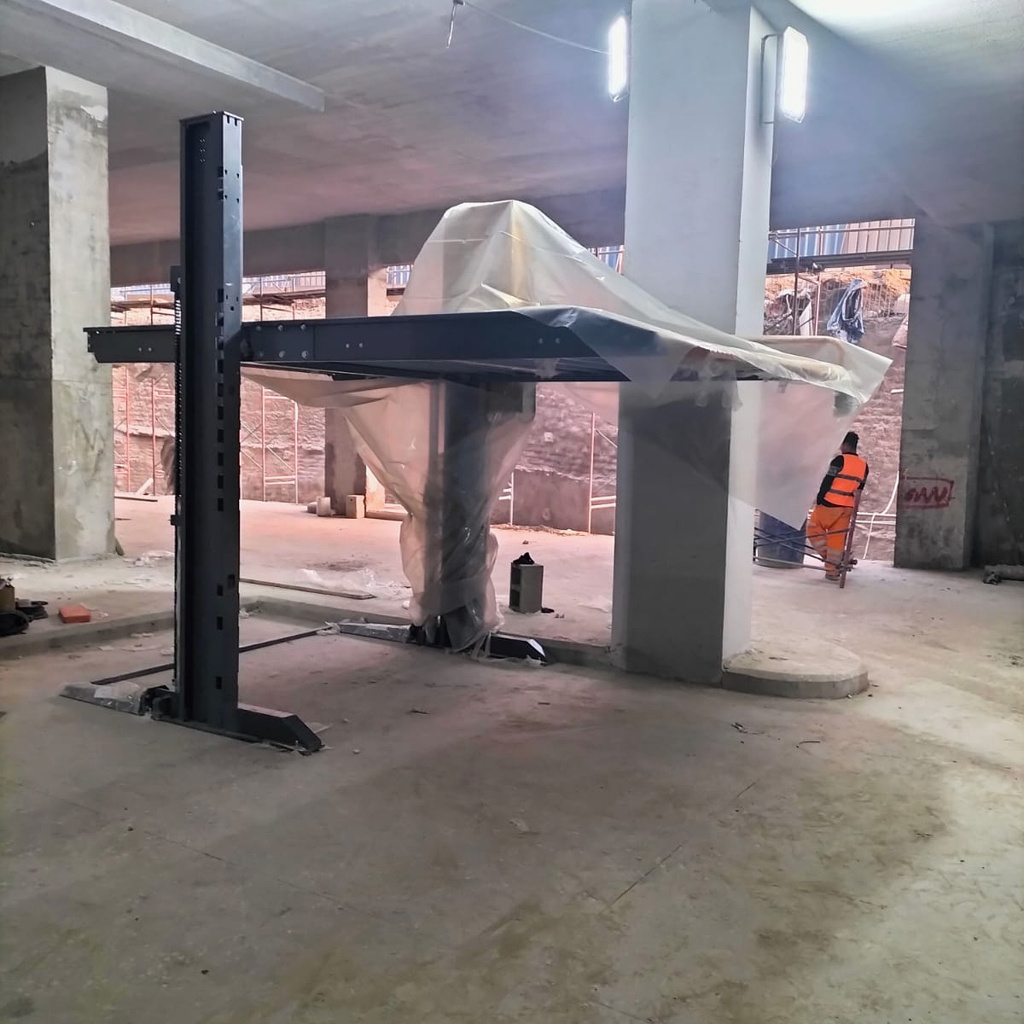
The operational tempo of a major US airport is relentless. Parking facilities must process thousands of vehicles per hour, accommodating early-morning business departures and massive surges during holiday travel periods. Therefore, the technology used must be engineered for high throughput, absolute reliability, and rapid retrieval.
Automated Guided Vehicle (AGV) Technology
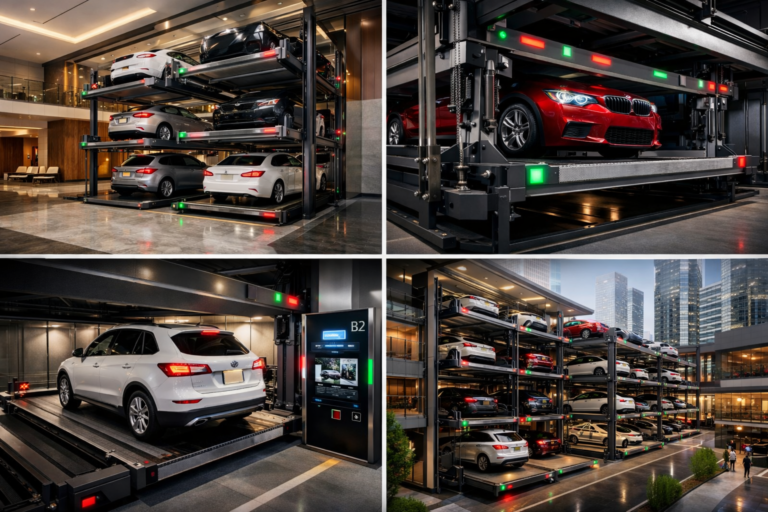
For terminal-adjacent parking, AGV systems are the gold standard. When a traveler pulls into a transfer cabin near the terminal, they exit their vehicle, and a laser-guided robotic platform slides underneath the car, lifting it by the tires. The AGV then navigates the car into a high-density parking grid. Because there are no fixed ramps or moving aisles within the grid, the space is entirely filled with cars. When the traveler returns, the system retrieves the car and delivers it front-first, eliminating the need to reverse out of tight spaces. This technology ensures retrieval times of under three minutes, which is significantly faster than walking through a traditional multi-story garage.
Tower and Puzzle Systems for Economy Lots
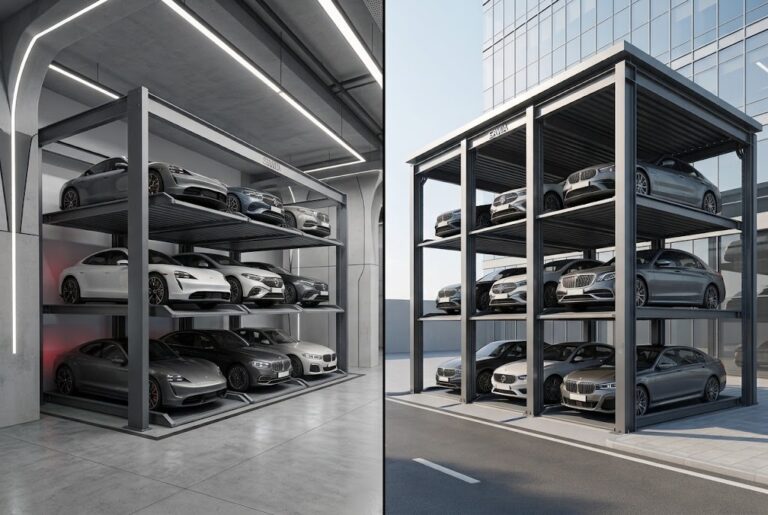
For slightly further removed economy parking, automated tower systems and puzzle systems provide excellent throughput. Tower systems act as high-speed elevators for cars, storing vehicles vertically in a silo-like structure that takes up a fraction of the land area of a traditional lot. Puzzle systems use moving pallets to shift cars vertically and horizontally, allowing vehicles to be stacked tightly without any human driving lanes. There is a diverse array of advanced parking products specifically designed to meet the rigorous throughput demands of aviation facilities.
Manufacturing Rigor for 24/7 Duty Cycles
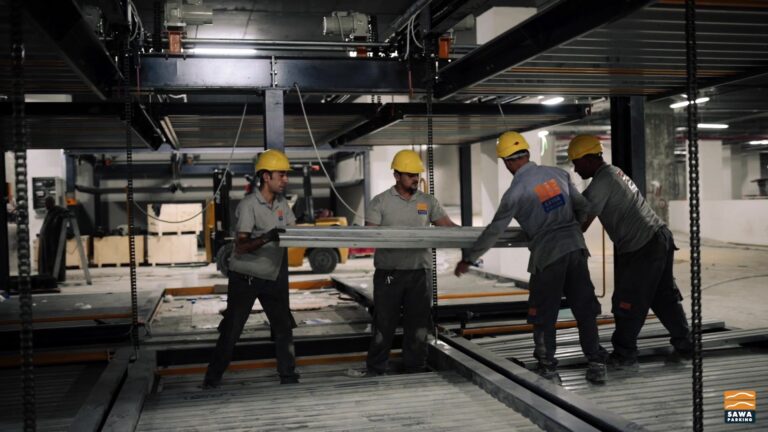
An airport parking system operates 24 hours a day, 365 days a year. There is no “off-season.” This relentless duty cycle demands the highest level of mechanical engineering. The precision manufacturing processes behind these automated systems ensure that heavy-duty steel components, high-torque motors, and redundant safety sensors can withstand continuous operation without failure, ensuring that the airport’s ground infrastructure matches the reliability of its airborne operations.
Enhancing the Passenger Journey with Mechanical Parking Systems for American Airports
The modern US traveler expects a seamless, frictionless experience. The aviation industry has spent billions on TSA PreCheck, biometric boarding, and in-flight Wi-Fi, yet the first and last miles of the journey—the parking experience—remain deeply frustrating.
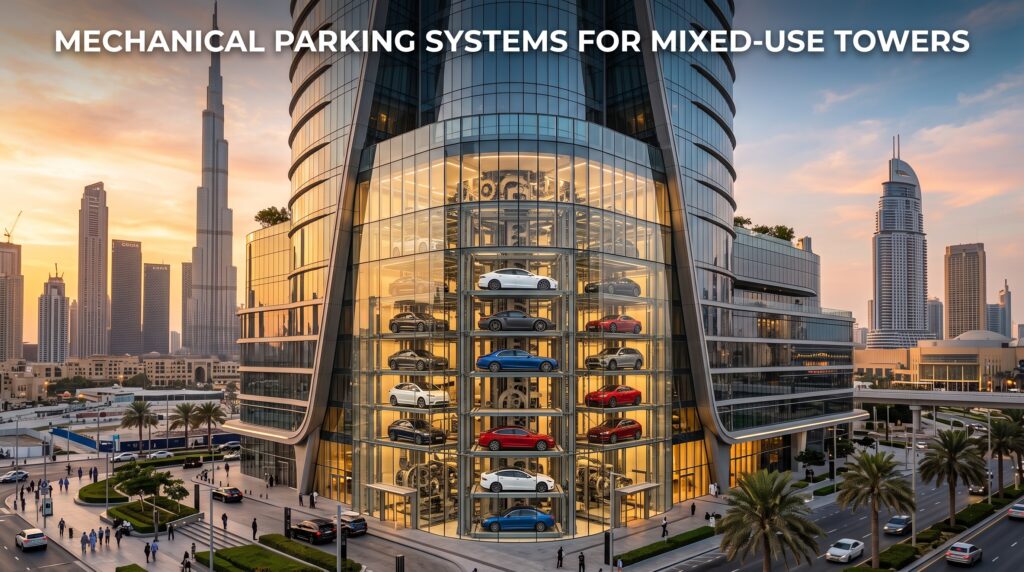
Automated parking fundamentally rewrites the passenger journey narrative. Instead of navigating a confusing concrete maze, the passenger drives into a brightly lit, climate-controlled, ground-level transfer pavilion located directly adjacent to the terminal curbside. They step out of their car, take their luggage, and walk directly into the terminal check-in area. The parking process takes less than two minutes.

This seamless transition is particularly crucial for business travelers rushing to make connections, families traveling with small children and heavy baggage, and elderly passengers or those with disabilities who find walking through massive traditional garages physically taxing. To ensure this level of operational excellence, airport authorities must partner with providers that offer comprehensive end-to-end parking services, including seamless integration with the airport’s wayfinding apps, flight information display systems (FIDS), and automated payment kiosks.
Additionally, the security of automated parking provides immense peace of mind. Traditional airport parking lots are notorious for vehicle break-ins, catalytic converter thefts, and accidental door dings in tight spaces. By placing the vehicle in a locked, human-excluded automated vault, the risk of damage or theft is reduced to near zero.
Environmental Sustainability: Mechanical Parking Systems for Airports in the USA
Major US airports are under increasing pressure from the Environmental Protection Agency (EPA) and local state environmental agencies to reduce their carbon footprints. Traditional parking facilities are incredibly environmentally hostile. They create massive “heat islands” due to acres of black asphalt absorbing solar radiation. Furthermore, they force thousands of cars to idle while drivers circle looking for spots, and they require continuous, energy-intensive mechanical ventilation and high-wattage lighting across multiple sprawling levels.
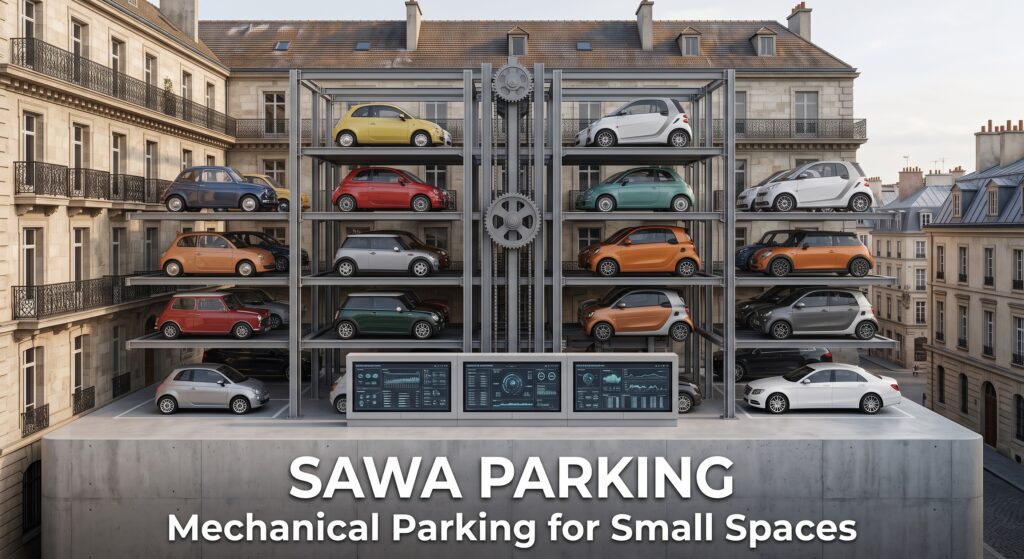
Mechanical parking systems for airports directly address these environmental mandates. Because the vehicles are turned off immediately upon entering the transfer cabin, the system completely eliminates the idling emissions associated with searching for a parking space. More importantly, because the public is excluded from the parking grid, the automated vault does not require continuous lighting or ventilation. Lights and fans only activate momentarily when a vehicle is being moved. This reduction in electrical consumption drastically lowers the airport’s overall carbon emissions. For urban planners and airport authorities looking to understand how to meet stringent LEED (Leadership in Energy and Environmental Design) certification goals through infrastructure upgrades, researching insights on a specialized parking technology blog is an essential step.
Conclusion
The United States stands at a critical inflection point in aviation infrastructure development. As passenger volumes continue to climb, the spatial, economic, and environmental limitations of traditional parking paradigms will only become more acute. Mechanical parking systems for airports are not a futuristic concept; they are a necessary, immediate solution to the ground-level gridlock plaguing American hubs. By embracing automated parking, US airports can maximize their highly constrained land assets, generate new revenue streams, drastically improve the passenger experience, and meet stringent environmental goals. The transition from asphalt lots to robotic vaults is the next great leap in aviation modernization. To explore how these advanced systems can be integrated into your airport’s master plan, we encourage you to contact our team for an expert consultation.
References & Scientific Sources
- Transportation Research Record: Journal of the Transportation Research Board – Modeling ground access mode choice and passenger behavior at major US hub airports: The impact of parking congestion and shuttle wait times. (Validates the economic and temporal losses associated with traditional airport parking friction).
- Journal of Air Transport Management – Spatial optimization and land-use economics of automated parking facilities at capacity-constrained airports. (Provides the academic foundation for the square-meter footprint comparisons and land-reclamation ROI calculations).
- Automation in Construction – High-throughput automated guided vehicle (AGV) algorithms for dense vehicular storage in intermodal transportation hubs. (Supports the engineering claims regarding retrieval speeds and the superiority of AGV technology in high-volume airport environments).
- Science of The Total Environment – Mitigating the urban heat island effect and reducing greenhouse gas emissions through automated parking infrastructure at major metropolitan airports. (Validates the environmental sustainability claims regarding idling emissions, heat islands, and energy consumption reductions).