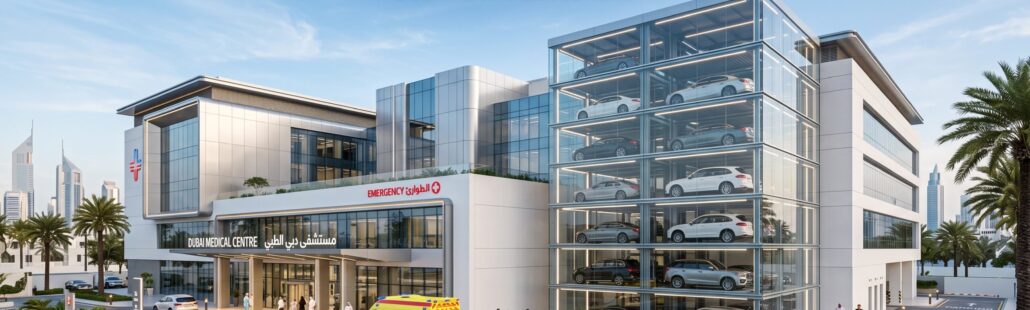



The global hospitality industry is defined by its relentless pursuit of perfection. In a hyper-competitive market, luxury hotels cannot rely solely on thread counts, interior design, or Michelin-starred chefs to distinguish themselves. Today, the true mark of a world-class hotel is the meticulous curation of the entire guest journey—from the moment of arrival to the moment of departure. Nowhere is this more critical, and more logistically challenging, than in Central London.
London is a city where centuries of history collide with ultra-modern wealth. It boasts some of the most exclusive hotel districts in the world—Mayfair, Knightsbridge, Belgravia, and the South Bank. Yet, these same districts are plagued by severe spatial constraints, labyrinthine one-way streets, exorbitant land values, and严格的heritage conservation laws. For a luxury hotel in London, offering seamless, discreet, and secure parking is one of the most complex operational hurdles. Traditional underground ramp parking is architecturally impossible to retrofit into historic buildings and financially ruinous to excavate beneath new ones. This is the exact juncture where mechanical parking systems for hotels transition from a mere convenience into an absolute architectural and commercial imperative. Forward-thinking developers and hospitality groups are increasingly turning to innovations from Sawa Parking to solve this quintessential London problem.
The London Land Crisis and Mechanical Parking Systems for Hotels
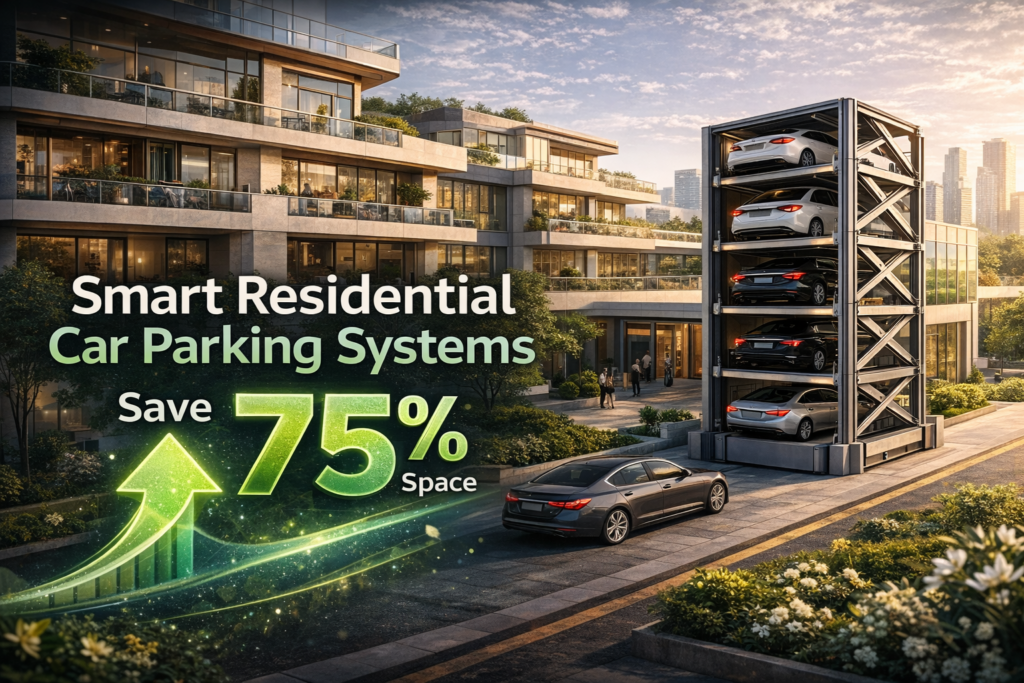
To comprehend the necessity of automated parking in the UK capital, one must understand the extreme economics of Central London real estate. In prime postcodes like W1 or SW1, land can cost upwards of £10,000 to £15,000 per square meter. When a hotel developer plans a traditional parking facility, the math becomes staggering. A conventional parking space, factoring in the driving lanes, turning circles, pedestrian walkways, and structural ventilation, requires an average of 30 to 35 square meters. In simple terms, a single conventional parking space in London can represent over £300,000 in lost or spent real estate value.
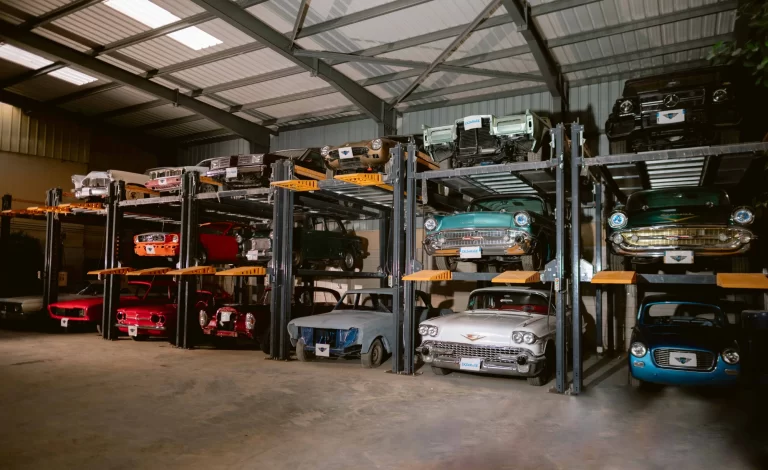
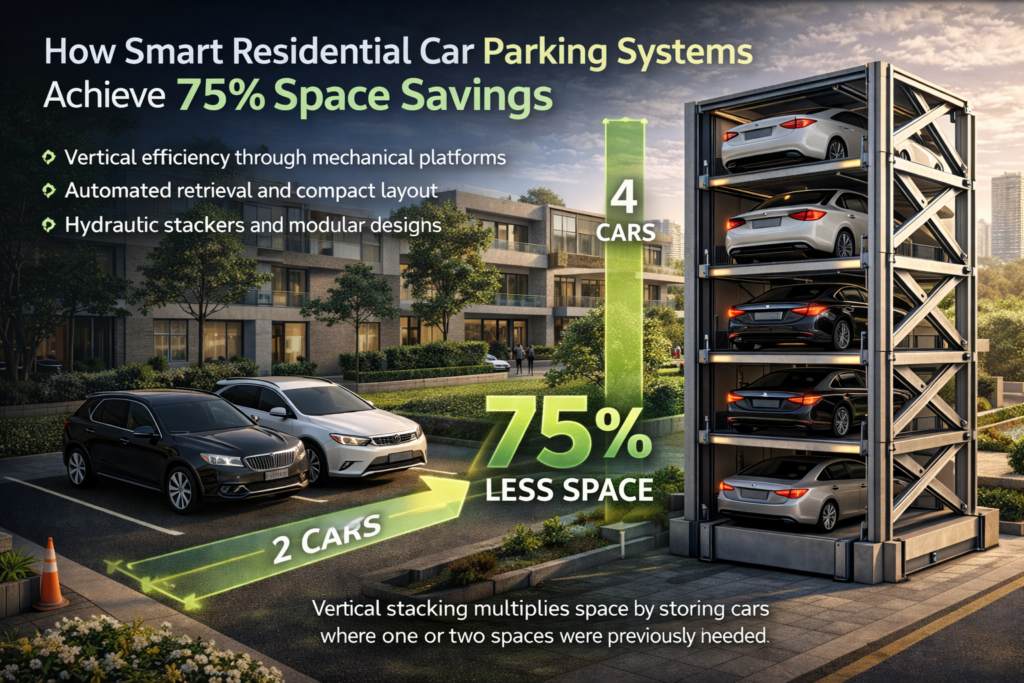
Mechanical parking systems for hotels completely shatter this economic barrier. By removing the human driver from the parking grid, the system eliminates the need for driving lanes, ramps, and pedestrian walkways. Vehicles are parked on dense, interconnected pallets or transported by robotic platforms. This reduces the spatial requirement per vehicle to as little as 15 square meters. For a London hotel developer, this represents a 50% to 60% reduction in the structural footprint required for parking. This spatial efficiency allows developers to either minimize the incredibly costly excavation process—avoiding complex party-wall agreements with neighboring historic buildings—or repurpose the saved underground volume into highly lucrative amenities such as subterranean spas, gourmet kitchens, or premium guest suites.
Elevating the Guest Journey with Mechanical Parking Systems for Hotels
In the realm of ultra-luxury hospitality, the psychological concept of “frictionless arrival” is paramount. High-net-worth individuals, celebrities, and dignitaries who frequent London’s top-tier hotels demand absolute privacy, security, and efficiency. They do not want to navigate a claustrophobic, concrete underground ramp, searching for a bay, only to walk through a damp corridor to find a lift.
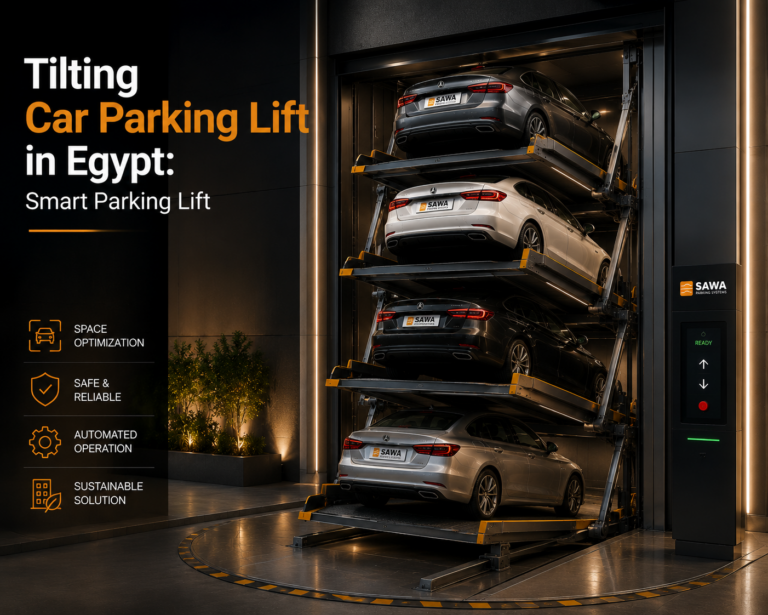
Mechanical parking systems for hotels architect a completely bespoke arrival sequence. The guest pulls their vehicle—whether it is a vintage Rolls-Royce or a modern hypercar—into a highly secure, beautifully appointed, ground-level reception cabin located discreetly at the side or rear of the hotel. They step out directly into the care of the hotel’s valet or doorman, handing over the vehicle to an automated system. The car is silently whisked away into the mechanized vault below.
This process guarantees absolute discretion. There are no public parking levels where paparazzi or prying eyes can view a guest’s vehicle. Furthermore, upon departure, the automated system retrieves the car and delivers it front-first into the cabin, meaning the guest never has to reverse out of a tight space. This elevated, VIP-level experience begins and ends the guest’s stay on a note of unparalleled sophistication. To achieve this level of seamless service, hotels must rely on comprehensive end-to-end parking services that integrate the machinery directly with the hotel’s concierge and security systems.
Central London is a minefield of architectural heritage. A vast majority of luxury boutique hotels are housed within Grade I or Grade II listed buildings, or located in strict conservation areas overseen by local councils and English Heritage. Attempting to dig a deep, multi-level traditional parking basement beneath a 200-year-old Georgian townhouse is often met with immediate rejection by planning authorities due to the risk of subsidence to adjacent historic foundations.
This is where mechanical parking systems for hotels provide a vital lifeline for heritage preservation. Because automated systems require a fraction of the depth needed for traditional ramps, the excavation required is significantly shallower. A puzzle parking system or a tower system can be installed in a shallow basement that was previously deemed unusable for cars. By minimizing ground disturbance, automated parking greatly increases the likelihood of gaining planning permission for parking in sensitive historical areas. It allows hoteliers to modernize their infrastructure and offer 21st-century conveniences without compromising the structural integrity or the historical aesthetic of the building.
The Engineering Behind Mechanical Parking Systems for Hotels
The specific technological application depends heavily on the architectural constraints of the London hotel. Developers must choose from a curated selection of advanced parking products that align with their structural parameters.
Automated Guided Vehicle (AGV) Systems for Modern Towers
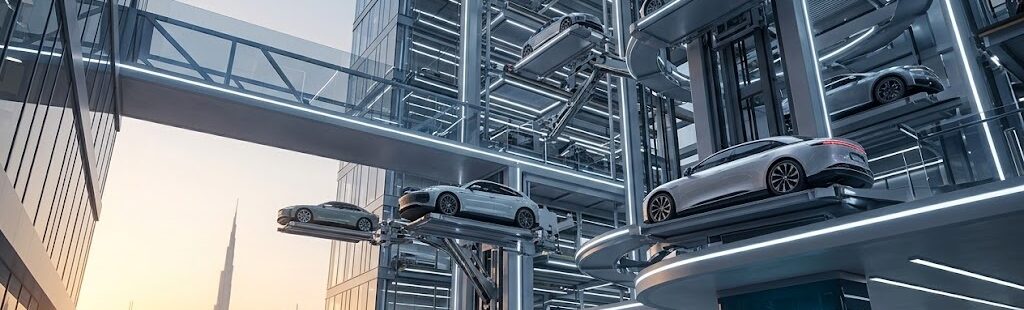
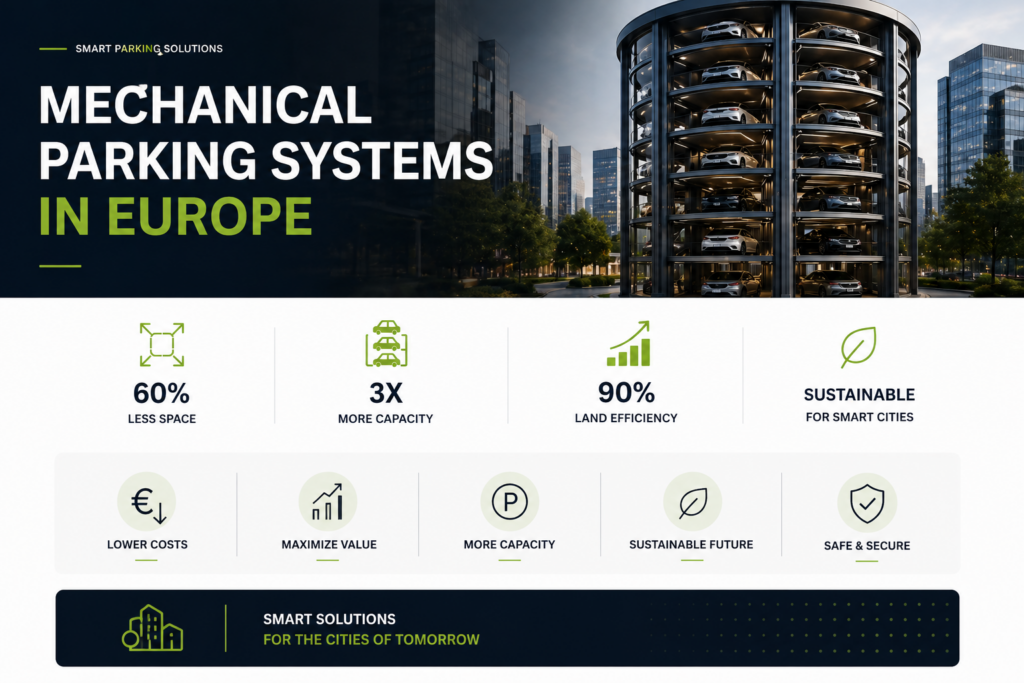
For newly built luxury hotels, such as those rising around the City of London or Canary Wharf, AGV systems represent the ultimate solution. These laser-guided robotic platforms slide under vehicles and transport them into a solid, high-density grid. Because there are no fixed rails or mechanical lifts within the parking grid itself, the structural load is evenly distributed across the floor slab, and the parking area requires no ventilation or lighting. It is the safest, most efficient, and most space-optimized technology available.
Puzzle and Tower Systems for Boutique Hotels
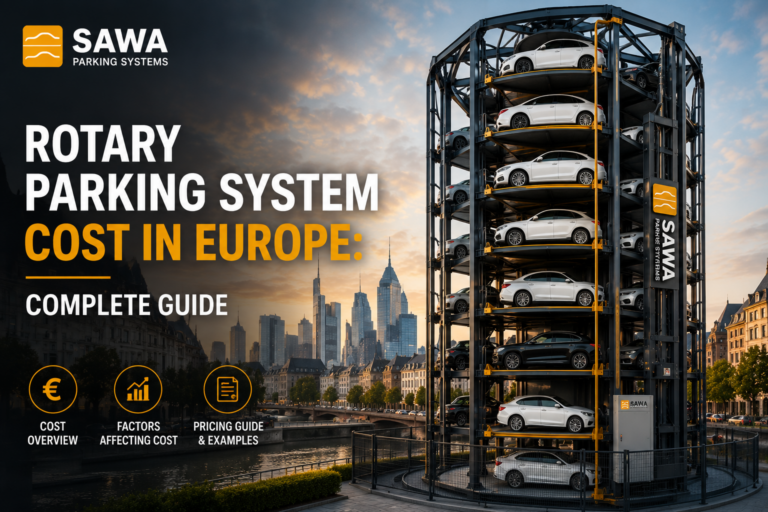
For the narrow, constrained footprints of boutique hotels in Mayfair or Kensington, Puzzle and Tower systems are ideal. Puzzle systems utilize moving pallets to slide cars vertically and horizontally, maximizing the capacity of a small, awkwardly shaped room. Tower systems take advantage of vertical height, storing cars in a silo-like structure that takes up only a few parking spaces worth of ground footprint but can hold dozens of vehicles. These systems are engineered with precision in a state-of-the-art factory, ensuring whisper-quiet operation that will never disturb the sleep of hotel guests in the rooms above.
Economic Viability and Mechanical Parking Systems for Hotels
Beyond the spatial savings, the financial return on investment (ROI) for automated parking in London is highly compelling when analyzed over a 20-year lifecycle.
Eradicating Operational Overhead
Traditional hotel parking requires a small army of valets, security patrols, and cleaning staff. It requires 24/7 high-intensity lighting and massive mechanical ventilation fans to extract vehicle exhaust. Mechanical parking systems for hotels operate in the dark and without human presence inside the grid. Electricity consumption is drastically reduced because lights and ventilation only activate when a car is moving. The reliance on manual valets is eliminated, removing the associated payroll costs, insurance liabilities, and risks of vehicle damage caused by human error.
Reclaiming Revenue-Generating Space
As demonstrated in numerous international global project portfolios, the most profitable outcome of installing an automated system is the repurposing of saved space. If a hotel replaces a planned 3-level traditional basement with a 2-level automated basement, the entire third level becomes available. In a London luxury hotel, converting this reclaimed subterranean space into a high-end wellness center, a private members’ club, or back-of-house staff facilities generates a return on investment that far exceeds the cost of the parking machinery.
Discreet Operations and Mechanical Parking Systems for Hotels
A luxury hotel cannot tolerate operational disruptions. Noise, vibration, and the sight of industrial machinery are strictly forbidden in the guest experience. Therefore, the integration of the parking system must be invisible.
This requires sophisticated engineering to isolate vibrations. The machinery must be mounted on specialized anti-vibration pads to ensure that the hum of electric motors is never felt by a guest resting in a suite directly above. Furthermore, the system must be integrated into the hotel’s Building Management System (BMS), allowing the engineering team to monitor the parking grid remotely from a back-office screen. For hotel owners and operators looking to understand how to seamlessly blend these industrial systems into luxury environments, consulting a specialized parking technology blog offers invaluable insights into acoustic dampening and architectural integration.
Conclusion
The luxury hospitality market in London is an environment where perfection is the baseline expectation. As land becomes scarcer and heritage regulations become stricter, traditional methods of accommodating guest vehicles are no longer viable. Mechanical parking systems for hotels represent a sophisticated fusion of robotics, software engineering, and spatial economics. They solve the profound logistical challenges of the capital, protecting historic architecture while unlocking massive financial value through space reclamation. More importantly, they elevate the guest experience, offering a level of privacy, security, and seamless arrival that modern ultra-high-net-worth travelers demand. For London hoteliers looking to the future, automated parking is not just an infrastructure upgrade; it is a critical investment in brand prestige and operational excellence. To explore how these systems can be integrated into your next development, we encourage you to contact our team for a bespoke consultation.
References & Scientific Sources
- Journal of Hospitality and Tourism Management – The impact of pre-arrival friction on luxury brand perception and guest loyalty in metropolitan hotels. (Supports the psychological argument regarding the necessity of a seamless, discreet parking arrival for high-net-worth individuals).
- Structural Survey and Engineering Journal – Geotechnical and structural constraints of deep basement excavations in heritage urban environments: A London case study. (Validates the argument regarding the impossibility of traditional parking basements in historic Central London areas due to subsidence risks).
- Tourism Economics – Real estate optimization and spatial capitalization in high-density urban hospitality sectors. (Provides the academic foundation for calculating the ROI and spatial savings of mechanical versus traditional parking in premium real estate markets).
- Automation in Construction – Vibration isolation and acoustic dampening methodologies for automated guided vehicle (AGV) systems in mixed-use residential and hospitality buildings. (Supports the engineering claims regarding how automated parking can operate silently without disturbing hotel guests).