


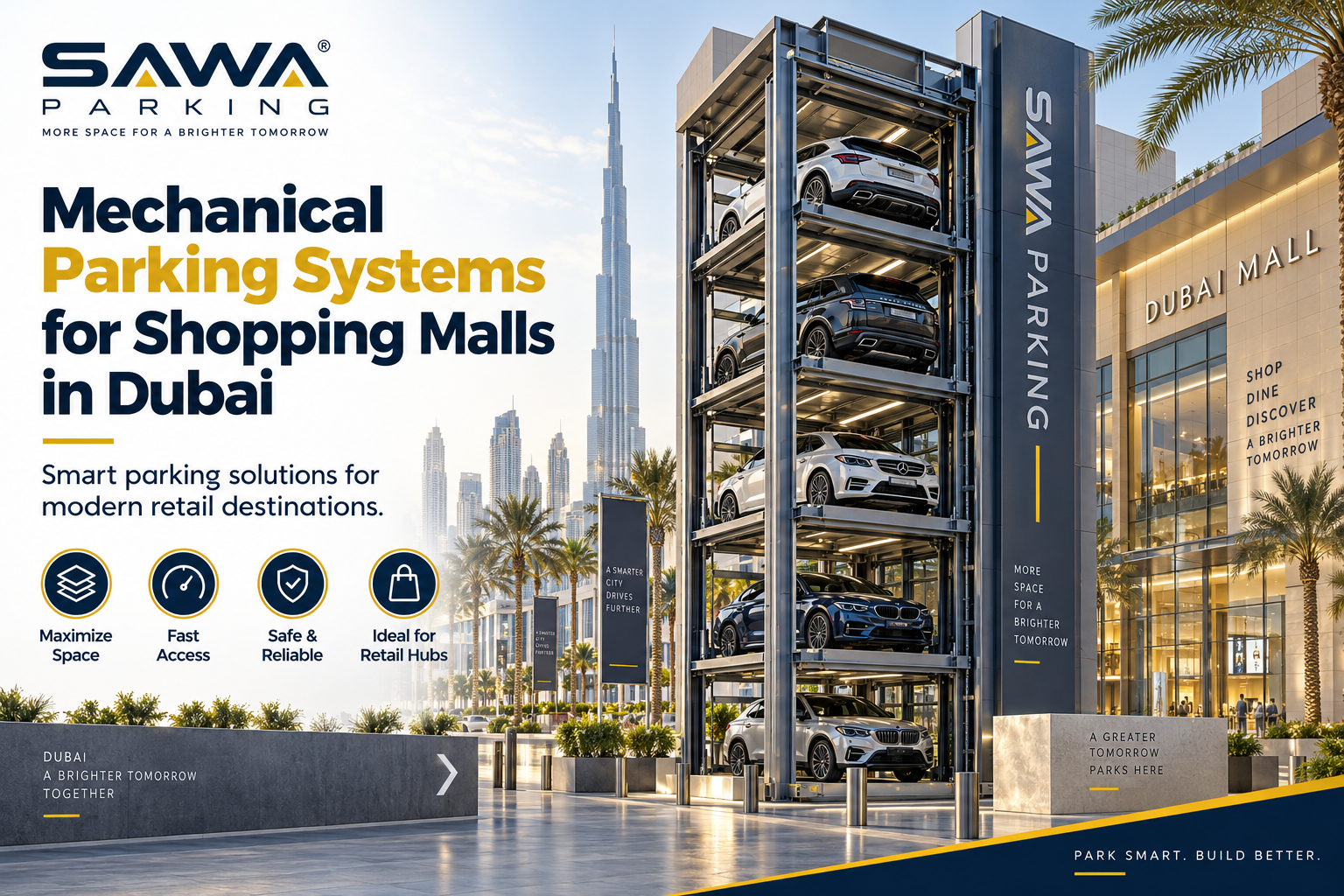
Mechanical Parking Systems for Shopping Malls: The Ultimate Space Revolution in Dubai
The modern shopping mall has undergone a radical transformation over the past two decades. No longer merely a collection of retail stores, the contemporary mall is an immersive ecosystem—a destination for entertainment, fine dining, socialization, and luxury experiences. Nowhere is this evolution more apparent than in Dubai. In a city that has turned retail into a global tourist attraction, the grandeur of the malls is unmatched. However, this architectural ambition hides a massive, often overlooked logistical paradox: the relentless demand for consumer space versus the absolute necessity of vehicle storage.
As malls in Dubai expand to include indoor ski slopes, massive aquariums, and sprawling entertainment districts, the land required to accommodate the visitors’ vehicles becomes exponentially more expensive and structurally complex. Traditional underground parking ramps, which consume vast amounts of volume and require extensive driving lanes, are no longer economically or spatially viable for premium retail developments. This is precisely where mechanical parking systems for shopping malls emerge not just as a convenience, but as a critical economic and architectural necessity. Industry pioneers like Sawa Parking have been at the forefront of re-engineering how urban spaces accommodate this massive influx of vehicles.

This comprehensive analysis explores the profound impact of automated parking on retail environments, focusing on how integrating these systems solves the space crisis, enhances the consumer journey, and drives higher revenue for mall operators in hyper-dense markets like Dubai.
The Dubai Retail Paradox: Why Mechanical Parking Systems for Shopping Malls are Essential
To understand the value of mechanical parking systems for shopping malls, one must first understand the real estate dynamics of a city like Dubai. Land in prime locations—such as Downtown Dubai, Dubai Marina, or along Sheikh Zayed Road—is among the most expensive in the world. Every square meter of this land holds immense commercial value when utilized for retail, dining, or entertainment.
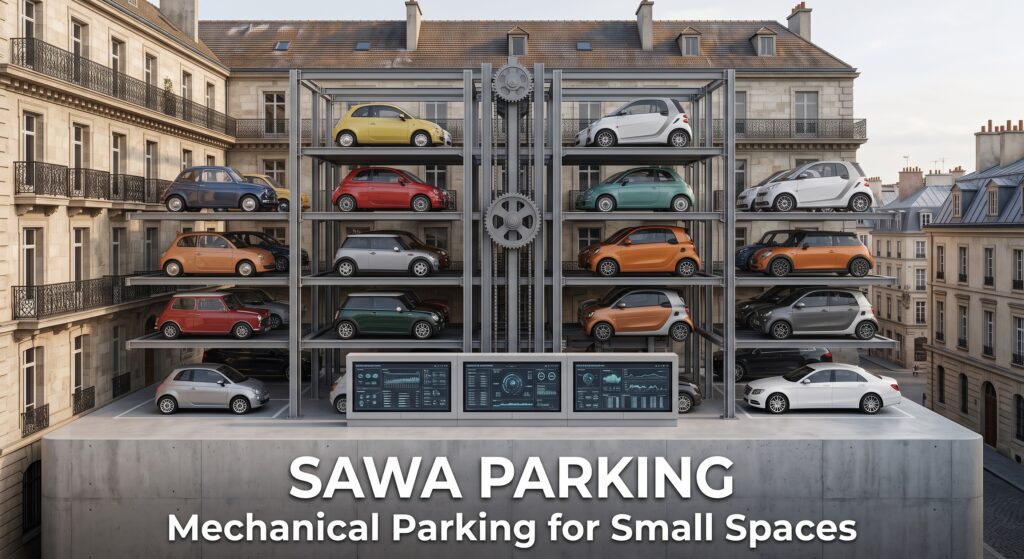
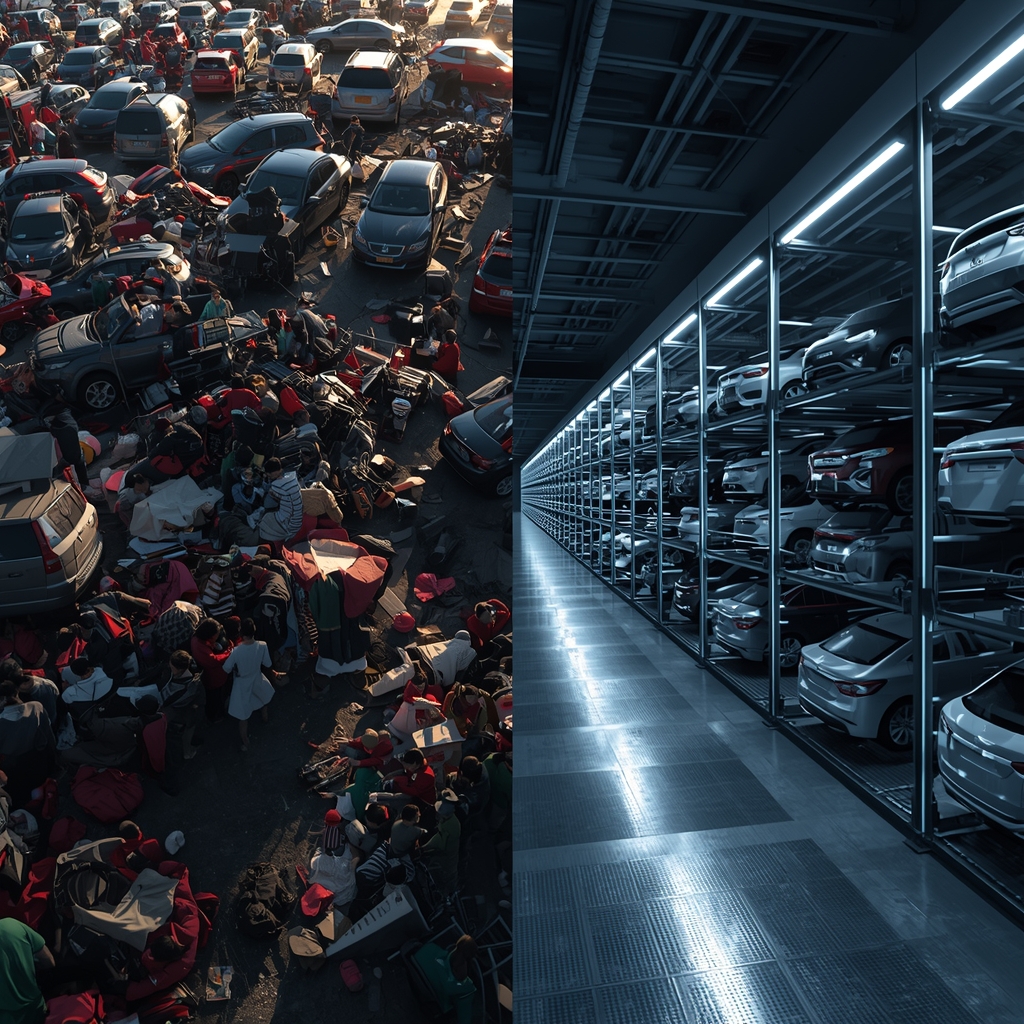
When a developer plans a traditional mall, a staggering 30% to 40% of the total built-up area is often sacrificed to conventional parking. This involves digging deep basements, creating wide driving lanes for cars to navigate safely, designing massive turning radii, and allocating space for pedestrian walkways from the car to the elevators. In a traditional setup, you are essentially building a massive, empty concrete cave beneath your profitable retail spaces.
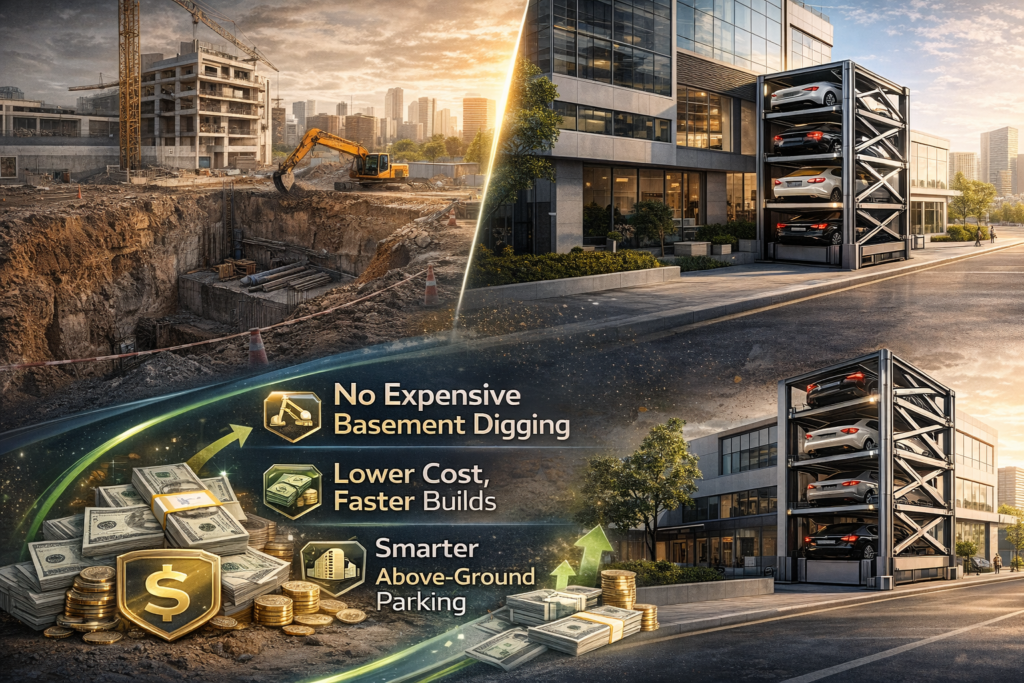
Mechanical parking systems for shopping malls completely invert this equation. By eliminating the need for driving lanes, pedestrian walkways, and turning radii, automated parking systems can increase parking capacity by up to 60% to 100% within the exact same structural footprint. In the context of Dubai, this means a developer can either halve the depth of the underground excavation—saving millions in construction costs and reducing the structural load—or double the number of parking spaces, allowing the mall to accommodate more visitors without expanding the physical footprint of the building.
The Consumer Psychology: Eliminating Parking Friction
In the highly competitive retail sector, the customer journey begins long before a shopper steps foot inside a boutique. It begins in the parking lot. Traditional mall parking is notoriously fraught with friction. Drivers circle endlessly looking for a spot, navigate confusing, dimly lit underground ramps, and often have to walk hundreds of meters through concrete corridors just to find an elevator. In the extreme heat of a Dubai summer, this pre-shopping experience can be physically exhausting and deeply frustrating, setting a negative tone before the consumer has even spent a dirham. Providing a seamless, end-to-end suite of parking services is crucial to mitigating this friction.
Mechanical parking systems architect a completely different psychological entry point. The experience is transformed from a stressful hunt into a seamless, valet-like interaction. The driver pulls into a well-lit, spacious, ground-level transfer cabin. They step out of their vehicle, take their belongings, and press a button on a sleek kiosk. The automated machinery safely transports their car to an optimized storage space deep within the structure.
The result is the complete elimination of parking friction. Shoppers arrive at the retail level relaxed, unbothered by the heat, and in a positive psychological state. Studies in retail consumer behavior consistently show that a frictionless arrival directly correlates with longer dwell times and higher average spend. By upgrading to automated solutions, mall operators are not just parking cars; they are actively priming their customers to spend more money.
Decoding the Technology: How Mechanical Parking Systems for Shopping Malls Operate
The engineering behind automated parking is a marvel of modern automation, combining software intelligence with robust mechanical precision. For developers and architects considering this investment, understanding the core technologies is essential. There is no one-size-fits-all solution; rather, developers can choose from a variety of advanced parking products tailored to specific structural needs.
Puzzle Parking Systems
Ideal for retrofitting existing traditional basements or for medium-capacity needs, puzzle systems operate on a grid. Cars are parked on pallets that move vertically and horizontally to shift vehicles out of the way, allowing a specific car to be retrieved. While they require some space for horizontal movement, they double or triple the capacity of a standard flat lot.
Automated Guided Vehicle (AGV) Systems
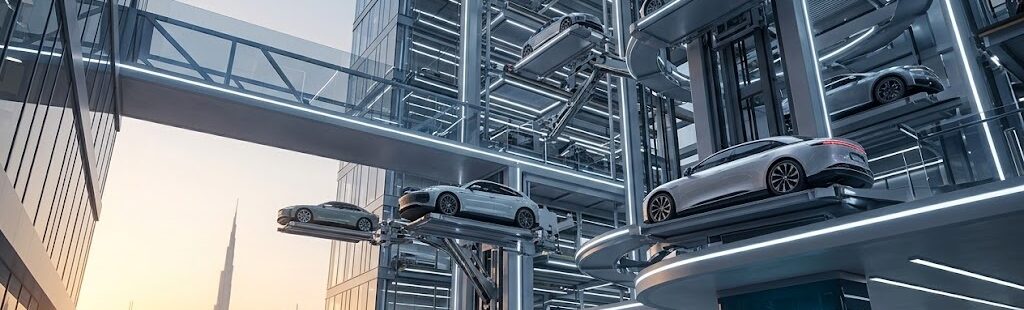
This is the pinnacle of parking technology, frequently utilized in new, high-end mall constructions. When a driver leaves their car in the transfer cabin, an AGV—a battery-powered, laser-guided robot—slides underneath the vehicle, lifts it by its tires, and navigates it into the parking grid. AGVs do not require fixed rails or structural movements within the building. The parking area becomes a completely solid block of parked cars, maximizing spatial efficiency to an unprecedented degree. When the shopper returns, the AGV retrieves the car and delivers it front-first, meaning they never have to reverse out of a space.
Tower Parking Systems
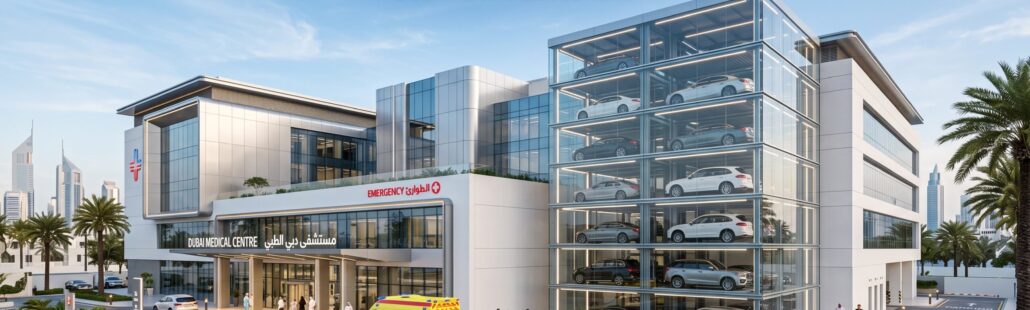
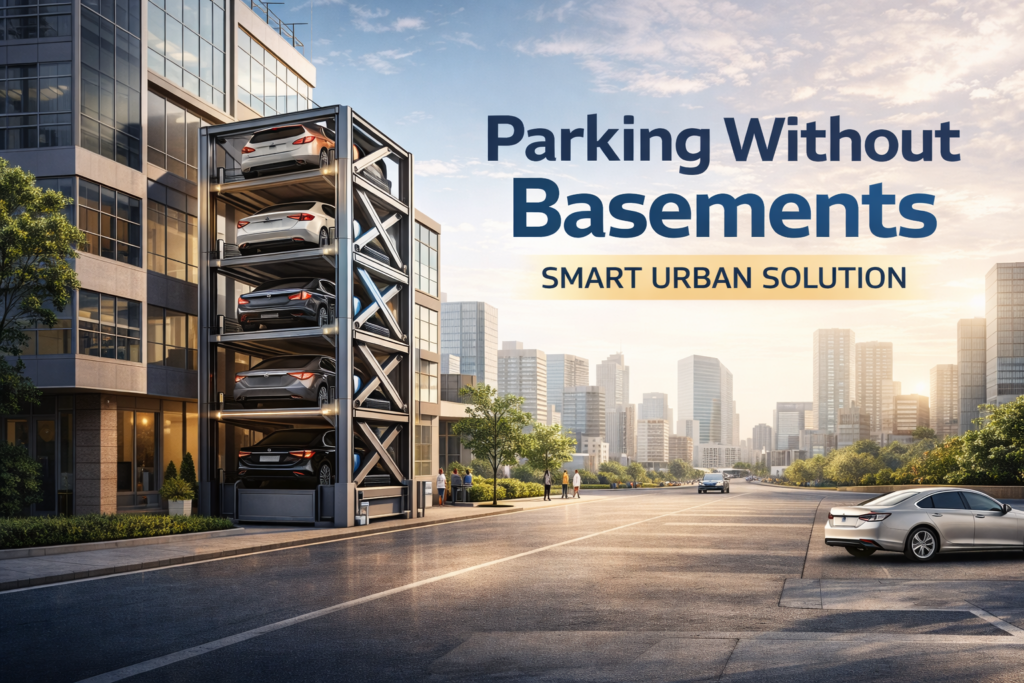
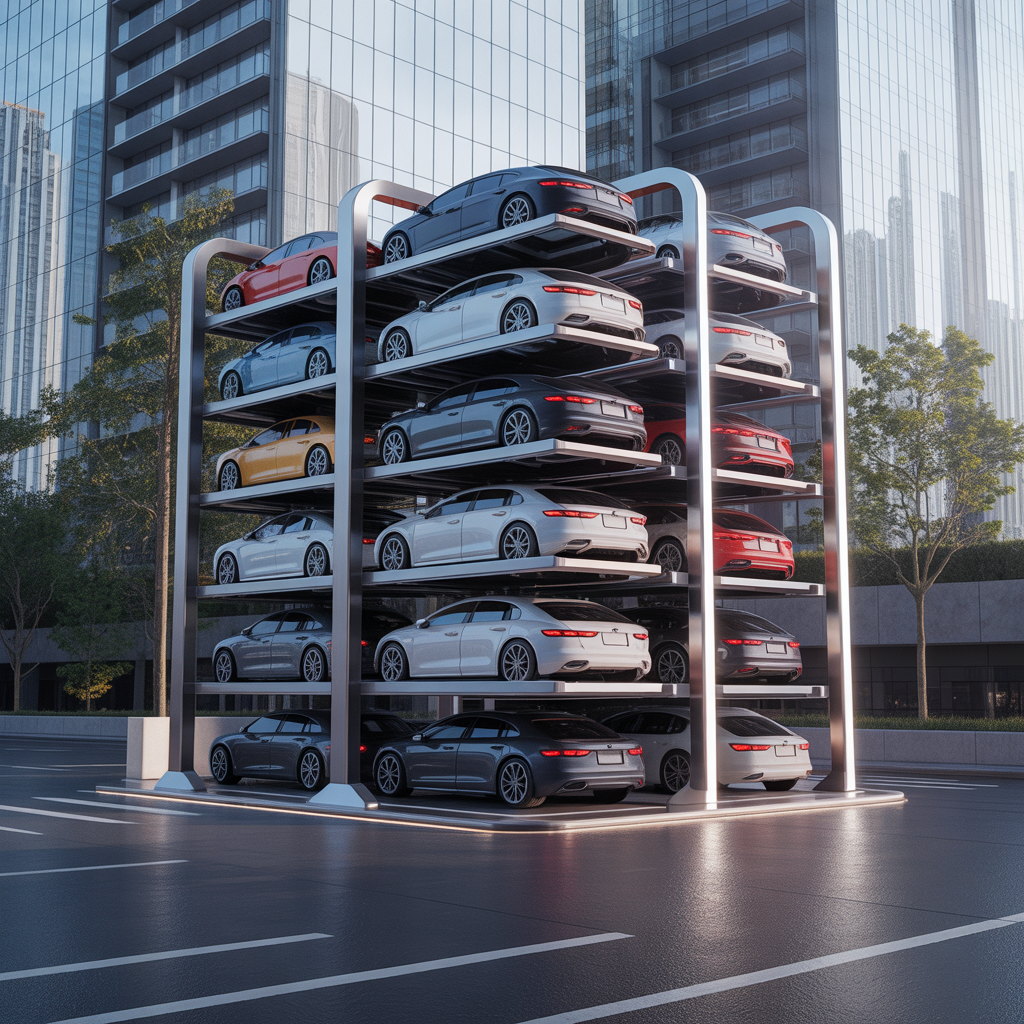
For malls with limited ground footprint but the ability to build vertically, tower systems act like high-rise elevators for cars. A central lift moves pallets up and down, while shifting mechanisms slide cars into empty bays. These are highly visible and can even be clad in aesthetic facades to serve as an architectural landmark on the mall’s exterior.
The Economic ROI: Reclaiming Space for Revenue Generation
The transition from conventional to automated parking is not merely an operational upgrade; it is a profound financial strategy. The Return on Investment (ROI) for mechanical parking systems is calculated not just by the cost of the machinery, but by the lucrative retail space it unlocks.
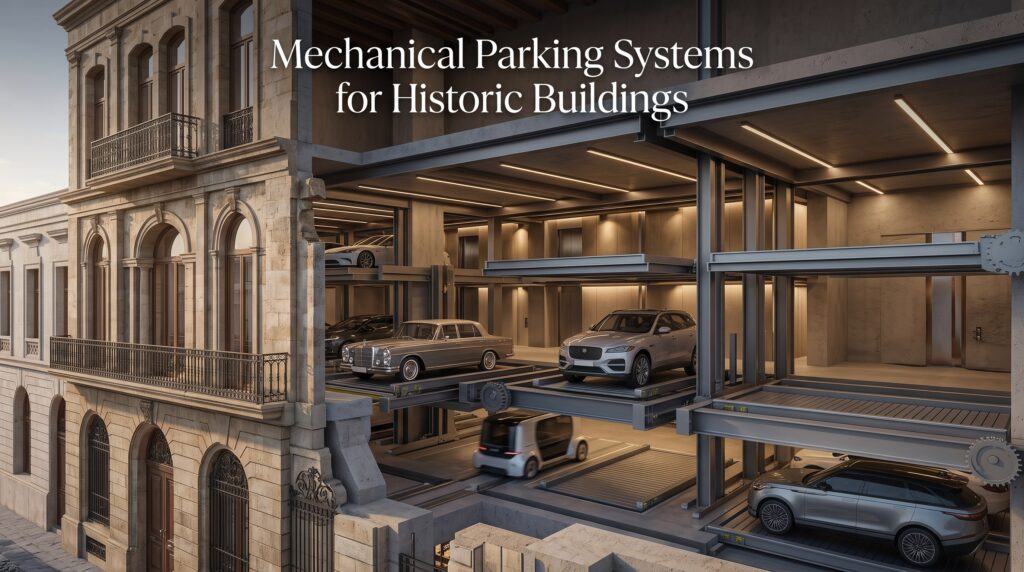
Consider a flagship mall in Dubai. If a mechanical system can condense a 3-level traditional basement into a 2-level automated basement, the entire third level is freed up. This massive subterranean volume can be repurposed. It can become a climate-controlled hypermarket, a luxury cinema complex, a large-scale family entertainment center, or additional high-yield retail units. The rental income generated by this reclaimed space far outstrips the capital expenditure of the parking system, often paying for itself within just a few years. As documented in various global project portfolios, this spatial reclamation is the primary financial driver for developers transitioning to automated systems.
Furthermore, automated parking reduces the operational overhead associated with traditional lots. There is no need for a large fleet of parking attendants, reduced lighting requirements (since humans are not walking through the parking grid), lower ventilation costs (as the space can be kept unlit and unventilated until a car is moving), and significantly reduced liability for minor accidents and dents that occur in tight traditional spaces.
Safety, Security, and the Luxury Standard in Dubai
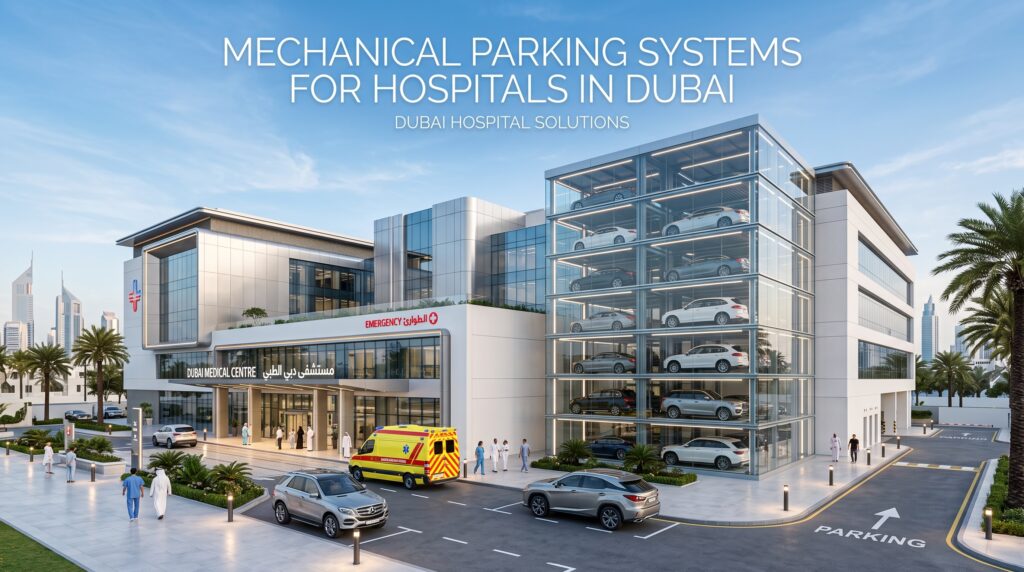
Dubai’s retail sector caters to a high-net-worth demographic that demands exceptional standards of safety and security. Traditional parking lots are inherently vulnerable. They are public spaces where vehicles are exposed to scratches, break-ins, and vandalism.
Mechanical parking systems transform the parking experience into a highly secure vault. The public is completely restricted from the parking grid. Once the car is inside the automated system, it is inaccessible to anyone other than the system operator. This zero-human-contact environment virtually eliminates the risk of theft, vandalism, or accidental damage. For owners of luxury vehicles—Ferraris, Rolls-Royces, and high-end SUVs that are common in Dubai—this level of security is not a luxury; it is a prerequisite for visiting a mall.
Additionally, the transfer cabins are continuously monitored by CCTV and are often staffed by security personnel or equipped with intercoms directly linked to the mall’s command center. The psychological comfort of handing your vehicle over to a fail-safe robotic system rather than a teenage valet is a massive draw for the luxury consumer segment.
Engineering Rigor: Manufacturing and Fire Safety Standards
Integrating mechanical parking into a massive shopping mall requires rigorous engineering, particularly concerning safety. Skeptics often raise questions about what happens in the event of a power outage or a fire. The reliability of these systems is directly correlated with the precision of their manufacturing processes, where strict quality control ensures fail-safe operations.
Fire Safety Innovations
Modern automated parking systems are actually safer than traditional open-air basements in a fire scenario. Because the public is excluded from the parking grid, the fire load is limited strictly to the vehicles themselves. Advanced systems integrate highly sensitive flame, heat, and smoke detectors directly within the parking tiers. In the event of an incident, the system can be programmed to automatically move the burning vehicle—or the vehicles immediately adjacent to it—out of the grid and into a designated fire-isolation chamber, preventing the fire from spreading to the rest of the fleet or the mall structure above. This level of automated fire containment is impossible in a traditional parking garage.
Uninterrupted Power and Redundancy
Power reliability is critical. Reputable manufacturers ensure that their systems are equipped with robust Uninterruptible Power Supplies (UPS) and backup diesel generators. If the city grid fails, the system continues to operate seamlessly, ensuring that shoppers are never trapped without access to their vehicles. The mechanical components are engineered with redundancy; if one motor or sensor fails, the system automatically routes operations through alternate pathways to maintain continuous service.
The Future of Retail Infrastructure
As the global retail landscape evolves, the battle for consumer attention is fiercer than ever. Malls can no longer rely solely on the brands they house; they must compete on the quality of the overall experience. Every touchpoint, from the digital advertising to the physical act of arriving at the mall, must be curated to perfection.
Mechanical parking systems represent the future of this infrastructure. They align perfectly with the smart-city initiatives prevalent in regions like the UAE, where technology is leveraged to improve efficiency, reduce carbon footprints (by eliminating the need for cars to idle while searching for spots), and elevate the standard of living. For those looking to stay updated on how these integrations fit into broader urban mobility trends, exploring industry insights through a dedicated parking technology blog is an invaluable resource.
For developers looking to build the next generation of iconic retail destinations, or for existing mall operators looking to renovate and expand their capacity without physically expanding their walls, the choice is clear. Embracing automated parking is a strategic imperative that pays dividends in real estate optimization, consumer satisfaction, and operational efficiency.
Conclusion
The integration of mechanical parking systems for shopping malls is a definitive paradigm shift in urban planning and retail architecture. In hyper-competitive, space-constrained environments like Dubai, the ability to double parking capacity, reclaim premium real estate for high-yield revenue generation, and provide a stress-free, highly secure arrival experience for shoppers is an unbeatable competitive advantage. The era of sprawling, concrete basement ramps is coming to an end. The future belongs to intelligent, compact, robotic solutions that respect the immense value of urban land and the time of the modern consumer. By investing in automated parking infrastructure, mall developers are not just building a place to store cars; they are engineering a superior, frictionless gateway to the ultimate retail experience.
References & Scientific Sources :
- Transportation Research Part A: Policy and Practice – Study on the impact of parking search time on consumer behavior and retail spending. (Validates the psychological and economic argument that parking friction directly reduces shopper dwell time and mall revenue).
- Journal of Urban Planning and Development (ASCE) – Spatial optimization of urban land use through automated mechanical parking systems. (Provides the engineering and architectural foundation for the 60-100% space-saving claims over traditional ramp parking).
- Fire Safety Journal – Analysis of fire risk and ventilation strategies in automated parking garages versus conventional open-air parking structures. (Supports the section detailing the safety of excluding the public from the parking grid and automated fire isolation protocols).
- IEEE Transactions on Intelligent Transportation Systems – Navigation and control algorithms for Automated Guided Vehicles (AGVs) in dense, confined spatial environments. (Supports the technological explanation of how AGV robotic systems operate without fixed rails to maximize parking density).