


- June 6, 2026
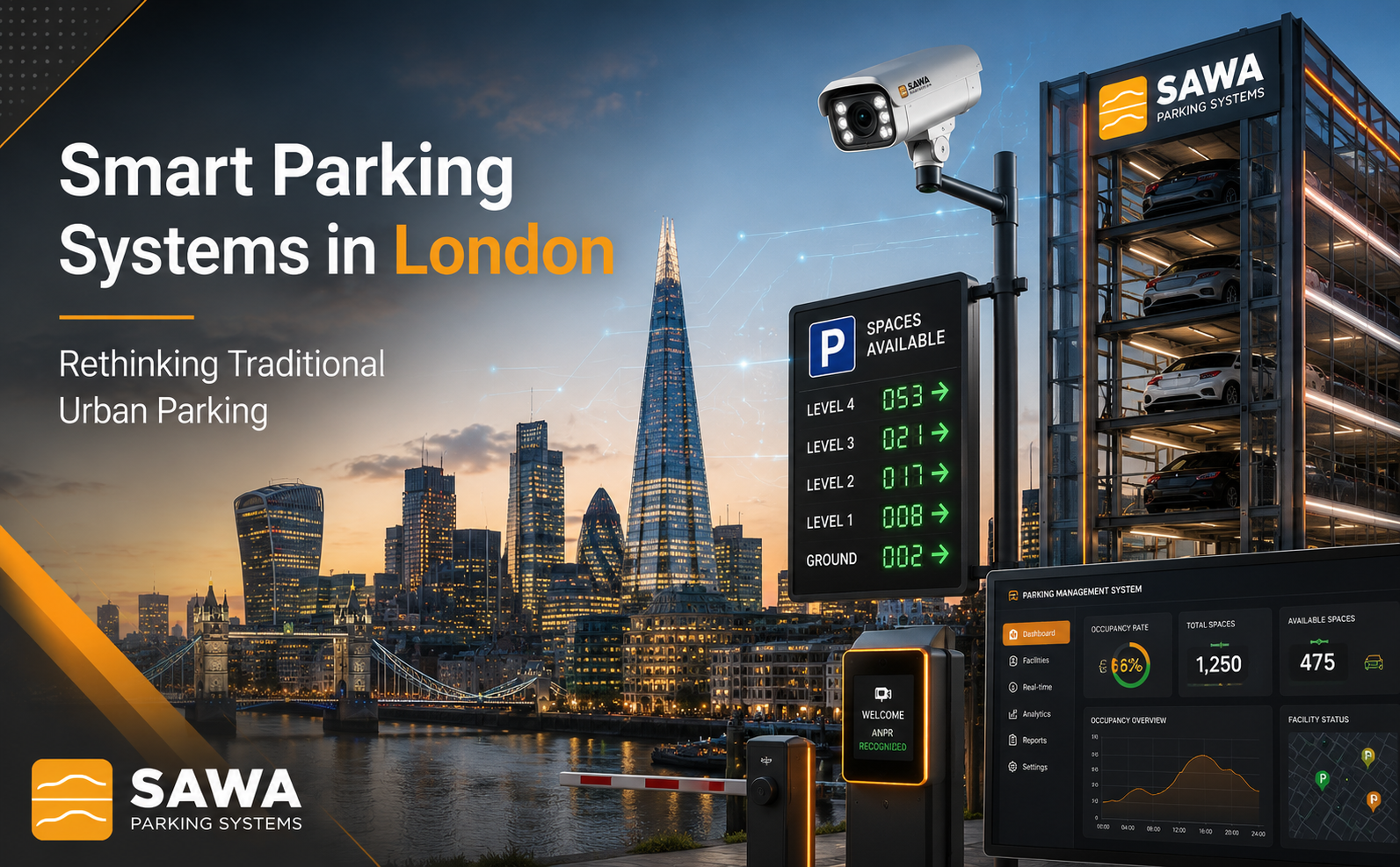
Smart Parking Systems in London: Rethinking Traditional Urban Parking
London is one of the most densely populated and operationally complex cities in Europe. As one of the world’s leading financial, commercial, tourism, and residential hubs, the city faces enormous pressure on transportation networks, urban mobility systems, and parking infrastructure every single day.
Millions of vehicles move through London daily while the city simultaneously works toward reducing congestion, improving sustainability, expanding pedestrian infrastructure, and supporting smarter urban mobility systems.
At the same time, urban density across London continues increasing rapidly. Residential towers, mixed-use developments, business districts, hospitality projects, and large commercial centers continue expanding across the city while available land becomes increasingly limited and expensive.
Traditional parking systems are struggling to support these modern urban conditions efficiently. Large parking garages, underground excavation, circulation-heavy parking layouts, and conventional parking structures consume enormous amounts of valuable urban space while still failing to provide efficient parking organization in many high-density areas.
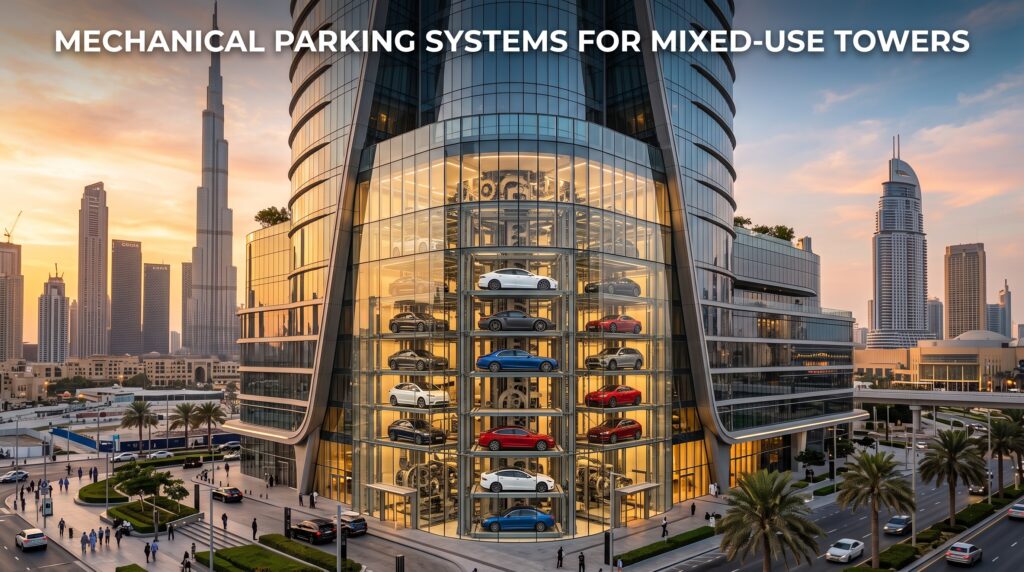
This is exactly why smart parking systems in London are becoming increasingly essential. Intelligent parking technologies are helping developers and urban planners improve parking capacity, optimize land utilization, reduce congestion, and support the future of sustainable urban mobility inside one of the world’s most challenging urban environments.
As London continues evolving into a smarter and more connected city, parking infrastructure itself is becoming one of the most important components shaping future urban development.
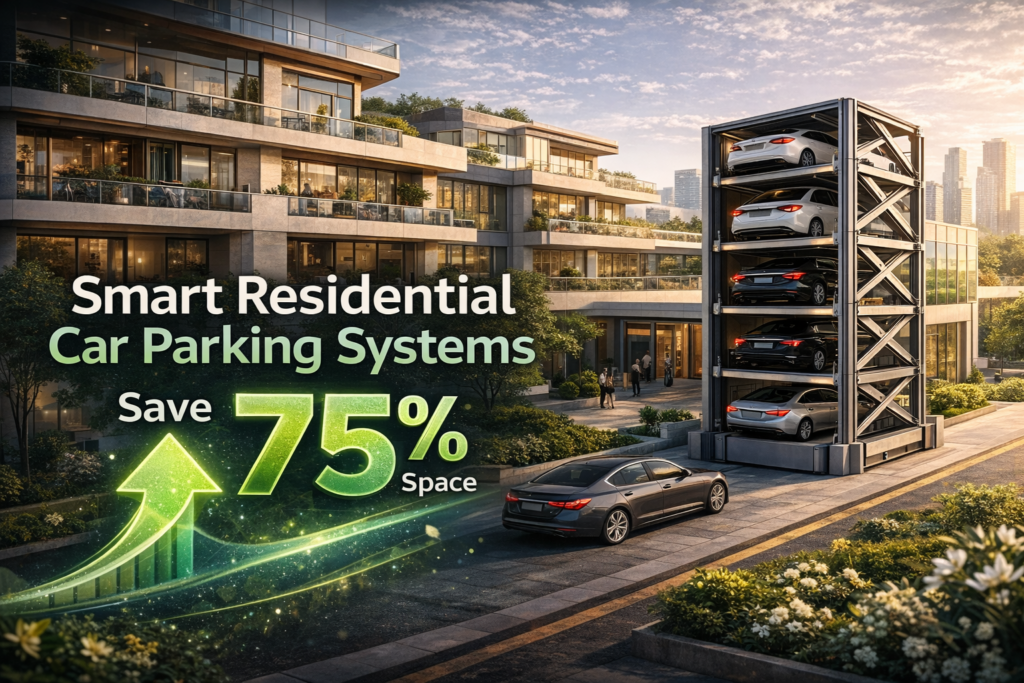
London’s Urban Density Is Increasing Rapidly
London continues experiencing major growth in:
- Residential developments
- Mixed-use projects
- Commercial districts
- Tourism activity
- Business infrastructure
- Urban mobility demand
At the same time, land availability inside central London and surrounding urban zones remains extremely limited.
This creates major infrastructure pressure because modern developments must support:
- High residential density
- Commercial traffic
- Visitor parking demand
- Service and logistics vehicles
- Smart city mobility systems
Traditional parking methods were never designed to support this level of density efficiently.
Conventional parking systems consume enormous amounts of space through:

- Large ramps
- Wide circulation lanes
- Turning radiuses
- Underground construction
- Oversized parking footprints
As land prices continue increasing across London, developers can no longer afford to waste valuable urban space on inefficient parking layouts that reduce project profitability and operational efficiency.
This is one of the biggest reasons why advanced smart parking systems in London are becoming increasingly important for future urban infrastructure planning.
London Is Reducing Dependence on Traditional Parking
London has been actively moving toward more sustainable urban mobility strategies for years.
The city continues investing heavily in:
- Public transportation systems
- Pedestrian infrastructure
- Cycling networks
- Congestion reduction policies
- Low-emission mobility strategies
- Smart transportation technologies
Several areas across London are reducing dependence on traditional parking infrastructure while prioritizing smarter and more efficient urban planning models.
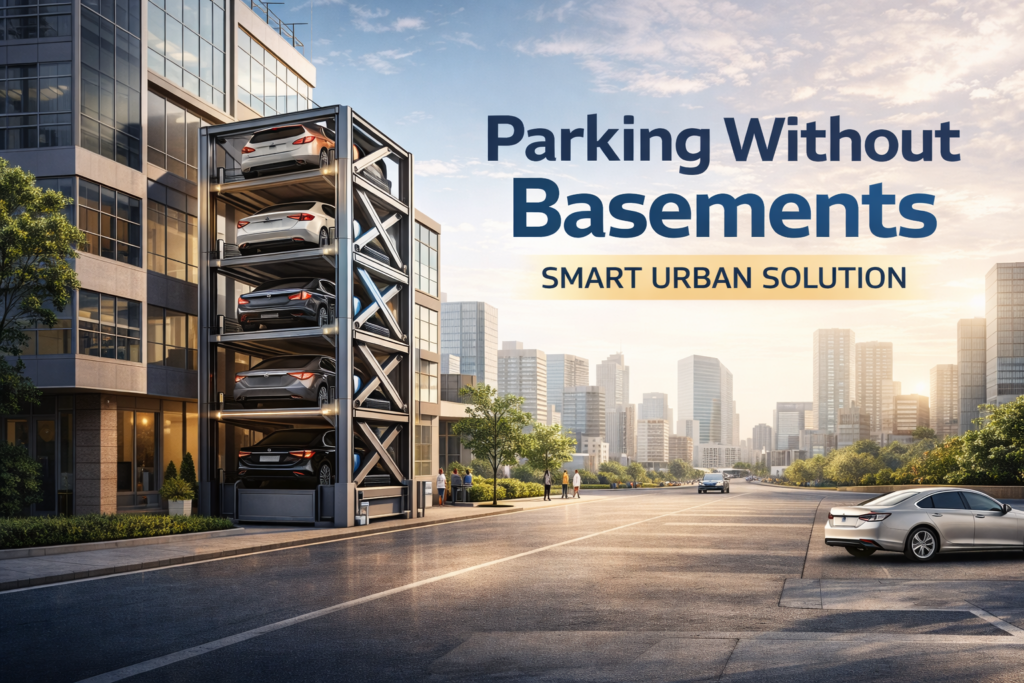
However, while sustainability policies continue evolving, parking demand itself has not disappeared. Residents, hotels, commercial centers, office towers, mixed-use developments, hospitals, and business districts still require highly organized parking infrastructure capable of supporting operational needs efficiently.
The challenge is that traditional parking systems are becoming increasingly incompatible with London’s future urban development goals because they consume too much space while generating operational inefficiencies and congestion.
This growing infrastructure challenge is accelerating demand for more advanced smart parking systems in London capable of maximizing parking efficiency within compact urban environments.
Traffic Congestion Is Reshaping Urban Mobility Planning
Traffic congestion remains one of the most expensive and operationally disruptive problems affecting London today.

Millions of vehicles move daily through already crowded streets and business districts while limited parking availability often increases congestion further as drivers spend additional time searching for available parking spaces.
Parking inefficiencies directly contribute to:
- Increased traffic pressure
- Longer travel times
- Higher fuel consumption
- Increased emissions
- Reduced urban mobility efficiency
As urban density continues increasing, parking infrastructure itself is becoming one of the most important components of future traffic management and smart mobility planning.
This is why municipalities and developers are increasingly investing in:
- Smart parking management systems
- Digital parking infrastructure
- Mechanical parking technologies
- Automated parking systems
- Intelligent mobility integration
as part of broader smart city operational strategies.
Why Smart Parking Systems in London Are Growing Rapidly
Modern smart parking systems in London solve several major urban infrastructure challenges simultaneously by improving parking density while reducing land consumption and operational inefficiencies.
These systems integrate technologies such as:
- Automated parking software
- Smart vehicle management
- Digital parking control systems
- Real-time parking monitoring
- AI-supported operational infrastructure
- Intelligent access management
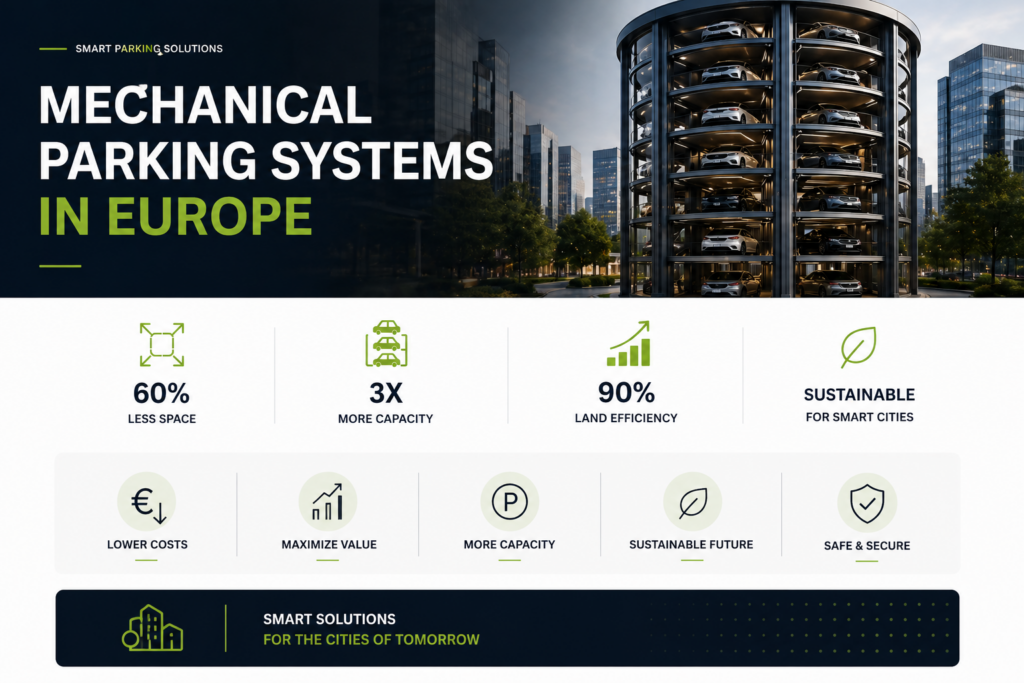
Instead of depending entirely on traditional horizontal parking layouts, intelligent parking systems maximize efficiency through vertical organization and automated vehicle storage technologies.
Mechanical parking systems such as:
- Puzzle parking systems
- Rotary parking systems
- Vertical parking systems
- Automated parking systems
- Car stacker systems
allow developers to accommodate significantly more vehicles within compact footprints compared to conventional parking methods.
This dramatically improves land utilization while supporting smarter and more sustainable urban infrastructure models.
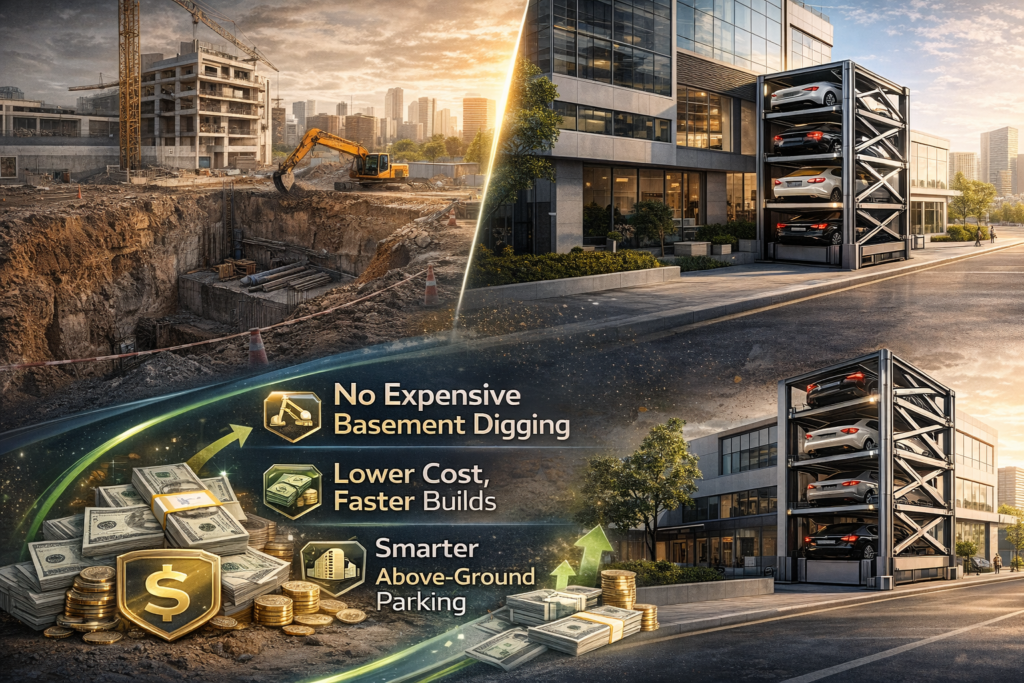
Underground Parking Costs Continue Rising
One of the biggest challenges facing modern developments in London is the rapidly increasing cost of underground parking construction.
Traditional underground parking infrastructure requires:
- Deep excavation
- Reinforced concrete structures
- Waterproofing systems
- Ventilation infrastructure
- Fire safety systems
- Long construction timelines
In dense urban areas where construction complexity is already extremely high, underground parking has become one of the most expensive non-revenue-generating infrastructure components inside many developments.
Mechanical and automated parking systems help reduce dependence on large underground parking layouts by maximizing parking density within smaller areas.
This creates major financial advantages for developers by improving land utilization while reducing construction complexity and operational inefficiencies.
Smart Cities Require Intelligent Parking Infrastructure
London continues investing heavily in smart city technologies designed to improve urban efficiency and sustainability.
Modern smart city infrastructure increasingly depends on integrated systems capable of improving:
- Traffic flow
- Urban mobility
- Energy efficiency
- Sustainability performance
- Operational scalability
Parking infrastructure plays a major role in this ecosystem because inefficient parking directly affects congestion, emissions, and transportation efficiency across the city.
Advanced smart parking systems in London are increasingly integrating technologies such as:
- Real-time parking availability systems
- Automated vehicle handling
- AI-supported traffic optimization
- Digital mobility platforms
- Smart payment systems
These technologies transform parking infrastructure from passive storage areas into intelligent components of future urban mobility networks.
As London continues evolving into a smarter and more connected city, intelligent parking systems will become increasingly important for supporting future infrastructure demands.
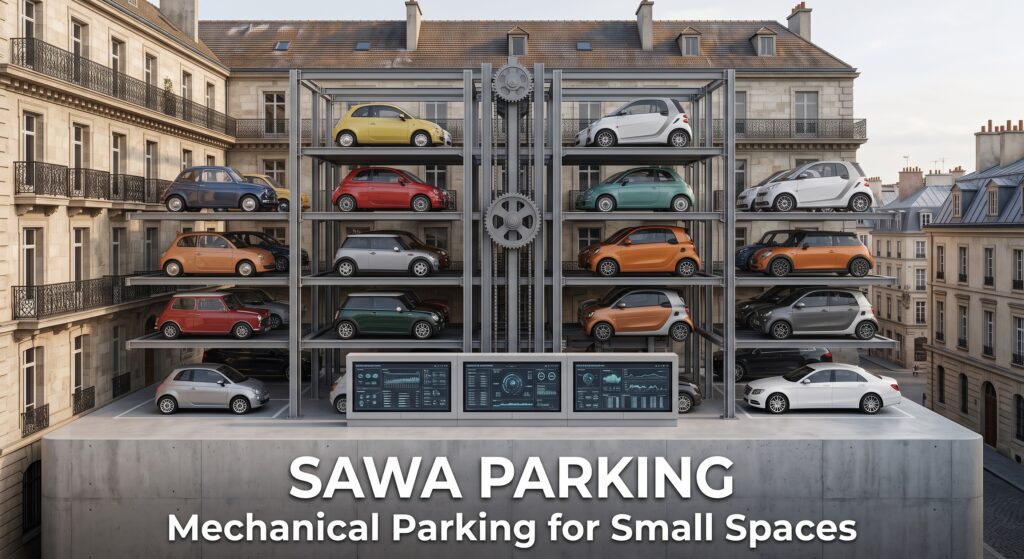
Historic Urban Environments Need Smarter Parking Solutions
Many areas across London face infrastructure challenges similar to other historic European cities.
Dense urban layouts, limited available land, preservation requirements, and high property values make traditional parking expansion increasingly difficult and financially inefficient.
Smart parking technologies provide important advantages because they allow parking capacity to increase vertically rather than horizontally.
This helps developers:
- Preserve valuable urban space
- Reduce construction footprint
- Improve operational efficiency
- Support higher-density developments
- Integrate parking more efficiently into complex urban environments
As London continues balancing modernization with urban preservation, intelligent parking systems are becoming essential infrastructure solutions for future city planning.
Parking Space Is Becoming More Valuable Than Ever
One of the biggest transformations happening in London’s real estate market is the increasing value of urban space itself.
Every square meter inside central London carries enormous economic value. Developers can no longer afford to dedicate excessive urban space to inefficient parking infrastructure dominated by ramps, circulation areas, and oversized parking structures.
Smart parking systems help developers:
- Increase parking density
- Preserve more sellable space
- Improve land utilization efficiency
- Support higher-density developments
- Reduce operational inefficiencies
As land prices continue rising, intelligent parking infrastructure will increasingly become one of the most important competitive advantages in future urban development.
Why This Matters for Emerging Smart Cities Globally
The transformation happening across London reflects a much larger global shift in urban infrastructure planning.
Cities worldwide are increasingly facing:
- Higher population density
- Limited available land
- Rising construction costs
- Sustainability requirements
- Traffic congestion
- Smart city expansion
This means the parking infrastructure strategies currently emerging in London are becoming increasingly relevant for rapidly growing urban markets globally, including Egypt and many future smart city developments.
Mechanical and automated parking technologies are no longer niche engineering solutions. They are becoming essential infrastructure systems required to support the future of modern urban mobility worldwide.
Why Sawa Parking Supports the Future of Smart Urban Mobility
As urban environments continue evolving globally, companies capable of delivering advanced parking technologies will play an increasingly important role in shaping future mobility systems.
Sawa Parking focuses on intelligent parking infrastructure specifically designed for modern urban environments where operational efficiency, smart land utilization, and scalable infrastructure have become critical priorities.
The company combines:
- Smart parking technologies
- Mechanical parking systems
- Advanced engineering expertise
- Intelligent parking design
- Customized infrastructure integration
- Local manufacturing capabilities
This allows developers to implement highly efficient parking systems capable of supporting both current operational requirements and future urban growth demands.
By focusing on intelligent mobility infrastructure and efficient urban space utilization, Sawa Parking continues supporting the future of sustainable urban development and smart city infrastructure.
Conclusion
London’s growing urban density and evolving mobility infrastructure are reshaping the future of parking systems across the city. Traditional parking methods are no longer capable of supporting modern urban requirements efficiently due to rising land prices, increasing traffic congestion, and growing infrastructure complexity.
This is why smart parking systems in London are becoming essential infrastructure solutions for improving parking capacity, reducing congestion, optimizing land utilization, and supporting future smart city development.
As cities worldwide continue moving toward denser and more intelligent urban environments, smart parking technologies will become critical components of future mobility systems and sustainable urban infrastructure planning.
References
Transport for London (TfL)
https://tfl.gov.uk
Urban Land Institute (ULI)
https://uli.org
International Parking & Mobility Institute (IPMI)
https://www.parking-mobility.org
ITS International
https://www.itsinternational.com
Smart Cities World
https://www.smartcitiesworld.net
McKinsey & Company – Urban Mobility Reports
https://www.mckinsey.com
World Economic Forum – Smart Cities & Mobility Reports
https://www.weforum.org
Greater London Authority
https://www.london.gov.uk