


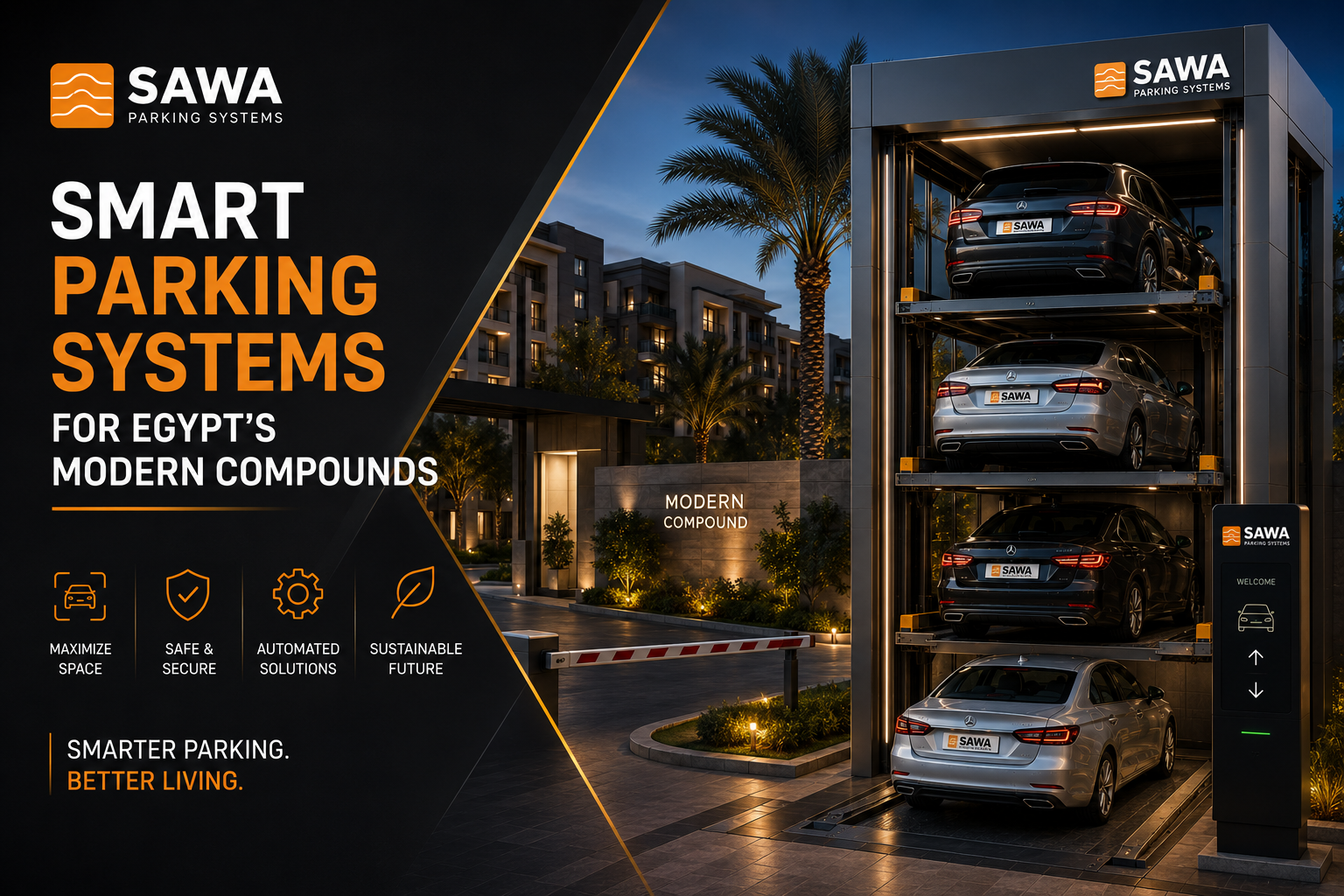
Smart Parking Systems for Egypt
Egypt is experiencing one of the largest urban expansion phases in its modern history. Across Cairo, New Cairo, Sheikh Zayed, the North Coast, and especially the New Administrative Capital, massive residential and commercial developments are transforming the future of real estate and urban infrastructure. This rapid transformation is also accelerating the demand for advanced smart parking systems for Egypt as developers search for more efficient infrastructure solutions capable of supporting modern urban growth.
The scale of this expansion is unprecedented. According to Egypt’s Ministry of Housing and urban development reports, thousands of residential buildings and large-scale compounds are continuously being developed across new cities as part of the country’s long-term urban transformation strategy. The New Administrative Capital alone is planned to accommodate more than 6 million residents in the future, while New Cairo and Sheikh Zayed continue witnessing rapid growth in high-density residential compounds and mixed-use projects.
At the same time, vehicle ownership in Egypt continues increasing significantly every year. Millions of cars move daily through Cairo and surrounding urban areas, creating enormous pressure on roads, parking spaces, and urban mobility infrastructure. Developers are now facing a major challenge that many projects were not originally designed to handle efficiently: parking capacity.
Traditional parking methods are no longer capable of supporting the scale and complexity of Egypt’s modern developments. Large ramps, underground excavation, inefficient circulation areas, and outdated parking layouts are consuming valuable land while increasing construction costs dramatically. In many compounds and residential towers, parking has already become one of the biggest operational problems affecting traffic organization, accessibility, and overall resident experience.
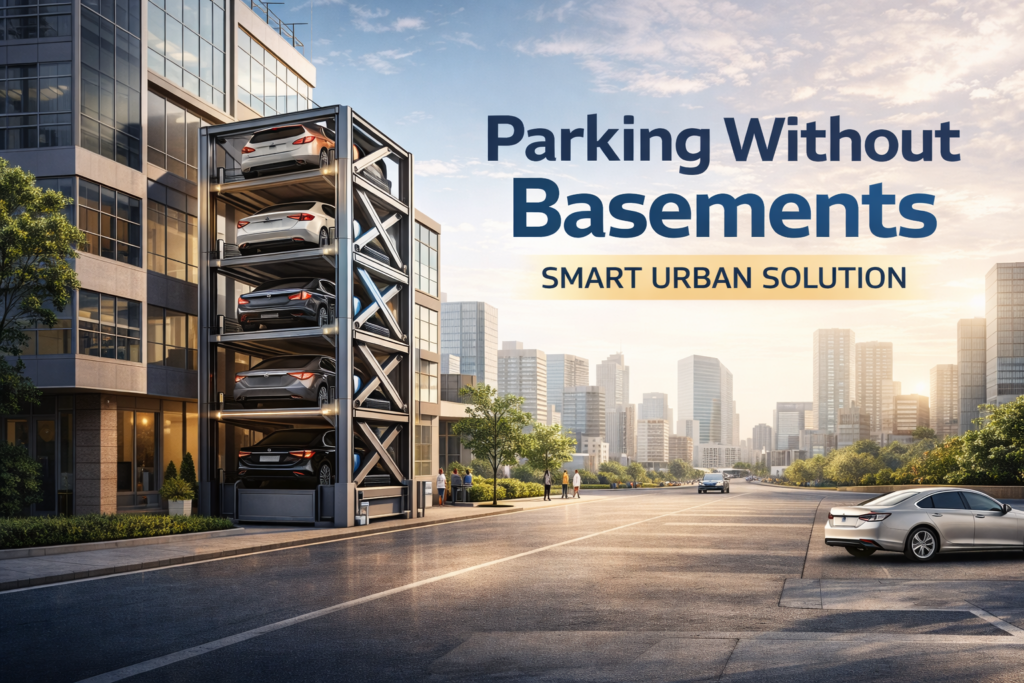
This is why smart parking systems for Egypt are no longer considered luxury additions or optional technologies. They are becoming essential infrastructure solutions required to support the future of modern compounds, smart cities, and high-density urban development.
Egypt’s Urban Expansion Is Happening Faster Than Traditional Infrastructure
The Egyptian real estate market has changed dramatically during the past decade. Developers are no longer building isolated residential projects. Entire urban communities are now being constructed simultaneously across multiple new cities and strategic expansion zones. This rapid transformation is creating massive demand for more advanced infrastructure solutions, especially smart parking systems for Egypt, as traditional parking layouts are no longer capable of supporting the scale and density of modern developments.
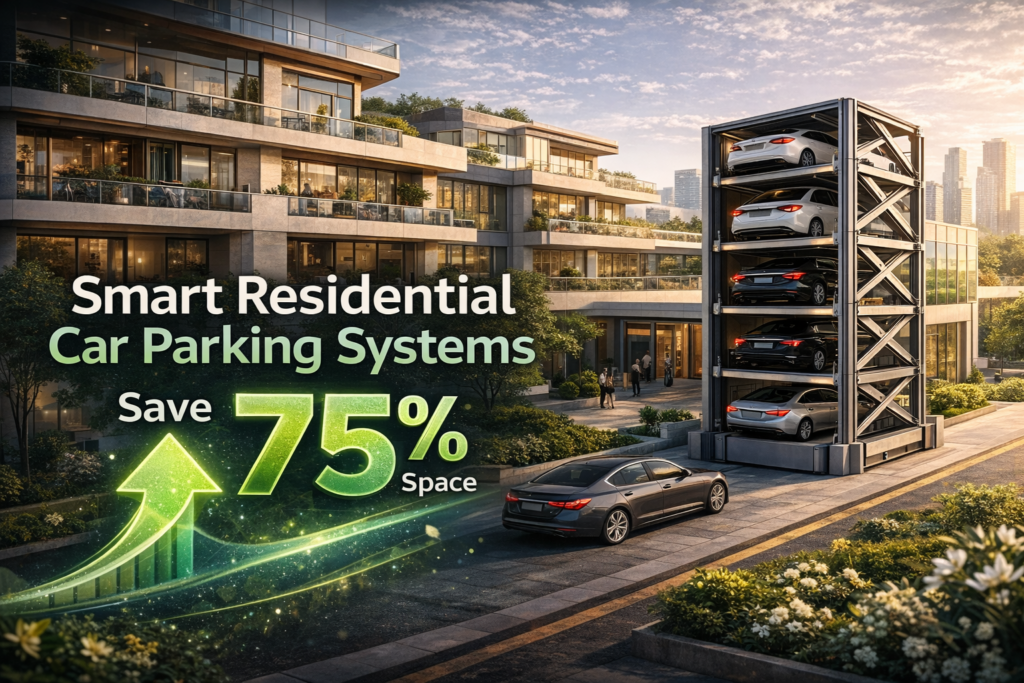
In 2024 alone, Egypt continued developing massive urban expansion projects including:
- The New Administrative Capital
- New Alamein
- New Mansoura
- Sheikh Zayed expansions
- New Cairo compounds
- East Cairo mixed-use developments
- Smart city infrastructure projects
According to reports from Egypt’s Ministry of Housing and real estate development sector data, the number of large residential compounds and mixed-use developments has increased significantly over recent years, especially in East Cairo and the New Administrative Capital. As these projects continue expanding, developers are increasingly recognizing that efficient parking infrastructure has become a critical operational requirement rather than a secondary engineering component.
However, while architecture and construction technologies have evolved rapidly, parking infrastructure in many projects still relies heavily on traditional systems designed decades ago for much lower urban density and smaller vehicle volumes. Conventional parking methods struggle to support modern traffic demands efficiently, particularly inside high-density compounds and mixed-use developments.
This creates a dangerous mismatch between modern urban expansion and outdated parking infrastructure. The result is increasingly visible across many residential compounds in Egypt today:
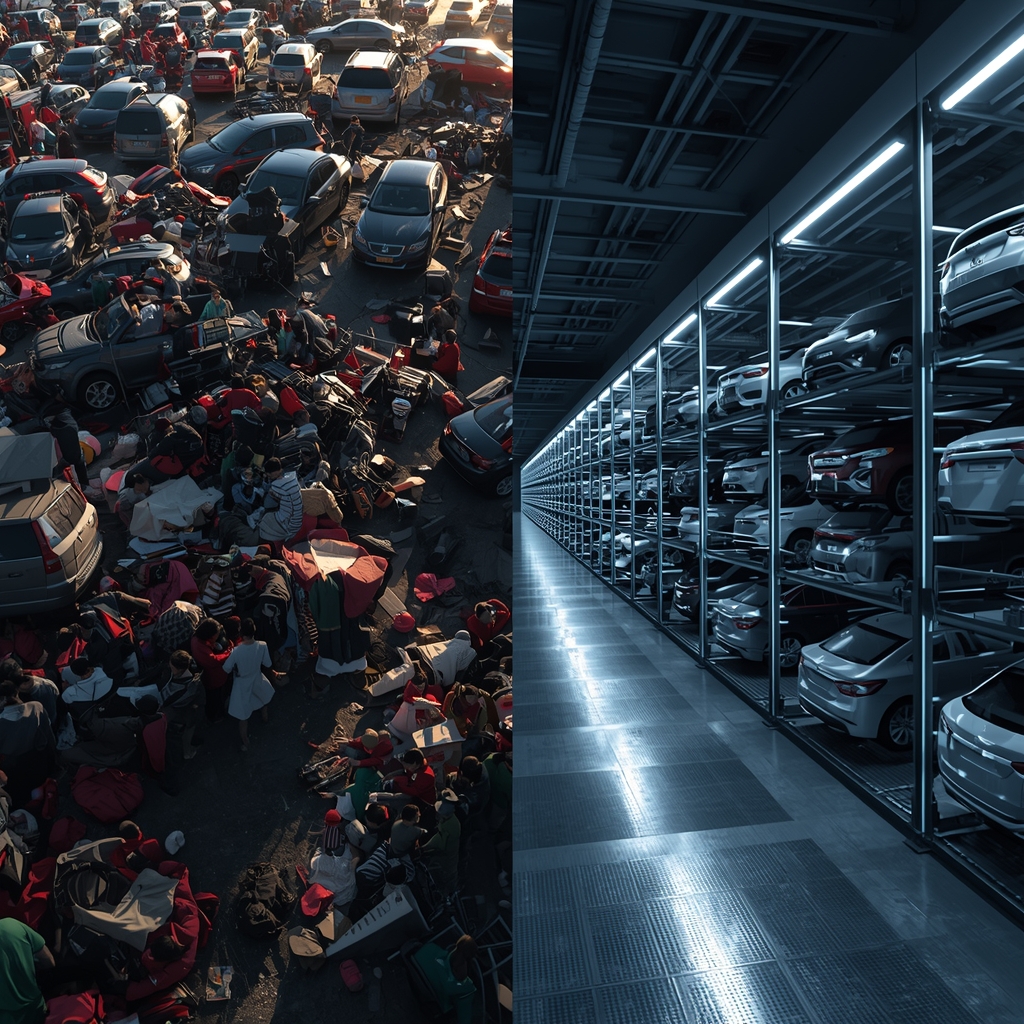
- Traffic congestion inside compounds
- Limited parking availability
- Basement overcrowding
- Poor circulation efficiency
- Resident complaints
- Increased vehicle waiting times
As urban density continues increasing, these problems are expected to become significantly worse if developers continue depending entirely on conventional parking layouts instead of adopting more advanced smart parking systems for Egypt capable of supporting the future of modern urban mobility and high-density development.
The Hidden Problem Inside Modern Compounds
Many real estate developers focus heavily on architecture, landscape, amenities, clubhouses, retail areas, and unit design while underestimating the long-term impact of parking infrastructure. Parking is often treated as a secondary engineering requirement rather than a strategic operational component that directly affects the quality and functionality of the entire project.
In reality, parking has become one of the most important operational systems inside modern residential compounds. Residents interact with parking infrastructure every single day, often multiple times per day. Poor parking organization directly affects traffic flow, accessibility, convenience, security, and even the perceived value of the development itself.
In many modern compounds across Cairo and the New Administrative Capital, parking demand is already exceeding the efficiency limits of traditional parking layouts. Families increasingly own multiple vehicles, visitor traffic continues increasing, and commercial areas inside mixed-use projects generate additional vehicle pressure throughout the day.
Traditional parking systems struggle to accommodate this growth efficiently because they depend heavily on:
- Large ramps
- Wide circulation lanes
- Turning radiuses
- Horizontal parking expansion
- Deep underground excavation
These elements consume enormous amounts of space without directly increasing actual parking capacity. In many projects, a significant percentage of the parking footprint is effectively wasted on circulation rather than vehicle storage itself.
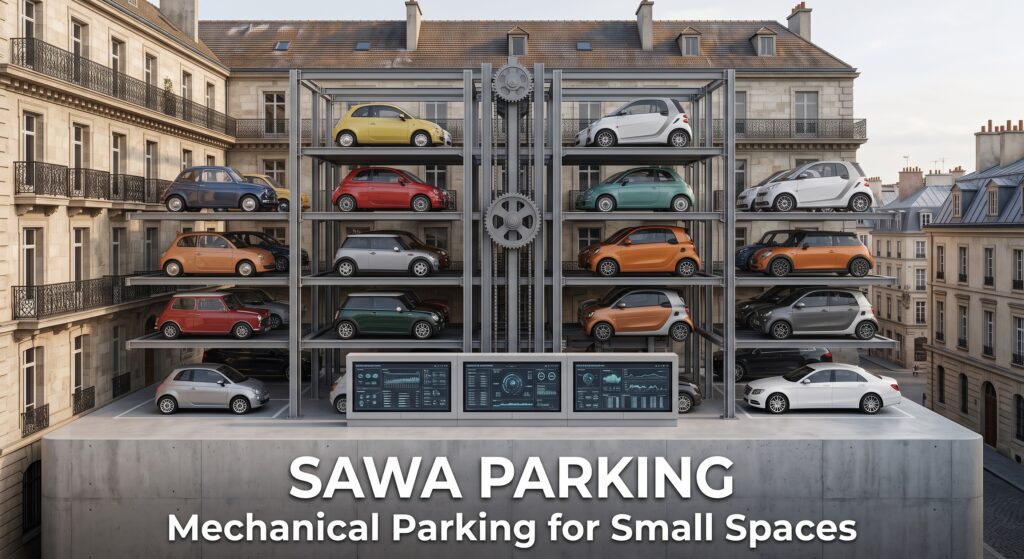
Why Traditional Parking Is Becoming Financially Unsustainable
One of the biggest reasons developers are beginning to adopt smart parking systems in Egypt is the rising financial cost of traditional parking infrastructure. Underground parking construction has become significantly more expensive due to increases in:
- Excavation costs
- Reinforced concrete requirements
- Waterproofing systems
- Ventilation infrastructure
- Fire safety systems
- Construction timelines
- Labor and material prices
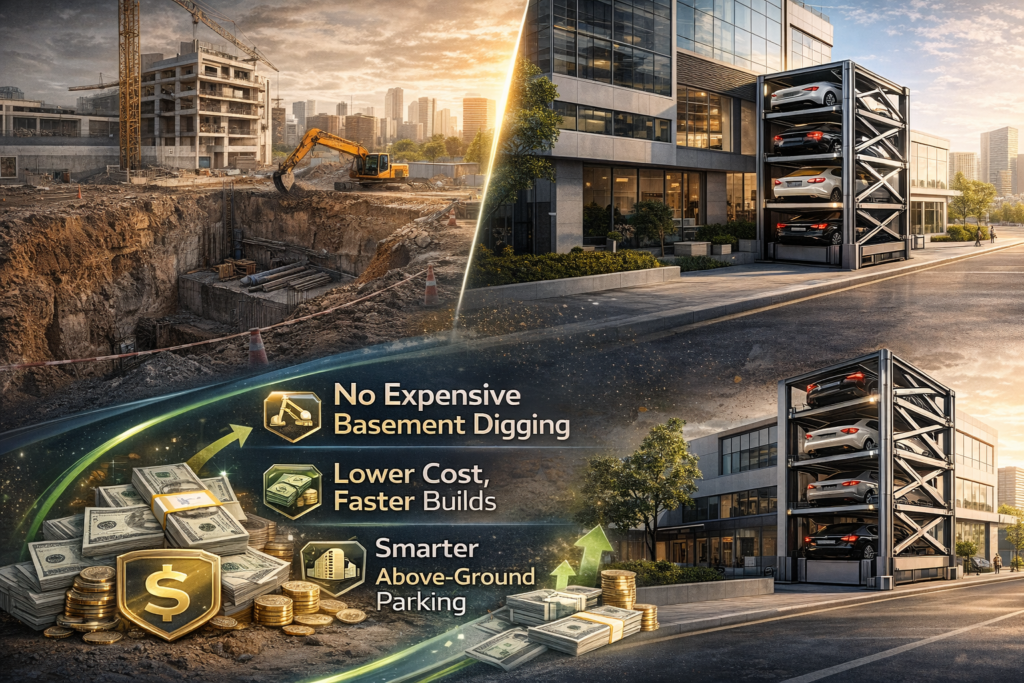
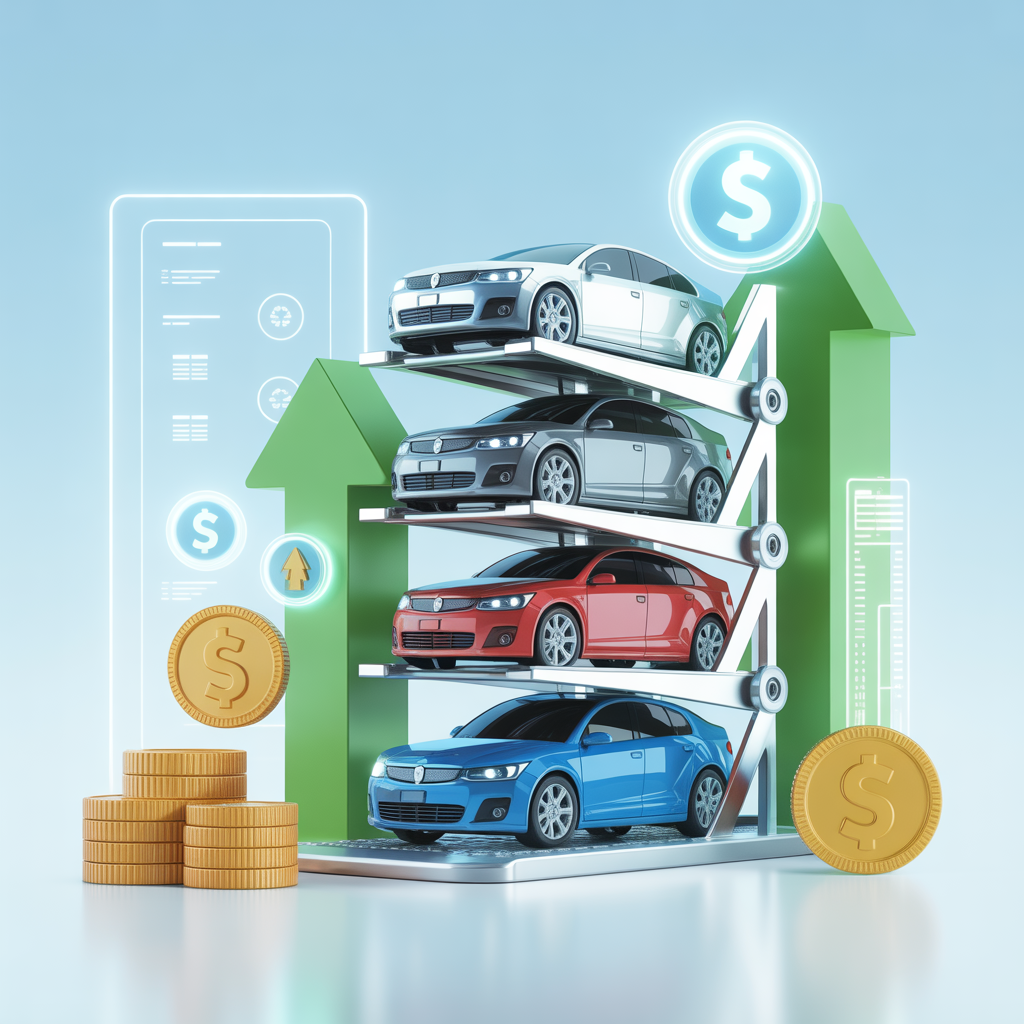
Every additional underground parking level dramatically increases project cost and structural complexity. In high-density urban developments where land prices are already extremely high, traditional parking expansion is becoming financially inefficient.
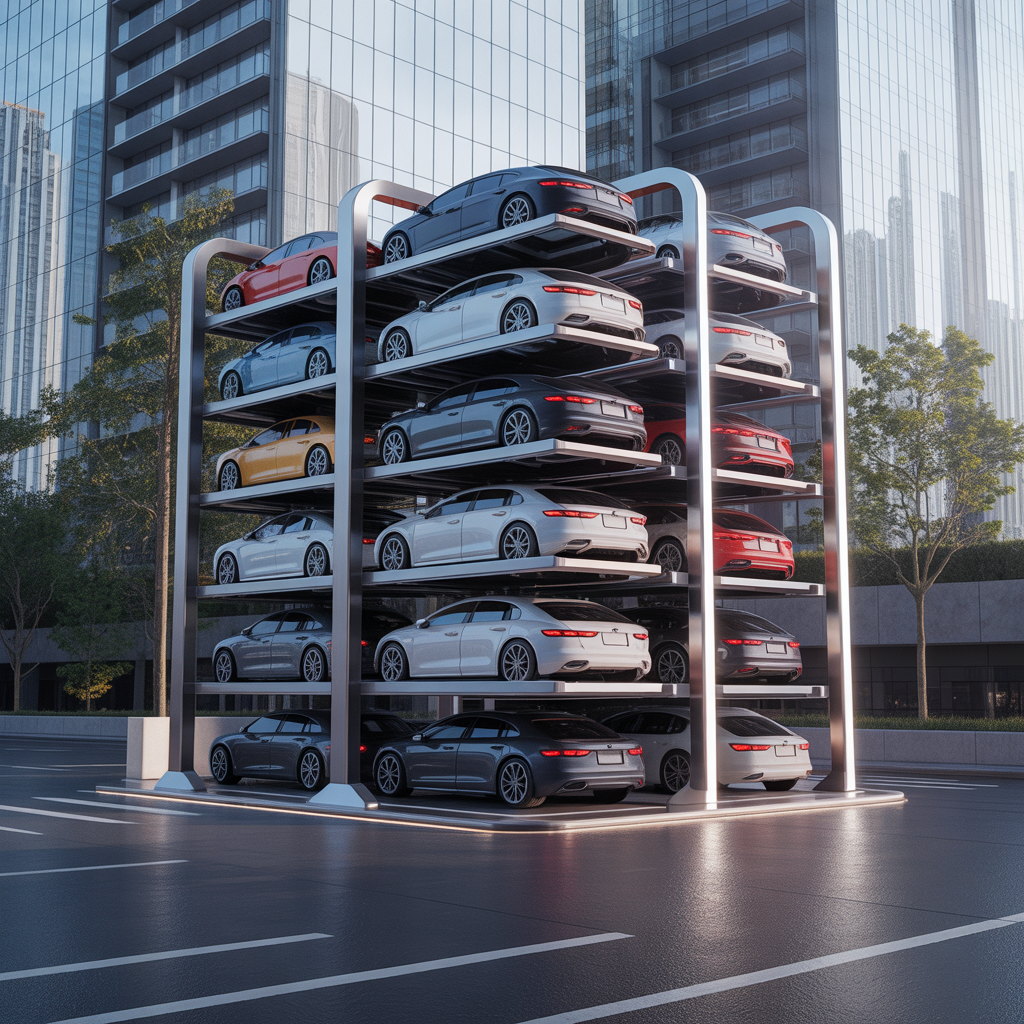
At the same time, parking itself does not directly generate revenue in the same way as apartments, retail spaces, offices, or hospitality facilities. Developers are therefore under increasing pressure to reduce the amount of space consumed by parking while maximizing the amount of revenue-generating area inside the project.
This is exactly where mechanical and smart parking technologies become critically important.
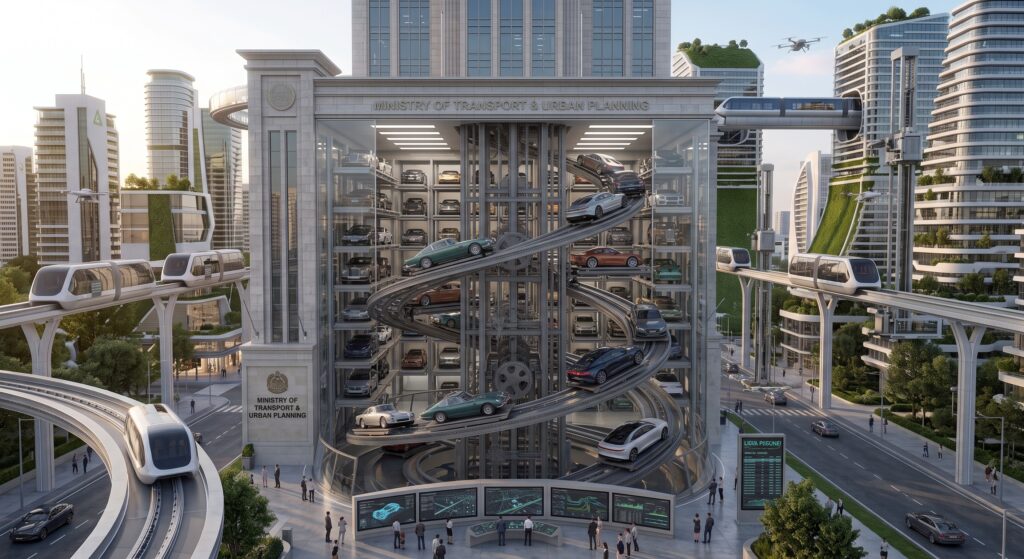
Why Smart Parking Systems Are Becoming Essential
A few years ago, many developers viewed mechanical parking systems as premium or luxury technologies used only in specialized projects. Today, the situation has completely changed.
Modern smart parking systems in Egypt are becoming essential because they solve multiple urban development problems simultaneously:
- Increasing parking capacity
- Reducing underground construction cost
- Improving land utilization
- Optimizing traffic flow
- Supporting smart city infrastructure
- Improving resident experience
Instead of relying entirely on horizontal parking expansion, smart parking systems use intelligent vertical storage technologies to maximize parking density within compact spaces.
Systems such as:
- Puzzle parking systems
- Rotary parking systems
- Scissor parking systems
- Tilting parking lifts
- Car stacker systems
- Automated parking systems
allow developers to dramatically increase parking efficiency without expanding project footprints or increasing underground excavation excessively.
The New Administrative Capital Is Accelerating the Shift
The New Administrative Capital represents one of the clearest examples of why Egypt’s future developments will increasingly depend on intelligent parking infrastructure.
The city is being designed as a smart city with advanced infrastructure, digital systems, and modern urban planning strategies. Large mixed-use developments, business districts, residential compounds, government buildings, hotels, and commercial projects are all being developed simultaneously within a highly organized urban environment.
This scale of development creates enormous parking demand that traditional systems alone cannot efficiently support long-term. As population density and vehicle ownership continue increasing, developers inside the New Administrative Capital are expected to rely more heavily on advanced parking technologies capable of supporting high-density urban mobility.
The same trend is already expanding rapidly across New Cairo, Sheikh Zayed, and other major urban development zones throughout Egypt.
Parking Space Is Becoming More Valuable Than Ever
One of the biggest shifts happening in modern real estate development is the increasing financial value of parking space itself.
As land prices continue rising across Egypt, every square meter inside a project becomes strategically important. Developers can no longer afford to waste large portions of valuable land on inefficient parking layouts and oversized circulation areas.
This is why smart parking systems are becoming more than simply engineering solutions—they are becoming financial optimization tools capable of improving project profitability and long-term investment performance.
By increasing parking density while reducing space consumption, mechanical parking systems allow developers to:
- Preserve more sellable area
- Increase project efficiency
- Improve land utilization
- Reduce construction cost
- Support higher-density development
In many future projects, intelligent parking infrastructure may become one of the most important competitive advantages separating modern developments from outdated ones.
Why Sawa Parking Is Positioned for the Future
As Egypt continues moving toward smarter and more advanced urban infrastructure, companies capable of delivering intelligent parking solutions will play a major role in shaping the future of modern development.
Sawa Parking focuses on delivering complete smart parking infrastructure solutions specifically designed for the challenges facing Egypt’s rapidly expanding urban environment. The company combines:
- Advanced engineering expertise
- Intelligent parking design
- Local manufacturing capabilities
- Smart parking technologies
- Customized project integration
This allows developers to implement efficient parking systems capable of supporting both current operational needs and future urban growth requirements.
One of the company’s biggest advantages is local manufacturing. Producing systems in Egypt allows Sawa Parking to provide highly competitive pricing while maintaining strong quality standards and faster delivery timelines compared to imported systems affected by global shipping costs and customs expenses.
As smart cities and modern compounds continue expanding across Egypt, intelligent parking infrastructure will become increasingly essential for efficient urban mobility and sustainable real estate development.
The Future of Parking in Egypt
The future of Egypt’s urban development will not depend only on architecture or construction scale. It will depend heavily on infrastructure efficiency and intelligent land utilization. Parking is becoming one of the most critical components of this transformation.
Traditional parking systems are no longer capable of supporting the scale, density, and operational complexity of modern compounds and smart cities. Mechanical and smart parking technologies are rapidly becoming essential infrastructure systems required to support the future of urban mobility in Egypt.
The projects that continue relying entirely on outdated parking methods may face increasing operational problems, lower land efficiency, higher construction costs, and reduced long-term competitiveness. Meanwhile, projects that adopt intelligent parking infrastructure early will likely gain significant advantages in efficiency, scalability, and overall project value.
Conclusion
Egypt is entering a completely new phase of urban expansion driven by smart cities, modern compounds, and high-density developments. As vehicle ownership continues increasing and land becomes more valuable, traditional parking systems are no longer sufficient for supporting the future of urban mobility and residential infrastructure.
Smart parking systems are becoming essential solutions capable of improving parking capacity, reducing underground construction cost, optimizing land utilization, and supporting the operational efficiency of modern developments across Egypt.
From the New Administrative Capital to New Cairo and Sheikh Zayed, the future of parking is shifting rapidly toward intelligent mechanical infrastructure designed for smarter, denser, and more efficient urban environments. Through advanced engineering expertise and locally manufactured smart parking solutions, Sawa Parking continues helping shape the future of modern parking infrastructure in Egypt.