


- May 10, 2026
Parking infrastructure has become one of the biggest challenges facing modern urban developments in Egypt. As cities continue expanding and land prices rise dramatically, developers are under increasing pressure to maximize parking efficiency while minimizing construction costs and land consumption. Traditional parking methods are no longer capable of meeting the growing demand for organized vehicle storage within limited project footprints.
Many residential and commercial projects still rely on conventional parking layouts that consume large amounts of space through ramps, turning areas, and circulation lanes. These outdated systems significantly reduce land utilization efficiency while increasing underground construction complexity and operational costs. In dense urban environments, this often leads to parking shortages, inefficient traffic organization, and reduced project profitability.
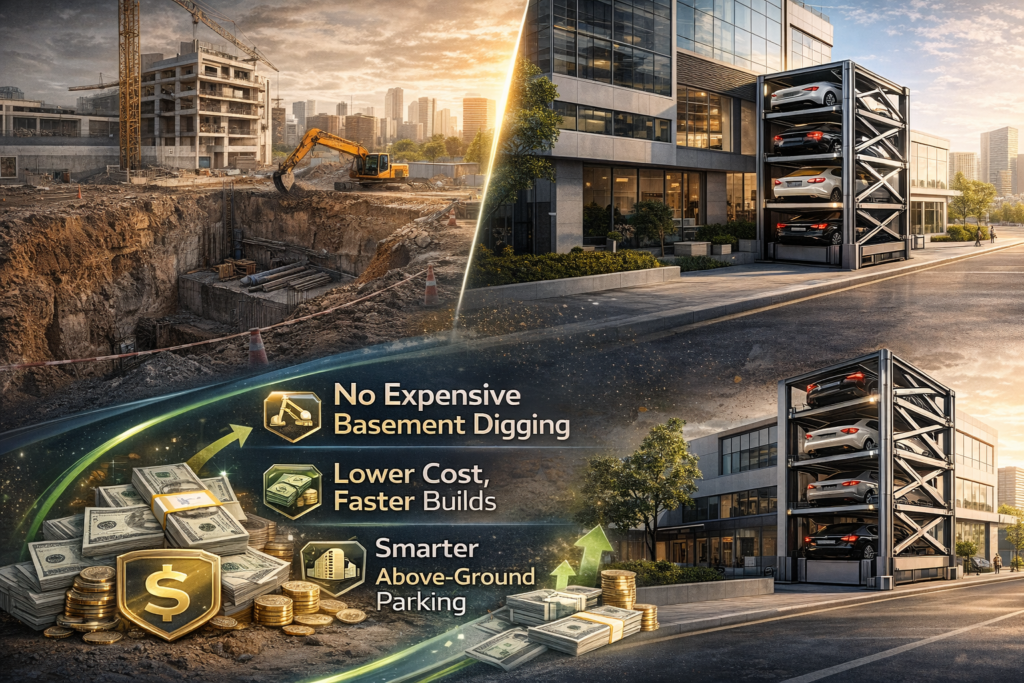
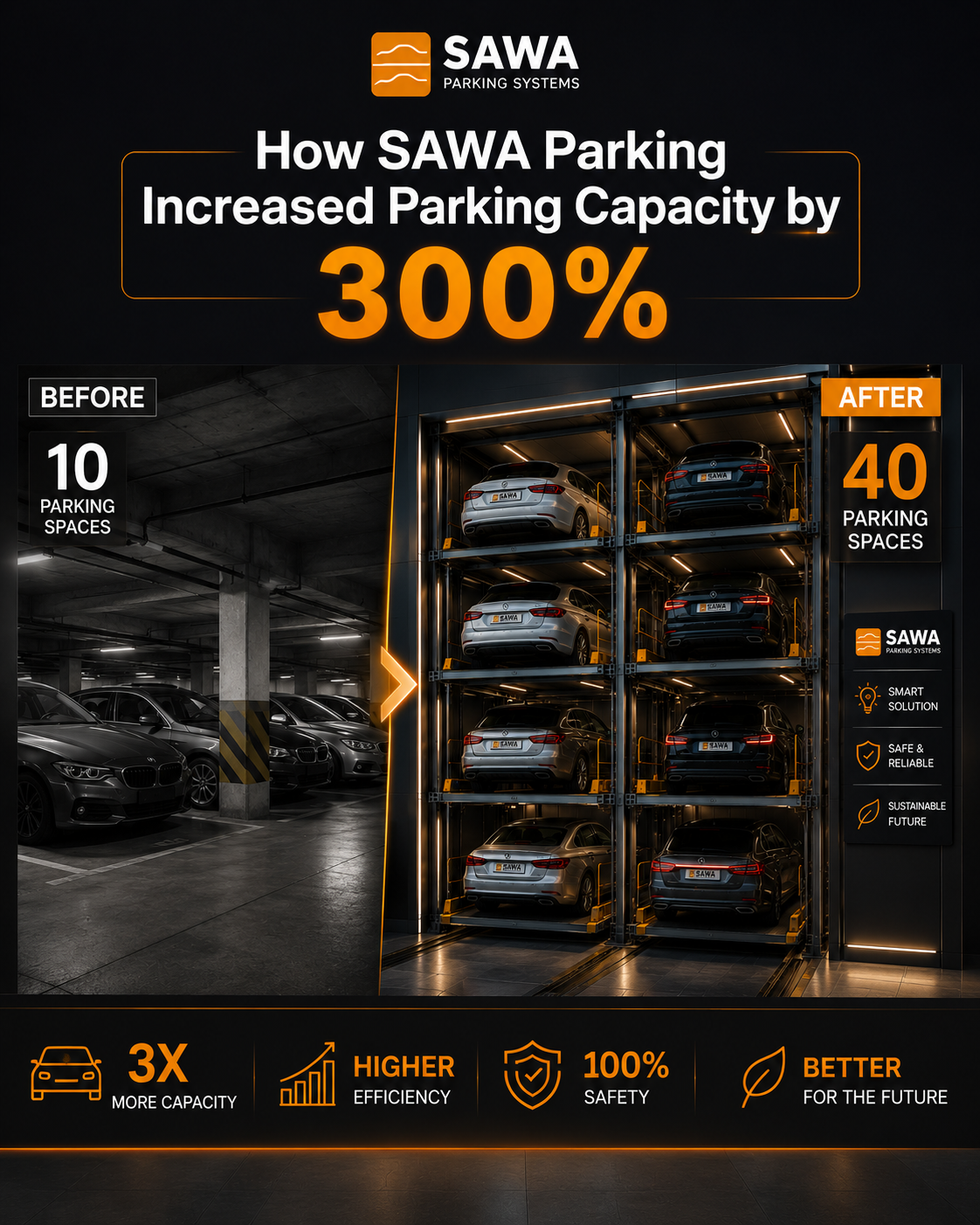
This case study explains how Sawa Parking successfully increased parking capacity by 300% through intelligent parking design, advanced mechanical parking systems, and customized engineering solutions. By replacing inefficient traditional parking layouts with smart mechanical infrastructure, the project achieved dramatically higher parking efficiency while reducing space consumption and improving overall operational performance.
The Initial Parking Challenge
The project involved a high-density urban development facing severe parking limitations due to restricted land availability and increasing parking demand. The original parking layout relied heavily on conventional parking methods that required large circulation areas, ramps, and inefficient underground space allocation.
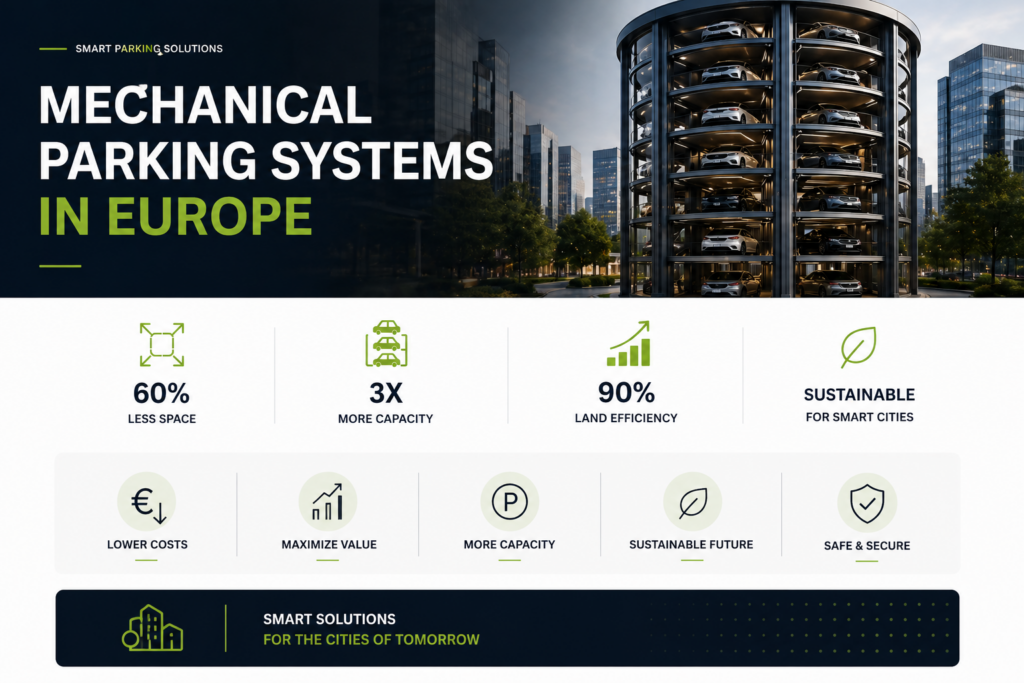
Despite the large construction footprint dedicated to parking, the project was still unable to provide sufficient parking spaces to meet operational requirements. Vehicle circulation inside the parking area was also inefficient, creating congestion during peak usage periods and reducing overall user experience.
The developer faced several major challenges simultaneously:
- Limited available land for parking expansion
- Rising underground construction costs
- Insufficient parking capacity
- Poor traffic organization
- Reduced project efficiency
Traditional parking expansion was financially impractical because additional excavation and structural work would significantly increase project cost and construction timelines. A more intelligent solution was required to optimize parking density without expanding the physical footprint of the development.
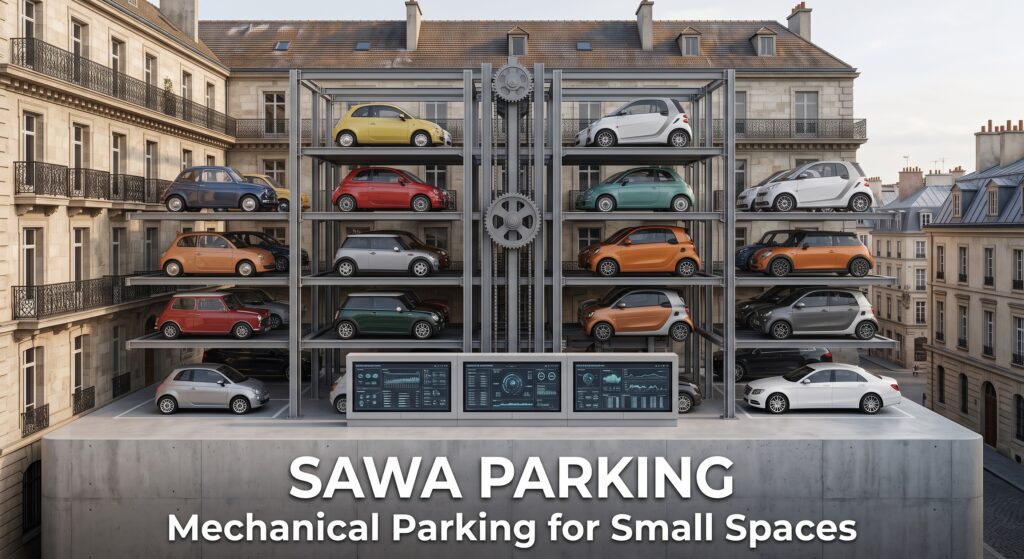
The Engineering Analysis
Before implementing any parking solution, Sawa Parking conducted a detailed engineering and operational analysis of the project. The objective was not simply to add more parking spaces, but to redesign the entire parking infrastructure to maximize efficiency, improve circulation, and reduce wasted space.
The engineering team analyzed:
- Vehicle movement patterns
- Parking demand projections
- Structural limitations
- Basement layout efficiency
- Traffic circulation flow
- Space utilization ratios
The analysis revealed that a large percentage of the existing parking footprint was being wasted on ramps and circulation lanes rather than actual parking capacity. This is one of the most common parking design problems found in traditional developments across Egypt.
Sawa Parking identified several opportunities to dramatically improve parking density through intelligent mechanical parking integration combined with optimized parking design strategies.
The Smart Parking Solution
To solve the parking challenge, Sawa Parking implemented a customized mechanical parking strategy combining intelligent space optimization with advanced parking technologies. Instead of relying entirely on traditional parking layouts, the project integrated multiple mechanical parking systems designed to maximize vertical storage efficiency.
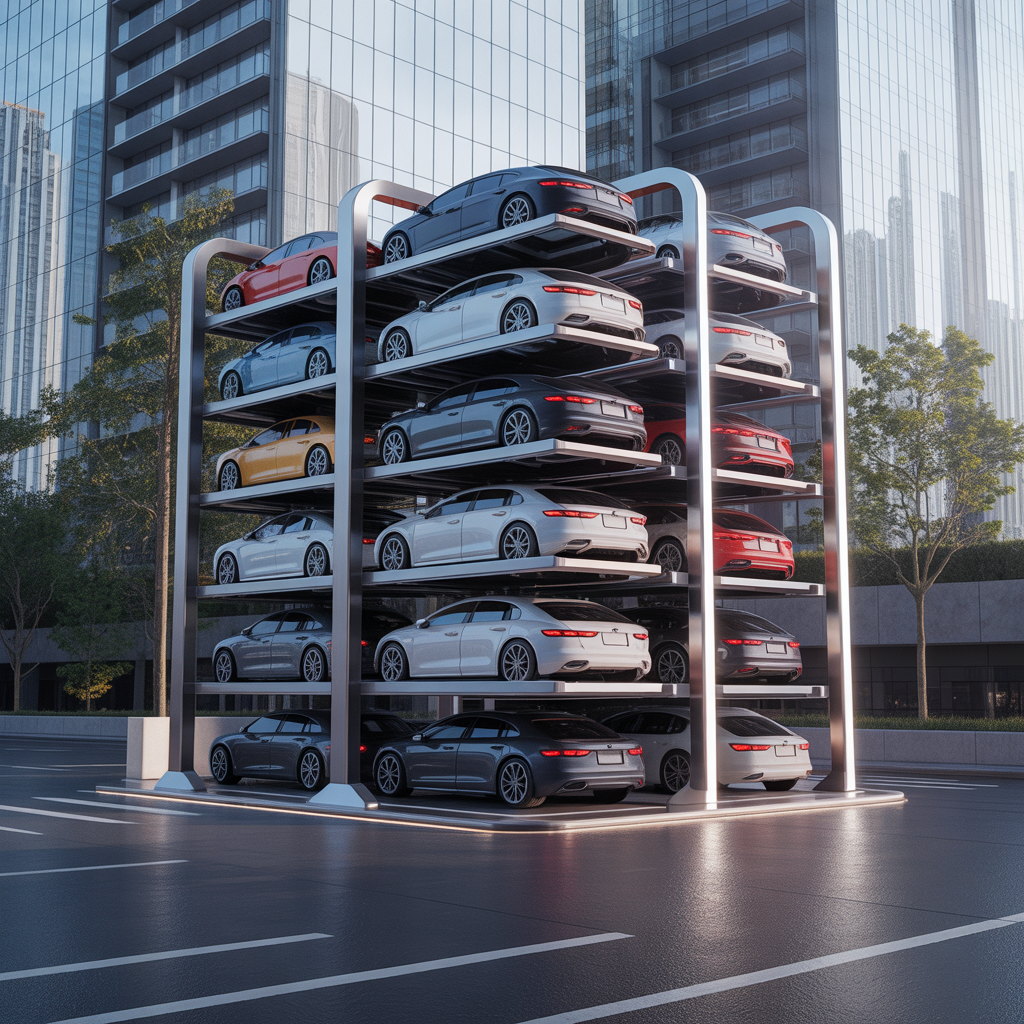
The implemented solution included:
- Puzzle parking systems
- Mechanical parking lifts
- Optimized traffic circulation
- Smart parking organization
- Improved parking access flow
By replacing large circulation zones and inefficient ramp structures with compact mechanical systems, the project was able to dramatically increase parking density within the same physical footprint.
The integration of smart parking technologies also improved operational organization while reducing vehicle congestion inside the parking facility. This created a more efficient and user-friendly parking experience while maximizing land utilization efficiency.
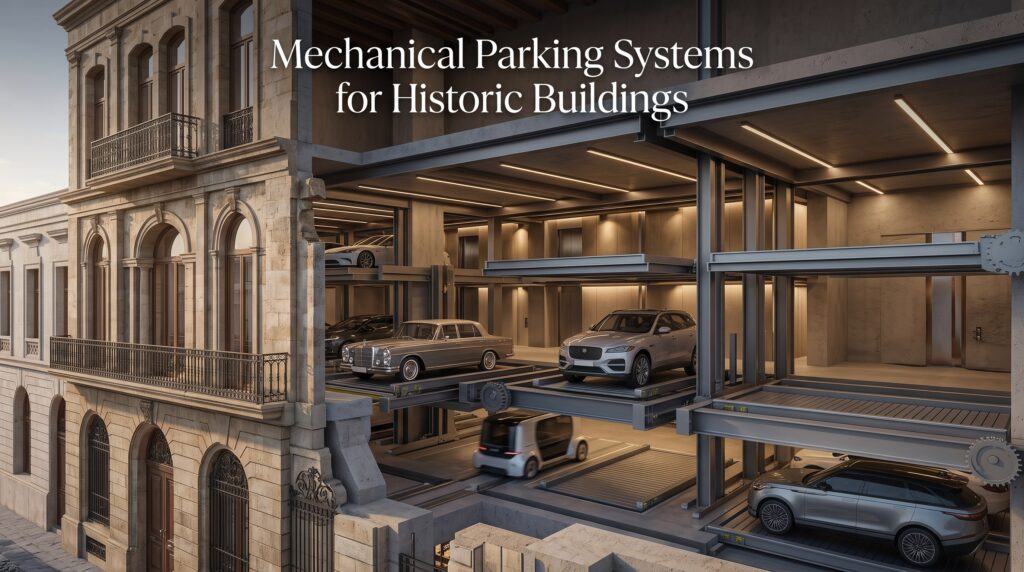
How Parking Capacity Increased by 300%
The increase in parking capacity was achieved through a combination of intelligent engineering decisions and advanced mechanical parking technologies. Traditional parking systems typically waste a large portion of available space on vehicle circulation and ramp infrastructure. Sawa Parking eliminated many of these inefficiencies by redesigning the parking layout around vertical parking optimization.
Mechanical parking systems allowed vehicles to be stored vertically instead of relying exclusively on horizontal parking arrangements. This dramatically increased parking density while reducing the amount of space required for vehicle movement inside the facility.
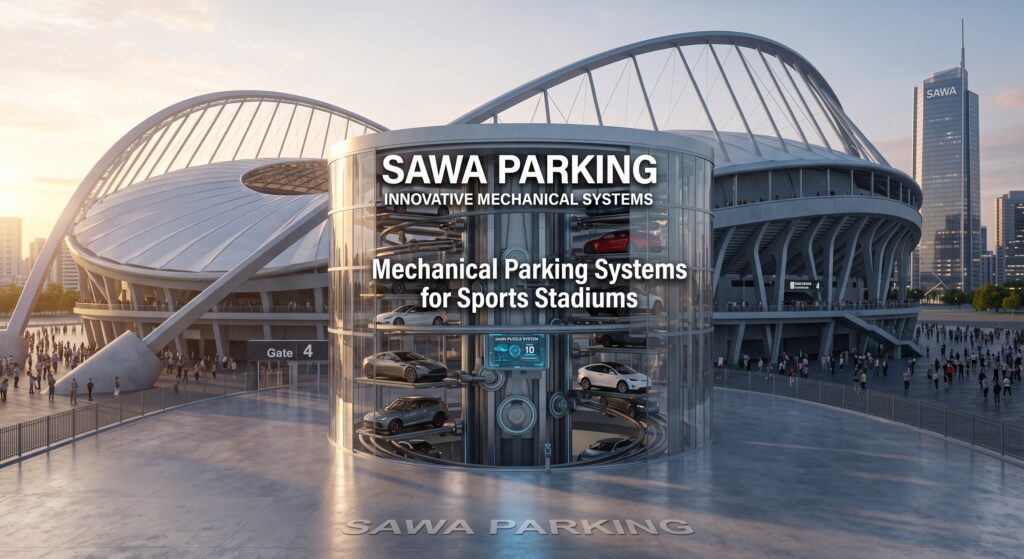
The project also optimized:
- Vehicle entry and exit flow
- Parking circulation organization
- Space allocation efficiency
- Structural parking layout design
As a result, the total parking capacity increased by approximately 300% compared to the original conventional layout while maintaining smooth operational performance and improved traffic organization.
Reducing Underground Construction Cost
One of the most important achievements of the project was reducing the financial burden associated with underground parking construction. Traditional parking expansion would have required deeper excavation, additional reinforced concrete structures, extended waterproofing systems, and larger ventilation infrastructure. These factors would have increased project costs significantly while extending construction timelines.
By implementing intelligent mechanical parking systems, Sawa Parking was able to maximize parking density within the existing structural footprint without requiring major underground expansion. The project achieved substantially higher parking capacity while minimizing additional excavation requirements and reducing structural complexity.
This created major financial advantages for the developer by lowering construction expenses and improving overall project profitability. Instead of investing heavily in expanding underground parking areas, the developer was able to optimize existing space through smarter engineering and more efficient parking infrastructure.
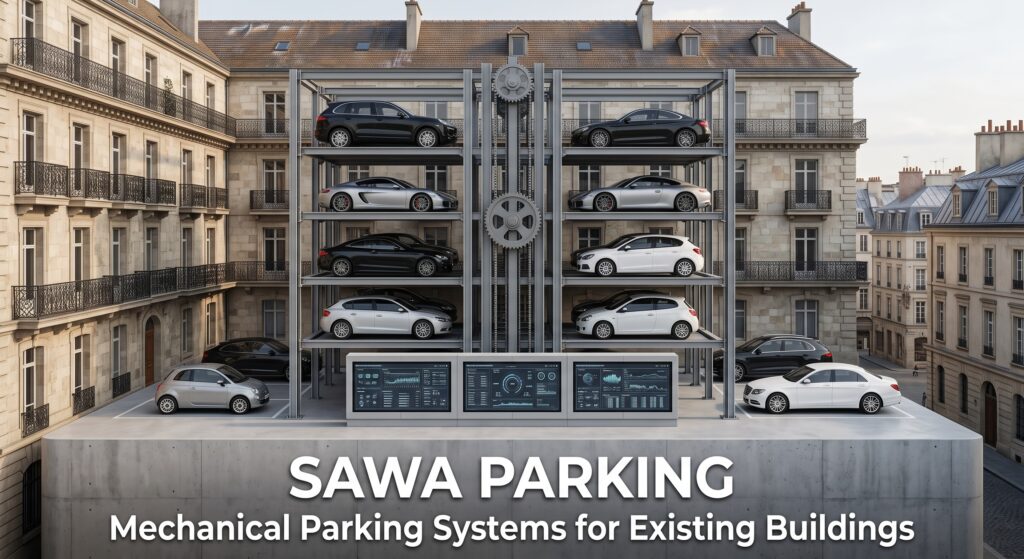
Improving Land Utilization Efficiency
In modern urban developments, land utilization efficiency directly affects project profitability and long-term investment value. Every square meter consumed by inefficient parking infrastructure reduces the amount of space available for revenue-generating project components such as apartments, office spaces, retail stores, and hospitality facilities.
The redesigned parking solution developed by Sawa Parking dramatically improved land utilization by minimizing wasted circulation areas and maximizing vertical parking density. Mechanical parking systems allowed the project to accommodate significantly more vehicles within the same physical footprint while preserving more usable space for commercial and residential functions.
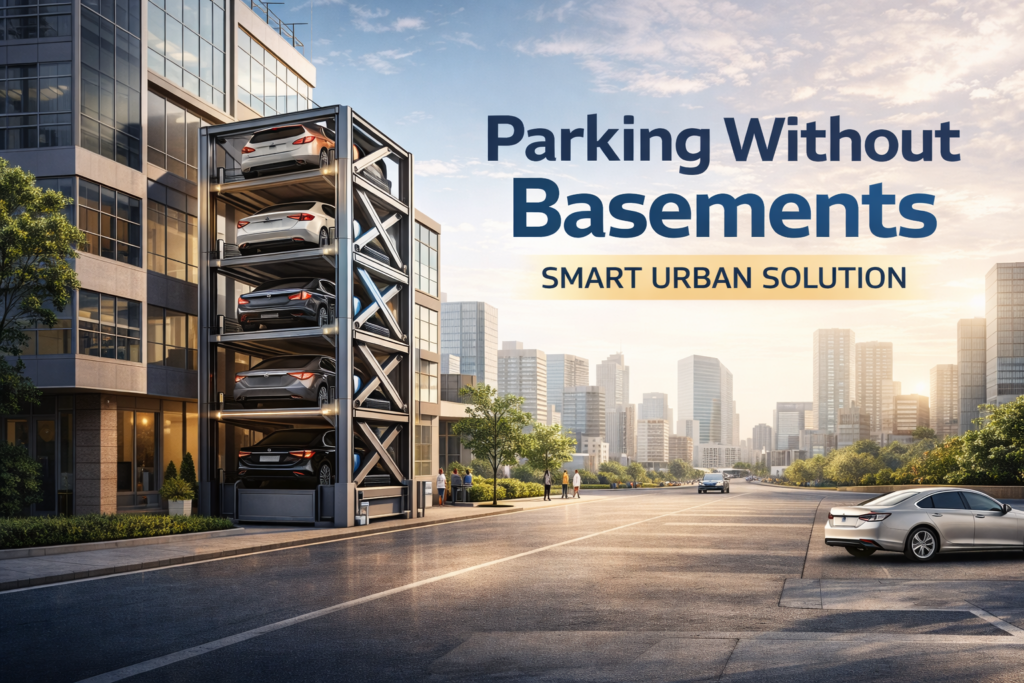
This optimization not only improved parking performance but also increased the overall financial value of the development. Efficient parking infrastructure is no longer simply an operational requirement—it has become a strategic component of modern real estate profitability.
Smart Parking Technology Integration
Modern parking infrastructure is increasingly dependent on intelligent operational systems capable of improving traffic organization, reducing congestion, and enhancing user experience. As part of the project transformation, Sawa Parking integrated smart parking technologies designed to improve overall operational efficiency.
The implemented technologies included:
- Intelligent parking management systems
- Automated operational controls
- Digital parking organization
- Vehicle monitoring technologies
- Smart access management systems
These systems helped simplify parking operations while improving traffic flow inside the facility. Drivers experienced shorter parking times, improved circulation efficiency, and better parking organization compared to the original traditional layout.
The integration of smart operational technologies also improved long-term management efficiency and reduced operational complexity for the property owner.
Operational Benefits After Implementation
Following the implementation of the new parking infrastructure, the project experienced major operational improvements beyond the increase in parking capacity itself. One of the most noticeable improvements was the reduction in vehicle congestion during peak usage periods.
Traditional parking layouts often create traffic bottlenecks due to inefficient circulation design and limited parking availability. The new mechanical parking strategy significantly improved vehicle flow and simplified parking operations, creating a smoother experience for users and reducing waiting times.
Additional operational benefits included:
- Faster parking access
- Better traffic organization
- Reduced parking search time
- Improved user experience
- More organized parking circulation
- Better long-term operational scalability
These improvements increased both operational efficiency and overall project satisfaction for residents, visitors, and property management teams.
Why Mechanical Parking Systems Are Becoming Essential
This project demonstrates a much larger shift happening within urban development across Egypt and many global cities. Traditional parking methods are becoming increasingly inefficient due to rising land prices, increasing vehicle ownership, and growing urban density.
Mechanical parking systems are no longer considered luxury additions or optional technologies. They are becoming essential infrastructure solutions required to support the future of modern urban mobility and high-density development.
Systems such as:
- Puzzle parking systems
- Rotary parking systems
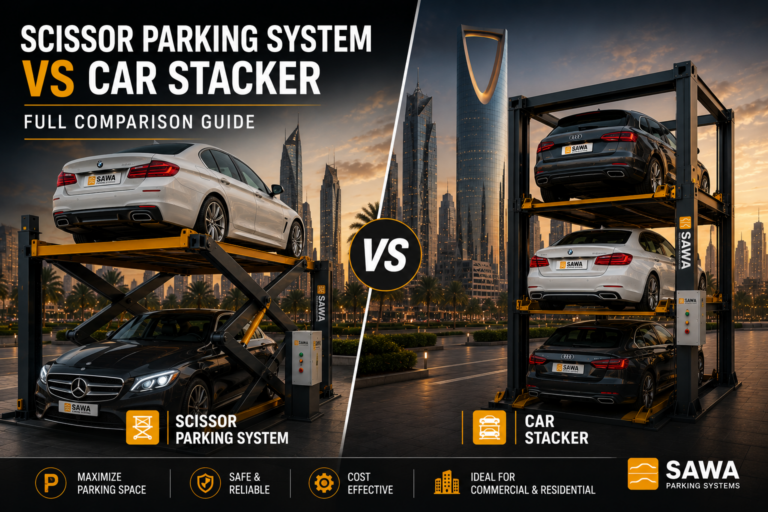
- Scissor parking systems
- Tilting parking lifts
- Car stacker systems
allow developers to achieve dramatically higher parking efficiency while reducing construction costs and improving project scalability. As smart city infrastructure continues expanding across Egypt, the demand for intelligent parking technologies is expected to increase significantly.
Why Developers Choose Sawa Parking
One of the key reasons behind the success of this project was the engineering-focused approach used by Sawa Parking. Instead of simply supplying parking equipment, the company developed a customized parking strategy tailored specifically to the operational and structural requirements of the project.
Sawa Parking focuses on delivering complete parking infrastructure solutions that combine:
- Advanced engineering analysis
- Intelligent parking design
- Mechanical parking integration
- Smart operational technologies
- Local manufacturing capabilities
This integrated approach allows developers to maximize parking efficiency while minimizing unnecessary construction complexity and operational costs.
Another major advantage is local manufacturing. Producing parking systems in Egypt allows Sawa Parking to provide highly competitive pricing while maintaining strong quality standards and faster project delivery timelines. Clients also benefit from improved technical support, maintenance services, and spare parts availability compared to imported systems.
The Future of Smart Parking in Egypt
The success of this project reflects the future direction of urban development in Egypt. As cities continue growing and land becomes increasingly valuable, developers will need smarter and more efficient parking infrastructure capable of supporting high-density urban environments.
Mechanical and smart parking systems are expected to become standard components of modern developments because they improve parking efficiency, reduce land consumption, and support better operational organization. Projects that continue relying exclusively on traditional parking methods may face increasing limitations related to land utilization, operational performance, and construction cost.
Intelligent parking infrastructure is no longer simply a technical improvement—it is becoming a strategic requirement for modern real estate development and future smart city planning.
Conclusion
This project demonstrates how intelligent engineering and advanced mechanical parking technologies can completely transform parking infrastructure performance in modern developments. By redesigning inefficient traditional parking layouts and integrating smart mechanical systems, Sawa Parking successfully increased parking capacity by 300% while improving traffic organization, reducing underground construction complexity, and maximizing land utilization efficiency.
The project highlights the growing importance of intelligent parking infrastructure within Egypt’s rapidly evolving urban landscape. As developers continue facing increasing parking demand and rising land costs, smart parking systems will play a critical role in shaping the future of modern urban mobility.
Through advanced engineering expertise, customized parking strategies, and local manufacturing capabilities, Sawa Parking continues to position itself as one of the leading companies driving the future of smart parking infrastructure in Egypt.
References
Urban Land Institute (ULI)
https://uli.org
International Parking & Mobility Institute (IPMI)
https://www.parking-mobility.org
ITS International
https://www.itsinternational.com
McKinsey & Company
https://www.mckinsey.com
Smart Cities World
https://www.smartcitiesworld.net