


- May 8, 2026
Puzzle Parking System in Egypt: The Future of Smart Urban Parking Solutions
Introduction
Urban development in Egypt is evolving at an unprecedented pace. Major cities such as Cairo, the New Administrative Capital, Sheikh Zayed, and New Cairo are witnessing massive growth in residential compounds, commercial towers, administrative projects, hospitals, hotels, and mixed-use developments. As urban density increases and land prices continue to rise, developers are facing one of the most critical challenges in modern construction: parking infrastructure.
Traditional parking methods are no longer capable of supporting the scale and complexity of modern projects. Conventional parking layouts consume large amounts of space, require extensive underground excavation, and significantly increase construction costs. At the same time, growing vehicle ownership and increasing traffic congestion are creating additional pressure on urban infrastructure.
This is why the demand for a puzzle parking system in Egypt is increasing rapidly. Developers are now searching for intelligent parking technologies that can maximize capacity while minimizing space usage and operational inefficiencies. A puzzle parking system in Egypt provides a highly efficient mechanical solution capable of transforming how parking is designed and implemented in modern urban developments.
The Growing Parking Crisis in Egypt
The parking problem in Egypt is becoming more severe every year due to rapid urban expansion and population growth. In Cairo alone, millions of vehicles move daily through highly congested roads and densely populated districts. New urban developments continue to attract more residents, businesses, and commercial activities, which creates enormous demand for organized parking infrastructure.
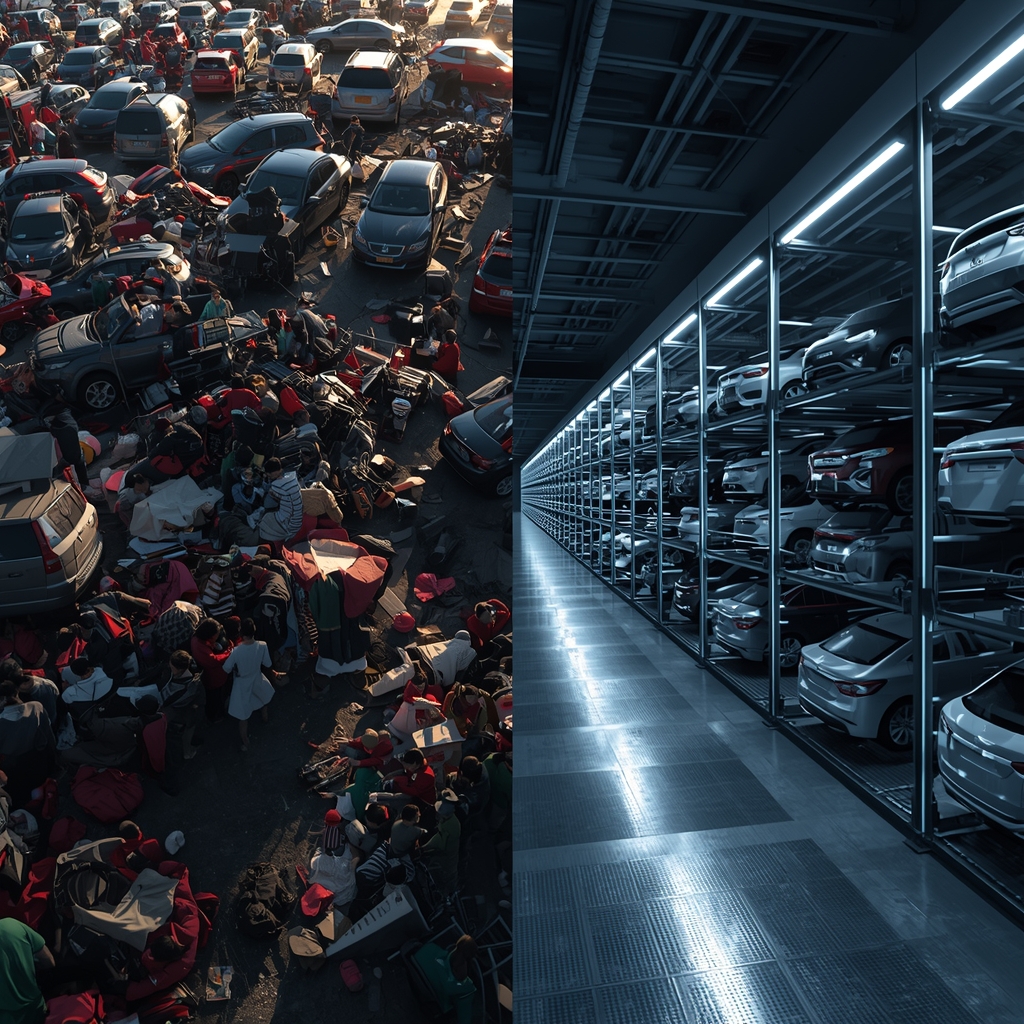
Unfortunately, traditional parking solutions are struggling to keep up with this growth. Many projects still rely on outdated parking layouts that consume excessive land while providing limited parking efficiency. Underground parking construction has also become increasingly expensive due to rising excavation costs, structural requirements, waterproofing systems, and extended construction timelines.
As a result, developers are facing a difficult challenge. They must provide sufficient parking spaces while maintaining project profitability and maximizing land utilization. This challenge is one of the main reasons why the puzzle parking system in Egypt is becoming one of the most important solutions in modern real estate development.
What Is a Puzzle Parking System
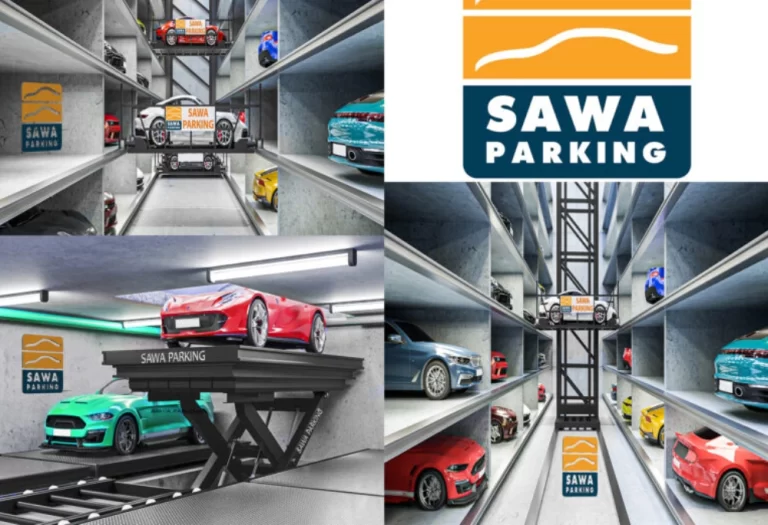
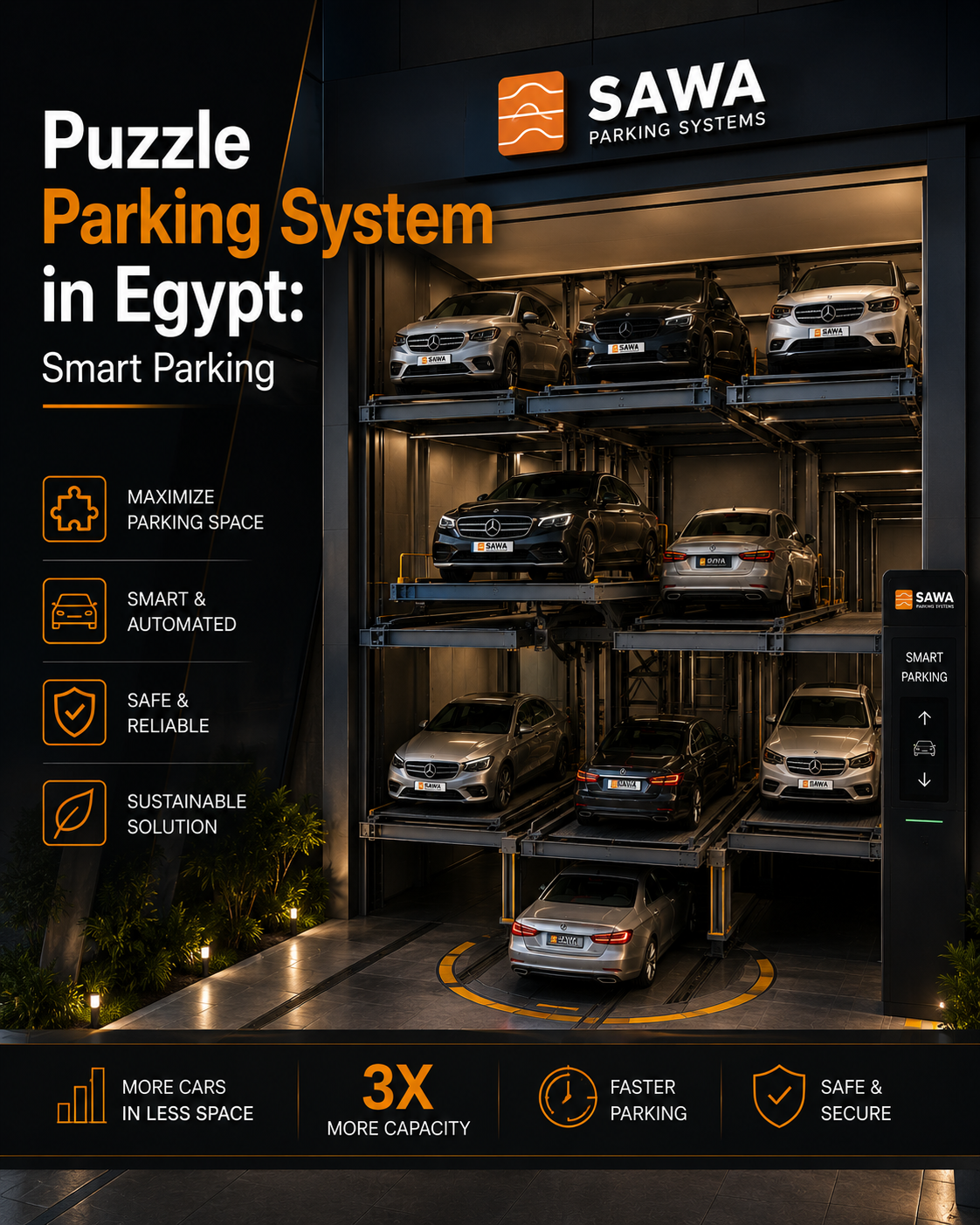
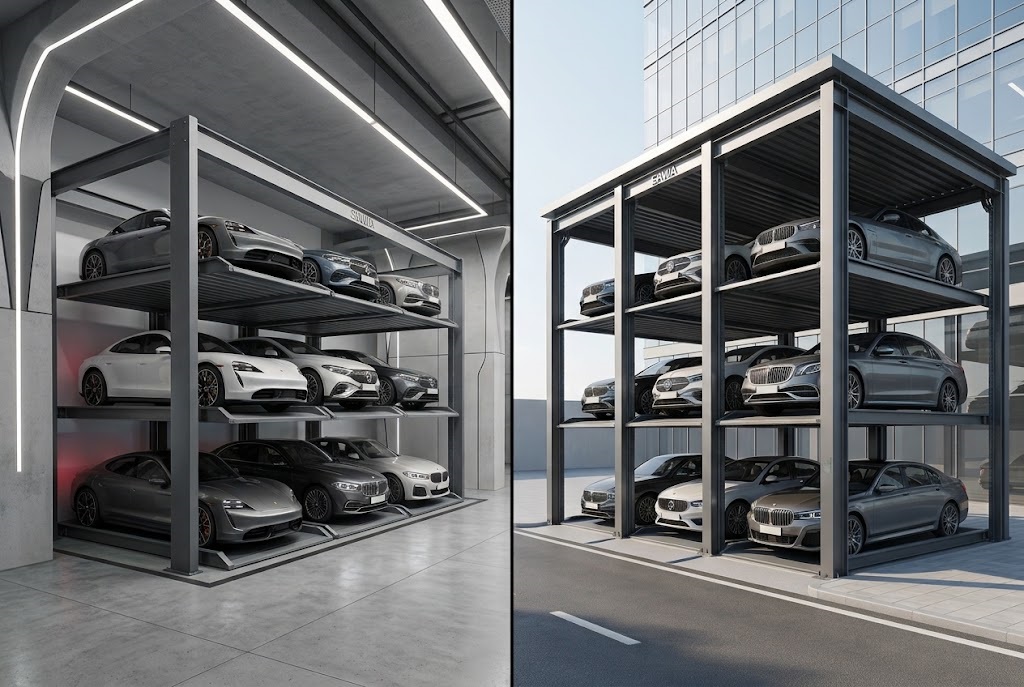
A puzzle parking system in Egypt is a semi-automated mechanical parking solution designed to maximize parking capacity within a compact footprint. Unlike traditional parking systems that depend heavily on ramps and circulation lanes, puzzle parking systems use a combination of vertical lifting and horizontal sliding movement to organize vehicles efficiently inside a multi-level steel structure.
Each vehicle is parked on an independent platform that moves automatically through an intelligent control system. The platforms shift vertically and horizontally to create empty spaces and retrieve vehicles when required. This allows the system to accommodate a significantly higher number of vehicles within a smaller area compared to conventional parking layouts.
One of the main reasons developers are increasingly interested in a puzzle parking system in Egypt is its ability to solve complex parking challenges without requiring excessive underground construction or large land areas. This makes it ideal for modern urban projects where every square meter has financial value.
How Puzzle Parking Systems Work
The operational mechanism of a puzzle parking system in Egypt is based on intelligent mechanical movement designed to optimize parking density while maintaining smooth and reliable vehicle access. Each car is parked on a dedicated steel platform inside the system structure. The platforms are connected to automated lifting and sliding mechanisms controlled through a computerized management system.
When a driver parks a vehicle, the system automatically identifies an available storage position and moves the platform accordingly. Platforms shift vertically and horizontally in a synchronized sequence to create access paths for storing or retrieving vehicles. This eliminates the need for large ramps and reduces the amount of circulation space typically required in traditional parking layouts.
The system is designed to operate efficiently while maintaining high safety standards and minimal operational complexity. Modern puzzle parking systems also include advanced features such as automated controls, safety sensors, emergency stop systems, and intelligent monitoring technologies that improve overall performance and reliability.
Technical Specifications of Puzzle Parking System in Egypt
Modern puzzle parking systems are highly flexible and can be customized according to project requirements, vehicle types, and available space conditions. Developers can configure the system based on parking demand, building layout, and operational requirements while maintaining maximum efficiency.
Typical technical specifications of a puzzle parking system in Egypt include platform load capacities of up to 2,500 kilograms per vehicle. Platform widths generally range between 2.3 and 2.7 meters to accommodate different vehicle sizes comfortably. Systems can also be configured with multiple levels, typically ranging from two to six floors depending on project scale and structural conditions.
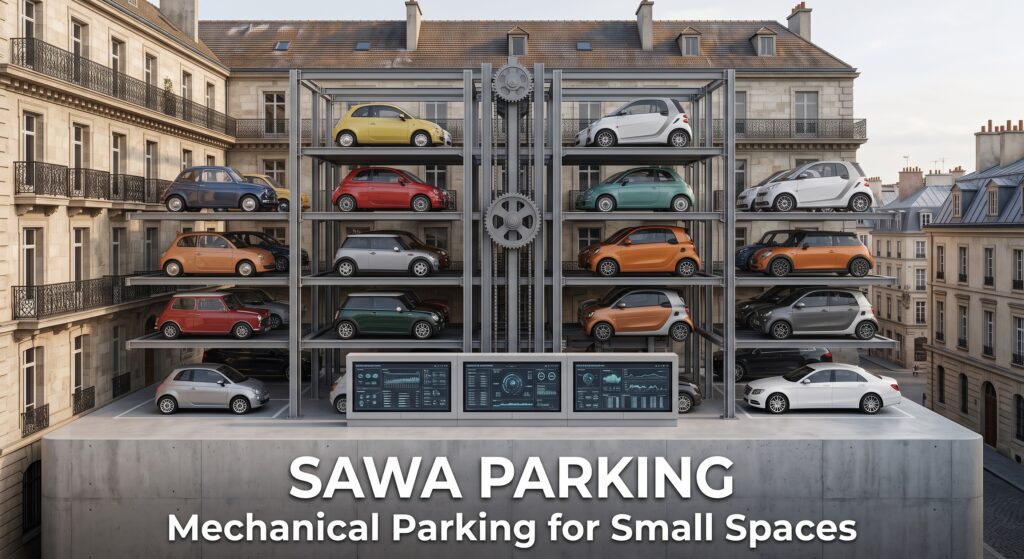
Another major advantage of puzzle systems is their ability to operate both indoors and outdoors. They can be integrated into underground basements, residential towers, commercial buildings, or standalone parking structures. This flexibility allows developers to implement customized solutions that match the specific requirements of each project while maximizing parking capacity and operational efficiency.
Why Developers Are Choosing Puzzle Parking Systems in Egypt
Developers across Egypt are increasingly adopting puzzle parking systems because they provide a practical solution to multiple urban development challenges simultaneously. Modern projects require parking systems that not only maximize efficiency but also improve financial performance and long-term operational sustainability.
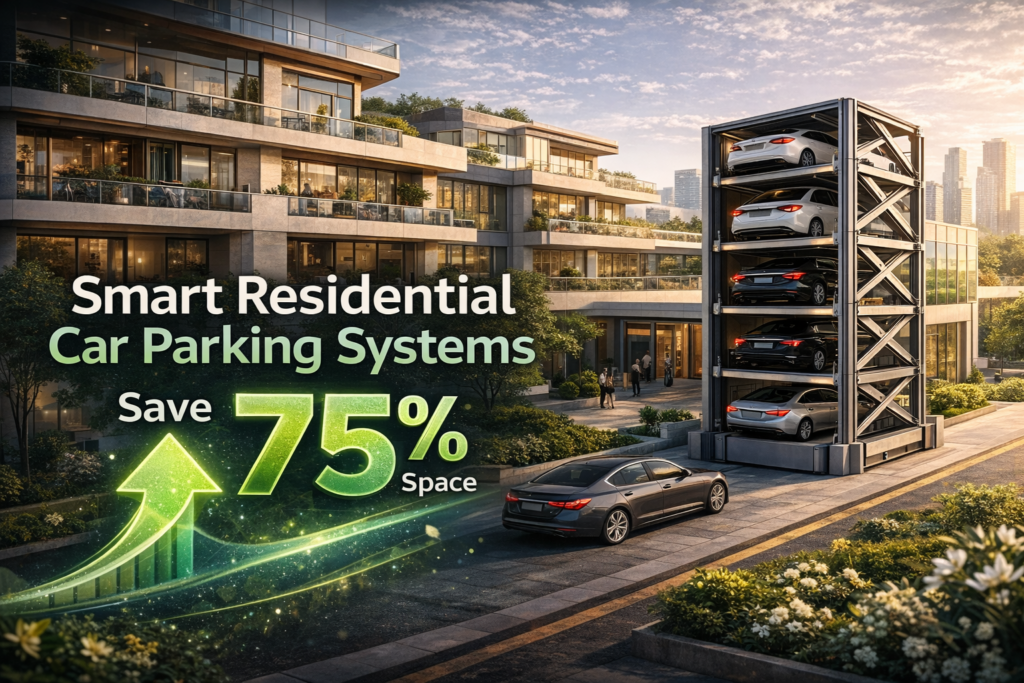
A puzzle parking system in Egypt helps developers achieve significantly higher parking density compared to traditional layouts. By eliminating ramps and reducing circulation space, developers can increase parking capacity while using a much smaller footprint. This allows more project area to be allocated for profitable spaces such as residential units, retail stores, or office areas.
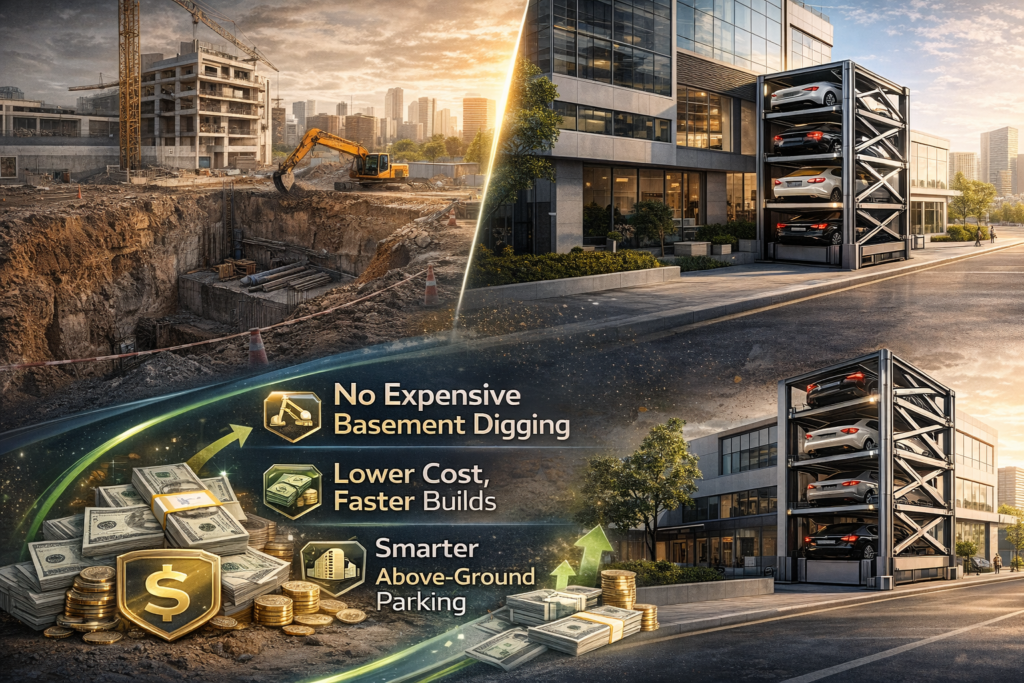
In addition to space optimization, puzzle parking systems also reduce underground construction requirements, which can dramatically lower excavation and structural costs. These financial advantages make puzzle systems highly attractive for developers seeking to improve return on investment while maintaining modern infrastructure standards.
Space Optimization and Parking Capacity
One of the most important benefits of a puzzle parking system in Egypt is its ability to maximize space utilization. Traditional parking structures waste a large percentage of available area on ramps, turning zones, and vehicle movement. In many developments, nearly half of the total parking space is consumed by circulation rather than actual parking capacity.
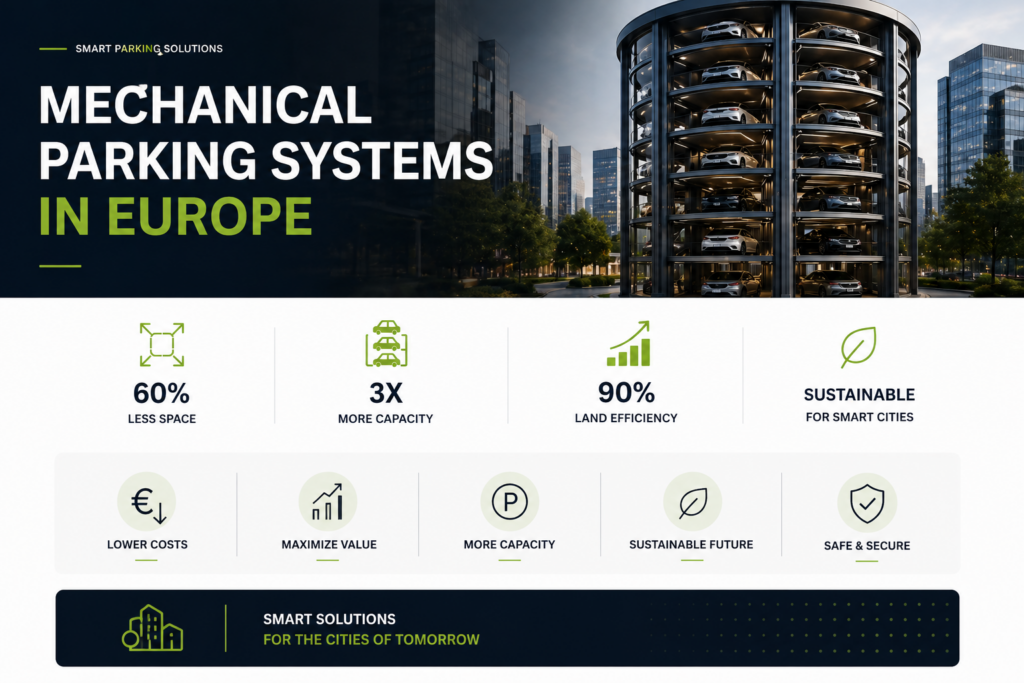
Puzzle parking systems eliminate most of these inefficiencies through compact vertical storage and intelligent platform movement. Vehicles are stored mechanically within a structured grid, allowing significantly higher parking density without increasing the project footprint. This results in substantial space savings that can exceed sixty or even seventy percent compared to traditional parking layouts.
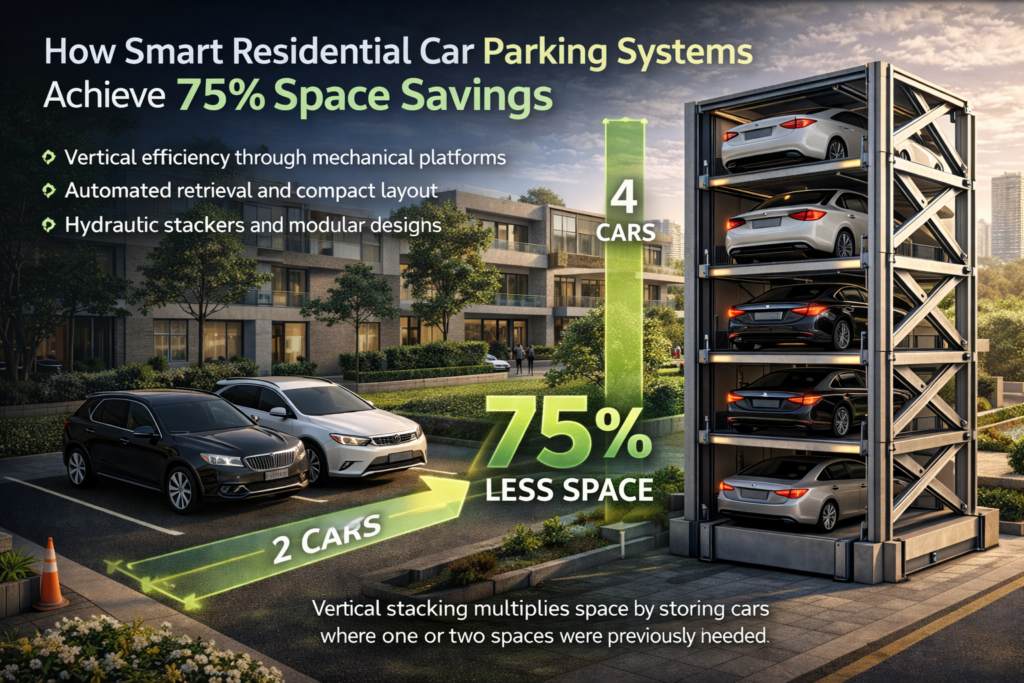
The increased efficiency provided by a puzzle parking system in Egypt allows developers to accommodate more vehicles while preserving valuable land for other project functions. This directly improves land utilization efficiency and increases the overall financial value of the development.
Reducing Underground Parking Cost
Underground parking construction has become one of the most expensive components of modern real estate development in Egypt. Excavation, waterproofing, reinforced concrete structures, ventilation systems, drainage infrastructure, and fire protection all contribute to significantly increasing project costs and construction timelines.
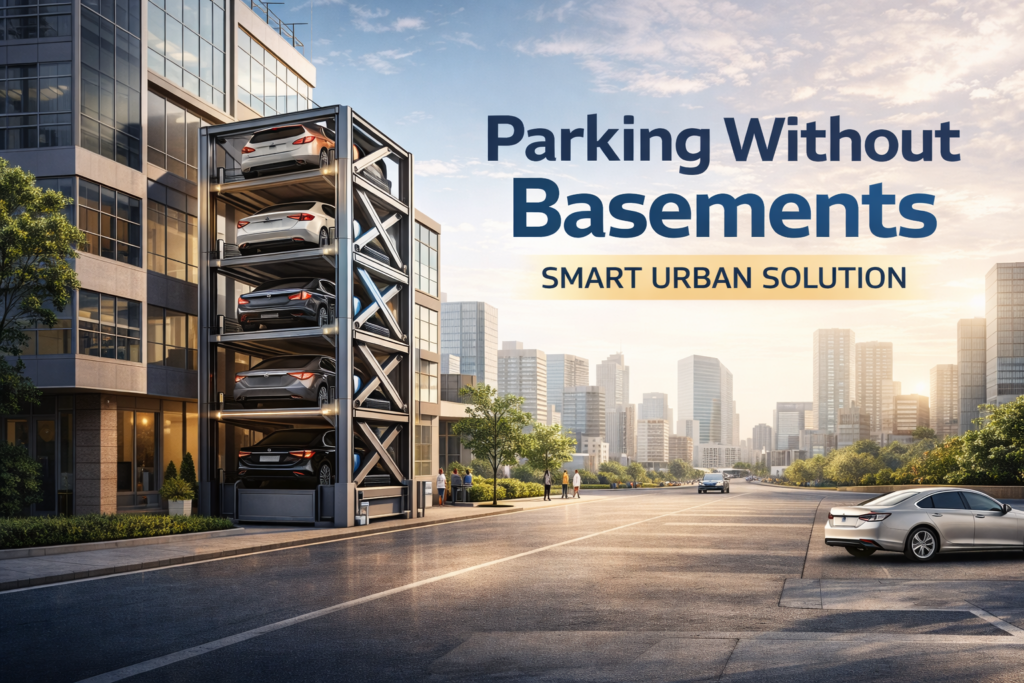
A puzzle parking system in Egypt helps reduce these costs by minimizing the amount of underground space required for parking operations. Since the system stores vehicles vertically and eliminates large circulation areas, developers can achieve higher parking capacity within smaller underground footprints.
Reducing underground excavation not only lowers construction expenses but also simplifies structural design and shortens project timelines. This creates a major financial advantage for developers while improving overall project efficiency and profitability.
Puzzle Parking System vs Traditional Parking
Comparing a puzzle parking system in Egypt with traditional parking layouts clearly demonstrates why developers are shifting toward mechanical parking solutions. Traditional systems depend heavily on horizontal space, large ramps, and extensive vehicle circulation areas, which significantly reduces efficiency and increases land consumption.
Puzzle parking systems, on the other hand, use intelligent mechanical movement to maximize vertical storage capacity while minimizing wasted space. This allows developers to achieve much higher parking density within the same footprint while reducing underground construction requirements and operational congestion.
In addition to better space efficiency, puzzle systems also improve traffic organization and reduce the time drivers spend searching for parking spaces. These operational improvements contribute to better user experience and support the growing demand for modern smart parking infrastructure in Egypt.