



Why Underground Parking Cost Is Turning Parking Into a Luxury, Not a Standard
1. Underground Parking Cost Is No Longer a Hidden Number
For years, underground parking was considered the safest and most practical solution for urban developments. Today, underground parking cost has become one of the most underestimated risks in real estate projects. Excavation, soil treatment, waterproofing, ventilation, and structural reinforcement now represent a massive financial burden before a single parking space is delivered.
Developers across the region are discovering that underground parking does not only cost more to build it also limits flexibility and increases long-term operational expenses. In several projects reviewed by SAWA Parking, underground parking budgets expanded far beyond initial estimates, forcing late-stage compromises. This shift is why many developers now explore alternatives after reviewing real smart parking projects that solved the same problem with lower risk.
2. The Real Drivers Behind Underground Parking Cost
When developers calculate underground parking cost, excavation is usually the first concern but it is rarely the biggest one. Structural depth, water tables, dewatering systems, and soil stabilization often double or triple the original budget. These factors are highly site-dependent and difficult to control.
In dense urban zones, underground construction also increases project timelines significantly. Delays caused by soil conditions or unexpected infrastructure conflicts can halt progress for months. SAWA Parking frequently consults developers after such issues appear, helping them reassess parking strategies using above-ground smart parking systems that avoid these risks entirely.
3. How Underground Parking Limits Design and Project Growth
Beyond cost, underground parking restricts architectural and functional flexibility. Once excavation begins, changing layouts becomes extremely expensive. Ceiling heights, column grids, and ramp geometry lock the project into a fixed configuration that is difficult to adapt.
Several developers have discovered too late that underground parking reduces their ability to expand parking capacity or modify circulation patterns. In contrast, mechanical parking systems designed by SAWA Parking allow scalability and phased expansion without structural demolition. This is one of the main reasons developers increasingly reassess underground parking as a default choice.
4. Why Urban Density Is Making Underground Parking Impractical
In highly dense cities, underground parking creates more problems than it solves. Limited site access, traffic disruption during excavation, and strict municipal regulations significantly increase underground parking cost. In many cases, local authorities impose restrictions on excavation depth, making underground solutions partially unusable.
SAWA Parking has supported multiple urban developments by proposing compact parking systems that operate entirely above ground or with minimal pit depth. Reviewing existing urban installations reveals how these solutions integrate seamlessly into tight plots where underground parking would be impossible or financially unviable.
5. Smart Parking Systems as a Practical Alternative to Underground Parking
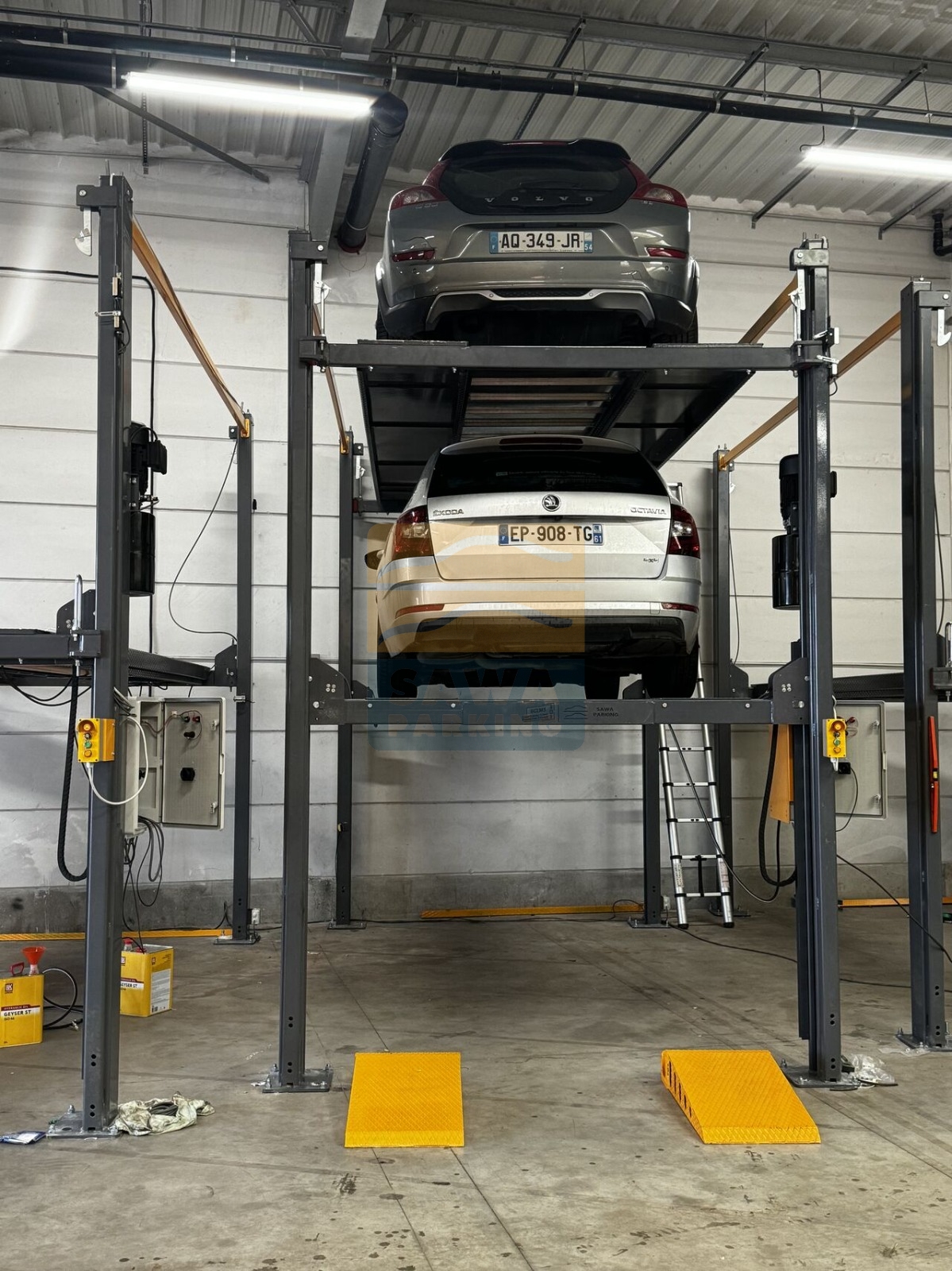
Smart parking systems provide a direct response to rising underground parking cost. By eliminating ramps and deep excavation, mechanical systems reduce civil work dramatically. Puzzle systems, rotary parking, and car elevators rely on vertical efficiency rather than underground volume.
These systems also shorten construction timelines and reduce uncertainty. SAWA Parking designs parking solutions based on actual site constraints, ensuring that the selected system delivers the required capacity without exposing the project to underground construction risks. Developers often discover that switching strategies early saves millions in avoided costs.
6. When Underground Parking Still Makes Sense
Underground parking is not obsolete it simply requires careful justification. In premium developments with extremely limited surface visibility or strict zoning requirements, underground parking may still be necessary. However, these cases are now the exception, not the rule.
Even in such projects, SAWA Parking often combines underground levels with smart mechanical systems to minimize depth and reduce overall underground parking cost. Early technical evaluation through direct engineering consultation allows developers to determine the optimal balance instead of defaulting to full underground solutions.
7. Why Underground Parking Is Becoming a Luxury Choice
Today, underground parking is no longer a standard it is a luxury decision that only certain projects can justify. Rising construction costs, extended timelines, and limited adaptability make it unsuitable for many residential and commercial developments.
Developers who continue to rely solely on underground parking often absorb unnecessary risk. Meanwhile, projects that integrate smart parking solutions gain flexibility, cost control, and faster delivery. This shift explains why underground parking is increasingly reserved for high-end projects rather than mainstream developments.
8. The Practical Way to Control Underground Parking Cost
The most effective way to control underground parking cost is not optimization it is rethinking the strategy entirely. By evaluating smart parking solutions early, developers avoid committing to irreversible excavation decisions.
SAWA Parking supports this process by analyzing site conditions, capacity requirements, and long-term operational goals before construction begins. Exploring SAWA Parking solutions early in the design phase transforms parking from a financial liability into a controlled, scalable asset.
Conclusion:
Underground parking cost is no longer just a construction line item—it is a strategic decision that impacts timelines, budgets, and long-term project value. While underground parking may still serve specific use cases, it should never be the automatic choice.
Real-world experience from SAWA Parking projects proves that smart parking systems offer safer, faster, and more adaptable alternatives. Developers who reassess underground parking early gain flexibility, reduce risk, and deliver more resilient projects in increasingly complex urban environments.
References
- SAWA Parking – Smart Parking Systems
https://sawaparking.com/ - Parking Structures: Planning, Design, Construction, Maintenance, and Repair
Mary S. Smith & William J. Dunn – Springer
https://link.springer.com/book/10.1007/978-3-319-06179-2 - Mechanical Parking Systems: Design, Safety, and Applications
Heinz-Jürgen Ahrens – Springer
https://link.springer.com/book/10.1007/978-3-662-55831-5 - Urban Land Economics
William Alonso – Harvard University Press