



1. Smart Parking Systems : The Global Parking Crisis and Why Traditional Solutions No Longer Work
Smart Parking Systems Urban centers across the world are facing a growing parking crisis that directly affects mobility, real estate value, and quality of life. Population growth, increased car ownership, and limited land availability have made traditional parking solutions inefficient and economically unsustainable. Surface parking and ramp-based garages consume excessive land while delivering limited capacity.
In many cities, developers are forced to choose between sacrificing valuable usable space or investing heavily in underground construction. This challenge has pushed urban planners and investors to explore alternative parking models that rely on vertical and mechanical efficiency rather than horizontal expansion.
Smart parking systems emerged as a direct response to this crisis, offering solutions that significantly increase parking capacity while reducing construction complexity. A closer look at real-life implementations through smart parking projects clearly shows how cities are already shifting away from outdated parking models.
2. What Smart Parking Systems Actually Represent in Modern Urban Planning
Smart parking systems are often described simply as automated machines, but their role in urban planning goes far beyond automation. These systems redefine how parking integrates with architecture, traffic flow, and land use. Instead of allocating massive areas for vehicle circulation, smart parking systems rely on controlled mechanical movement to store and retrieve vehicles efficiently.
This shift allows developers to reclaim valuable square meters for residential units, commercial areas, or green spaces. It also reduces vehicle congestion within parking structures, improving safety and user experience. In many modern developments, smart parking is now considered a design requirement rather than an optional feature.
Developers exploring long-term urban solutions often begin by reviewing smart parking system options early in the planning phase to align parking strategy with architectural and financial goals.
3. Understanding the Different Types of Smart Parking Systems
Smart parking is not a single solution but a family of systems designed to solve different spatial and operational challenges. Mechanical puzzle systems, rotary parking systems, car elevators, and multi-post lifts each serve distinct use cases depending on space availability, vehicle volume, and building height.
Puzzle parking systems are widely used in residential and commercial buildings where horizontal space is limited but moderate vertical clearance is available. Rotary systems maximize capacity in extremely tight urban footprints by using vertical carousel movement. Car elevators enable seamless vehicle transport between levels, while multi-post systems optimize garage layouts.
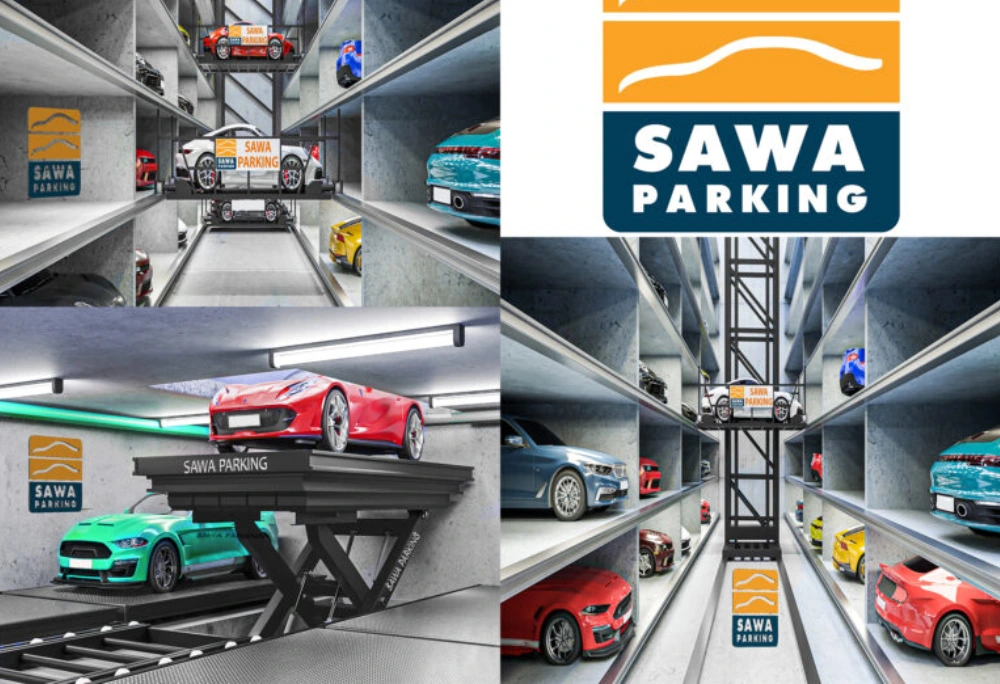
There are also fully-automated parking systems where you can exploit the most of garage space in parking cars without losing any spaces in runways, ramps etc. and cars are parked automatically without any human existence in the parking area.
Selecting the right system requires a deep understanding of site constraints and operational needs. Reviewing technical comparisons and real installations through existing smart parking projects can help decision-makers avoid costly design mistakes.
4. Smart Parking Systems and Their Impact on Residential Developments
Residential developments increasingly depend on efficient parking solutions to remain competitive. In dense urban neighborhoods, parking availability directly influences property value and buyer perception. Traditional parking often forces developers to build deeper basements or reduce sellable areas.
Smart parking systems solve this challenge by increasing vehicle capacity without expanding the building footprint. Residents benefit from organized parking layouts, reduced internal traffic, and improved safety. Developers gain higher revenue potential and lower construction costs.
Many residential developers now consult smart parking specialists early in the design phase and use professional guidance available through SAWA Parking’s expertise to integrate parking systems seamlessly into their projects.
5. Commercial, Hospitality, and Mixed-Use Parking Applications
Commercial buildings, hotels, and mixed-use developments present complex parking demands due to peak-hour usage and high vehicle turnover. Smart parking systems address these challenges by optimizing parking flow and reducing vehicle retrieval time.
Hotels benefit from compact parking layouts that allow more space for guest services. Commercial developments enjoy higher parking density without increasing structural costs. Mixed-use projects gain flexibility by allocating parking capacity dynamically based on time and usage patterns.
Many developers researching innovative parking strategies turn to industry insights and articles to understand how smart parking systems improve operational efficiency across different project types.
6. The Economic Advantage of Smart Parking Systems
From a financial perspective, smart parking systems offer a compelling value proposition. While the equipment cost may appear higher initially, the overall construction savings are significant. Reduced excavation, faster installation, and minimized concrete work lower total project expenses.
Additionally, smart parking systems reduce operational costs by minimizing manpower and optimizing energy consumption. Over time, these savings translate into a strong return on investment, particularly in high-value urban areas where land cost is a major factor.
Developers evaluating feasibility studies often discover that consulting directly with experts via professional parking consultations helps clarify cost-benefit scenarios early in the decision-making process.
7. Smart Parking as a Foundation of Smart Cities
Smart cities rely on intelligent infrastructure that enhances mobility, sustainability, and efficiency. Parking systems play a crucial role in this ecosystem by reducing traffic congestion caused by drivers searching for spaces and lowering vehicle emissions.
Smart parking systems integrate seamlessly with modern urban strategies by supporting automation, controlled access, and efficient land use. Cities that adopt these systems create more livable environments while preparing for future transportation trends.
Urban planners and municipal stakeholders increasingly review innovative parking solutions as part of broader smart city initiatives.
8. Why SAWA Parking Delivers Complete Smart Parking Solutions
SAWA Parking Systems is the first Egyptian manufacturer specialized in automatic and mechanical parking and car elevators with collaboration with Italian parking experts and strong network in the parking industry through the Middle-East, The Gulf and Europe. SAWA provides comprehensive smart parking solutions that adapt to different spaces, climates, and project requirements. With in-house manufacturing and advanced engineering capabilities, the company supports projects from concept to execution.
SAWA’s experience across residential, commercial, and public installations demonstrates the ability to deliver reliable systems that perform under demanding conditions. Each solution is engineered to balance efficiency, safety, and long-term durability.
For developers and planners seeking proven smart parking solutions, exploring SAWA Parking’s projects offers valuable insight into real-world applications.
9. The Role of Knowledge and Continuous Innovation in Parking Design
Smart parking systems continue to evolve as urban challenges become more complex. Innovations in automation, control systems, and structural engineering are constantly improving performance and adaptability. Staying informed about these developments is essential for long-term project success.
Developers and consultants who follow industry updates through specialized parking resources are better positioned to implement future-ready solutions that align with regulatory and market demands.
10. Final Thoughts: Turning Parking into a Strategic Advantage
Parking is no longer a secondary consideration in urban development. It is a strategic asset that directly impacts project feasibility, user experience, and long-term value. Smart parking systems provide cities and developers with tools to address space limitations while enhancing urban functionality.
Projects that integrate intelligent parking solutions gain a competitive edge in increasingly crowded markets. Engaging with experienced partners such as SAWA Parking ensures that parking becomes part of the solution—not the problem.
References
1. SAWA Parking – Smart Parking Systems Manufacturer
2. Mechanical Parking Systems: Design, Safety, and Applications
Heinz-Jürgen Ahrens – Springer
https://link.springer.com/book/10.1007/978-3-662-55831-5
3. Parking Structures: Planning, Design, Construction, Maintenance, and Repair
Mary S. Smith, William J. Dunn – Springer
https://link.springer.com/book/10.1007/978-3-319-06179-2
4. Parking Design: A Manual for Architects and Engineers
Albert W. Steiss – Wiley
https://www.wiley.com/en-us/Parking+Design%3A+A+Manual+for+Architects+and+Engineers-p-9780471297102