


Ramadan is not only a spiritual month, it is also a period where daily routines, traffic patterns, and urban movement change significantly. Working hours shift, commercial areas become busier in the evening, and large numbers of people move within a short time window before Iftar. These behavioral changes directly impact traffic congestion and parking demand across cities.
In this article, we present the Ramadan 2026 Emsakiah along with an analysis of how prayer times influence peak traffic hours and parking capacity, and why Ramadan becomes a real operational test for commercial and residential projects.
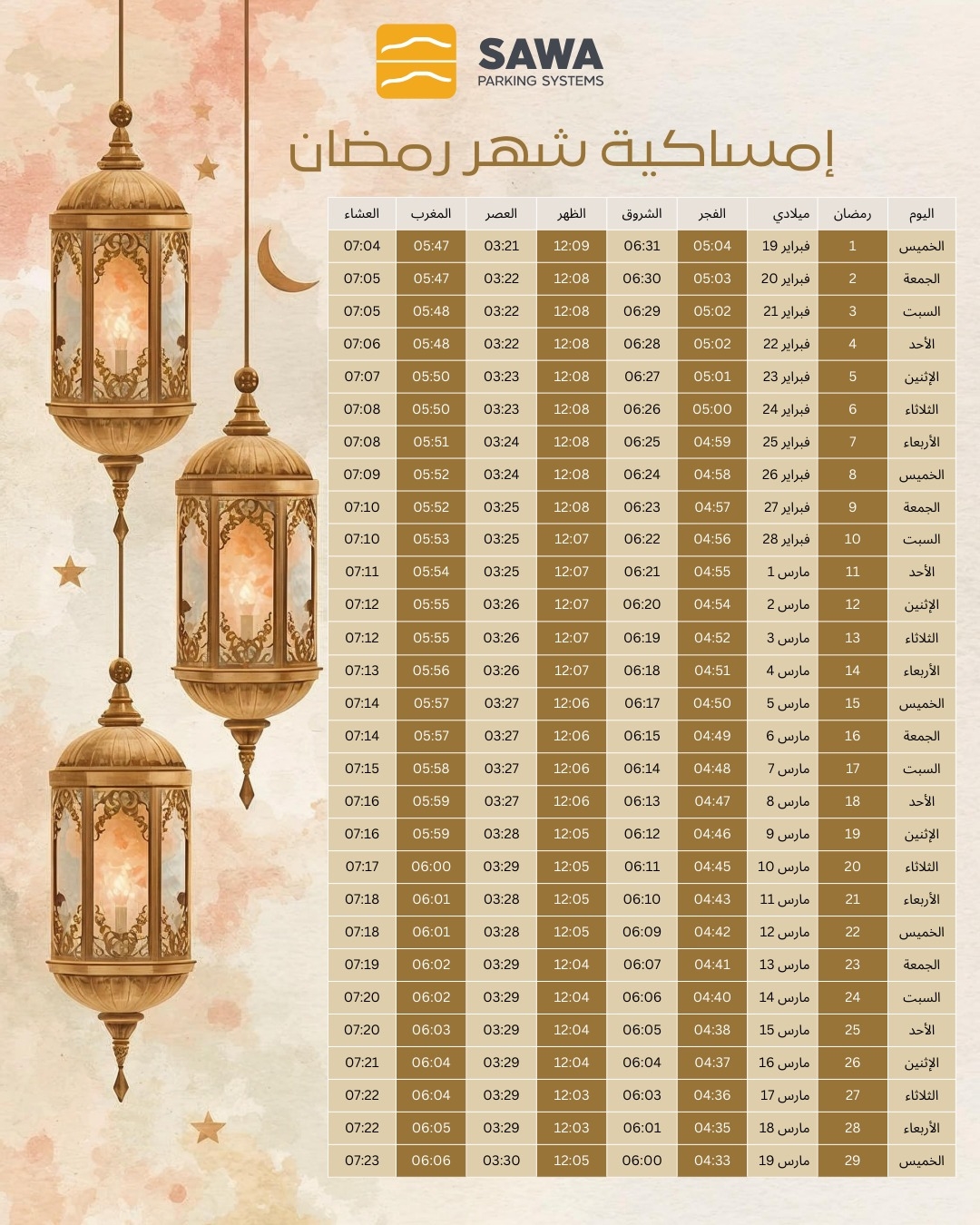
Ramadan 2026 Emsakiah
The Emsakiah provides the daily prayer times including Fajr, Sunrise, Dhuhr, Asr, Maghrib, and Isha. During Ramadan, Maghrib time marks the moment of Iftar, which becomes the most critical traffic peak of the day. As the month progresses, Fajr becomes earlier and Maghrib gradually shifts later, slightly extending fasting hours and influencing daily movement patterns.
From an urban planning perspective, the Emsakiah is not just a religious timetable. It acts as a clear indicator of predictable daily traffic peaks. The period approximately one hour before Maghrib consistently records the highest vehicle movement in most cities.
Why Traffic and Parking Demand Increase Before Maghrib
About 60 to 90 minutes before Iftar, multiple movement patterns overlap. Employees leave work, families head to supermarkets, shopping centers experience last-minute grocery rushes, restaurants prepare for high demand, and many drivers attempt to reach home before sunset. This concentration of movement within a narrow time window creates sudden pressure on road networks and parking facilities.
The result is increased time spent searching for parking, higher stress levels for drivers, congestion inside commercial parking areas, and inefficient circulation within traditional parking layouts. Ramadan highlights weaknesses in parking infrastructure more clearly than any other time of the year.
A Second Peak After Isha and Taraweeh
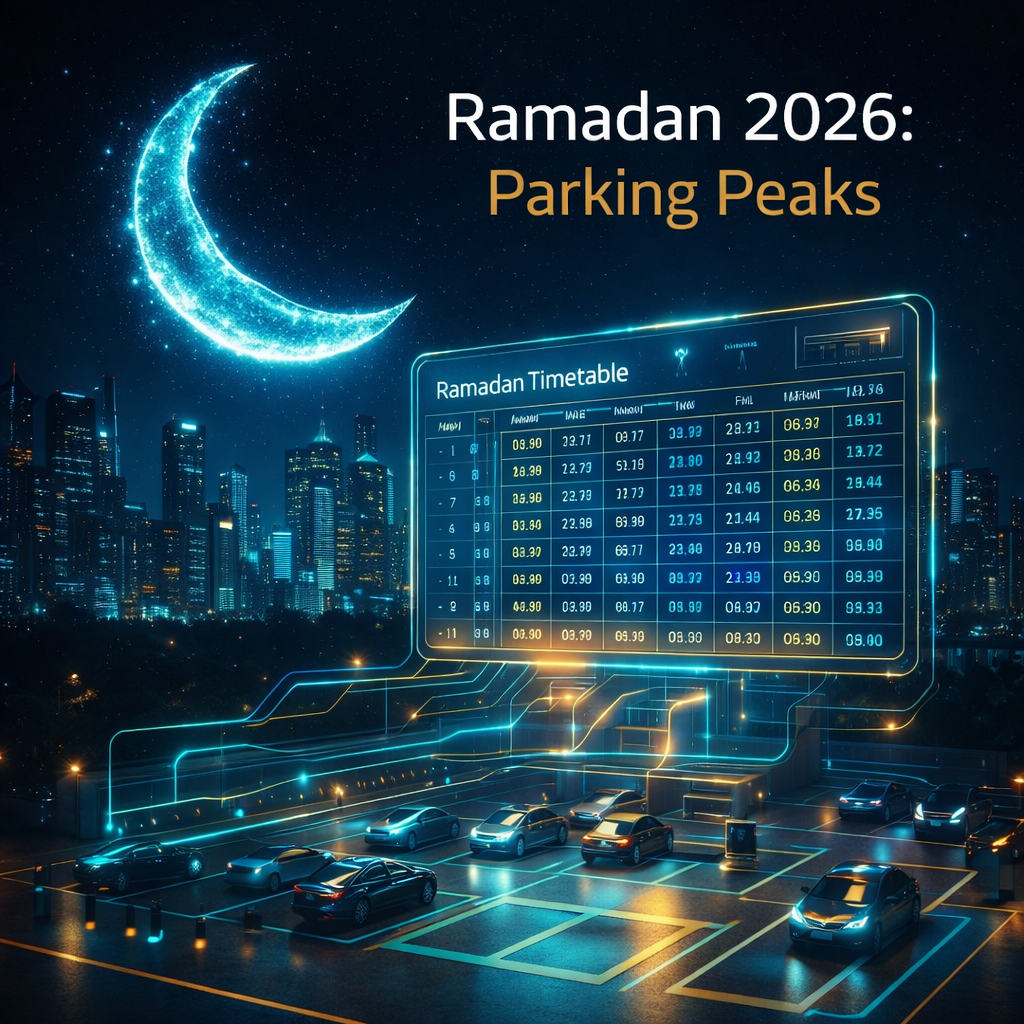
The pressure does not end at Iftar. After Isha prayer and during Taraweeh, another movement wave begins. Mosques, retail centers, cafes, and public spaces experience renewed traffic flow. In residential neighborhoods near mosques, parking demand can exceed normal capacity within minutes.
This second peak demonstrates that parking design must account not only for average daily usage, but also for concentrated short-term surges. Traditional flat parking solutions often struggle during these concentrated demand periods.
Ramadan as a Stress Test for Real Estate and Commercial Projects
For developers and property owners, Ramadan becomes a practical stress test. Malls, mixed-use projects, residential compounds, and buildings located near mosques face sudden increases in parking demand. Projects that rely solely on conventional surface or ramp-based parking may encounter circulation bottlenecks and customer dissatisfaction.
Efficient parking is not only about providing spaces. It is about managing peak flow efficiently, reducing vehicle search time, and maximizing land utilization. During Ramadan, inefficient parking layouts become highly visible to users.
How Smart and Mechanical Parking Systems Improve Performance During Peak Seasons
Smart and mechanical parking systems address seasonal peak challenges by increasing capacity within the same footprint. By utilizing vertical space instead of expanding horizontally, developers can significantly improve vehicle accommodation without sacrificing valuable land.
Automated systems reduce internal traffic circulation, minimize time spent searching for a space, and optimize entry and exit flow. This improves user experience, reduces congestion around the facility, and enhances overall project value.
During predictable high-demand periods such as Ramadan evenings, smart parking solutions provide operational stability and consistent performance. Instead of reacting to congestion, projects equipped with advanced parking systems are prepared for it.
Download the Ramadan 2026 Emsakiah
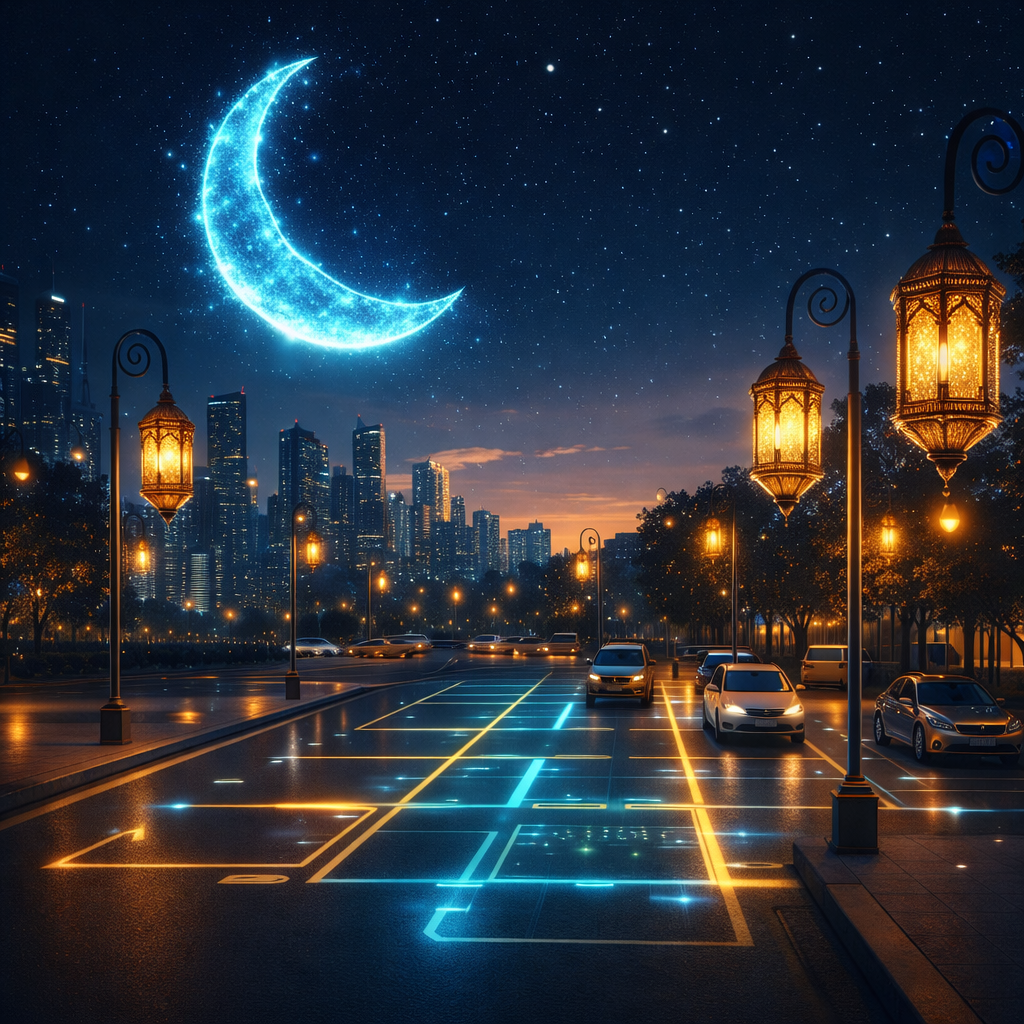
To support better daily planning during the holy month, you can download the complete Ramadan 2026 Emsakiah in a clear and professionally formatted version.
Download the full Ramadan_2026_Emsakiah_Sawa_Parking.
Having accurate prayer times helps individuals and businesses anticipate peak movement hours, especially before Maghrib and after Isha. These concentrated time windows significantly impact traffic flow and parking demand across commercial and residential areas.
If your project experiences seasonal congestion during Ramadan or other high-demand periods, Sawa Parking provides advanced smart and mechanical parking systems designed to handle peak capacity efficiently while maximizing land utilization.
Contact our team today to explore a customized parking solution built for performance, efficiency, and long-term value.
Conclusion
Ramadan 2026 brings meaningful spiritual moments, but it also brings predictable urban movement patterns. The Emsakiah reveals more than prayer times; it reveals daily traffic peaks and concentrated demand windows. For cities, developers, and commercial operators, understanding these patterns is essential.
Projects that prepare for peak periods with efficient parking design and smart technology can maintain smooth operations even during the busiest evenings of the year. As cities grow and seasonal demand intensifies, investing in intelligent parking infrastructure becomes not a luxury, but a strategic necessity.