



1. Can Parking Design Beautiful in Real Urban Projects?
For decades, parking was treated as a necessary but invisible part of any development. Concrete walls, dark basements, and hidden garages became the standard. Today, this perception is changing rapidly. The question “Can parking be beautiful?” is no longer theoretical it is being answered through real projects where beautiful parking design enhances the urban environment instead of harming it.
In dense cities, parking is no longer something to hide. Streets, commercial zones, and mixed-use developments demand solutions that function efficiently while remaining visually acceptable. At SAWA Parking, this shift became clear through projects where parking systems were designed to operate in visible, public-facing locations without compromising aesthetics or safety. Exploring real smart parking projects shows how parking can become part of the city’s identity rather than an eyesore.
2. Why Traditional Parking Design Fails Visually
Traditional parking structures were never designed with appearance in mind. Their focus was purely functional: store cars at the lowest possible cost. This approach resulted in bulky ramps, massive concrete volumes, and layouts that dominate valuable urban frontage. In modern developments, this outdated logic creates visual pollution and reduces the perceived quality of the project.
Developers today face stricter expectations from users, municipalities, and investors. Parking that disrupts the visual flow of a street can directly impact property value. This is where beautiful parking design becomes a competitive advantage rather than a luxury. Smart mechanical systems allow parking to occupy smaller footprints, opening space for better architectural integration—a strategy SAWA Parking has already applied across multiple urban installations.
3. How Beautiful Parking Design Emerges Through Smart Systems
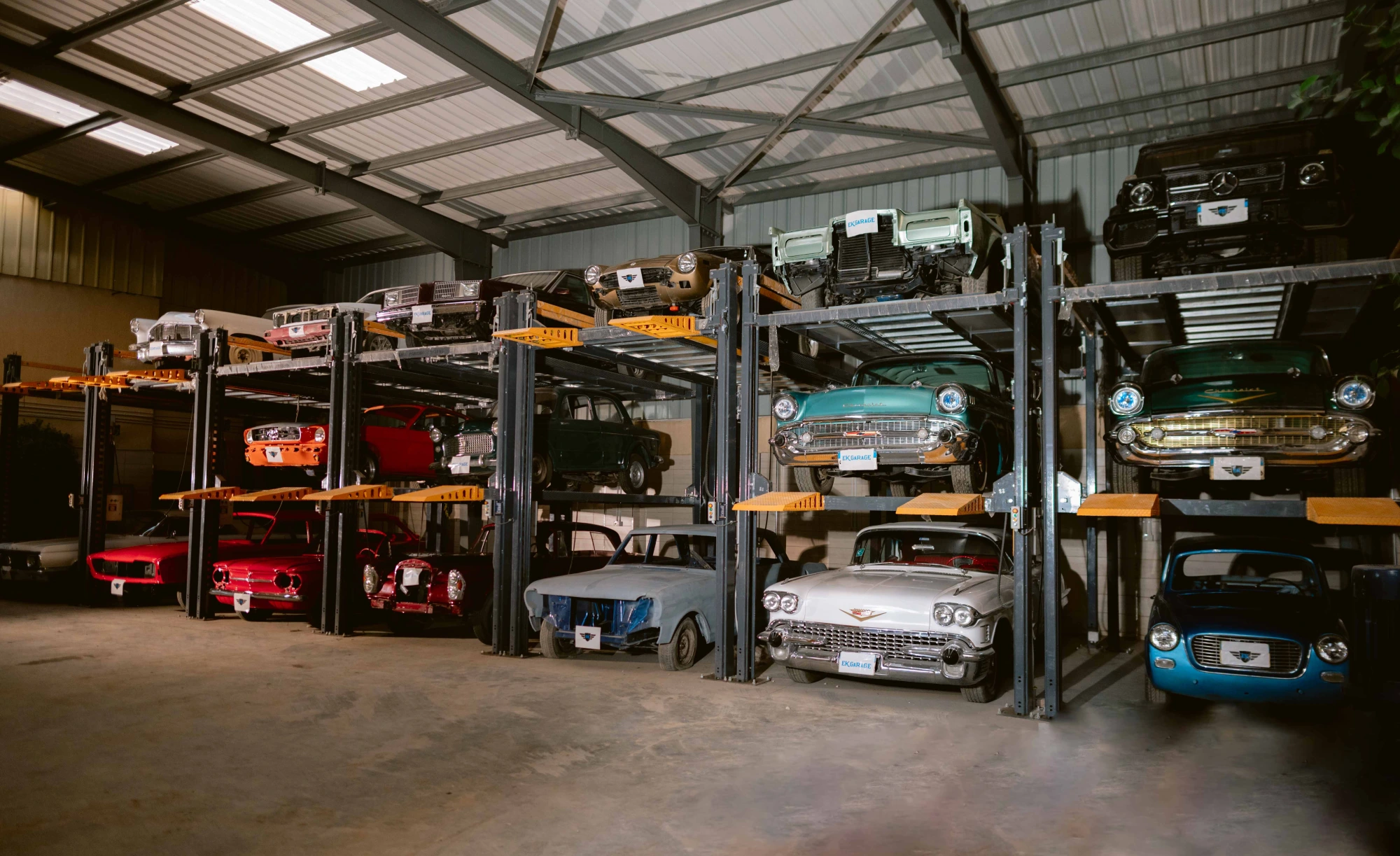
The key to beautiful parking design is not decoration—it is engineering. When parking systems eliminate ramps and unnecessary circulation, the structure itself becomes simpler, cleaner, and easier to integrate architecturally. Puzzle systems, rotary systems, and car elevators reduce visual bulk by relying on vertical efficiency rather than horizontal sprawl.
In several SAWA Parking installations, parking systems were placed directly along active streets and commercial zones. Instead of hiding them underground, the systems became compact, structured elements that fit naturally into the urban fabric. Developers reviewing modern parking solutions often realize that aesthetics improve automatically once the right system is selected.
4. Visible Parking in Commercial Streets and Public Areas
One of the strongest proofs that parking can be beautiful is its successful integration into visible, high-traffic environments. Commercial streets, café districts, and entertainment zones cannot afford visually aggressive infrastructure. Parking systems in these locations must perform efficiently while maintaining a neutral or even appealing presence.
SAWA Parking has delivered systems that operate in full public view, transforming parking from a hidden necessity into a controlled, organized element of the street. This approach not only improves aesthetics but also enhances user trust and perceived safety. When parking feels intentional and well-designed, it elevates the entire project experience.
5. Why Beautiful Parking Design Adds Real Value to Developments
Beautiful parking design is not about appearance alone—it directly impacts financial performance. Projects with visually integrated parking often achieve higher rental values, stronger user satisfaction, and better long-term asset perception. Buyers and tenants judge a development from the moment they arrive, and parking is often the first physical interaction.
Developers who prioritize parking design early avoid costly retrofits and visual compromises later. Many projects reviewed through SAWA Parking’s portfolio demonstrate how thoughtful parking integration improves both usability and overall project value without increasing construction complexity.
6. The Role of Engineering Experience in Beautiful Parking Design
Designing beautiful parking is not the architect’s responsibility alone. It requires engineering partners who understand structural limits, movement logic, and real-world operation. Without this expertise, parking systems remain bulky and visually disruptive.
SAWA Parking’s approach focuses on designing systems around space constraints, user flow, and long-term durability. This practical experience allows the company to propose solutions that work structurally while remaining visually controlled. Developers often underestimate this phase, which is why early consultation through direct engineering discussions makes a measurable difference.
7. Can Parking Be Beautiful Without Increasing Cost?
A common misconception is that beautiful parking design automatically means higher cost. In reality, smart parking systems often reduce overall construction expenses by minimizing excavation, concrete volume, and structural complexity. The visual improvement is a result of efficiency, not decoration.
By replacing ramps with mechanical movement, developers achieve cleaner layouts and better architectural outcomes at the same time. Projects delivered by SAWA Parking consistently demonstrate that beautiful parking design is often the byproduct of choosing the right system—not spending more money.
8. Can Parking Be Beautiful? The Practical Answer
So, can parking be beautiful? The practical answer is yes—when it is engineered correctly. Beautiful parking design is not about aesthetics added at the end; it is about choosing systems that naturally integrate into their surroundings.
SAWA Parking’s real-world projects prove that parking can coexist with architecture, public spaces, and commercial streets without visual compromise. For developers seeking parking solutions that work technically and visually, starting with SAWA Parking is often the difference between a hidden problem and a visible success.
Conclusion:
Beautiful parking design is no longer an abstract architectural idea or a luxury reserved for iconic projects. It has become a practical, achievable choice for developers who understand how parking systems influence both urban appearance and project performance. When parking is engineered intelligently, visual quality becomes a natural result—not an added cost.
Real-world implementations delivered by SAWA Parking clearly demonstrate that parking systems can operate efficiently in visible, public-facing environments without compromising aesthetics or functionality. By replacing bulky ramps and oversized concrete structures with smart mechanical solutions, projects gain cleaner layouts, better user experience, and stronger long-term value.
For developers and planners, the question is no longer whether parking can be beautiful, but how early the right decisions are made. Choosing experienced partners and proven systems from the beginning transforms parking from a hidden problem into a visible asset that supports architecture, usability, and project success.
References
- SAWA Parking – Smart Parking Systems
https://sawaparking.com/ - Parking Design: A Manual for Architects and Engineers
Albert W. Steiss – Wiley
https://www.wiley.com/en-us/Parking+Design%3A+A+Manual+for+Architects+and+Engineers-p-9780471297102 - The Image of the City
Kevin Lynch – MIT Press - Architecture of Parking
National Building Museum – Exhibition Publication