


Parking System Manufacturing Process: 7 Powerful Stages
1) Concept Engineering and Structural Feasibility Analysis
The parking system manufacturing process begins long before steel is cut or hydraulic cylinders are assembled. It starts with structural feasibility analysis. Mechanical parking engineering requires load distribution calculations, soil interface evaluation, building integration assessment, and compliance review with safety regulations. Engineers analyze vehicle weight classifications, expected usage frequency, seismic considerations where applicable, and architectural constraints. This stage transforms conceptual parking demand into measurable engineering variables. Precision at this phase determines the safety and durability of the entire system. In advanced manufacturing environments such as those operated by Sawa Parking, feasibility modeling is conducted using CAD and simulation software to predict stress points and optimize structural geometry before fabrication begins.
2) Design Optimization Through CAD/CAM Integration
Once feasibility is confirmed, the parking system manufacturing process advances into digital design optimization. Using CAD/CAM/CAE platforms, engineers refine structural members, hydraulic pathways, automation sequences, and control system architecture. Finite element analysis is frequently applied to validate load-bearing components and ensure compliance with safety margins. This digital environment allows iterative modification without material waste. Adjustments to platform dimensions, motor capacity, or ceiling clearance compatibility are resolved virtually before physical production. For complex configurations found in smart residential car parking systems, digital modeling ensures seamless integration between mechanical movement and building architecture. Design optimization reduces rework, enhances efficiency, and shortens production cycles.
3) Procurement and Material Qualification Protocols
Material integrity defines system longevity. The parking system manufacturing process incorporates structured procurement protocols to ensure steel grades, hydraulic components, chains, motors, and electronic modules meet engineering specifications. Suppliers are evaluated for consistency, certification compliance, and traceability. Incoming materials undergo inspection procedures to confirm dimensional accuracy and metallurgical standards. This disciplined approach minimizes structural fatigue risk and operational malfunction. Quality assurance at this stage is preventive rather than corrective. By controlling material input variables, manufacturers reduce downstream structural deviations and protect long-term reliability.
4) Precision Fabrication and Robotic Processing
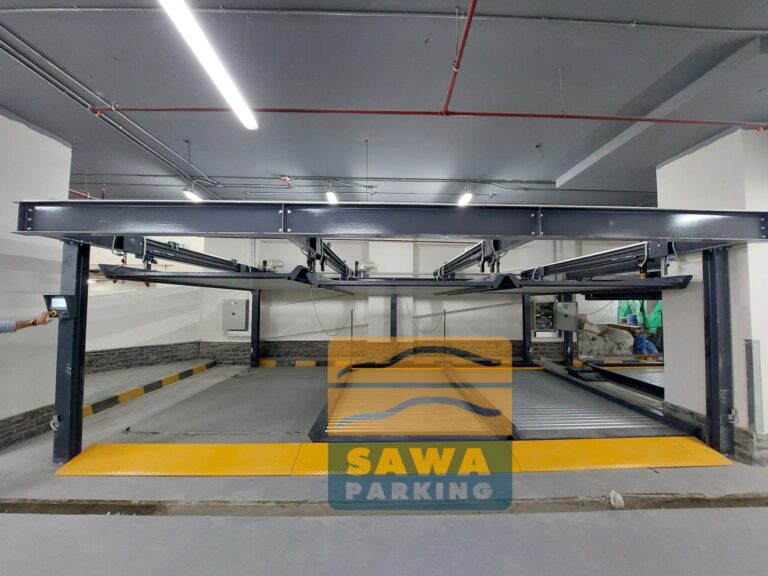
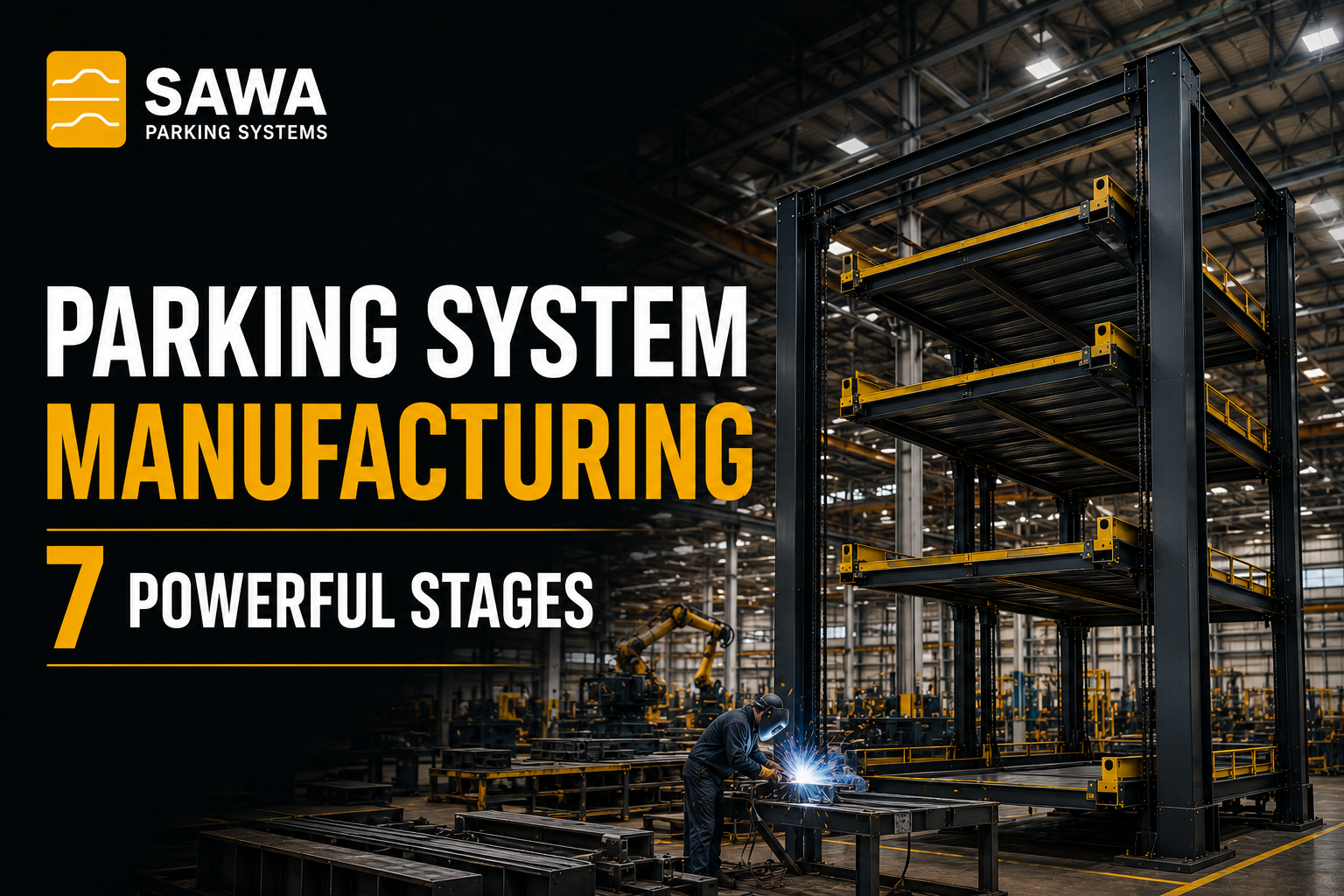
Fabrication transforms digital design into structural reality. Modern parking system manufacturing process environments integrate robotic 3D cutting, laser precision machining, automated welding stations, and bending machines capable of handling large structural members. Robotic systems ensure uniformity across repeated components, eliminating manual inconsistency. Welding procedures follow documented parameters to guarantee penetration strength and load tolerance. Surface treatment processes such as shot blasting and industrial coating protect against corrosion, especially in regions with high humidity or coastal exposure. This stage reflects the industrial backbone of mechanical parking engineering: repeatable precision. Systems such as the puzzle parking system require exact alignment between vertical and horizontal movement rails, making fabrication accuracy essential for smooth operation.
5) Assembly, Hydraulic Integration, and Automation Programming
After structural fabrication, the parking system manufacturing process moves into controlled assembly. Hydraulic cylinders, chains, steel ropes, locking systems, and motor units are integrated into structural frames. Engineers calibrate lifting capacity, synchronization timing, and fail-safe mechanisms. PLC-controlled automation modules are programmed to manage platform movement, safety interlocks, and user interface commands. Redundant locking systems are tested under simulated load conditions to confirm operational security. Automation programming also includes emergency stop protocols, overload detection, and system reset sequences. This integration stage converts fabricated steel into an intelligent mechanical infrastructure system.
6) Quality Control, Load Testing, and QHSE Compliance
Quality control is embedded throughout the parking system manufacturing process but becomes most visible during load testing and compliance verification. Structural assemblies undergo dynamic load simulations to validate lifting capacity and stability margins. Electrical systems are inspected for insulation integrity and programming accuracy. Safety mechanisms are tested repeatedly under stress conditions. QHSE frameworks ensure that production adheres to documented safety management procedures. Inspection reports, certification records, and compliance documentation accompany each system prior to delivery. Quality validation is not symbolic; it is a structural safeguard protecting both users and developers.
7) Installation Engineering and Site Coordination
The parking system manufacturing process extends beyond factory completion into site integration. Installation engineers coordinate with civil contractors to align anchor points, electrical supply routes, and drainage provisions. Precise leveling ensures platform movement accuracy. Commissioning tests validate synchronization between mechanical systems and digital control interfaces. Installation teams confirm compliance with local regulatory requirements and operational safety standards. Developers can directly contact our engineering team to align installation planning with architectural and MEP frameworks. Effective site coordination protects the integrity of the manufacturing effort.
8) After-Sales Engineering and Lifecycle Optimization
A complete parking system manufacturing process incorporates lifecycle planning. Maintenance manuals, spare part inventories, and technical support structures are established before system handover. Periodic inspection schedules are defined to monitor hydraulic performance, chain wear, and automation calibration. Lifecycle engineering ensures sustained operational efficiency and reduces unexpected downtime. Manufacturers maintaining vertical integration retain technical familiarity with each system’s design parameters, enabling faster troubleshooting and adaptive upgrades. Lifecycle optimization transforms mechanical parking from installed equipment into a long-term managed infrastructure asset.
9) Continuous Improvement and Manufacturing Evolution
Industrial competitiveness depends on continuous refinement. The parking system manufacturing process evolves through feedback loops connecting installation teams, maintenance technicians, and design engineers. Field performance data informs improvements in structural reinforcement, hydraulic efficiency, and automation programming. Research and development units evaluate new materials, motor technologies, and digital interface enhancements. Continuous improvement ensures that each production cycle benefits from cumulative operational insights. In advanced ecosystems such as those developed by Sawa Parking, innovation remains embedded within manufacturing rather than isolated from it.
Conclusion
The parking system manufacturing process is a structured, multi-stage engineering discipline integrating feasibility analysis, digital design optimization, material qualification, robotic fabrication, hydraulic integration, automation programming, rigorous quality control, and lifecycle management. Each stage reinforces structural reliability and operational precision. In modern urban infrastructure, mechanical parking systems must perform as long-term engineered assets rather than short-term installations. A disciplined manufacturing process ensures that safety, efficiency, and durability remain foundational principles rather than afterthoughts.
References
Urban Land Institute (ULI) – Parking & Urban Development Research
https://uli.org
Institute of Transportation Engineers (ITE) – Parking Generation Manual
https://www.ite.org/technical-resources/topics/parking-generation/
Transportation Research Board (TRB) – Urban Infrastructure Studies
https://www.trb.org
McKinsey & Company – Urban Mobility Insights
https://www.mckinsey.com/industries/automotive-and-assembly/our-insights