


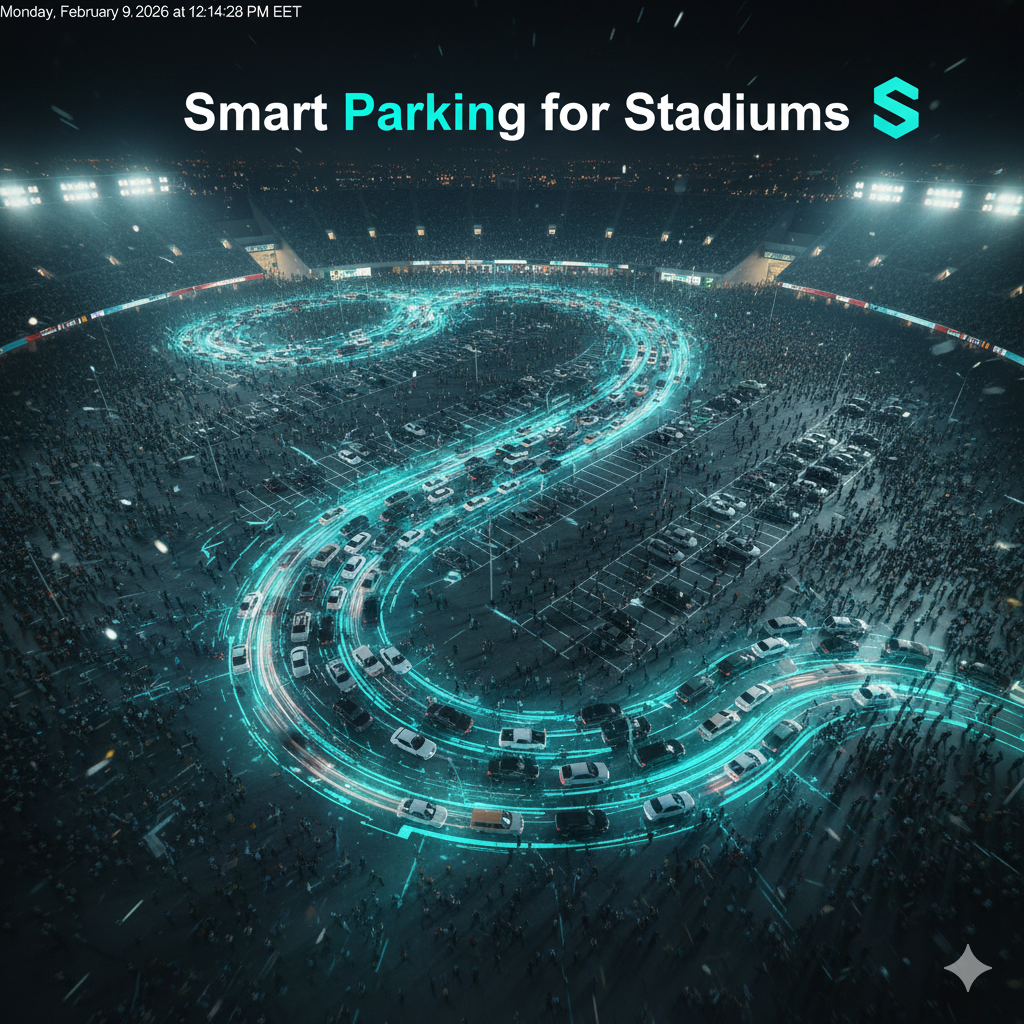
Smart Parking for Stadiums as the Ultimate Stress Test
Few environments expose infrastructure weaknesses as brutally as stadiums. On matchdays, thousands of vehicles arrive within a narrow time window, driven by emotion, urgency, and fixed kickoff schedules. Traditional parking systems struggle under this pressure, creating congestion, confusion, and frustration long before fans reach their seats. This is why Smart Parking for Stadiums is not a luxury feature, but a functional necessity. Stadiums are the real-world stress test for any parking solution, and only systems designed for peak performance survive without collapsing operationally.
Unlike daily-use facilities, stadiums operate in extremes. Long periods of inactivity are followed by sudden surges of demand. Smart Parking for Stadiums addresses this challenge by managing flow, not just capacity. It transforms parking from a passive space into an active traffic-control mechanism, guiding vehicles efficiently and preventing bottlenecks before they form. Stadium operators reviewing large-scale event parking challenges often discover, through real-world parking projects, how early planning makes the difference between chaos and control.
Smart Parking for Stadiums and Matchday Traffic Chaos
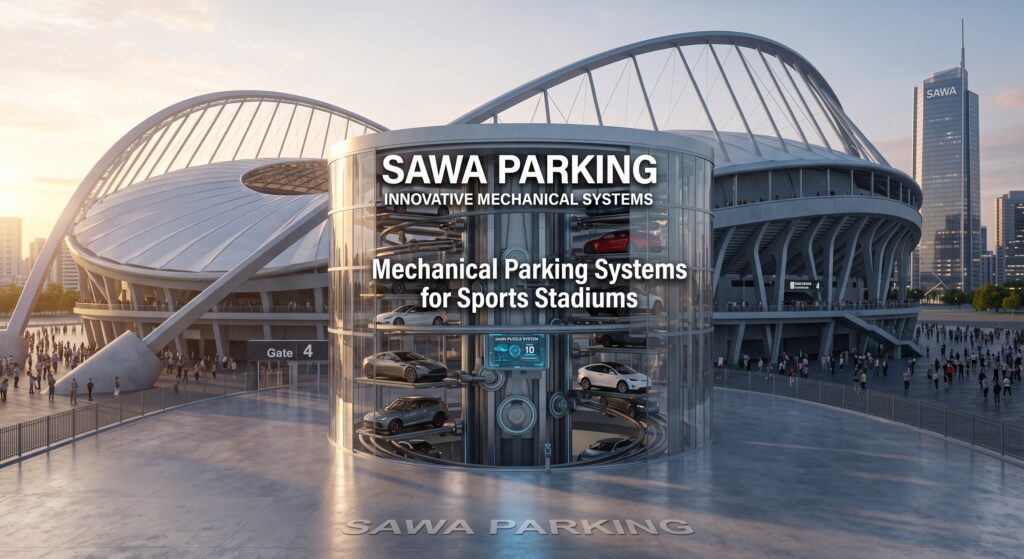
Matchday congestion rarely starts at the stadium gate. It begins kilometers away, where poorly managed parking demand spills into surrounding neighborhoods. Drivers circle, stop illegally, block access roads, and create dangerous pedestrian conflicts. Smart Parking for Stadiums tackles this problem by integrating arrival logic with traffic management, directing vehicles toward predefined zones and reducing unnecessary circulation.
Studies in transport planning show that up to 30% of event-day congestion is caused by drivers searching for parking. By eliminating this behavior, Smart Parking for Stadiums restores order not only inside the venue, but across the surrounding urban fabric. Stadium planners exploring smart parking solutions through
our products
often recognize that parking strategy is inseparable from city traffic performance on matchdays.
Smart Parking for Stadiums and the Fan Arrival Experience
For fans, the matchday experience begins long before the first whistle. Parking frustration directly affects mood, patience, and perception of the event. Smart Parking for Stadiums improves arrival by reducing uncertainty. Fans know where to go, how long it will take, and where their vehicle will be stored. This predictability lowers stress and improves overall satisfaction.
From a UX perspective, this matters more than speed alone. Behavioral research consistently shows that predictable systems outperform faster but uncertain ones in user satisfaction. Stadiums that implement Smart Parking for Stadiums as part of the fan journey—not just an operational afterthought—deliver a smoother transition from city to seat. Operators studying stadium-scale parking implementations via
our project portfolio
often find that improved arrival experience reduces late entry surges and internal crowd pressure.
Smart Parking for Stadiums vs Traditional Event Parking Models
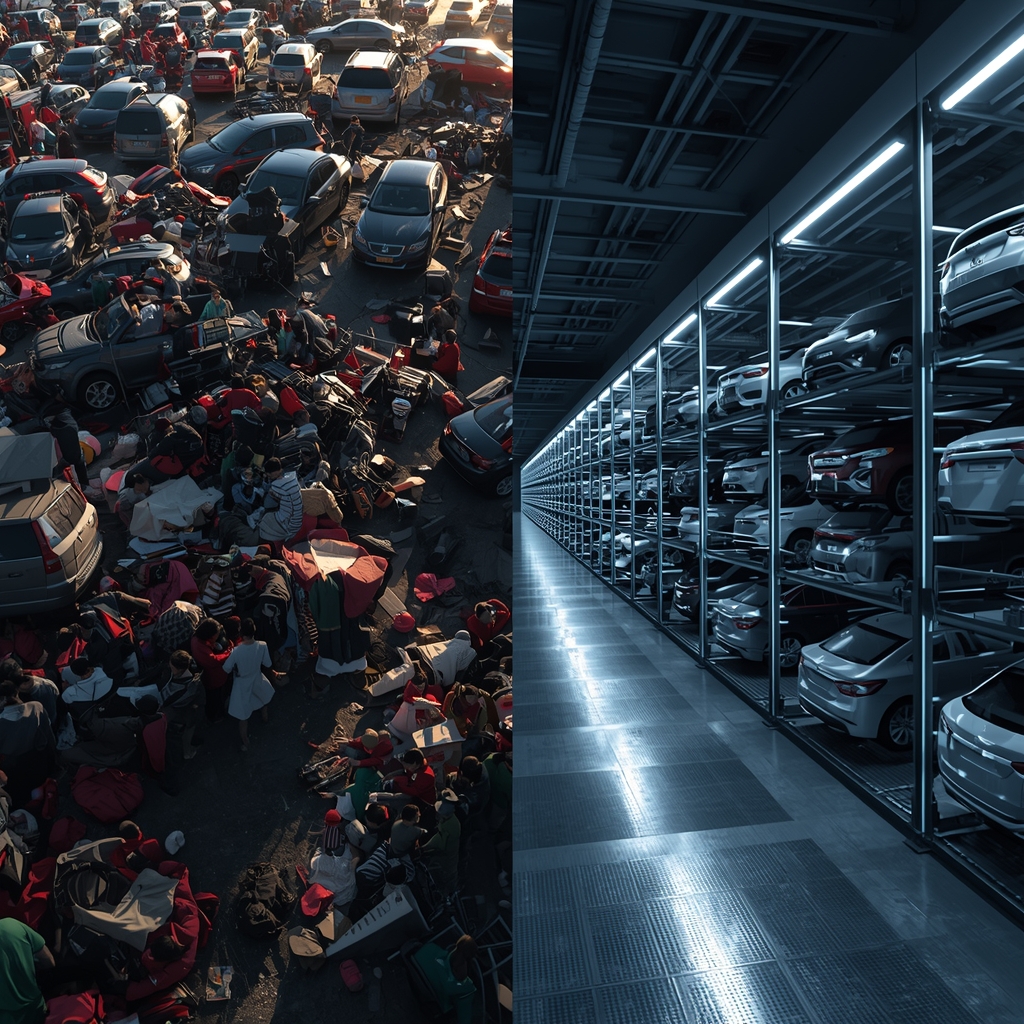
Traditional stadium parking relies on static assumptions: fixed spaces, manual guidance, and human-dependent control. These models may function on low-demand days but collapse under matchday pressure. Long queues, inconsistent routing, and last-minute improvisation define the experience. Smart Parking for Stadiums replaces this fragile model with dynamic control. Sensors, access management, and real-time guidance allow parking capacity to be distributed intelligently rather than consumed randomly. The difference is not technological sophistication alone, but operational resilience. Stadium operators evaluating smart parking systems through our products often realize that technology is only effective when it actively manages peak behavior rather than passively offering space.
Smart Parking for Stadiums in Numbers and Scientific Research
Research consistently confirms that stadiums magnify parking inefficiencies more than any other venue type. According to studies published in Transportation Research Part A, event-based venues experience traffic volumes up to five times higher than daily peak conditions within short arrival windows. The International Transport Forum reports that unmanaged event parking can increase surrounding congestion by 25–40 percent on matchdays. Meanwhile, data from Energy and Buildings journal shows that smart and automated parking systems can reduce vehicle circulation time by up to 60 percent, directly lowering emissions and fuel waste. These findings explain why Smart Parking for Stadiums is increasingly discussed in academic and professional literature as a traffic mitigation strategy, not merely a parking solution. Stadiums that integrate parking logic early into planning outperform those that treat parking as an isolated facility.
Smart Parking for Stadiums and Crowd Safety Management
Crowd safety is inseparable from parking design. When vehicles and pedestrians compete for space, risk increases dramatically. Traditional parking layouts often force fans to walk across traffic lanes, creating conflict points that become dangerous during peak arrivals and departures. Smart Parking for Stadiums improves safety by separating vehicle storage from pedestrian movement. Controlled access zones, clear drop-off points, and reduced internal driving minimize interaction risks. This design approach aligns with crowd management principles used in large-scale event planning. Stadium authorities reviewing real parking project strategies via our projects often identify safety improvements as one of the most valuable outcomes after implementation.
Smart Parking for Stadiums After the Final Whistle
Departure is often more challenging than arrival. When tens of thousands of fans leave simultaneously, poorly designed parking systems create gridlock that can last hours. Smart Parking for Stadiums addresses departure by managing release patterns instead of allowing uncontrolled exits. Vehicles are retrieved in structured sequences, smoothing flow and preventing sudden surges. This controlled departure reduces frustration and improves overall event satisfaction. From an operational standpoint, faster clearance also benefits stadium operations by reducing overtime staffing and easing coordination with city traffic authorities. Stadium managers increasingly recognize that parking performance after the match shapes long-term fan loyalty just as much as the event itself.
Smart Parking for Stadiums as a Revenue and Brand Asset
Stadiums are no longer single-purpose venues. They host concerts, conferences, and community events. Parking quality directly influences the venue’s ability to attract these opportunities. Smart Parking for Stadiums supports flexible event scheduling by reducing turnaround times and improving predictability. Premium parking experiences, reserved access, and integrated ticketing models become feasible when parking is digitally managed. Beyond revenue, parking performance contributes to brand perception. Fans associate smooth arrival and departure with professionalism and organization. Venue operators following industry insights on the SAWA blog often note that parking is one of the most underutilized brand touchpoints in stadium environments.
Smart Parking for Stadiums and Urban Integration
Most stadiums are embedded within cities rather than isolated complexes. Matchday congestion affects residents, businesses, and public services. Smart Parking for Stadiums supports better urban integration by coordinating with surrounding traffic networks. Designated zones, smart routing, and controlled access reduce spillover into residential streets. This coordination improves relationships between stadium operators and municipalities, reducing opposition to large events. Cities increasingly expect venues to manage their parking impact responsibly, making smart parking a prerequisite for future approvals rather than an optional enhancement.
Conclusion: Why Stadiums Reveal the Truth About Parking Systems
Stadiums expose parking systems in their most extreme conditions. What works on a normal day often fails on matchday. Smart Parking for Stadiums succeeds because it is designed for these extremes. It manages flow, reduces uncertainty, protects safety, and integrates parking into the broader event experience. Stadiums that adopt smart parking strategies move beyond damage control and toward operational excellence. In environments where pressure is unavoidable, only systems built for peak reality deliver consistent performance.
Summary
Smart Parking for Stadiums transforms how large venues handle the intense pressure of matchdays. By replacing static parking models with dynamic flow control, smart systems reduce congestion, improve fan experience, and enhance safety. Scientific research confirms that unmanaged event parking significantly increases traffic, emissions, and operational risk. Smart parking solutions address these challenges by guiding vehicles, structuring arrival and departure, and integrating parking into urban traffic networks. For stadium operators, smart parking is not just an infrastructure upgrade but a strategic investment in experience, safety, and long-term venue performance.
References
-
SAWA Parking – Smart Parking Solutions for Large Venues
https://sawaparking.com/Explore More Explore SAWA Parking Systems → -
Shoup, D. (2018). Parking and the City. Routledge.
https://www.routledge.com/Parking-and-the-City/Shoup/p/book/9781138825863
-
International Transport Forum (OECD). Managing Traffic for Major Events.
https://www.itf-oecd.org/ -
Transportation Research Part A: Policy and Practice. Elsevier.
https://www.sciencedirect.com/journal/transportation-research-part-a-policy-and-practice -
Energy and Buildings Journal. Elsevier.
https://www.sciencedirect.com/journal/energy-and-buildings