


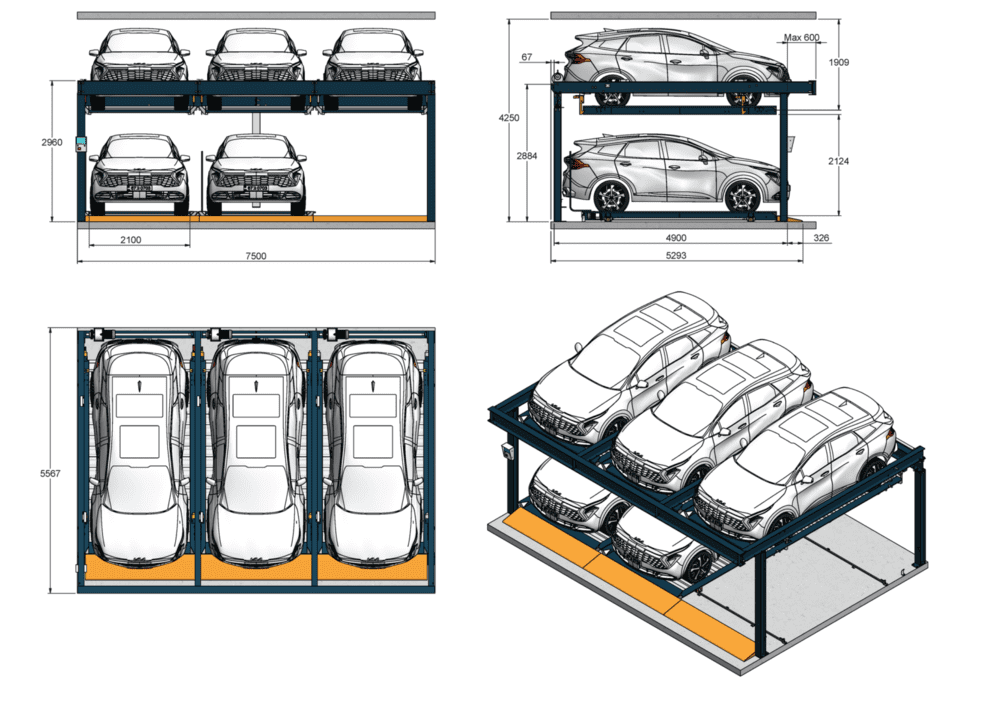
Let’s start with a simple but misleading question:
How many cars can a parking garage hold?
Most people answer this by counting spaces. But capacity is not just about numbers painted on the floor. It’s about how much usable space is lost before the first car even parks. Ramps, drive aisles, turning radii, human error—these invisible elements quietly consume space long before capacity is reached.
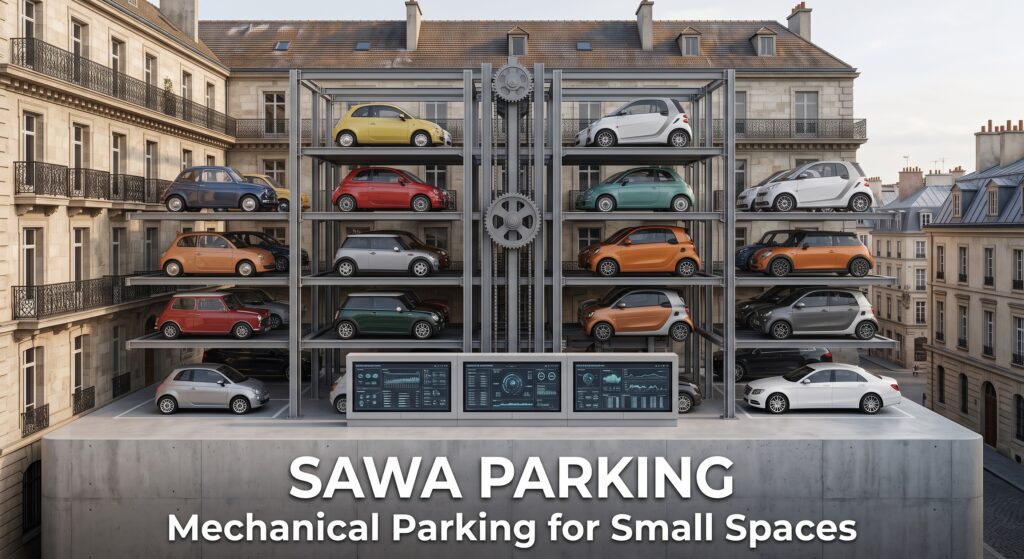
This is where the comparison between manual vs automatic parking capacity becomes critical. The difference is not marginal. It is structural, behavioral, and financial. And once you understand it, you never look at parking layouts the same way again.
1. What Does Parking Capacity Actually Mean?
Before comparing systems, let’s align on definitions.
Parking capacity is not just:
- The number of marked spaces
- Or the maximum cars allowed
True parking capacity includes:
- Space efficiency
- Circulation loss
- Operational reliability
- Usable vs wasted volume
Ask yourself this question:
If 40% of a garage is ramps and circulation, is that really capacity?
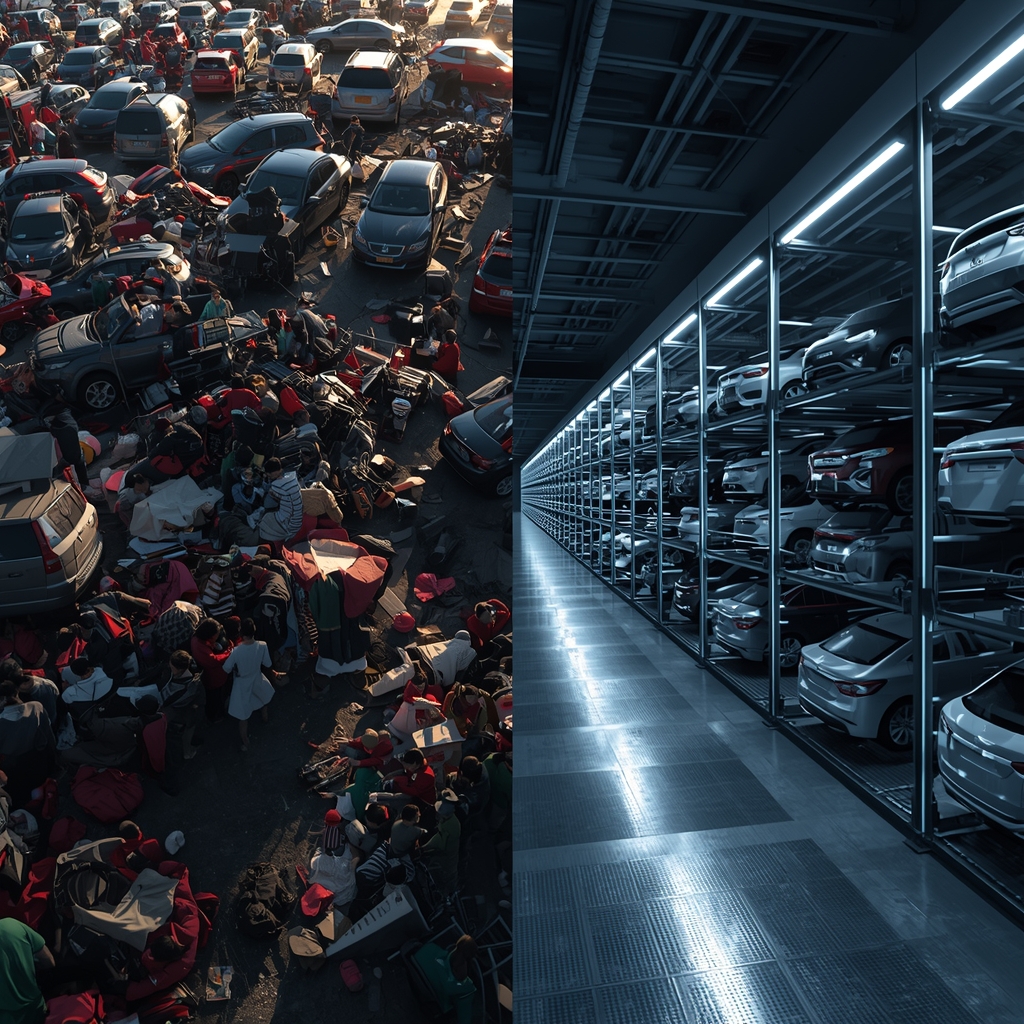
In the debate around manual vs automatic parking capacity, automatic systems redefine capacity by removing elements that exist only to accommodate human driving behavior.
2. Manual Parking Capacity: Designed Around Human Limitations
Manual parking systems are designed for people, not cars.
Humans need:
- Turning space
- Visibility clearance
- Error margins
- Comfort zones
Every one of these needs consumes space. Wide aisles. Gentle slopes. Oversized ramps. These elements do not store cars—they store human uncertainty.
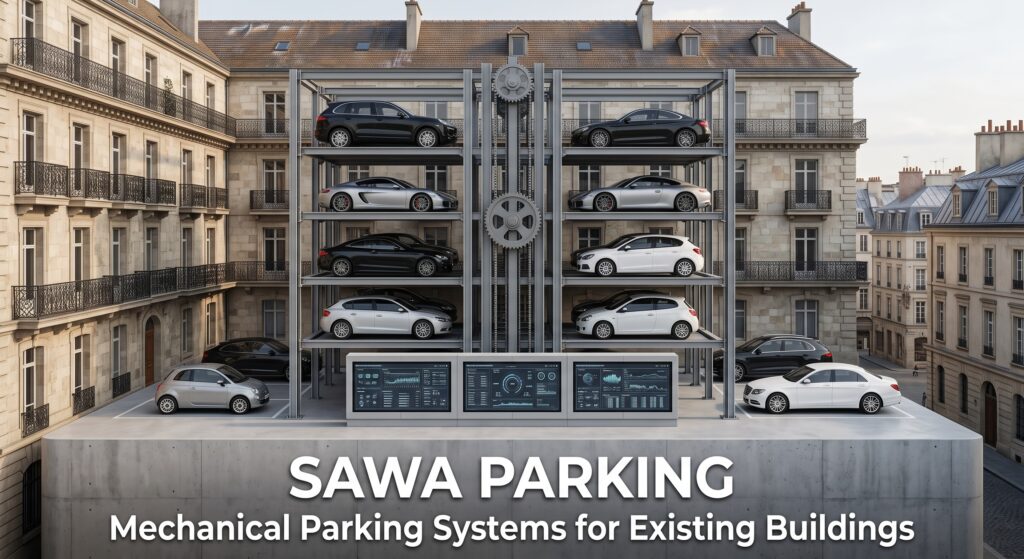
In real projects reviewed by SAWA Parking, manual garages routinely lose 30–45% of their built volume to circulation alone. This loss is accepted as “normal” only because it has always existed.
But is normal the same as efficient?
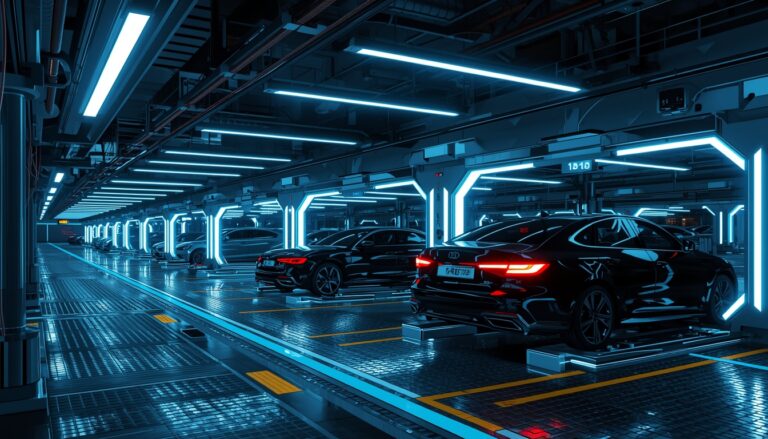
3. Automatic Parking Capacity: Designed Around Geometry, Not Guessing
Automatic parking systems flip the logic completely.
Cars do not drive inside. Humans do not circulate. Movements are calculated, repeatable, and precise. As a result, the system no longer needs to accommodate fear, hesitation, or visibility.
Ask yourself:
What happens to capacity when ramps disappear?
They don’t just free space—they free entire volumes. This is why manual vs automatic parking capacity comparisons often show automatic systems accommodating 60–100% more vehicles within the same footprint.
That difference is not marketing. It is math.
4. The Ramp Problem: Where Manual Parking Loses First
Ramps are the single biggest capacity killer in manual parking.
They:
- Consume vertical space
- Fragment layouts
- Limit future flexibility
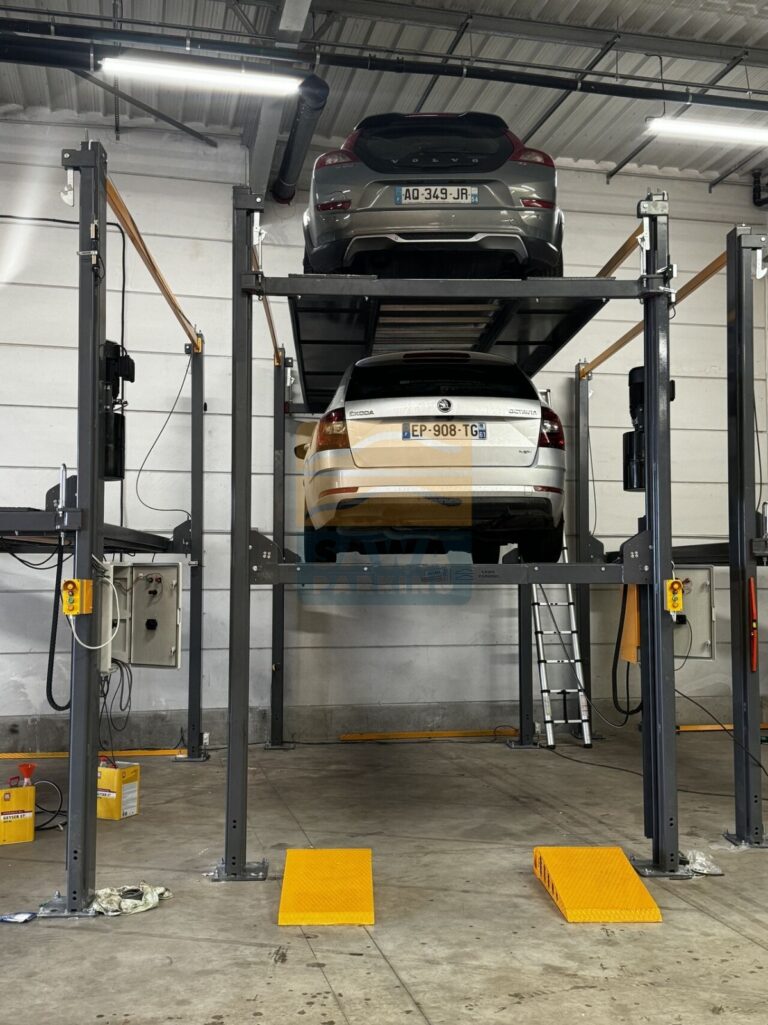
In contrast, automatic systems replace ramps with vertical movement mechanisms that occupy a fraction of the volume.
Here’s a question worth asking:
Would you dedicate an entire floor of a building just to moving people between floors?
That’s exactly what ramps do for cars.
5. Turning Radius vs Fixed Positioning
Manual parking must accommodate turning radii for the worst driver, not the best one. This forces designers to oversize aisles and corner clearances.
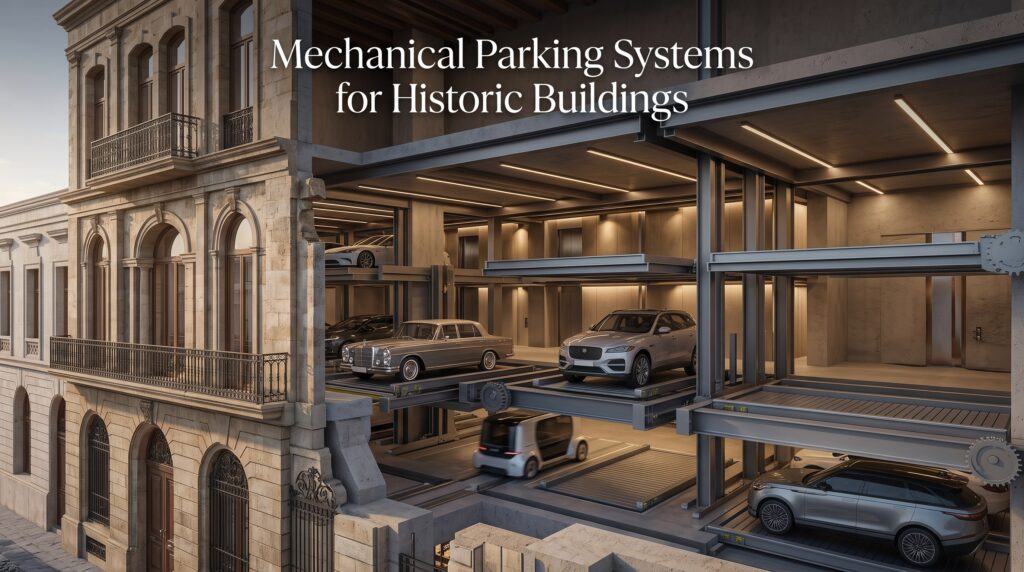
Automatic parking systems do not turn cars—they translate them. Fixed positioning removes the need for extra clearance.
This distinction alone dramatically shifts manual vs automatic parking capacity outcomes, especially in tight urban plots where every meter matters.
6. Ceiling Height and Vertical Efficiency
Another overlooked factor is height.
Manual parking requires:
- Higher floor-to-floor heights
- Sloped ramps
- Clearance for driver visibility
Automatic parking systems can operate with tighter vertical tolerances because cars remain stationary during movement.
Ask yourself:
How many extra floors could a building gain if parking consumed less height?
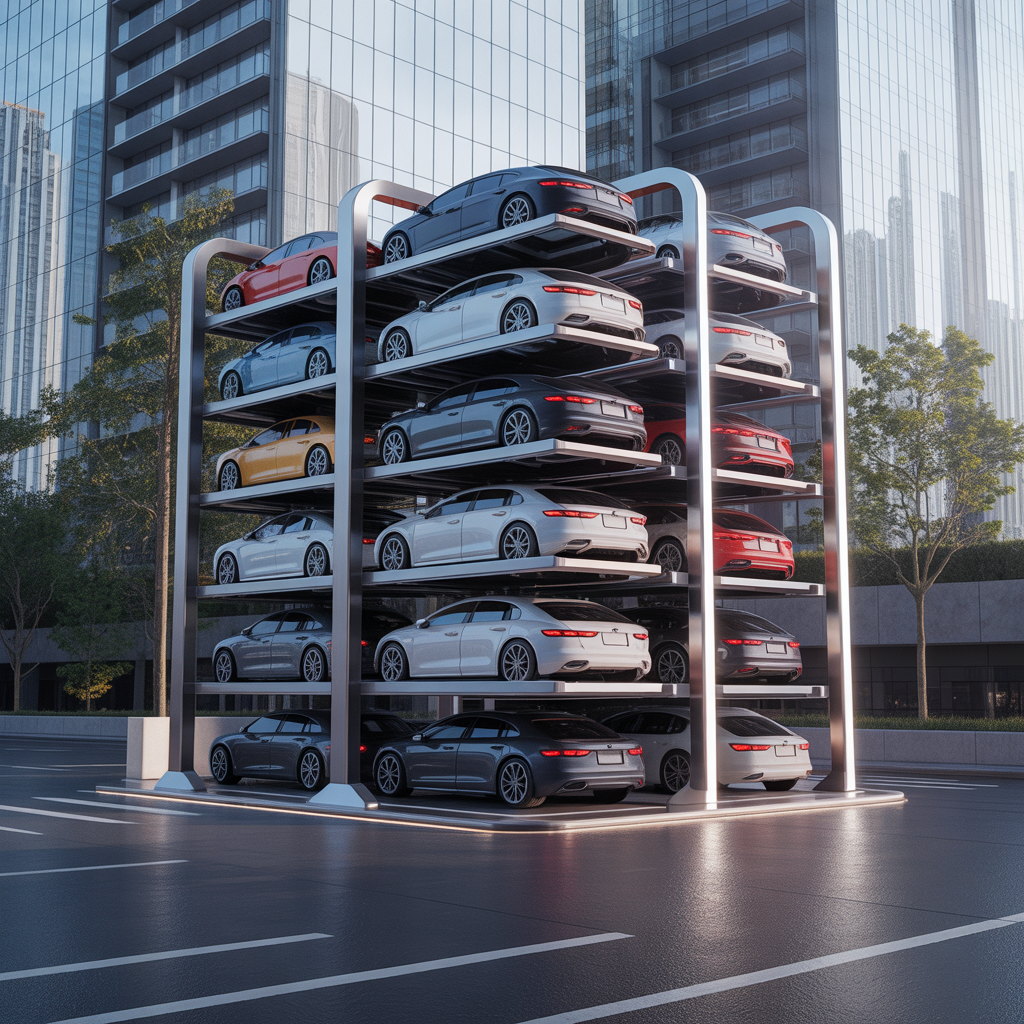
Capacity is not only horizontal—it is vertical.
7. Human Error as a Design Constraint
Manual parking design assumes mistakes.
Drivers misjudge angles. They stop crooked. They leave gaps. Over time, real capacity is always lower than theoretical capacity.
Automatic parking removes variability. Every car is positioned precisely, every time. Real capacity matches design capacity—not in theory, but in daily operation.
This reliability is a core advantage in the manual vs automatic parking capacity discussion.
8. A Question for You Before We Go Further
Pause for a moment.
If you were investing millions in a building, would you:
- Design around human error
- Or eliminate it entirely?
Your answer usually predicts which parking system makes sense.
9. Capacity on Paper vs Capacity in Reality
Let’s address a critical gap that almost no one talks about.
On paper, a manual parking garage may look efficient. The drawings show neat rows, perfect alignment, and maximum utilization. But reality behaves differently. Drivers park imperfectly. Columns block doors. SUVs exceed assumed dimensions. Over time, real capacity drops.
Here’s the question:
If a garage is designed for 100 cars but comfortably fits only 85, which number matters?
Automatic parking systems operate differently. What is designed is exactly what is delivered. There is no deviation caused by human behavior. This is why manual vs automatic parking capacity comparisons must be based on operational reality, not drawings.
10. Capacity Loss Through Circulation Space
Manual parking requires circulation even when cars are stationary. Aisles must remain clear. Ramps must be accessible. Turning paths cannot be blocked.
Ask yourself:
How much space is dedicated purely to movement, not storage?
In many manual garages, circulation consumes more space than the cars themselves. Automatic parking removes circulation almost entirely. Vehicles move only when required, and movement happens within controlled mechanical paths.
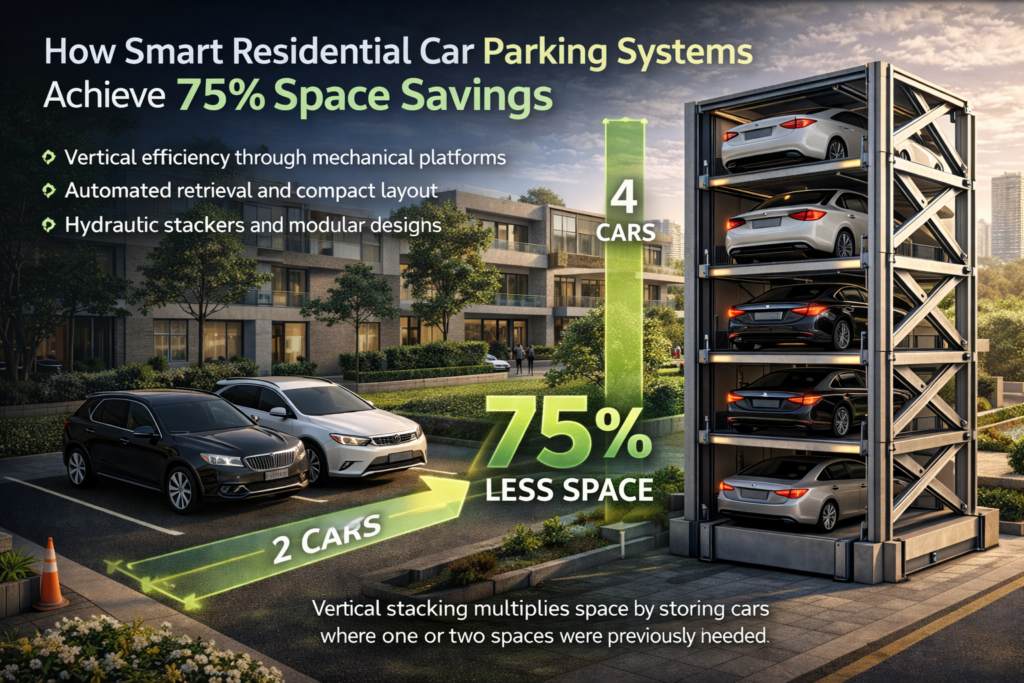
This alone shifts capacity dramatically in favor of automatic systems.
11. Residential Projects: When Capacity Becomes a Selling Point
In residential developments, parking capacity directly affects marketability. Buyers ask two questions almost immediately:
- Is parking guaranteed?
- Is it convenient?
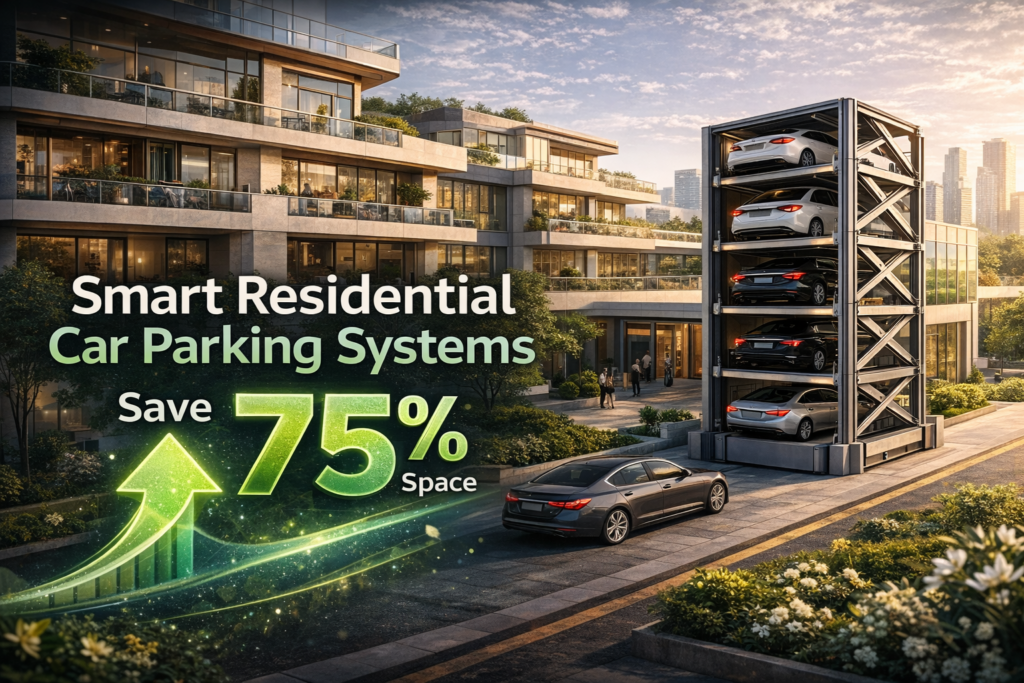
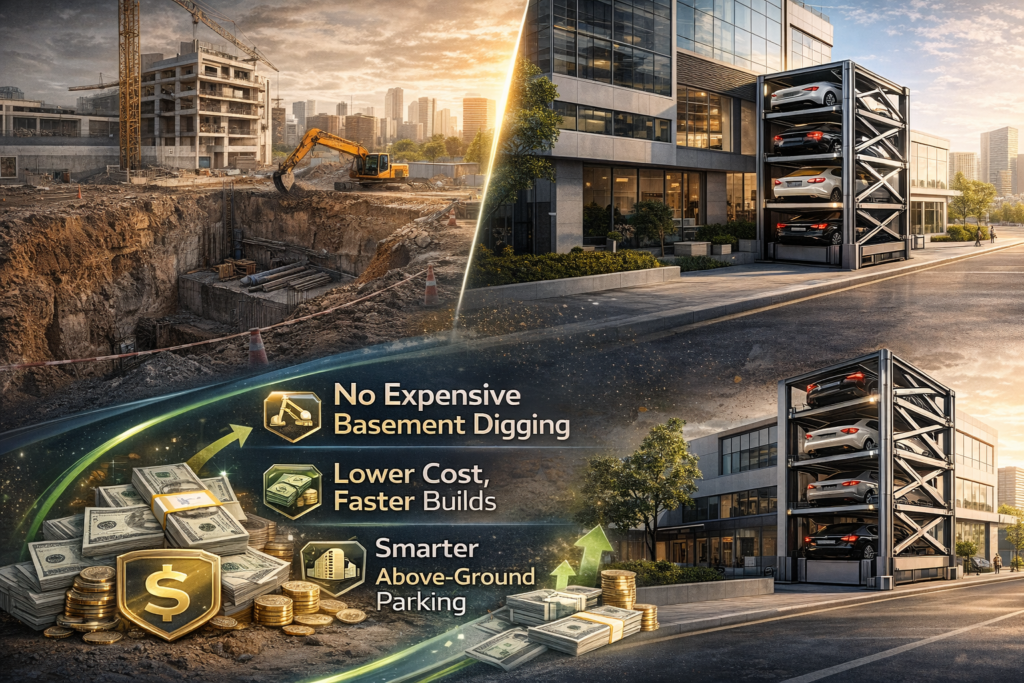
Manual garages often struggle to meet parking ratios without expanding basements or sacrificing usable area. Automatic parking allows developers to increase capacity without increasing footprint.
In the manual vs automatic parking capacity debate, residential projects often see the biggest relative gains because space constraints are strict and user expectations are high.
12. Commercial Projects: Throughput vs Storage
Commercial buildings care about throughput as much as capacity.
A manual garage may technically hold many cars, but if retrieval and exit cause congestion, effective capacity drops. Automatic parking systems manage throughput predictably by sequencing movements.
Ask yourself:
What good is capacity if users cannot access it efficiently during peak hours?
Automatic systems ensure that stored capacity remains usable, even under pressure.
13. Cost per Parking Space: A Different Way to Measure Capacity
Let’s talk economics.
Instead of asking “how many cars,” smart developers ask:
How much does each usable parking space cost?
Manual parking may seem cheaper per square meter, but when you factor in:
- Excavation
- Ramps
- Structural volume
- Lost sellable area
The cost per effective space rises quickly.
Automatic parking often delivers higher capacity at a lower cost per usable space, even if equipment costs are higher. This reframes the manual vs automatic parking capacity discussion as a financial decision, not just a spatial one.
14. Vertical Expansion: When Capacity Grows Without Land
Manual parking is limited by ramps and slopes. Adding more floors increases complexity and height rapidly.
Automatic parking systems scale vertically with less penalty. Additional levels add storage, not circulation. This vertical efficiency becomes critical in dense cities where land expansion is impossible.
Ask yourself:
Would you rather build wider, deeper, or smarter?
15. Retrofitting Existing Buildings
One of the strongest arguments for automatic parking capacity lies in retrofit scenarios.
Existing buildings often cannot expand laterally or excavate deeper. Manual parking upgrades are usually impossible. Automatic systems, however, can be inserted into existing volumes.
In many SAWA Parking projects, automatic parking transformed underperforming garages into high-capacity assets—something manual solutions could never achieve.
16. Flexibility Over Time: Capacity That Adapts
Manual parking is rigid. Once built, layouts rarely change.
Automatic parking systems can be reconfigured, upgraded, or expanded. Capacity can evolve with demand. This adaptability protects long-term value and reduces the risk of obsolescence.
In the manual vs automatic parking capacity comparison, flexibility is often underestimated—but it is one of the most strategic advantages.
17. Safety Margins vs Space Margins
Manual parking designs rely on safety margins for human error. These margins cost space.
Automatic systems rely on sensors and controlled movement. Safety does not require extra space—it requires precision. This fundamental difference allows automatic systems to reclaim volume that manual systems must sacrifice.
18. A Second Question for You
Let’s pause again.
If you had to choose:
- A system that looks efficient on paper
- Or a system that delivers efficiency every day
Which one would you trust with your investment?
19. Capacity Under Peak Conditions: When Theory Is Tested
Let’s talk about peak hours—the moment when any parking system is truly tested.
Morning rush, evening returns, events, or weekend traffic expose weaknesses that drawings never show. Manual parking systems suffer the most during these moments. Congested ramps, blocked aisles, and hesitant drivers reduce effective capacity far below theoretical limits.
Ask yourself:
If a garage holds 200 cars but only 150 can move efficiently at peak time, what is its real capacity?
Automatic parking systems are designed for peak scenarios. Movement is sequenced, conflicts are eliminated, and throughput remains predictable. This stability is a decisive factor in the manual vs automatic parking capacity comparison.
20. Long-Term Performance: Capacity That Survives Daily Use
Capacity is not a one-day measurement. It is tested every single day over years.
Manual parking systems degrade in performance over time. Lines fade. Drivers park more carelessly. Vehicles get larger. What once worked “well enough” slowly becomes inefficient.
Automatic parking systems, on the other hand, do not age behaviorally. Precision does not drift. Slot dimensions remain fixed. Real capacity after five years closely matches capacity on day one.
This consistency is why developers focused on long-term asset value increasingly favor automation.
21. Why Developers Often Underestimate Capacity Loss
Here’s a hard truth.
Many developers underestimate how much capacity is lost in manual parking because:
- Loss is gradual, not immediate
- Complaints appear after handover
- Responsibility shifts to operators
Ask yourself:
Would you rather discover capacity issues before construction—or after residents move in?
Automatic parking forces capacity clarity early. What you design is what you deliver. There is no illusion of efficiency.
22. Manual vs Automatic Parking Capacity in Mixed-Use Projects
Mixed-use developments magnify capacity challenges.
Residential users need predictability.
Commercial users need throughput.
Visitors need clarity.
Manual parking struggles to satisfy all three simultaneously. Automatic parking systems manage allocation dynamically, prioritizing usage based on time and demand.
In mixed-use environments, manual vs automatic parking capacity is not just about space—it’s about control.
23. The Financial Impact of Capacity Decisions
Capacity decisions directly affect:
- Sellable area
- Rental value
- Operating cost
- User satisfaction
Ask yourself:
How much revenue is lost when parking limits occupancy?
Automatic parking often unlocks value not by adding floors, but by converting wasted circulation into usable storage. This shift changes the financial equation of entire projects.
24. Capacity as a Risk Management Tool
Parking is rarely seen as a risk factor—until it fails.
Under-capacity leads to:
- Resident complaints
- Access problems
- Legal disputes
- Reputation damage
Automatic parking reduces these risks by delivering predictable, enforceable capacity. In the manual vs automatic parking capacity discussion, risk reduction is often the most overlooked benefit.
25. Environmental Efficiency and Capacity
Higher capacity in the same footprint also has environmental implications.
Less excavation.
Less concrete.
Less land use.
Automatic parking systems achieve higher density without expanding physical boundaries. This makes capacity efficiency part of sustainability—not just engineering.
26. A Final Question Before the Verdict
Let’s bring this back to you.
If you were choosing between:
- A system that appears efficient
- And one that operates efficiently
Which would you trust with your project, your users, and your reputation?
Final Verdict: Capacity Is About Control, Not Just Space
The comparison between manual vs automatic parking capacity reveals a fundamental truth: capacity is not defined by drawings, but by behavior and control.
Manual parking is built around human limitations. Automatic parking is built around geometry, precision, and predictability. As cities densify and expectations rise, the gap between the two becomes impossible to ignore.
Automatic parking does not simply store more cars.
It delivers usable capacity consistently, day after day, year after year.
And in modern developments, that consistency is what truly defines value.
References :
- SAWA Parking – Smart & Automatic Parking Systems
https://sawaparking.com/
Primary reference based on real project execution, system design, and operational experience. - Mechanical Parking Systems: Design, Safety, and Applications
Heinz-Jürgen Ahrens – Springer
https://link.springer.com/book/10.1007/978-3-662-55831-5 - Parking Structures: Planning, Design, Construction, Maintenance, and Repair
Mary S. Smith & William J. Dunn – Springer
https://link.springer.com/book/10.1007/978-3-319-06179-2 - Parking Design: A Manual for Architects and Engineers
Albert W. Steiss – Wiley
https://www.wiley.com/en-us/Parking+Design%3A+A+Manual+for+Architects+and+Engineers-p-9780471297102