



Introduction: Why Parking Security Is a Growing Urban Concern
Car theft is no longer limited to dark alleys or isolated locations. In modern cities, theft often occurs inside parking garages that appear secure on the surface but suffer from weak control and unrestricted access. Traditional parking systems rely heavily on surveillance and human supervision, both of which are prone to failure.
This reality explains why automatic parking prevents car theft more effectively than conventional solutions. By removing human access and controlling every movement mechanically, automatic parking transforms parking from a vulnerable space into a controlled environment. Understanding this shift requires examining how theft actually happens—and how automation disrupts it.

Restricted Human Access as the First Line of Defense
The most critical difference between manual and automatic parking lies in access. Traditional garages allow drivers, pedestrians, attendants, and sometimes unauthorized individuals to move freely around parked vehicles. This freedom creates opportunity.
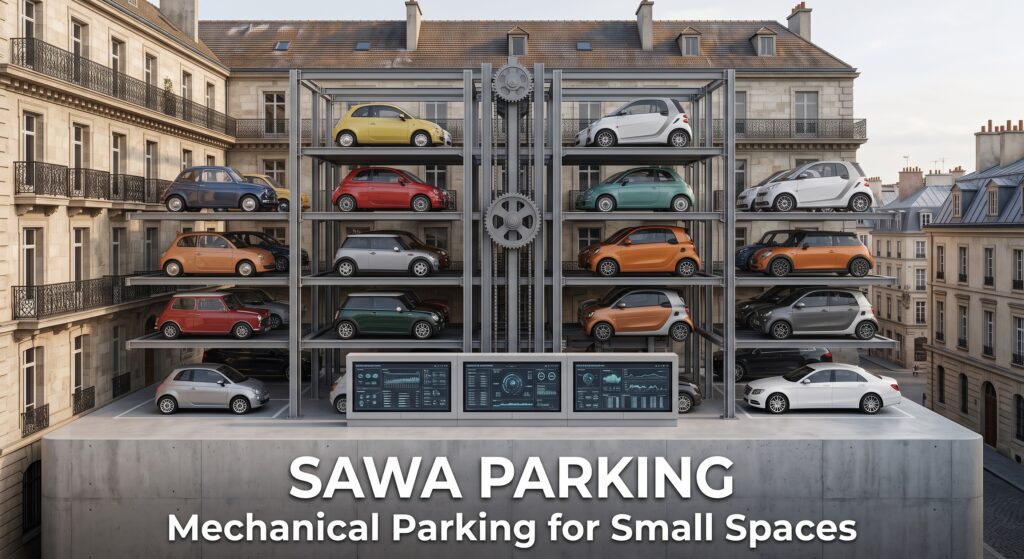
Automatic parking systems eliminate this vulnerability by design. Once the driver exits the vehicle, no one can physically access it until retrieval. There are no aisles to walk through and no doors to test. This restricted access is the foundation of why automatic parking prevents car theft at a structural level, not just through monitoring.

Eliminating Opportunistic Theft
Most car theft is opportunistic rather than planned. Thieves exploit moments of access, distraction, or poor visibility. Manual parking environments provide countless such moments.
Automatic parking removes opportunity entirely. Cars are stored in isolated compartments or stacked environments inaccessible to humans. Even if a thief enters the building, there is simply nothing to reach.
Ask yourself:
How do you steal a car you cannot physically touch?
This simple question explains much of the security advantage.
Controlled Entry and Exit Points
In traditional garages, entry and exit points are numerous and difficult to monitor fully. Vehicles may enter or leave without consistent identity verification.
Automatic parking systems centralize access. Entry and exit occur only at controlled handover points. Identity verification—cards, codes, or digital credentials—is required for retrieval.

This controlled flow ensures that every vehicle movement is authorized. As a result, automatic parking prevents car theft not by reacting to incidents, but by preventing unauthorized movement altogether.
Removal of Key Vulnerabilities
Keys are a common security weakness. In valet or attended parking scenarios, keys change hands multiple times, increasing risk.
Automatic parking systems eliminate this vulnerability. Drivers keep their keys. The system moves the vehicle mechanically. There is no need for trust in individuals.
This single design decision removes one of the most common theft vectors and significantly strengthens overall security.
Surveillance Becomes Secondary, Not Primary
Traditional garages depend heavily on cameras and guards. These tools observe theft—they do not prevent it.
Automatic parking changes the role of surveillance. Cameras become verification tools rather than deterrents. Because physical access is already restricted, surveillance supports system integrity instead of compensating for weak design.
This shift explains why automatic parking prevents car theft more reliably than systems that rely on observation alone.
Protection Against Vandalism and Tampering
Car theft is often accompanied by vandalism or attempted tampering. Scratches, broken locks, and interior damage are common even when theft fails.
Automatic parking eliminates these risks. Vehicles are stored in protected environments without human contact. No one can lean against them, open doors nearby, or attempt forced entry.
For many users, this protection is as valuable as theft prevention itself.
Psychological Deterrence and Risk Perception
Security is not only about physical barriers—it is also about perception. Thieves avoid environments that increase risk and reduce opportunity.
Automatic parking systems are visibly controlled, structured, and inaccessible. This perception alone acts as a deterrent. Thieves are more likely to target locations where escape is easy and access is informal.
By increasing perceived risk, automatic parking prevents car theft before it is even attempted.
Insurance and Liability Implications
From an insurance perspective, reduced theft risk translates into lower claims and more favorable terms. Properties with automatic parking often benefit from improved insurance profiles.
Lower risk also reduces liability exposure for property owners and operators. This financial protection reinforces the value of automated parking as a security investment rather than a convenience feature.
Urban Security in High-Density Environments
In dense urban areas, parking security becomes increasingly difficult to manage manually. High user volume, mixed-use access, and constant movement create complexity.
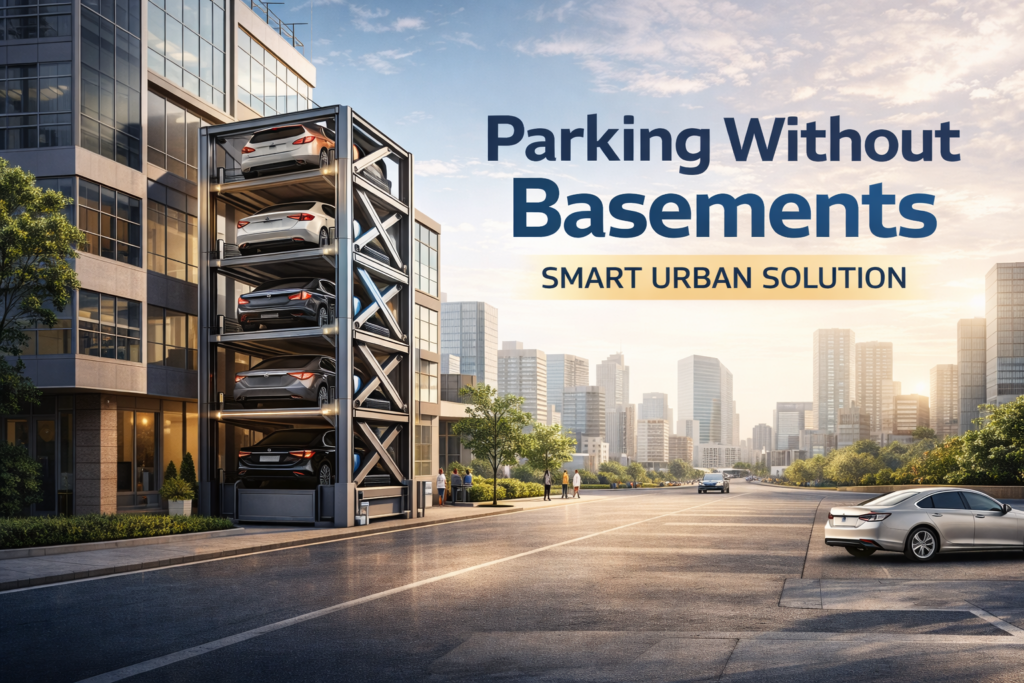
Automatic parking systems simplify this environment by isolating vehicles from human activity. This simplification is critical in cities where traditional security measures struggle to scale.
Once again, automatic parking prevents car theft by reducing complexity, not by adding layers of control.
Conclusion: Security by Design, Not Surveillance
Automatic parking does not prevent car theft by watching more closely—it prevents it by removing access entirely. By eliminating human interaction with parked vehicles, controlling every movement, and reducing opportunity, automated systems create a fundamentally safer parking environment.
In a world where vehicle security risks continue to evolve, the most effective solutions are those that remove vulnerability at its source. This is why automatic parking is increasingly recognized not just as a smart convenience, but as a critical security infrastructure.
References :
SAWA Parking – Smart & Automatic Parking Systems
https://sawaparking.com/
Primary reference based on real-world implementations of automated parking systems and their impact on vehicle security.
Clarke, R. V. (1997). Situational Crime Prevention: Successful Case Studies
Harrow and Heston
https://popcenter.asu.edu/content/situational-crime-prevention-successful-case-studies
Explains how crime is prevented by removing opportunity—a core principle behind automated parking security.

Newman, O. (1972). Defensible Space: Crime Prevention Through Urban Design
Macmillan
https://archive.org/details/defensiblespacec0000newm
Classic academic work linking restricted access and spatial control to reduced crime and theft.
Cozens, P., Saville, G., & Hillier, D. (2005). Crime Prevention Through Environmental Design (CPTED): A Review
Property Management Journal
https://www.researchgate.net/publication/223736190
Academic review showing how controlled environments significantly reduce theft risk.