


When a Driver Chooses Automatic Parking
Imagine this scenario for a moment.
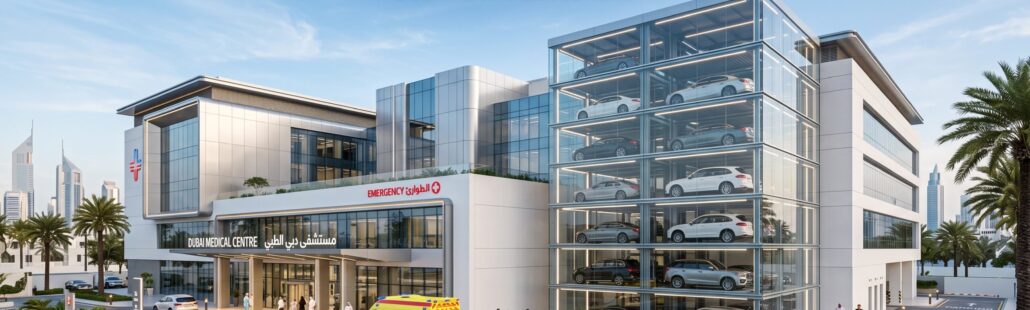
You are driving through a crowded city street, traffic is heavy, parking spots are invisible, and every turn feels like a gamble. Now pause and ask yourself: what if parking was no longer your responsibility? What if, instead of circling blocks, calculating angles, and worrying about scratches, your role simply ended at the entrance? This is exactly where the automatic parking process begins.
Automatic parking is not just a machine that lifts cars. It is a user journey, a sequence of carefully engineered steps designed to remove friction, stress, and inefficiency from one of the most frustrating daily experiences. Yet many people talk about automatic parking without truly understanding how it works from the user’s point of view. So let’s flip the perspective. Instead of explaining technology first, let’s walk through the automatic parking process exactly as a user experiences it — step by step, from street to slot.
1. The Moment of Decision: When a Driver Chooses Automatic Parking
Every automatic parking journey starts with a decision, not a machine.
Picture yourself approaching a building. You see a sign indicating automatic parking. At this moment, a silent question appears in your mind:
Is this easier than parking myself? Is it safe? Will it take longer?
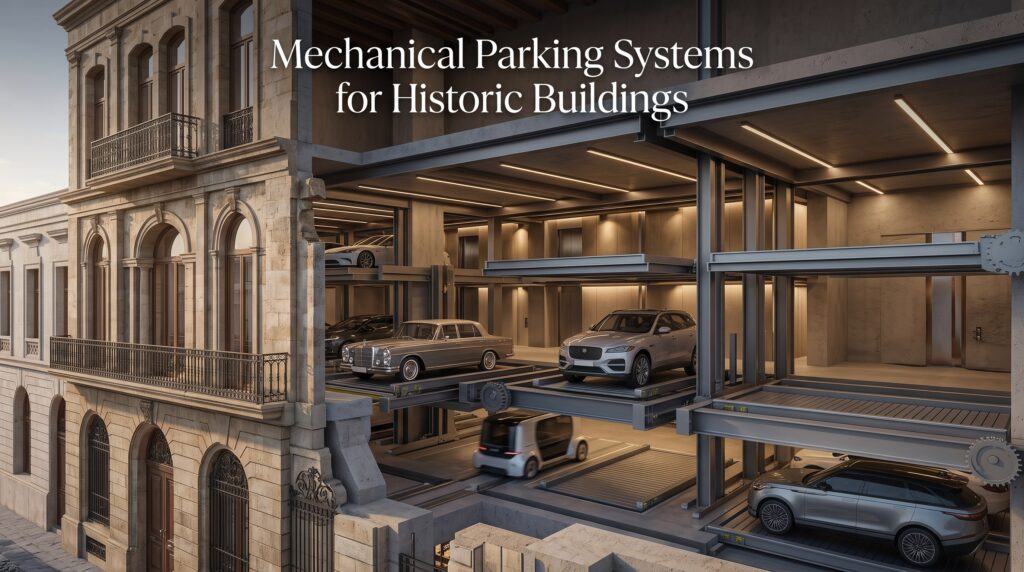
This hesitation is natural. In fact, SAWA Parking has observed across multiple projects that user confidence in the automatic parking process is shaped within the first 10 seconds of interaction. Clear signage, visible structure, and intuitive entry points play a critical role here.
If the entrance feels confusing, users resist. If it feels logical and guided, users follow without thinking. This is why automatic parking design always starts before the machine — it starts at the street.
2. Entry Zone: Where the Automatic Parking Process Actually Begins
Once the driver commits, the next step is the entry zone. This is not just a gate; it is the transition point between human control and system control.
Here’s an important question for you as a reader:
Would you trust a system that immediately takes control without explaining itself?
Exactly. That’s why a proper automatic parking process includes a buffer zone where the driver slows down, aligns the vehicle, and receives visual or digital instructions. Lights, screens, sensors — all of these are part of the communication layer between the user and the system.
In real SAWA Parking installations, this zone is engineered to eliminate ambiguity. The driver knows:
- Where to stop
- When to stop
- What happens next
No guessing. No surprises.

3. Vehicle Positioning: The Most Critical User-Controlled Step
Now comes a key moment in the automatic parking process: vehicle positioning.
Let’s ask a practical question:
What happens if the car is not parked correctly at this stage?
The answer is simple: the entire process slows down or stops. That’s why modern automatic parking systems are designed to guide the user, not test them. Sensors detect wheel position, vehicle size, and alignment. Visual indicators confirm correctness before the system proceeds.
At this stage, the user is still involved, but only minimally. This balance — limited responsibility with clear feedback — is what makes the automatic parking process comfortable rather than intimidating.

4. Exit the Vehicle: The Psychological Shift
This step is often overlooked, yet it is one of the most important moments in the journey.
The driver exits the vehicle.
Pause for a second and think:
How many times have you parked and walked away still worried about scratches, theft, or tight spaces?
In the automatic parking process, this anxiety disappears at this exact moment. Why? Because responsibility shifts completely from the human to the system. The user is no longer part of the equation — and that’s the whole point.
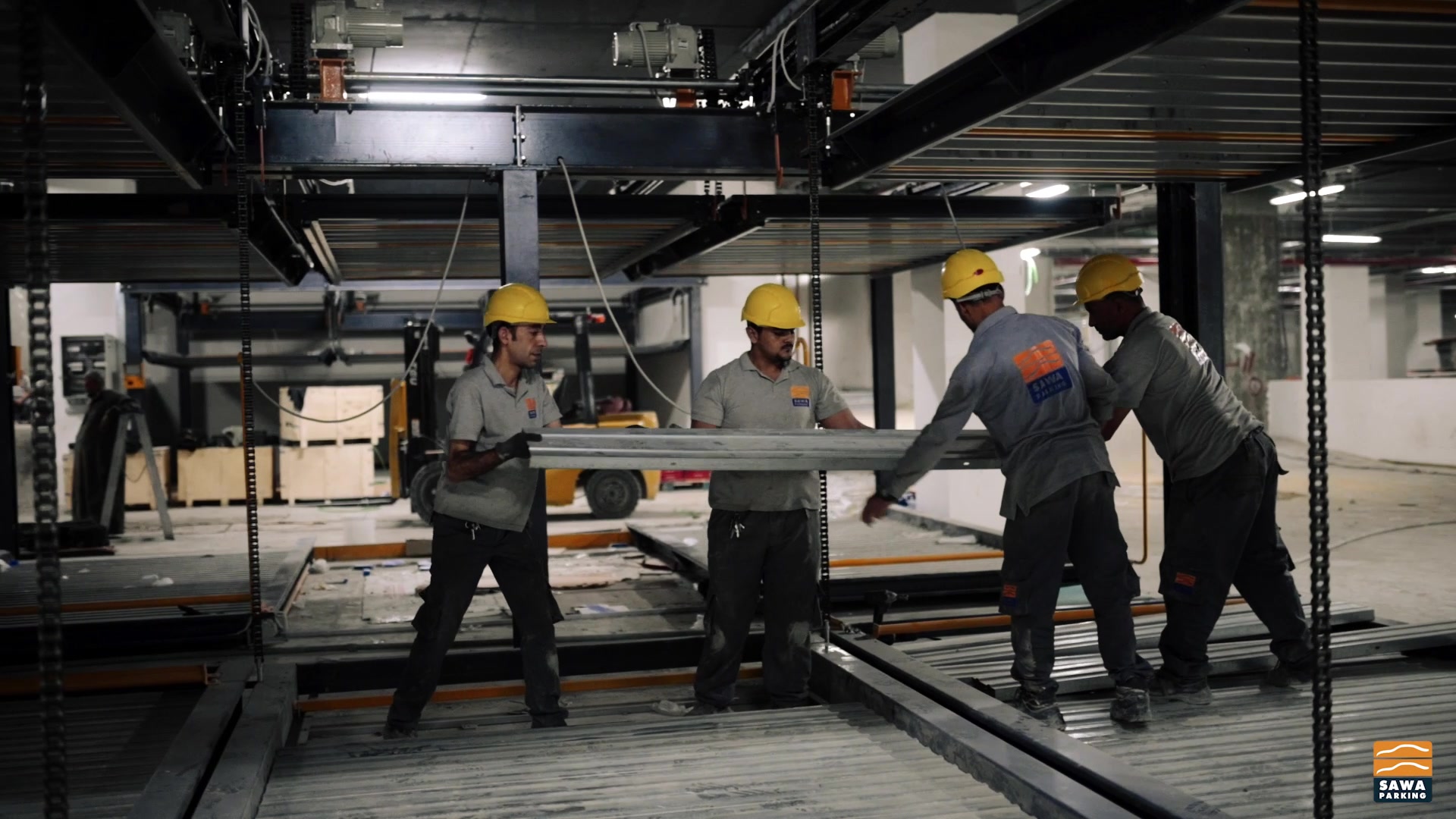
SAWA Parking systems are designed so that once the user exits, the system assumes full responsibility. No human interference. No unpredictable behavior.
5. System Verification: What Happens After the User Leaves
Here’s where most people’s understanding becomes blurry.
After the driver leaves, the automatic parking process does not immediately lift or move the car. Instead, the system performs a verification sequence:
- Vehicle dimensions check
- Weight distribution analysis
- Door and trunk status confirmation
- Safety clearance validation
Ask yourself:
Would you want a system to move your car without checking these things?
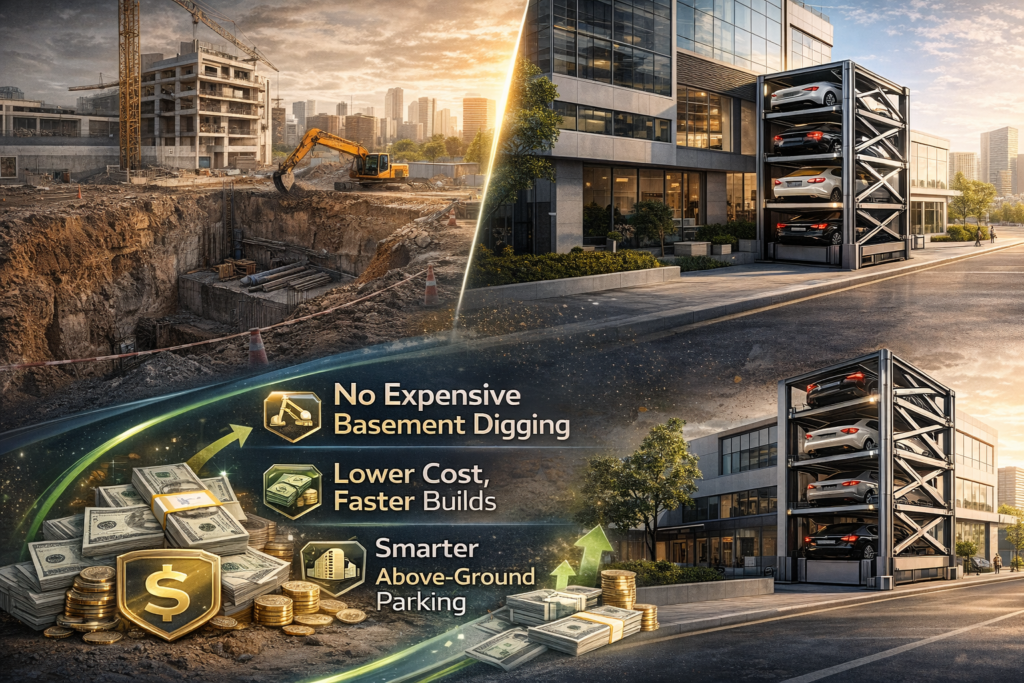
Of course not. This invisible verification layer is what separates professional automatic parking systems from unsafe mechanical shortcuts.
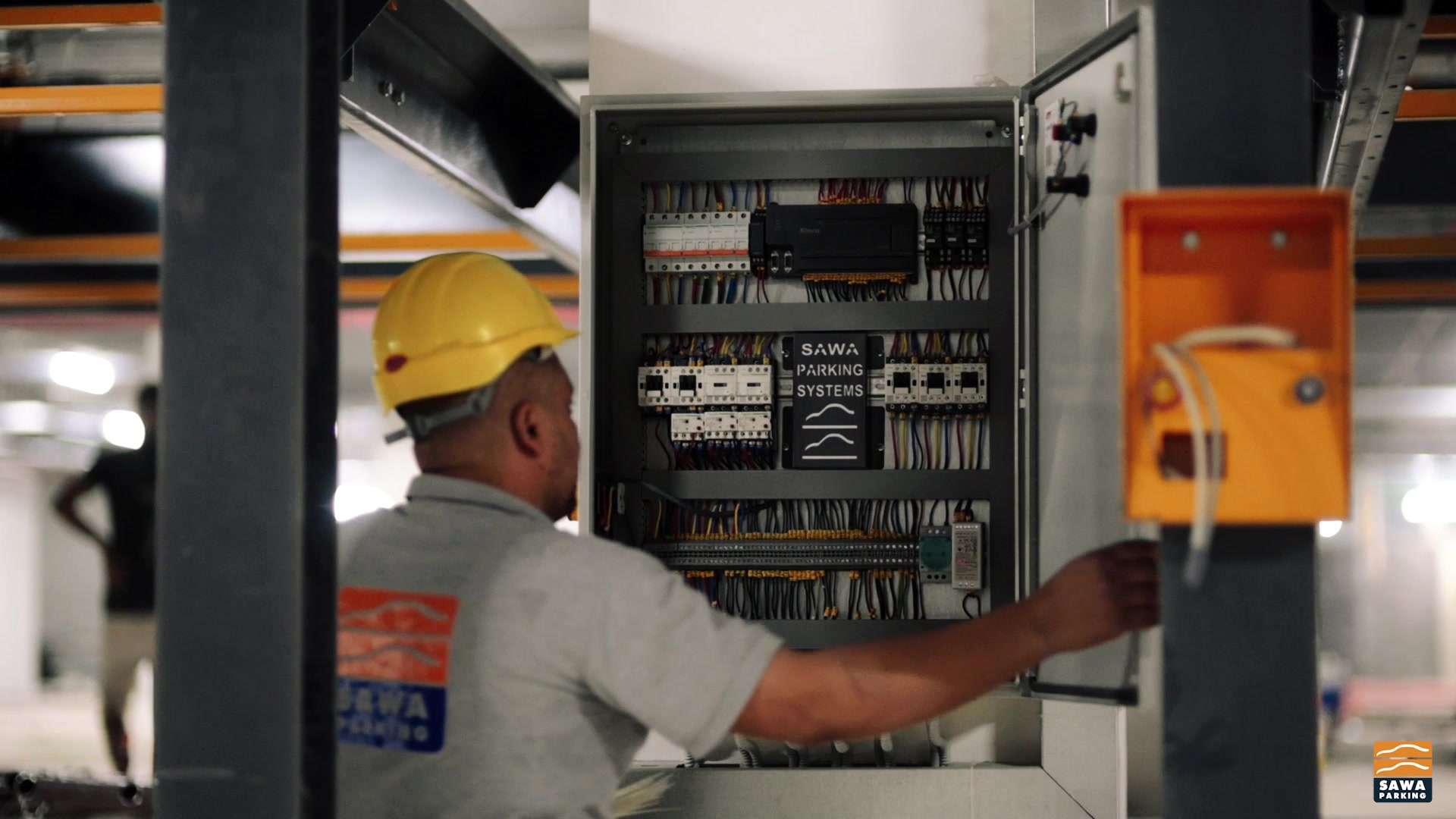
6. The First Movement: When Automation Takes Over
Only after all checks are completed does the system begin movement.
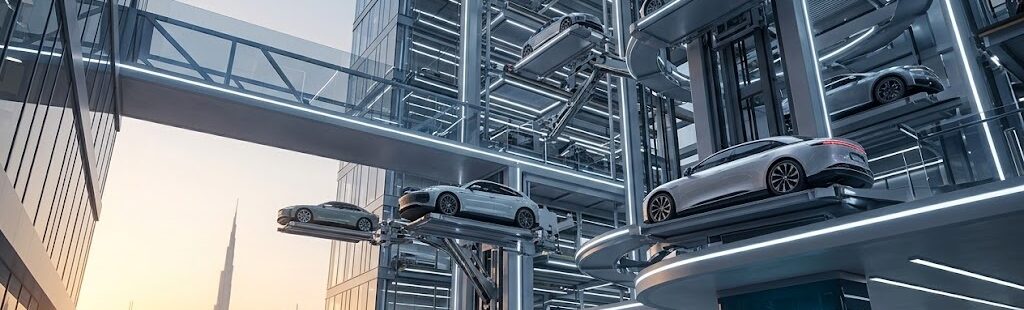
This is the moment most people imagine when they think of automatic parking: lifts moving, platforms sliding, structures rotating. But what matters more than movement is control.
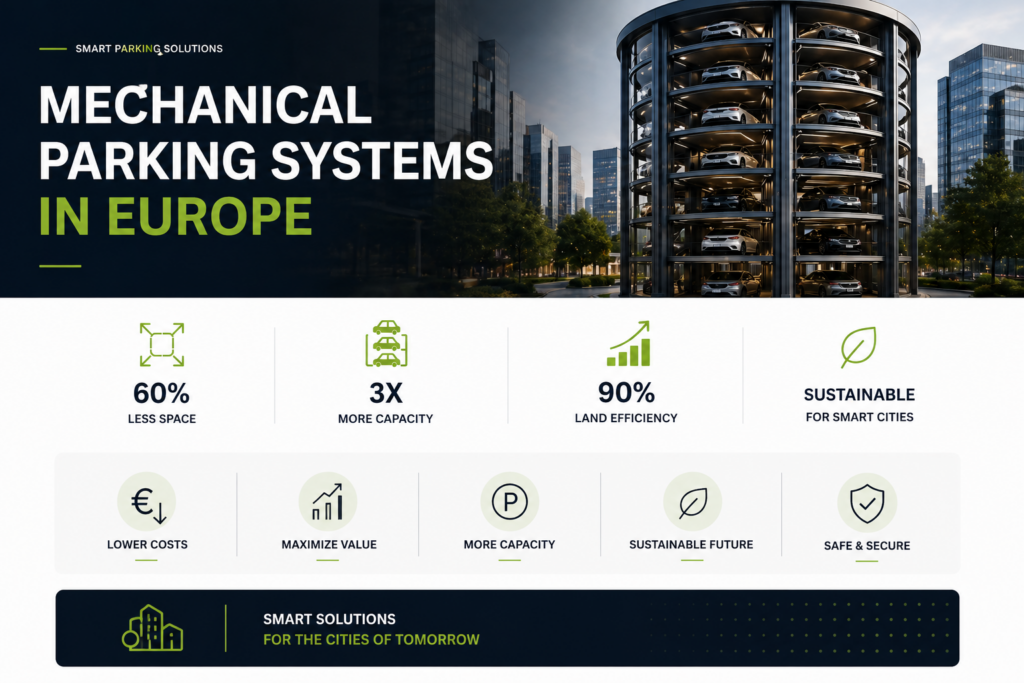
The automatic parking process prioritizes:
- Smooth acceleration
- Controlled speed
- Predictable motion paths
In SAWA Parking projects, movement paths are simulated and tested repeatedly to eliminate abrupt transitions. The goal is not speed alone, but confidence and consistency.
7. Internal Transport: How Cars Move Inside the System
Now let’s go deeper.
Once inside, the vehicle may:
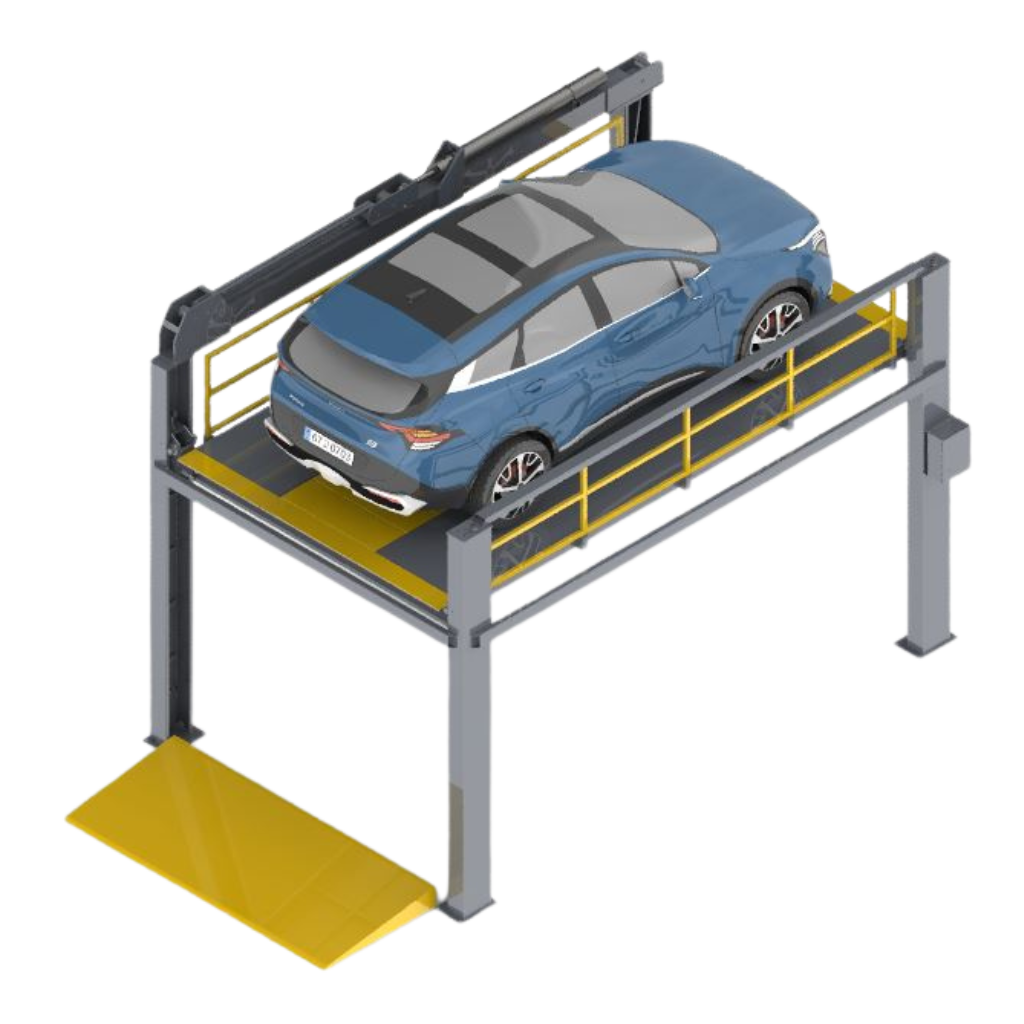
- Be lifted vertically
- Shift horizontally
- Rotate
- Or combine multiple movements
This depends on the type of automatic parking system used. But from the user’s perspective, none of this complexity matters — and that’s intentional.
A well-designed automatic parking process hides complexity. The user doesn’t need to understand the mechanics; they only need to trust the outcome.
This design philosophy is why automatic parking systems outperform manual garages in efficiency and safety when properly implemented.
8. Slot Allocation: Where Data Meets Engineering
Here’s a question few people ask:
How does the system decide where your car goes?
The answer lies in real-time data. The automatic parking process continuously evaluates:
- Available slots
- Vehicle size compatibility
- Retrieval optimization
- Traffic flow inside the system
Your car is not just stored — it is strategically placed to minimize retrieval time later. This dynamic allocation is one of the strongest advantages of automatic parking over manual parking.
9. Storage Phase: When the Car Becomes Passive
Once parked, the car enters a passive state.
No doors opening.
No movement.
No external access.
From a security standpoint, this is critical. Automatic parking systems drastically reduce:
- Theft risk
- Vandalism
- Accidental damage
Ask yourself honestly:
Have you ever worried about leaving your car overnight in a public garage?
The automatic parking process removes this concern entirely.
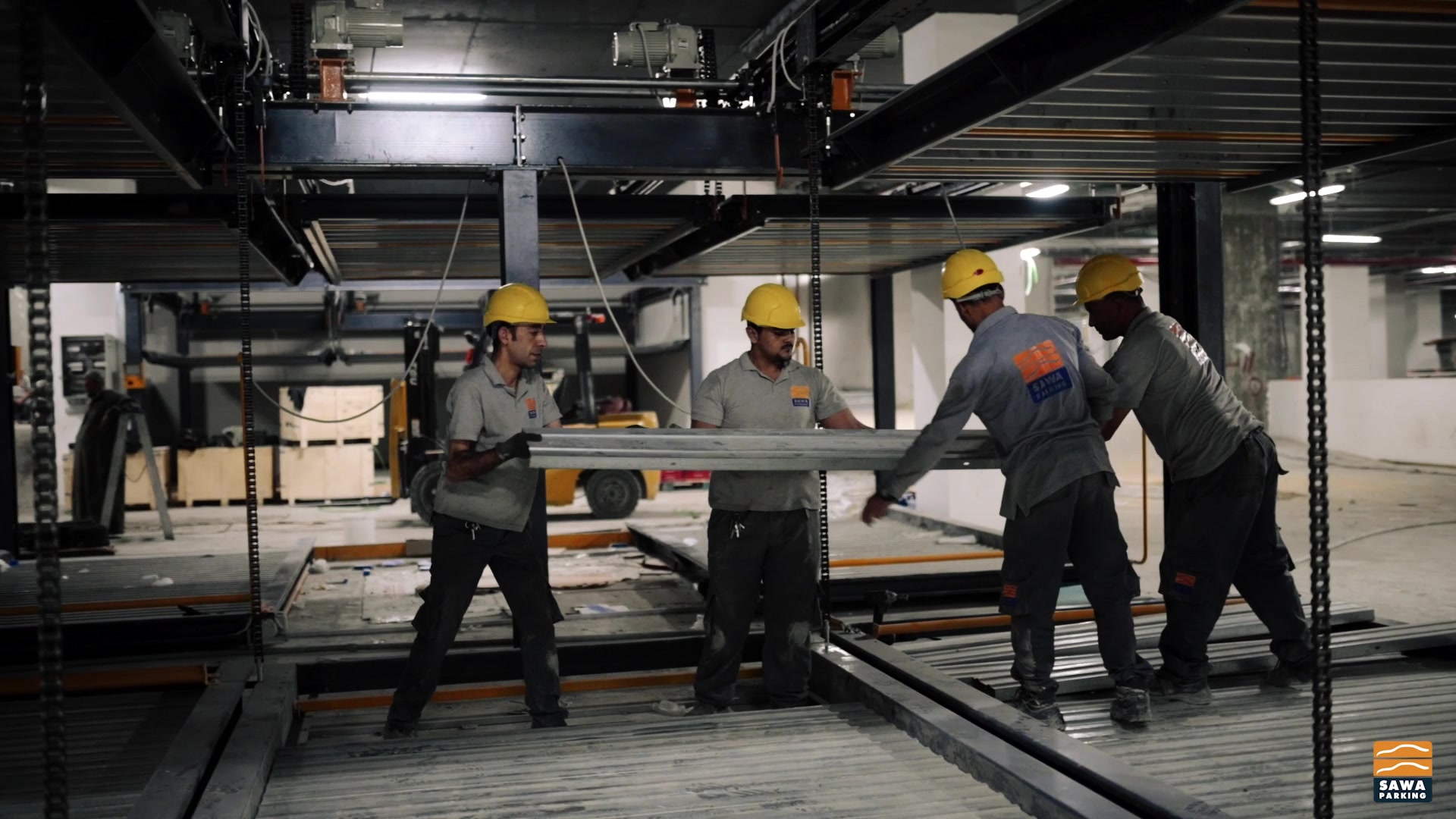
10. The Forgotten Phase: What Happens While You’re Gone
Here’s something most articles never mention.
While your car is parked, the system continues working:
- Monitoring system health
- Reorganizing internal layout
- Preparing for peak retrieval times
The automatic parking process is never idle, even when cars are not moving. This background optimization is what allows automatic systems to outperform human-managed parking in high-demand environments.
-
The Return Journey: When the User Comes Back for the Car
Let’s jump forward in time.
You’ve finished your meeting, shopping, or workday. You walk back toward the building, and a familiar question pops up again:
How long will it take to get my car back?
This is where the second half of the automatic parking process begins — and where user satisfaction is either reinforced or destroyed.
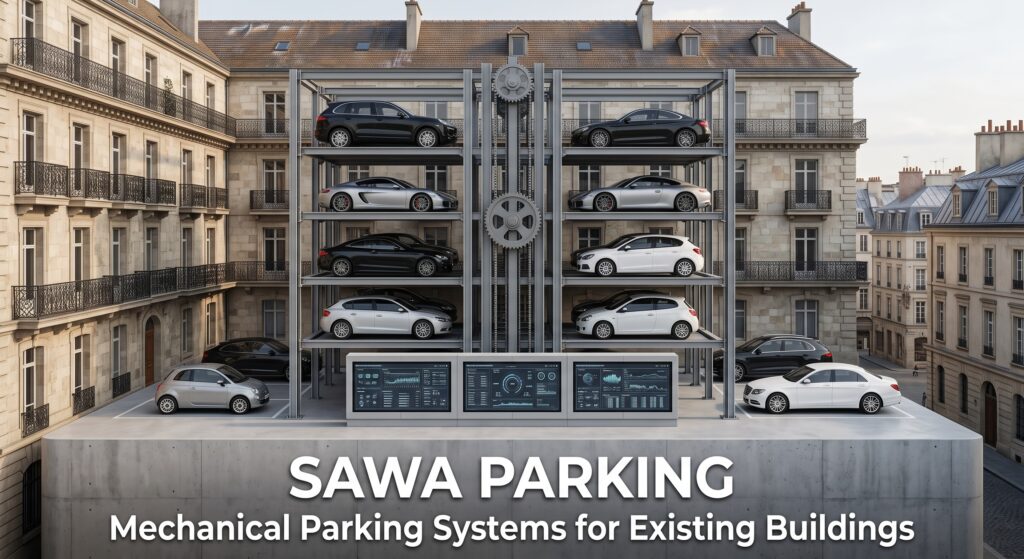
In a well-designed automatic parking system, retrieval is not reactive; it’s predictive. The system already knows peak times, common exit patterns, and average retrieval durations. In many SAWA Parking implementations, the system begins preparing vehicles before users even request them.
The goal is simple: when the user asks for the car, the system is already one step ahead.
12. Vehicle Request: The Trigger That Activates the System
Now pause and imagine yourself standing in front of the interface.
You tap a button, scan a card, or enter a code.
Here’s a question worth asking:
Should a user need instructions at this stage?
Ideally, no. If the automatic parking process is designed correctly, the retrieval interface feels intuitive — almost boring. And that’s a good thing. Confusion at this stage creates anxiety and queues.
Behind the scenes, however, the system is doing something complex:
- Identifying vehicle location
- Clearing movement paths
- Coordinating lifts, platforms, and carriers
But from the user’s perspective, none of this complexity leaks out.
13. Internal Repositioning: Why Your Car Isn’t Always the First to Move
Here’s something that surprises many users.
When you request your car, it may not be the first vehicle that moves.
Why?
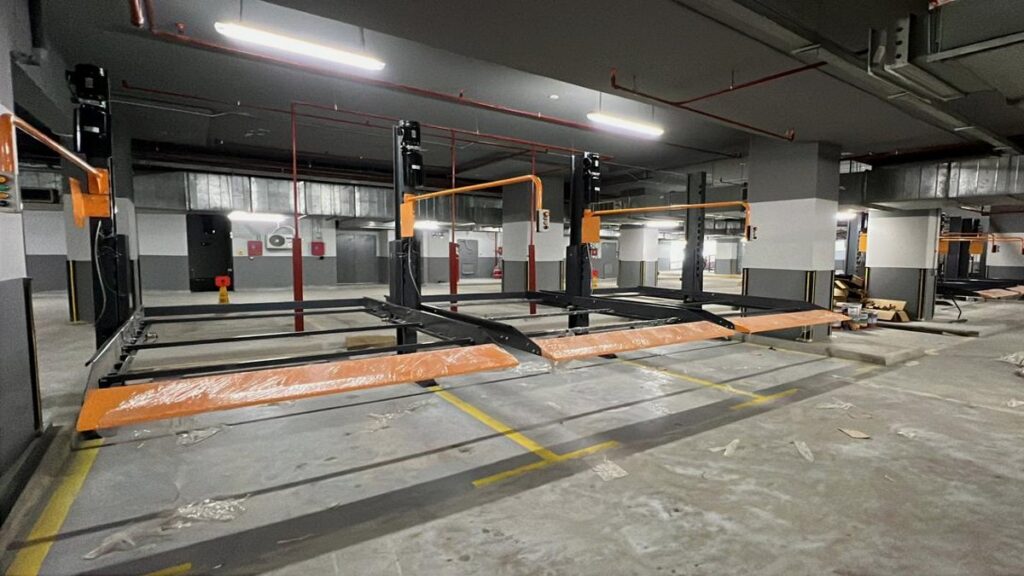
Because the automatic parking process is optimized for system efficiency, not individual impatience. The system may temporarily move other vehicles to clear access routes, balance loads, or optimize traffic inside the structure.
Ask yourself honestly:
Would you rather wait 30 seconds more for a smooth retrieval, or experience a jam caused by rushed movement?
Exactly. Professional systems prioritize stability and predictability over raw speed.
14. The Retrieval Path: Engineering the Exit Before the Entry
One of the biggest mistakes in poorly designed parking systems is focusing too much on entry and ignoring exit flow.
SAWA Parking systems are engineered backwards — starting from exit requirements and designing the internal logic around them. This means:
- No crossing paths
- No conflicting movements
- No deadlocks
The automatic parking process treats retrieval as a critical operation, not an afterthought. Every movement sequence is calculated to reduce stress on components and eliminate user-visible delays.
15. Arrival at the Handover Zone: Reintroducing the Human
Your car arrives.
And here’s another subtle but important moment: the system must reintroduce control to the human smoothly.
Ask yourself:
How many systems fail at the handover between automation and people?
This is where visual confirmation, clear signals, and safe positioning matter. The car must be:
- Fully stationary
- Correctly aligned
- Safely accessible
Only then does the automatic parking process release the vehicle to the user.
16. What Happens If Something Goes Wrong? (The Question Everyone Thinks About)
Let’s address the elephant in the room.
What if there’s a power cut?
What if a sensor fails?
What if someone presses the wrong button?
These questions are not signs of doubt — they are signs of intelligence.
A professional automatic parking process includes:
- Emergency stop protocols
- Manual override access (restricted and controlled)
- Redundant safety systems
- Backup power solutions
In SAWA Parking projects, failure scenarios are designed, not ignored. Systems are tested under abnormal conditions long before real users ever interact with them.
17. Human Error vs System Control: Why Automation Wins
Let’s flip the conversation.
How many parking accidents happen every day because of:
- Poor visibility
- Tight spaces
- Fatigue
- Distraction
Now ask yourself:
Is a tired human really better at parking than a calibrated system?
The automatic parking process removes human error from the most damage-prone part of the journey. No steering corrections. No misjudged angles. No door scratches.
Automation doesn’t replace people — it protects them from unnecessary risk.
18. Why Users Adapt Faster Than You Think
One common myth is that users resist automatic parking.
Reality says otherwise.
In most SAWA Parking projects, users fully adapt within two to three uses. Why? Because the process reduces effort instead of increasing it. Humans naturally adopt systems that make their lives easier — especially when the learning curve is short.
The automatic parking process succeeds not because it is advanced, but because it is forgiving.
19. Automatic Parking vs Manual Parking: A User Perspective
Let’s make this personal.
Think about the last time you parked manually:
- Searching for space
- Adjusting mirrors
- Reversing twice
- Hoping no one hits your door
Now compare that to:
- Stop
- Exit
- Walk away
Which experience would you repeat tomorrow?
This is why automatic parking is not a luxury feature anymore — it’s becoming a user expectation in high-density developments.
20. The Hidden Benefit: What Users Don’t See but Feel
Here’s a subtle question:
Why do people feel calmer in buildings with automatic parking, even if they can’t explain why?
Because the automatic parking process removes uncertainty.
No noise.
No traffic jams.
No chaotic movement.
Users may not articulate it, but they feel the difference — and that feeling translates directly into perceived project quality.
21. How the Automatic Parking Process Impacts the Entire Building
Parking doesn’t exist in isolation.
When parking works smoothly:
- Lobbies are calmer
- Security improves
- Traffic around the building decreases
- Property value increases
SAWA Parking projects consistently show that optimizing the automatic parking process has ripple effects across the entire development.
Parking is infrastructure — and infrastructure shapes behavior.
22. A Final Question for You as a Reader
Before we conclude, let’s turn the question back to you.
If you were designing a building today:
- Would you want users stressed before they even enter?
- Or relaxed before they reach the lobby?
The answer usually decides whether automatic parking is treated as an optional feature or a core system.
23. Real-Life Use Cases: Where the Automatic Parking Process Truly Shines
Let’s stop talking in theory for a moment and ask a very practical question:
Where does the automatic parking process actually make the biggest difference?
The answer is simple: places where parking pressure is constant and mistakes are expensive.
In residential towers, users return home tired. They don’t want narrow ramps or blind corners. The automatic parking process turns parking into a background action — something that happens without effort. In commercial buildings, time is money. Faster turnover and predictable retrieval times improve daily operations. And in mixed-use developments, where residential, retail, and offices coexist, automatic parking creates order where chaos would normally dominate.
Across SAWA Parking projects, these use cases repeat themselves because the problem is universal — space is limited, and human patience is even more limited.
24. Automatic Parking in High-Traffic Urban Areas
Now imagine a dense city center.
Cars line the streets. Drivers double-park. Traffic slows not because of volume, but because people are searching for parking. Here’s the question:
What if parking stopped stealing time from the street?
The automatic parking process does exactly that. By removing the search phase, vehicles enter, stop once, and disappear from circulation. No looping. No hesitation. No random braking.
Urban planners increasingly recognize that automatic parking is not just a building feature — it is a traffic management tool. Every car that parks efficiently frees space on the road for movement.
25. Automatic Parking vs Manual Parking: A Capacity Comparison
Let’s compare honestly.
In a traditional manual garage:
- 30–40% of space is lost to ramps and circulation
- Human error increases spacing requirements
- Traffic conflicts reduce flow
Now ask yourself:
Why would anyone design like this today?
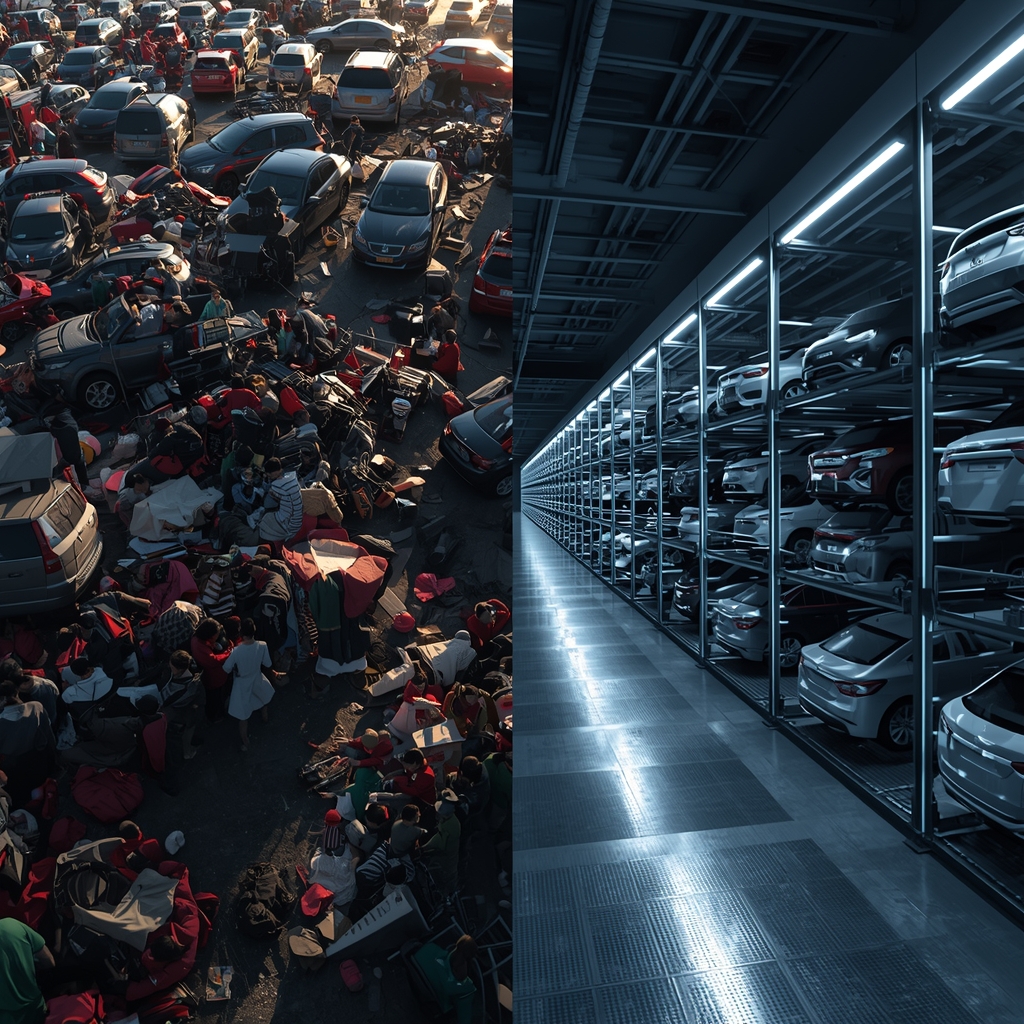
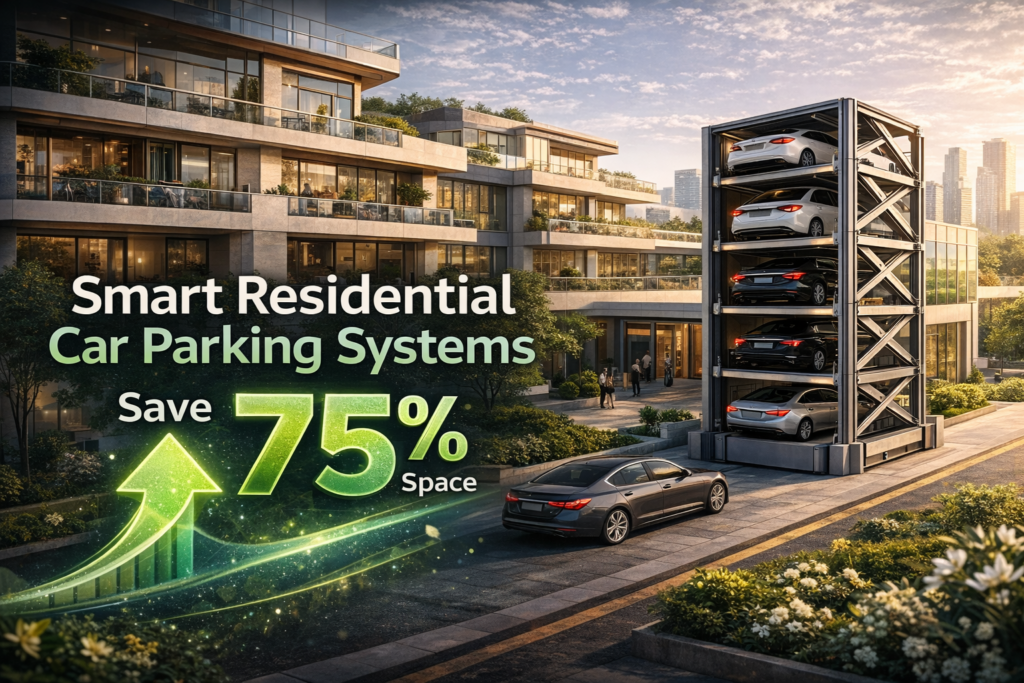
The automatic parking process eliminates ramps entirely. Cars move only when necessary. Slots are sized precisely. The result is significantly higher capacity within the same footprint.
This is not marketing — it’s physics and geometry. And it’s why automatic systems consistently outperform manual garages in constrained sites.
26. The Human Behavior Factor: Why Users Change Their Habits
Here’s an interesting observation from real projects. After using automatic parking for a short period, users stop asking questions. They stop watching the system. They stop worrying. Parking becomes invisible.
Ask yourself:
When was the last time you thought about an elevator working? Exactly. That’s the level of acceptance automatic parking reaches when the process is well designed. The automatic parking process succeeds when it fades into the background of daily life.
27. What Happens During Peak Hours? (The Stress Test)
Peak hours expose weak systems. Morning rush. Evening returns. Event-based spikes. Poorly designed parking systems collapse under pressure. But a robust automatic parking process anticipates these patterns.
SAWA Parking systems are configured to:
- Pre-position vehicles
- Balance internal load
- Reduce conflicting movements
Here’s the key question:
Is your parking system reacting… or predicting? Prediction is what separates premium systems from basic ones.
28. Automatic Parking and Property Value: The Hidden Connection
Let’s talk value.
Would you pay more for an apartment where:
- Your car is protected
- Parking is guaranteed
- Retrieval is predictable
Most people would — even if they don’t say it out loud.
The automatic parking process increases property value not by being flashy, but by removing daily friction. Developers who understand this treat parking as part of the user experience, not just compliance.
29. Security and Theft Prevention Through Process Design
Car theft rarely happens because of bad luck. It happens because of access.
Automatic parking removes access entirely. No keys left inside. No human roaming garages. No opportunity.
Ask yourself:
How do you steal a car you can’t reach?
The automatic parking process turns vehicles into stored assets, not exposed objects. This is why high-end developments increasingly adopt automation as a security layer — not just a convenience.
30. Why Some Automatic Parking Systems Fail (And Others Don’t)
Now let’s be honest.
Not all automatic parking systems succeed.
Failures usually happen when:
- User journey is ignored
- Systems are overcomplicated
- Maintenance is an afterthought
- Design prioritizes machinery over people
The automatic parking process must be designed holistically. SAWA Parking approaches projects from the user backward, not the machine forward — and this difference defines long-term success.
31. The Question Every Developer Eventually Asks
At some point, every developer asks:
Is automatic parking worth it?
The better question is:
Can your project afford not to have it?
As cities densify, land values rise, and users demand frictionless experiences, the automatic parking process moves from optional to expected.
32. Final Reflection: Parking as Part of the Urban Experience
Parking is often the first and last interaction people have with a building.
If that interaction is stressful, the building feels stressful.
If it is smooth, the building feels premium.
The automatic parking process shapes perception more than most people realize.
Conclusion: From Street to Slot Is About Trust
The journey from street to slot is not about technology alone — it is about trust. Trust that the system understands the user, anticipates needs, and removes unnecessary decisions.
The automatic parking process succeeds when users stop thinking about it entirely. And when that happens, parking stops being a problem — and starts becoming infrastructure that quietly supports modern life.
The automatic parking process is not a single action — it is a complete journey. From the street to the slot, and back again, every step matters. The success of automatic parking lies not in how advanced the technology is, but in how naturally users move through it.
Real-world implementations by SAWA Parking demonstrate that when the process is designed around people — not machines — automatic parking becomes intuitive, trusted, and indispensable. Parking stops being a problem. And starts becoming part of the solution.
References :
- SAWA Parking – Automatic & Smart Parking Systems
https://sawaparking.com/
Primary reference based on real projects, system design experience, and implemented automatic parking solutions. - Mechanical Parking Systems: Design, Safety, and Applications
Heinz-Jürgen Ahrens – Springer
https://link.springer.com/book/10.1007/978-3-662-55831-5
Comprehensive technical reference covering automated and mechanical parking system processes. - Parking Structures: Planning, Design, Construction, Maintenance, and Repair
Mary S. Smith & William J. Dunn – Springer
https://link.springer.com/book/10.1007/978-3-319-06179-2
Authoritative guide on parking system planning and operational efficiency. - Parking Design: A Manual for Architects and Engineers
Albert W. Steiss – Wiley
https://www.wiley.com/en-us/Parking+Design%3A+A+Manual+for+Architects+and+Engineers-p-9780471297102
Industry-standard reference linking parking design with user experience and flow.