


Why Parking Systems Had to Evolve
Parking was never meant to be complex. In its earliest form, it was simply an empty space where a vehicle could stop. But as cities grew, cars multiplied, and land became scarce, parking quietly transformed into one of the most complex components of urban infrastructure.
This transformation did not happen overnight. The evolution of automatic parking systems is the result of decades of pressure—spatial, economic, behavioral, and technological. Each stage of development responded to a specific failure in the previous one. Understanding this evolution is not about nostalgia; it is about understanding why modern parking systems look the way they do today.
Ask yourself this question: If traditional parking worked perfectly, would automatic parking even exist?
1. The Era of Surface Parking: When Space Was Abundant
In the earliest stage of urban development, parking was simple because cities were small. Vehicles were few, land was cheap, and streets were wide enough to absorb inefficiency. Surface parking dominated because it required minimal planning and zero technology.
At this stage, parking systems did not need to evolve. There was no pressure to optimize space or manage behavior. Cars stopped wherever space was available, and urban flow adjusted naturally.
However, this model carried a hidden weakness: it relied entirely on abundance. Once abundance disappeared, the model collapsed. The evolution of automatic parking systems begins exactly at the moment when cities lost the luxury of excess space.
2. Multi-Story Parking Structures: Vertical Expansion Begins
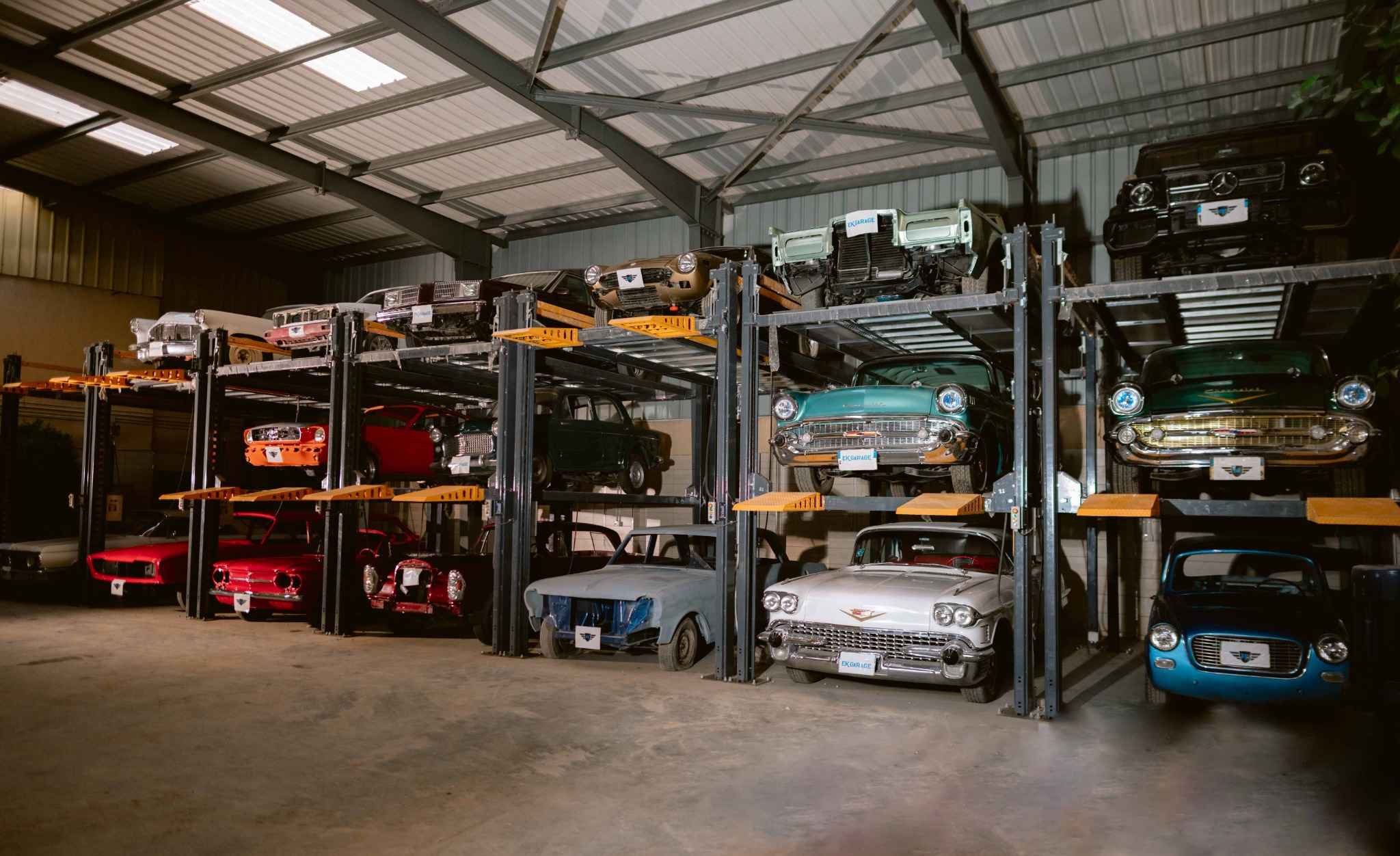
As cities densified, parking moved upward. Multi-story garages emerged as a logical solution to limited land. These structures represented the first major leap in parking system design.
Yet they also introduced complexity. Ramps, circulation paths, turning radii, and human safety requirements consumed enormous volumes. Parking was no longer just storage—it became movement.
Ask yourself:
Why did parking buildings grow so large without increasing usable capacity proportionally?
Because they were designed around human driving behavior. This inefficiency planted the seeds for the next stage in the evolution.
3. Mechanical Assistance: The First Step Toward Automation
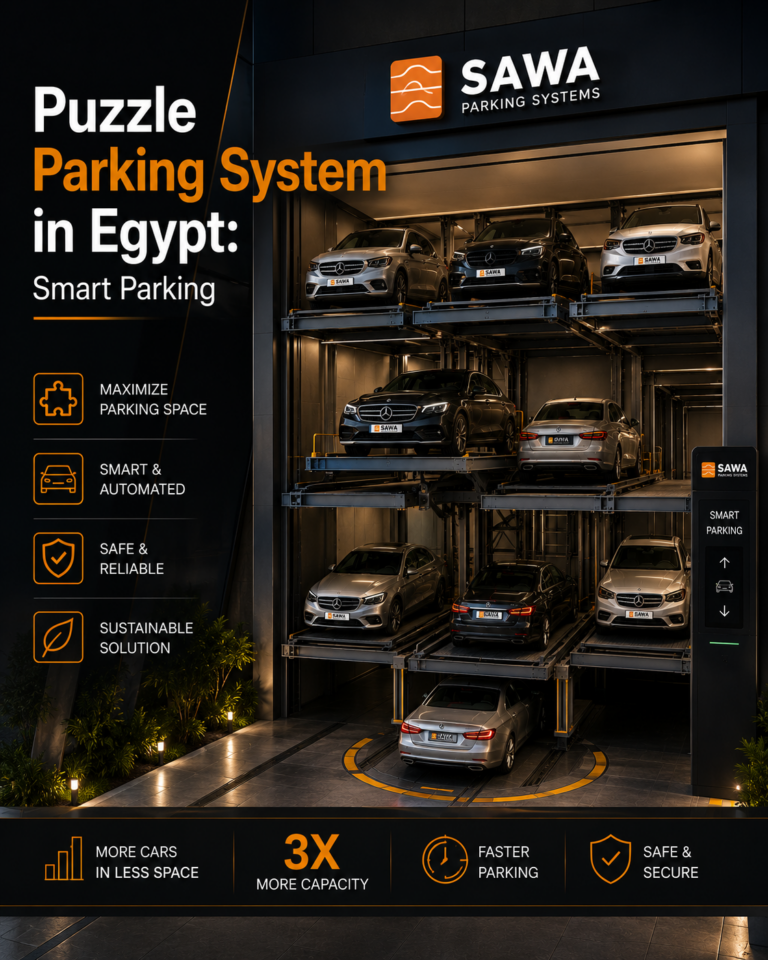
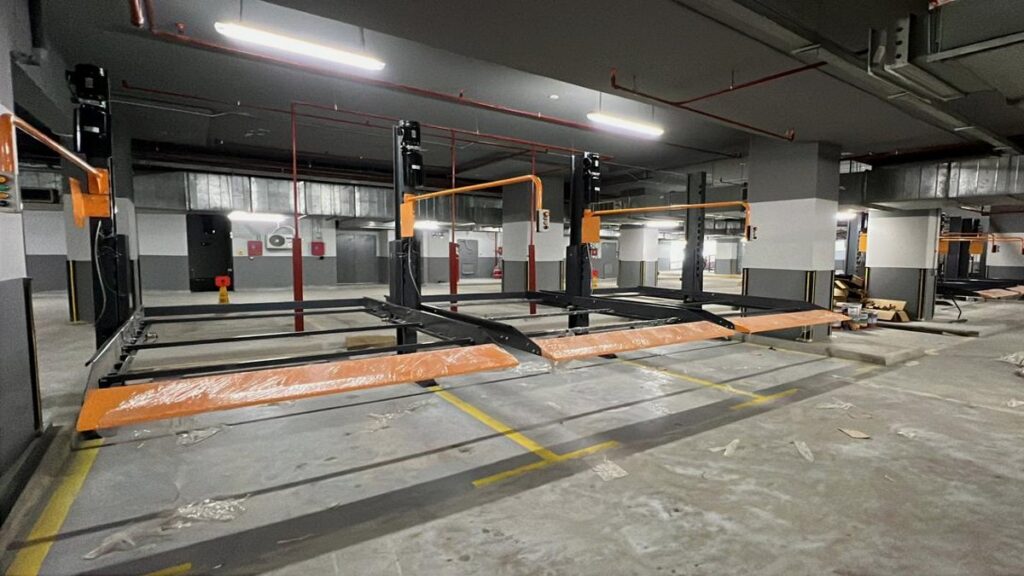
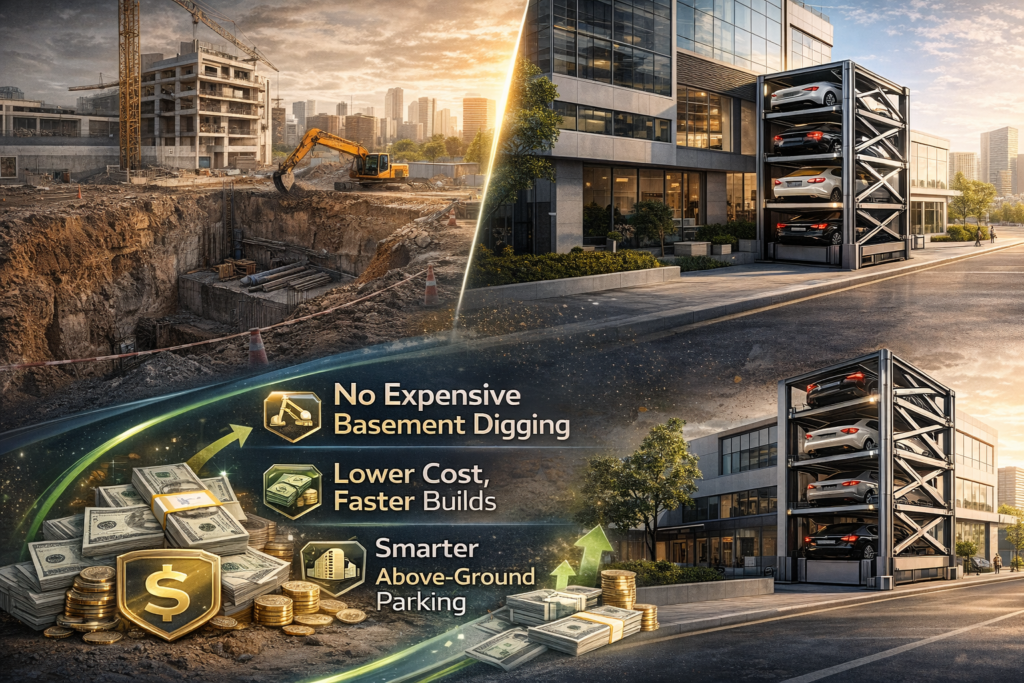
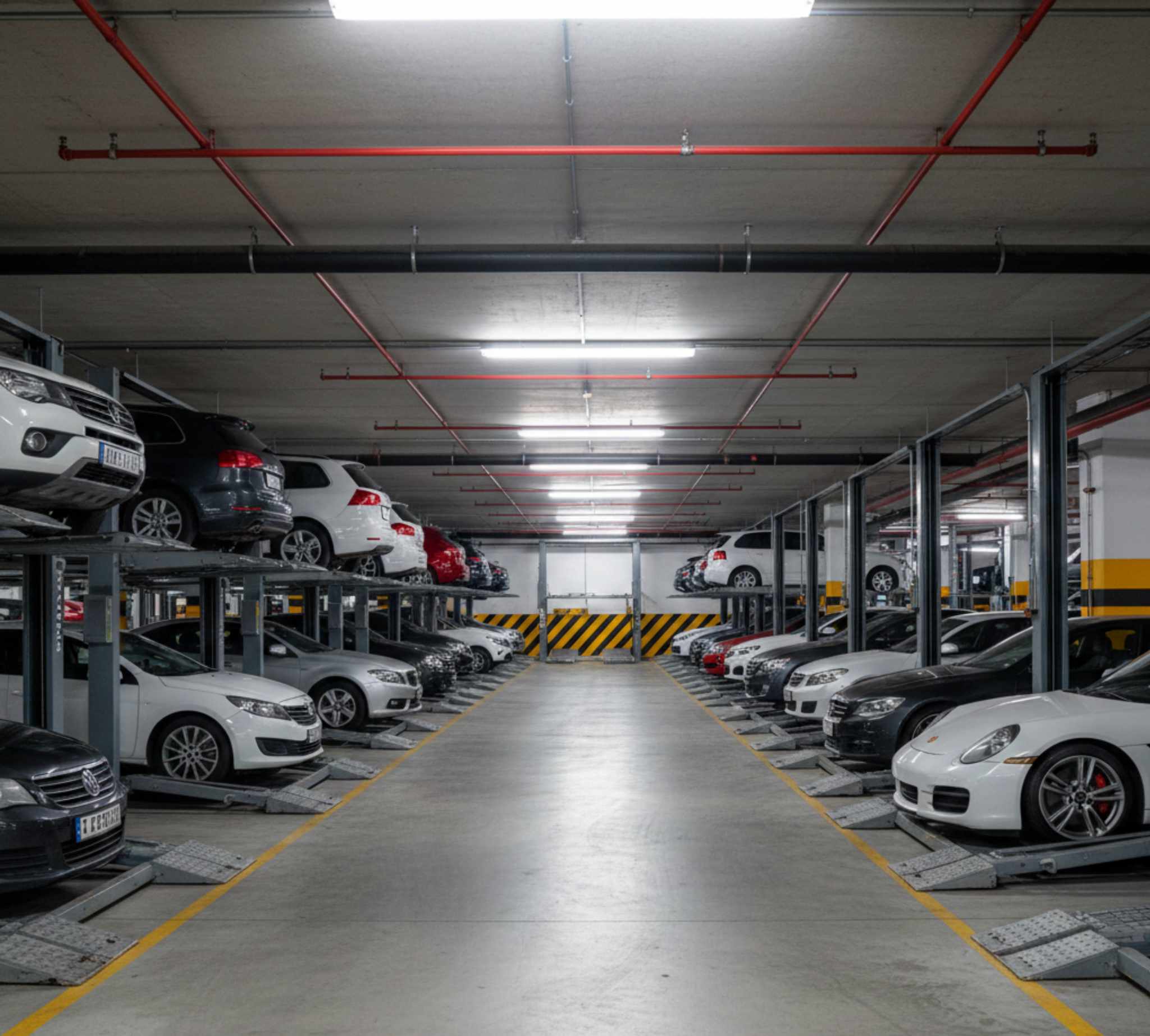
Before full automation, parking systems experimented with mechanical assistance. Simple car lifts, stackers, and semi-automated platforms appeared in constrained environments.
These systems marked a crucial moment in the evolution of automatic parking systems. For the first time, cars were moved mechanically rather than driven everywhere. This reduced ramp dependency and hinted at a more efficient future.
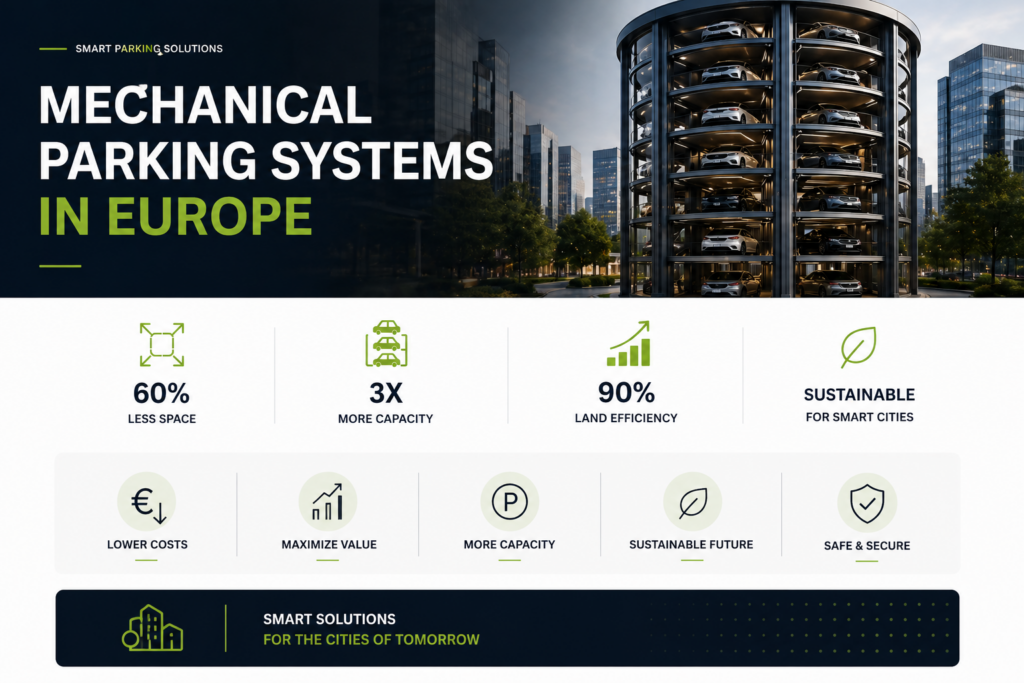
However, these early systems were limited. They solved space issues but introduced operational challenges. Reliability, safety, and user trust were still developing. Automation had begun—but it was not yet mature.
4. The Rise of Fully Automated Parking Systems
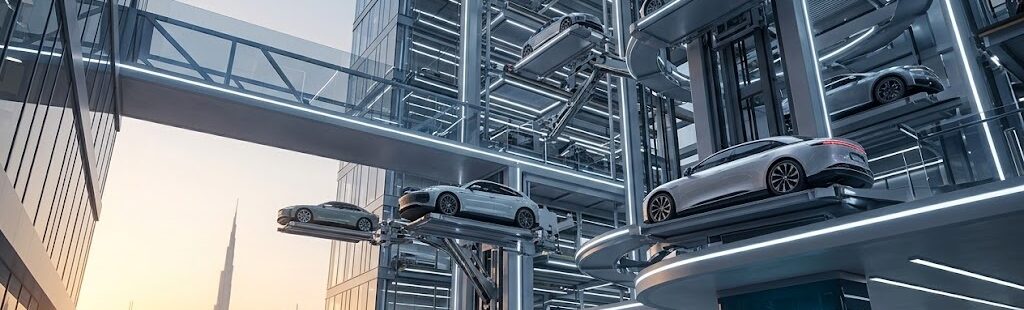
The real turning point came with the integration of control systems, sensors, and software. Fully automated parking systems removed drivers from the parking process entirely.
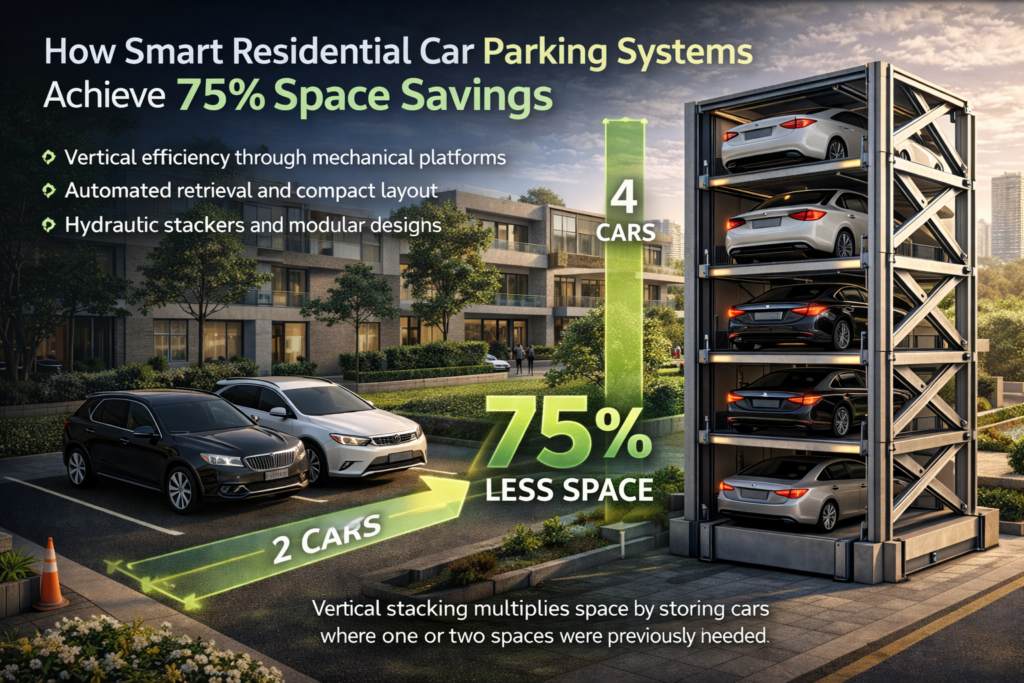
This was not just a technical upgrade—it was a conceptual shift. Parking was no longer about guiding drivers; it was about managing vehicles as objects.
Ask yourself:
What happens to design constraints when human presence is removed?
The answer is dramatic. Aisles disappear. Turning radii shrink. Capacity increases. This stage defines modern automatic parking as we know it today.
5. Digital Control and Optimization
As automation matured, software became the dominant factor. Parking systems began optimizing space dynamically, not statically.
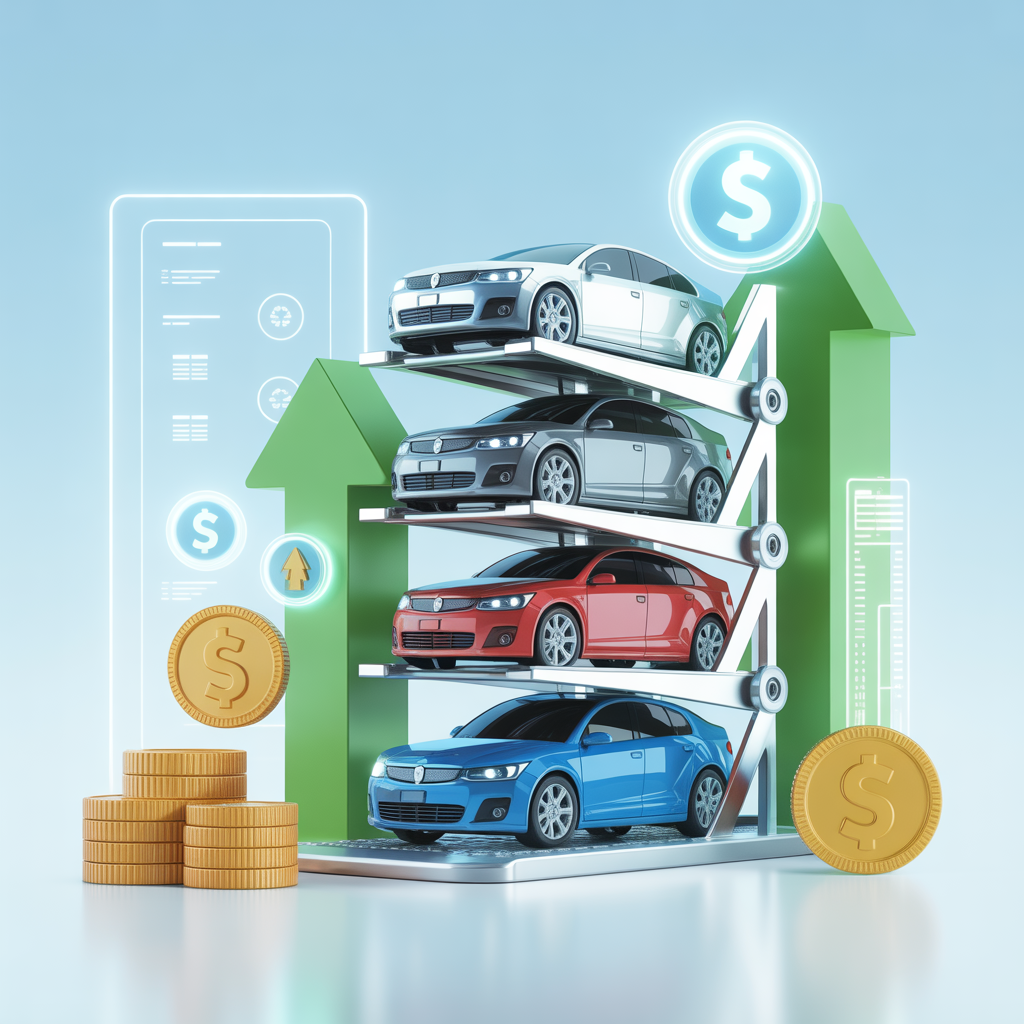
Slots were no longer fixed assignments. Algorithms decided placement based on vehicle size, retrieval patterns, and peak demand. This intelligence transformed parking into a responsive system.
The evolution of automatic parking systems reached a point where efficiency was no longer mechanical—it was computational.
6. User Experience Becomes Central
Early automated systems focused heavily on machinery. Over time, designers realized that user experience determined success more than hardware.
Clear interfaces, predictable timing, and intuitive processes became priorities. Automation had to feel trustworthy, not intimidating.
Ask yourself:
Why do some advanced systems fail despite working technically?
Because users were ignored. This realization reshaped the next generation of automatic parking design.
7. The Shift from Mechanical Logic to Intelligent Systems
At a certain point in the evolution, mechanical precision alone was no longer enough. Parking systems needed to think, not just move. This is where intelligence entered the picture. Sensors, programmable logic controllers, and later advanced software platforms transformed automatic parking from a fixed machine into an adaptive system.
Instead of following predefined paths only, systems began making decisions in real time. They analyzed availability, optimized retrieval sequences, and adjusted operations based on demand patterns. This marked a defining stage in the evolution of automatic parking systems, where efficiency was driven by data rather than hardware alone. Parking stopped being static and became responsive.
8. Safety Evolution: From Physical Barriers to Systemic Protection
Safety concerns played a decisive role in shaping automatic parking technologies. Early systems relied heavily on physical barriers and simple interlocks. While effective, these measures were limited and reactive.
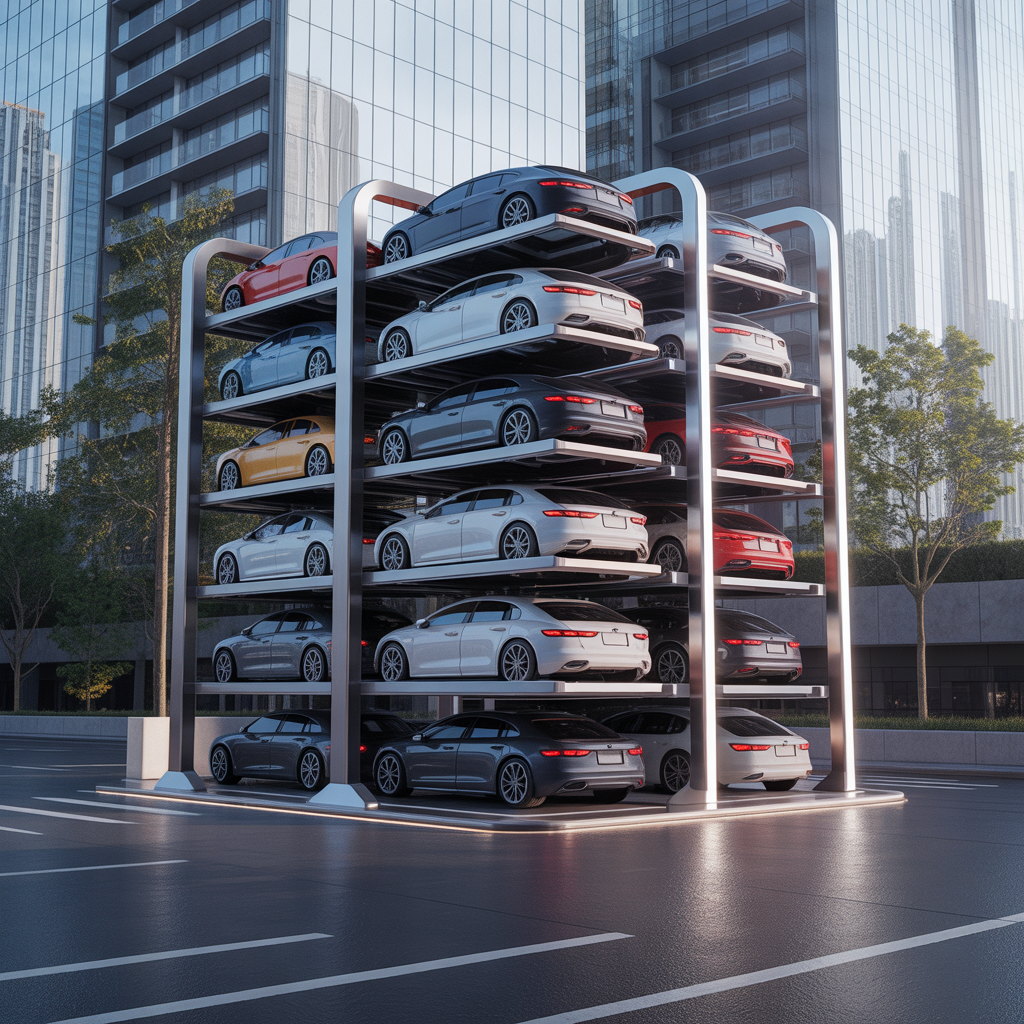
Modern automatic parking systems embed safety into every layer of operation. Redundant sensors, fail-safe logic, controlled access zones, and emergency protocols work together to prevent incidents before they occur. This systemic approach represents a major leap forward. Safety is no longer about stopping mistakes—it is about designing systems where mistakes are structurally unlikely.
Ask yourself:
How much safer does parking become when human unpredictability is removed entirely?
9. Integration with Building Design and Architecture
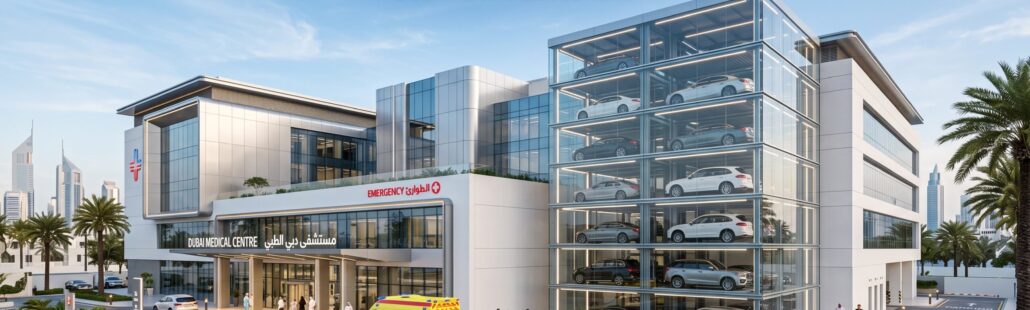
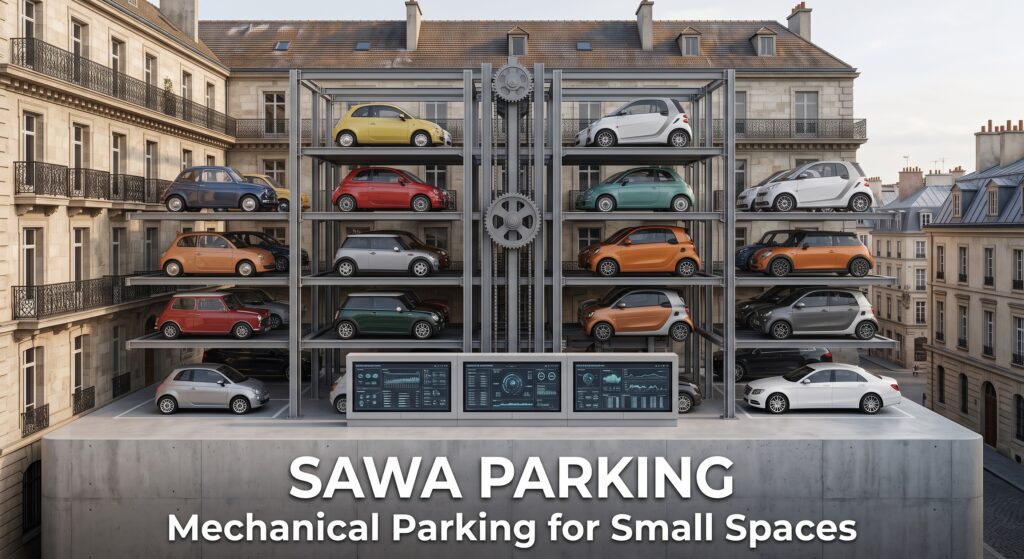
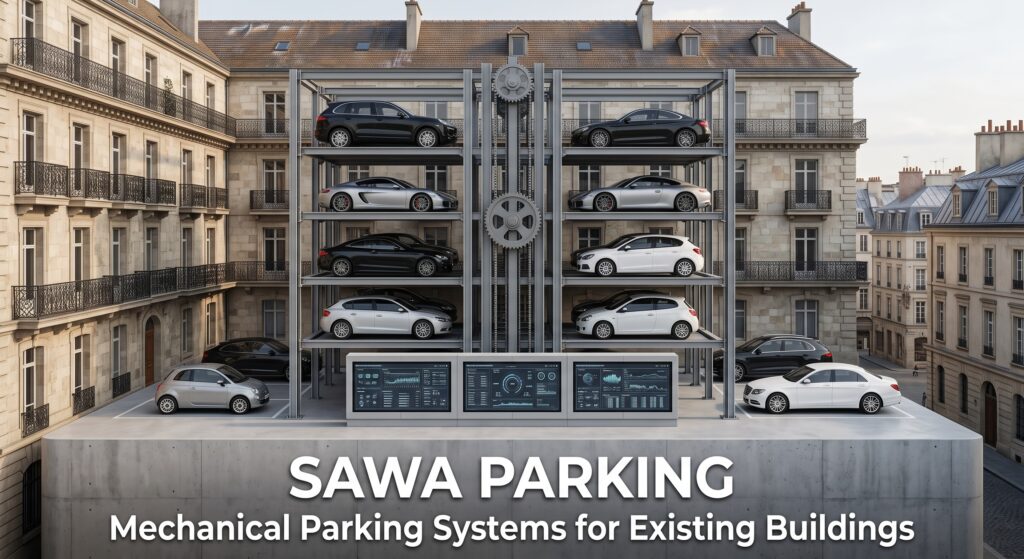
As automatic parking matured, architects and engineers began treating it as a core building system rather than a secondary utility. This integration changed how buildings were designed from the earliest planning stages.
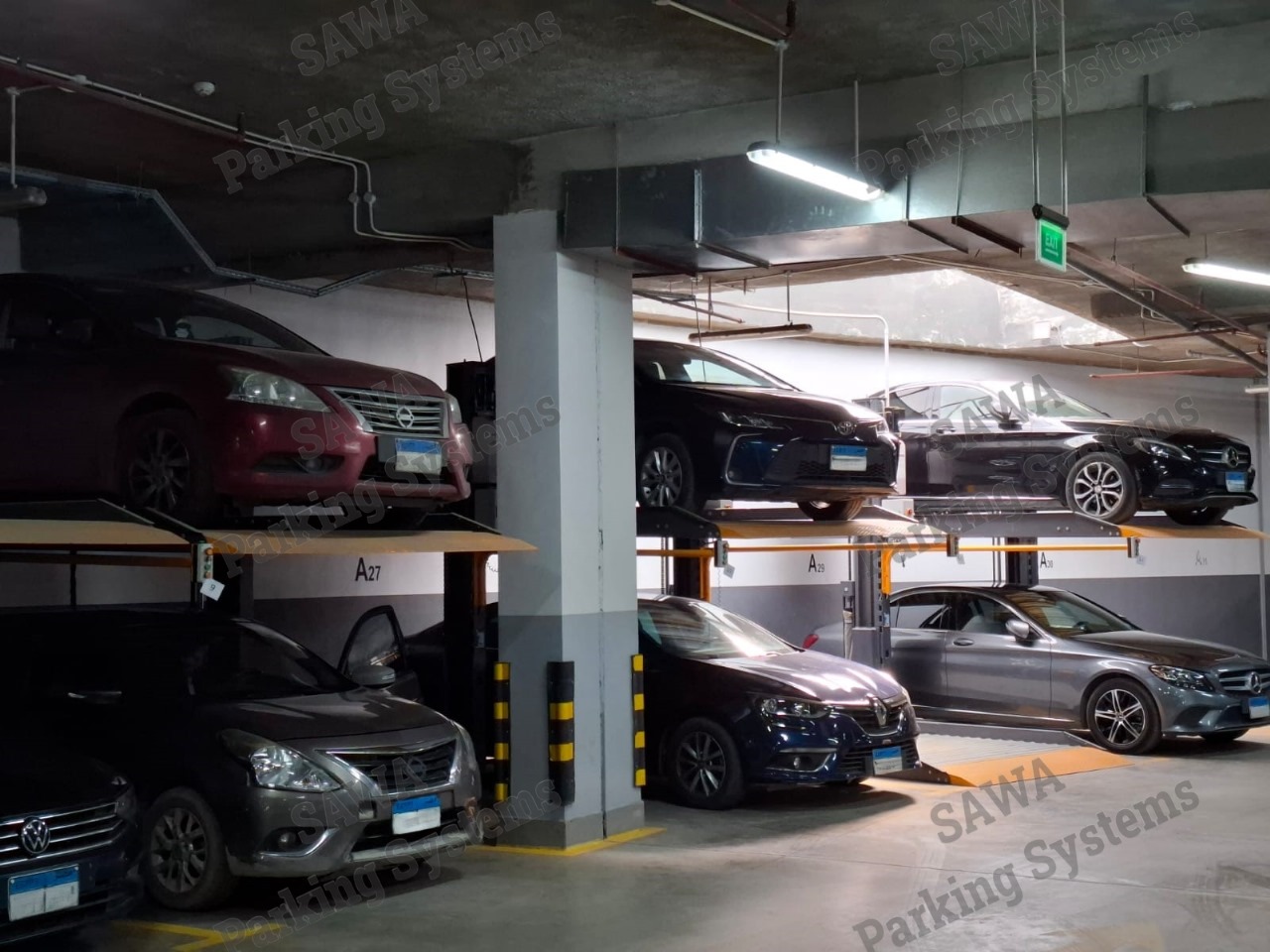
Parking volumes could now be placed underground, inside compact cores, or integrated vertically without ramps. This freed architects to rethink ground floors, circulation, and façade design. In the broader evolution of automatic parking systems, this integration represents a shift from adaptation to collaboration between parking technology and architecture.
Buildings no longer “make room” for parking—parking is designed as part of the building’s logic.
10. Urban Planning and the Role of Automatic Parking
Urban planners also began to reassess parking’s role in city life. Traditional parking structures contributed to congestion, visual clutter, and inefficient land use. Automatic parking offered an alternative that aligned better with modern planning goals.
By reducing surface parking and minimizing street-level disruption, automated systems support walkability, mixed-use development, and cleaner urban environments. This stage of the evolution of automatic parking systems reflects a broader shift: parking is no longer isolated infrastructure, but a component of urban quality.
Ask yourself:
What kind of city does manual parking encourage—and what kind does automation enable?
11. Sustainability Pressure and Environmental Performance
Environmental considerations have become unavoidable in construction and infrastructure. Parking systems are no exception. Traditional garages require extensive excavation, concrete, and long-term energy use for lighting and ventilation.
Automatic parking systems respond to this pressure by reducing excavation depth, structural volume, and operational energy consumption. Cars are stored more densely, ventilation needs decrease, and lighting is limited to active zones only.
This environmental efficiency is not accidental. It is a direct result of the evolution of automatic parking systems toward compactness and control. Sustainability is no longer an added benefit—it is a design driver.
12. Automation as a Response to Changing Vehicle Profiles
Vehicles themselves have changed. They are larger, heavier, and more technologically complex than before. Manual parking struggles to adapt to these changes without expanding space requirements.
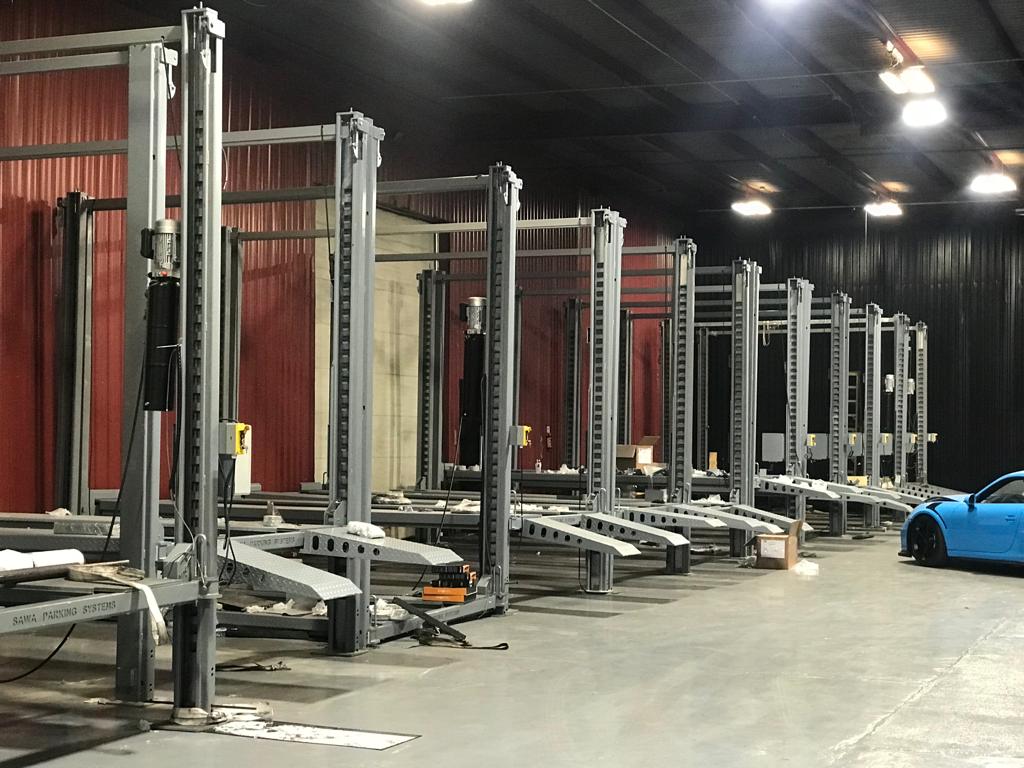
Automatic parking systems respond differently. They adjust slot dimensions, weight handling, and movement logic without redesigning entire structures. This adaptability is critical in a future where vehicle profiles continue to evolve, including electric and autonomous vehicles.
In this sense, automatic parking is not just reacting to urban change—it is preparing for it.
13. User Trust as a Product of System Maturity
Trust did not appear at the beginning of automatic parking’s evolution. It was earned gradually through reliability, safety, and improved user experience. Early skepticism faded as systems proved consistent and predictable.
Modern users expect automation to work seamlessly. This expectation is itself a sign of maturity. The evolution of automatic parking systems is reflected not only in technology, but in how little users now think about it.
When a system fades into the background of daily life, it has truly evolved.
14. Artificial Intelligence and Predictive Parking Logic
The latest phase in the evolution of automatic parking systems is driven by artificial intelligence rather than mechanical innovation. AI allows parking systems to predict behavior instead of merely responding to it. By analyzing usage patterns, peak hours, and retrieval trends, systems can pre-position vehicles and reduce waiting times significantly.
This predictive logic changes parking from a reactive service into a proactive one. Instead of waiting for user input, the system anticipates demand. This marks a fundamental shift in how parking efficiency is defined. Parking is no longer optimized only for space, but for time and user satisfaction simultaneously.
Ask yourself:
How different does parking feel when the system already knows what you will need next?
15. The Relationship Between Autonomous Vehicles and Parking Systems
As autonomous vehicles develop, parking systems must evolve alongside them. Self-driving cars will not eliminate the need for parking, but they will change how parking is accessed and managed. Automatic parking systems already operate on principles similar to autonomous navigation—controlled movement, sensor-based decisions, and centralized logic.
In this context, automatic parking becomes the natural interface between autonomous vehicles and the built environment. The evolution of automatic parking systems positions them as a bridge technology, capable of serving both traditional and autonomous vehicles without redesigning urban infrastructure.
This adaptability makes automated parking future-proof rather than transitional.
16. Global Adoption Patterns and Regional Drivers
The evolution of automatic parking systems does not follow a single global timeline. Different regions adopt automation for different reasons. In dense Asian cities, land scarcity drives adoption. In European cities, heritage preservation and urban quality play a key role. In emerging markets, economic efficiency and rapid urbanization dominate.
Despite these differences, the outcome is consistent: once implemented successfully, automatic parking becomes the preferred solution. This global convergence suggests that the evolution is not experimental—it is structural.
Ask yourself:
Why would such different cities arrive at the same solution unless the problem itself is universal?
17. The Shift from Equipment to Infrastructure
Another critical stage in the evolution is conceptual. Automatic parking is no longer treated as equipment that can be added or removed easily. It is increasingly treated as infrastructure—on the same level as elevators, HVAC systems, or fire protection.
This shift affects regulation, financing, and long-term planning. Infrastructure is expected to last, adapt, and integrate seamlessly. Automatic parking systems now meet these expectations through modular design, upgrade paths, and system redundancy.
Once parking becomes infrastructure, its evolution slows—not because innovation stops, but because stability becomes the priority.
18. Economic Rationalization of Automated Parking
As adoption increases, automatic parking systems benefit from standardization and scale. Costs stabilize, performance improves, and design risks decrease. This economic rationalization accelerates adoption further, creating a feedback loop.
Developers and cities begin to view automatic parking not as a premium upgrade, but as a rational baseline. In the evolution of automatic parking systems, this is the stage where innovation turns into normalization.
Ask yourself:
How many technologies stopped being questioned once they became economically logical?
19. Cultural Acceptance and the End of Resistance
Every major system faces resistance at first. Automatic parking was no exception. Early skepticism focused on reliability, safety, and complexity. Over time, these concerns faded as systems proved consistent.
Cultural acceptance is the final phase of evolution. When users stop questioning a system and start expecting it, resistance disappears. Automatic parking has reached this stage in many cities and is rapidly approaching it in others.
At this point, evolution is no longer technical—it is societal.
Conclusion: Evolution Driven by Necessity, Not Novelty
The evolution of automatic parking systems tells a clear story. Parking evolved not because technology allowed it, but because cities demanded it. Each stage addressed a specific failure—space inefficiency, safety risk, user frustration, environmental impact.
What began as mechanical experimentation matured into intelligent infrastructure. Automatic parking today is not a futuristic concept; it is a practical response to modern urban constraints. And as those constraints intensify, the evolution continues—not toward novelty, but toward inevitability.
Academic References :
- Shoup, D. (2011). The High Cost of Free Parking.
Routledge – Urban planning and parking economics
https://www.routledge.com/The-High-Cost-of-Free-Parking/Shoup/p/book/9781138497923 - Ahrens, H.-J. (2016). Mechanical Parking Systems: Design, Safety, and Applications.
Springer – Technical foundation of automated parking
https://link.springer.com/book/10.1007/978-3-662-55831-5 - Banister, D. (2018). Inequality in Transport.
Oxford University Press – Urban transport systems and infrastructure logic
https://global.oup.com/academic/product/inequality-in-transport-9781138951180 - Litman, T. (2020). Parking Management: Strategies, Evaluation and Planning.
Victoria Transport Policy Institute – Policy and planning perspective
https://www.vtpi.org/park_man.pdf