



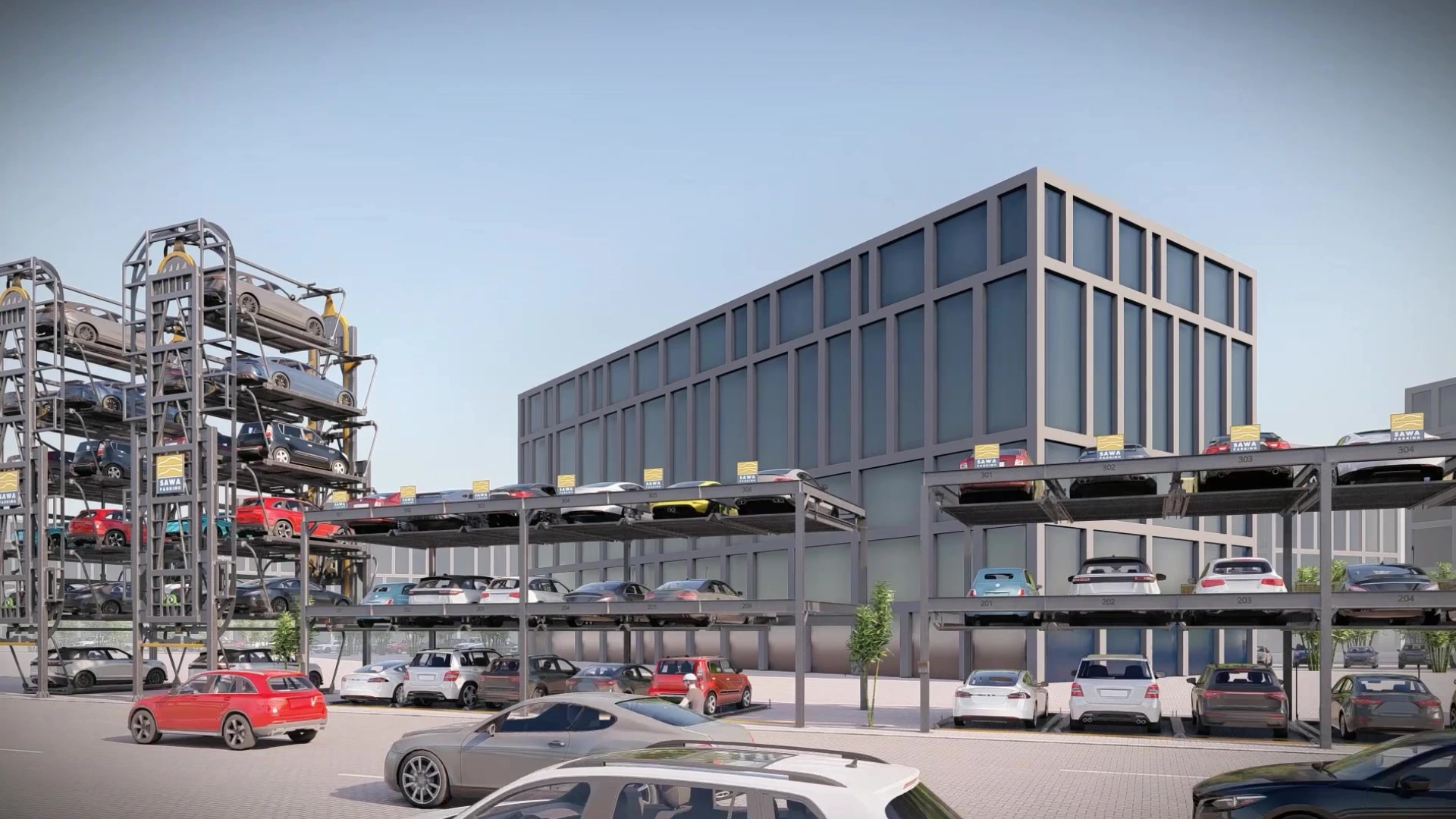
Introduction: One Technology, Two Completely Different Realities
At first glance, a shopping mall and a residential compound may seem to share similar parking needs. Both require capacity, accessibility, and user convenience. However, when we examine usage patterns closely, the differences become fundamental. This is why automatic parking for malls vs compounds must be analyzed as two distinct operational realities rather than a single solution applied everywhere.
Automatic parking systems can succeed brilliantly in both environments—but only when they are designed and managed according to context. Understanding these differences is essential for developers, operators, and planners who want automation to deliver real value rather than frustration.
High Turnover vs Long-Term Storage
One of the most critical differences between malls and compounds lies in vehicle turnover. Shopping malls experience constant inflow and outflow throughout the day. Visitors park for short periods, retrieve their cars frequently, and create peak waves during weekends or events. In contrast, residential compounds are dominated by long-term storage. Vehicles remain parked overnight, retrieval patterns are predictable, and peak activity is concentrated in morning and evening hours.
This contrast directly affects how automatic parking for malls vs compounds should be designed. Systems optimized for fast retrieval and high throughput perform well in malls, while compounds benefit more from systems focused on storage efficiency, quiet operation, and reliability over speed.
User Patience and Behavioral Expectations
Mall visitors are often in a hurry. They expect immediate access, clear instructions, and minimal waiting time. Any delay feels amplified because parking is only a small part of a larger shopping or entertainment plan. Residential users, on the other hand, prioritize certainty over speed. They value knowing that their car is safe, accessible, and consistently retrievable.
This behavioral difference explains why some automatic parking projects succeed in compounds but struggle in malls—or vice versa. Automatic parking for malls vs compounds cannot ignore user psychology. Systems must match the patience threshold and expectations of their users, or dissatisfaction will follow regardless of technical performance.
Peak-Time Pressure and Operational Stress
Shopping malls experience extreme peak conditions. Weekends, holidays, and promotional events can push parking systems to their limits. Retrieval queues form quickly, and small inefficiencies become visible under pressure. Compounds experience peak usage as well, but it is more predictable and easier to manage.
This difference means that automatic parking for malls vs compounds requires different stress-testing approaches. Mall systems must be designed for peak resilience, redundancy, and rapid response. Compound systems prioritize consistency and long-term stability. Confusing these priorities is one of the most common causes of operational failure.
Security Needs: Public Access vs Controlled Communities
Security requirements also differ sharply. Malls are public environments with constant visitor turnover. Parking systems must manage access without disrupting flow, often relying on tickets, QR codes, or time-based validation. Compounds operate as controlled communities, where access is restricted and user identity is known.
Automatic parking enhances security in both contexts, but the implementation logic changes. In automatic parking for malls vs compounds, malls require systems that balance openness with control, while compounds benefit from deeper isolation and restricted access models.
Integration with Building Circulation
In malls, parking is closely tied to pedestrian circulation. Visitors expect to move quickly from parking to retail areas without confusion. Long walking distances or unclear routes damage user experience immediately. Compounds are more forgiving, as residents accept slightly longer transitions in exchange for safety and calm.
This difference highlights why automatic parking for malls vs compounds must be integrated differently with elevators, lobbies, and access points. Parking success is not just about the system—it is about the journey around it.
Revenue Logic vs Lifestyle Value
For malls, parking is often a revenue generator or traffic driver. Validation systems, turnover rates, and customer flow directly affect commercial performance. In compounds, parking contributes indirectly by supporting lifestyle quality and property value.
Automatic parking supports both goals, but the metrics of success differ. Understanding this distinction is critical when evaluating automatic parking for malls vs compounds, as misaligned KPIs lead to poor decision-making.
Cost Justification and Investment Logic
The financial logic behind automatic parking differs significantly between malls and compounds. Shopping malls often justify parking investment through indirect revenue generation. Faster parking turnover increases visitor flow, which directly supports retail sales. In this context, automatic parking is evaluated based on throughput, customer satisfaction, and time efficiency. In contrast, residential compounds justify investment through long-term value creation. Parking does not generate direct income, but it protects property value, reduces operational headaches, and enhances market appeal. This distinction is central to understanding automatic parking for malls vs compounds, as applying mall-style ROI logic to residential projects often leads to incorrect conclusions.
Maintenance Strategies and Operational Priorities
Maintenance expectations also vary between the two environments. Malls operate in highly visible, public settings where downtime immediately affects reputation. As a result, maintenance strategies prioritize rapid response, redundancy, and continuous monitoring. Residential compounds can tolerate short maintenance windows, but they demand long-term reliability and low noise levels. Systems that require frequent intervention may frustrate residents even if they perform well technically. In automatic parking for malls vs compounds, maintenance planning must align with daily life rhythms rather than purely technical performance metrics.
System Selection: One Size Never Fits All
A common mistake in automated parking projects is assuming that capacity alone defines suitability. In reality, system selection must reflect usage patterns, peak behavior, and user tolerance. High-speed, high-throughput systems may excel in malls but feel unnecessarily aggressive in residential compounds. Conversely, systems optimized for quiet, dense storage may frustrate mall visitors during peak hours. This mismatch is one of the clearest reasons why automatic parking for malls vs compounds must be approached as two separate design challenges, even when using similar technologies.
Noise, Movement, and Environmental Sensitivity
Environmental sensitivity plays a different role in each context. Mall users are accustomed to activity, noise, and movement. Slight mechanical sounds are rarely noticed. In residential compounds, however, parking systems operate close to living spaces. Noise, vibration, and visual exposure become critical issues. Automatic parking must integrate acoustic control and smooth operation to maintain residential comfort. Ignoring this distinction often leads to resident complaints, reinforcing the importance of context-aware design in automatic parking for malls vs compounds.
User Support and Communication Models
User support requirements differ sharply between malls and compounds. Mall visitors need fast, intuitive guidance with minimal explanation. Clear signage, automated instructions, and on-site assistance during peak times are essential. Residential users benefit from onboarding, familiarity, and consistent support channels. Over time, residents expect the system to “just work” without constant reminders. Successful automatic parking for malls vs compounds projects design communication strategies that evolve with user familiarity rather than remaining static.
Learning from Success and Failure Patterns
Across multiple projects, success patterns repeat themselves. Automatic parking performs well in malls when designed for peak resilience and rapid throughput. It performs well in compounds when designed for reliability, safety, and quiet integration. Failures usually occur when these principles are mixed incorrectly. Developers who treat malls like compounds—or compounds like malls—often misjudge user tolerance and operational demands. These lessons underline why automatic parking for malls vs compounds is not a theoretical distinction, but a practical one grounded in real outcomes.
Long-Term Adaptability and Future Use
Another key difference lies in adaptability. Malls may change tenants, layouts, or operating hours frequently. Parking systems must adapt to fluctuating demand and evolving usage patterns. Compounds change more slowly but require systems that remain relevant for decades. Automatic parking must therefore be future-proofed differently in each case. This long-term perspective further reinforces the need to evaluate automatic parking for malls vs compounds as distinct investment and design decisions.
Final Comparison: Same Technology, Different Success Criteria
Automatic parking can succeed in both malls and compounds, but success is measured differently. In malls, success is speed, turnover, and customer flow. In compounds, success is calm, safety, and long-term reliability. Treating these environments as interchangeable leads to disappointment. Treating them as unique contexts unlocks the full value of automation. This nuanced understanding defines effective decision-making in automatic parking for malls vs compounds.
Conclusion: Context Determines Performance
Automatic parking is not a universal solution applied identically everywhere. Its effectiveness depends on how well it aligns with user behavior, operational demands, and long-term goals. Malls and compounds represent two ends of the usage spectrum, each requiring a tailored approach. When designed with context in mind, automatic parking enhances both commercial performance and residential quality. When context is ignored, even advanced systems struggle. The key lesson is simple: success in automatic parking for malls vs compounds comes not from technology alone, but from understanding the environment it serves.
References :
- SAWA Parking – Commercial & Residential Parking Solutions
https://sawaparking.com/
Primary reference based on real-world implementations of automatic parking systems in malls, mixed-use developments, and residential compounds. - Marsden, G., & Reardon, L. (2017). Parking Policy in Cities: What Can Be Learned from International Experience
Transport Reviews – Taylor & Francis
https://www.tandfonline.com/doi/full/10.1080/01441647.2017.1307867
Analyzes how different land uses (commercial vs residential) require distinct parking strategies and operational models. - Shoup, D. (2018). Parking and the City
Routledge
https://www.routledge.com/Parking-and-the-City/Shoup/p/book/9781138825863
Explores how parking demand, turnover, and user behavior vary across commercial and residential environments. - Litman, T. (2020). Parking Management Best Practices
Victoria Transport Policy Institute
https://www.vtpi.org/park_man.pdf
Provides practical frameworks for evaluating parking systems based on land use, turnover, and long-term performance.